REVIEW · TIMISOARA
Timisoara: Classic Walking Tour
Book on GetYourGuide →Operated by Timisoara City Tours · Bookable on GetYourGuide
Timisoara packs centuries into one focused walk. I love the big-picture stories that connect Mongol, Ottoman, Austrian, and communist-era turning points, and you’ll like how the guide brings it back to what life in Romania feels like today. It’s the kind of tour where you stop looking at buildings and start reading the city’s behavior.
One catch: it’s only 2 hours, so the route moves fast through major eras. If you want deep time at one monument, plan to add your own follow-up after the walk.
In This Review
- Key highlights you’ll notice right away
- Why Timisoara’s history feels personal on a 2-hour walk
- Starting at the tourist information center: getting oriented fast
- Mongol invasion to Ottoman occupation: how the guide turns the center into a map
- Austrian rebuilding after the early 1700s: streets, houses, and the end of medieval wood
- Timisoara’s early tech firsts: trams and electric street lights on the route
- Communism to revolution: understanding society changes, not just politics
- Private group energy: why the guide matters more than the distance
- Price and value: what you get for $42 in 2 hours
- What I’d ask the guide: Timisoara sites you can follow up on
- Should you book this Timisoara Classic Walking Tour?
- FAQ
- How long is the Timisoara Classic Walking Tour?
- How much does the tour cost?
- Where do we meet for the tour?
- What languages is the tour offered in?
- Is the tour private or group-based?
- What is included in the price?
- What will the tour cover about Timisoara’s history?
- Does the tour include information about Ottoman-era sites?
- Can I cancel or pay later?
Key highlights you’ll notice right away
- A timeline that jumps centuries without getting confusing
- Ottoman-era locations explained, including where the Central Mosque stood
- Austrian rebuilding stories tied to streets, houses, and fortifications
- Timisoara’s transport and tech firsts: trams to the suburbs and early electric street lights
- Modern Romania context, including the revolution against the communist regime
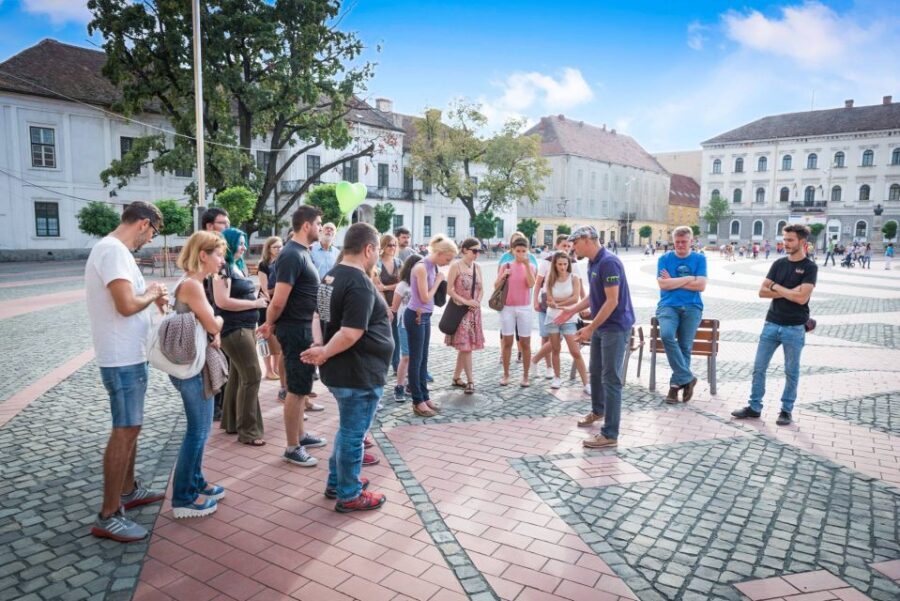
- Small-group feel, with guides like Armand and Alex Muntean praised for great storytelling
Why Timisoara’s history feels personal on a 2-hour walk
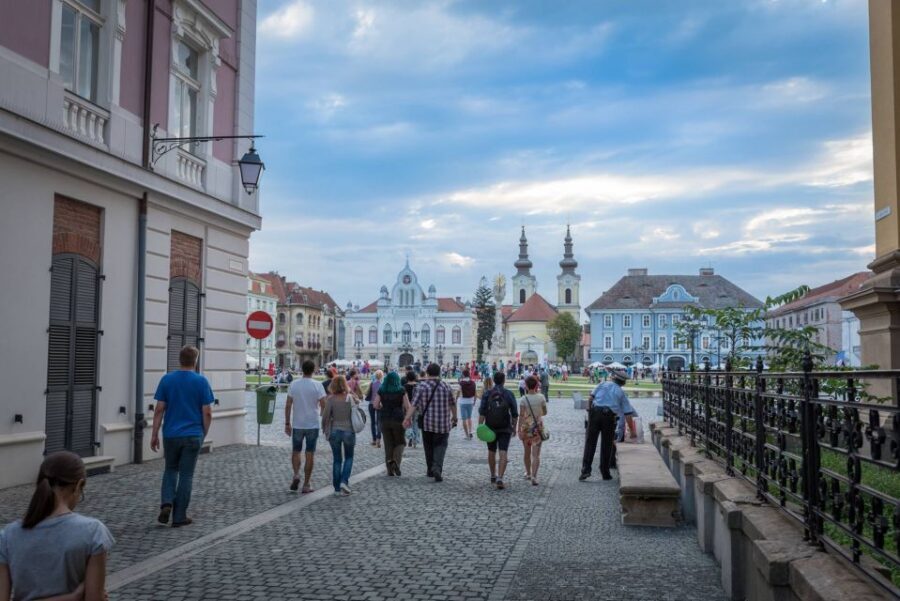
Timisoara has a way of making history feel practical. On this tour, you don’t just hear dates—you learn how Timisoara’s role in Europe kept changing, and how that shaped everyday life. The guide starts with Romania today, then walks you backward through key chapters, so the present doesn’t feel like a random add-on.
I like that the tour treats the city as a living place. The stories connect the Mongol invasion far back in the past, the long Ottoman presence, the Austrian rebuilding after the early 1700s, and then the more recent revolution against the communist regime. That mix matters because you end up understanding why Timisoara looks the way it does, not just what happened there.
You can also read our reviews of more walking tours in Timisoara



Starting at the tourist information center: getting oriented fast
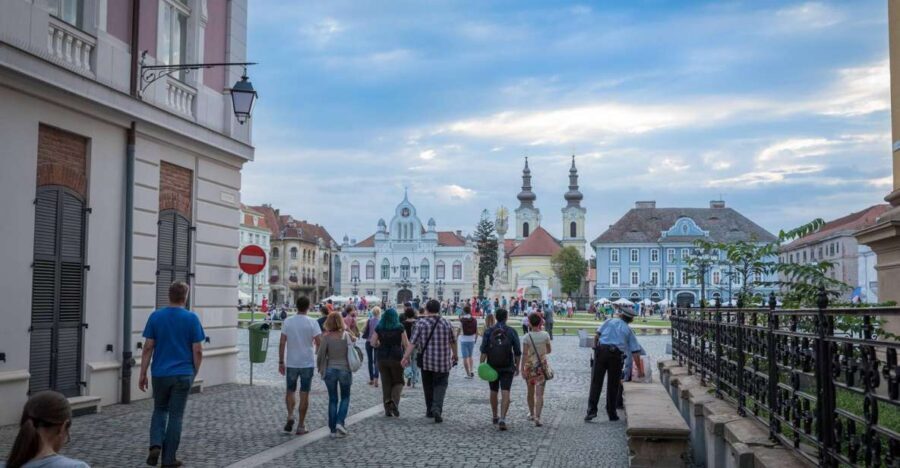
You meet in front of the tourist information center, which is a smart move for a first visit. You get your bearings before the walk turns into a guided lesson. The guide also uses the opening minutes to set up Romania’s current situation, so when the tour shifts into history, you’re not lost on what all these changes led to.
Expect the introduction to do two jobs: give you a basic story for Timisoara and explain how Romanian society has shifted over recent decades. That second piece is more useful than it sounds. It helps you read what you see outside your own viewpoint. Instead of treating the city like a museum, you start treating it like a place shaped by real decisions, real government changes, and real daily adjustments.
Mongol invasion to Ottoman occupation: how the guide turns the center into a map
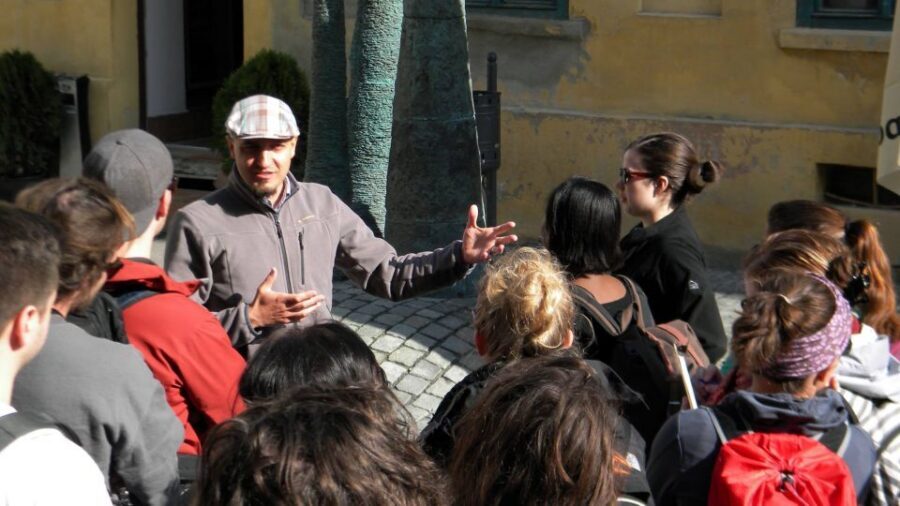
One reason this walking tour works is that it follows a clear logic. You start with the distant threat period—centuries back—then move forward to the Ottoman years. The guide doesn’t just mention the Turkish occupation. You get references to specific kinds of places and what used to be there.
During this part of the walk, you’ll hear about where the Turkish public bath and the bazaar were located, plus the spot associated with the Central Mosque. Even if you’re standing on streets that look totally different today, the explanation helps you picture the city’s earlier layout and daily rhythms. That’s the main trick: you learn to imagine the city layers without needing a textbook.
I’d also keep an eye on how the guide explains change over time. Timisoara’s story isn’t a straight line. The city shifts hands, redraws its urban plan, and retools its public spaces. If you like city history that explains why certain elements disappear, this section is a strong match.
Austrian rebuilding after the early 1700s: streets, houses, and the end of medieval wood
The mood of the walk changes once the Austrian period arrives. After Timisoara is conquered by Austrian imperial troops at the beginning of the 18th century, everything starts to look more planned. The guide describes how the city was completely rebuilt and how the old medieval wooden buildings disappeared.
This is one of the most valuable moments of the tour, because it explains what you might otherwise miss when you’re just sightseeing. Cities don’t change only by adding new things. They also change by replacing what doesn’t fit the new system. When you hear that new streets, houses, and a fortification system were set up, you can start connecting present-day street patterns to that planning mindset.
If you’re the type who likes architecture but hates vague commentary, pay attention here. The tour gives you the reason behind the look. You’re not just told what to notice—you’re told why those details emerged when they did.
Timisoara’s early tech firsts: trams and electric street lights on the route
Then the guide leans into Timisoara’s surprises. You learn about one of the first trams in the world that connected people from the suburbs to the city center. It’s a reminder that public transport isn’t just a modern convenience—it can be a statement about how a city grows and who it wants to serve.
The tram story ties into a second standout: Timisoara is described as the first place in continental Europe where electric street lights were used. That detail is more than trivia. It helps you see the city as forward-moving during certain periods, not just a place that suffered invasions and rebuilds.
As you listen, you start noticing how these innovations fit the larger story. Once the Austrian rebuilding created a new urban structure, you can understand why transportation and lighting became part of the next wave. The city didn’t only reset its buildings. It reset how it functioned.




Communism to revolution: understanding society changes, not just politics
A big part of the tour is how the guide brings you from historical events to what life is like now. You’ll hear about the contemporary revolution against the communist regime in Romania, and you’ll get insight into how society has changed over the last decades.
I like this approach because it makes the past usable. Instead of treating communism as a distant label, the tour frames it as a living influence that shaped daily expectations, public life, and norms that still echo. The guide’s job is to help you understand how those changes affect how people move, think, and talk today.
This section also supports the earlier parts of the tour. When you understand how governments and empires shifted Timisoara’s structure, it’s easier to understand why modern society would keep evolving in response. History becomes cause-and-effect, not a list of eras.
Private group energy: why the guide matters more than the distance
This tour runs as a private group, which changes the whole feel. With a smaller group, you get more chances to ask questions and more feedback on what you find interesting. That matters because Timisoara can be read in different ways: transport and innovation, religious and Ottoman-era traces, Austrian planning, or modern political change. A good guide helps you follow your curiosity without losing the main thread.
The praise around the guides is consistent. Armand is highlighted as friendly and genuinely happy to show tourists the city. Alex Muntean is praised for telling stories in a way that makes Timisoara feel specific, including personal anecdotes, and for being able to address children as well. That last point is a clue: the guide isn’t only performing history facts. He’s managing attention.
If you care about a tour that feels tailored rather than recited, this private format is a real advantage.
Price and value: what you get for $42 in 2 hours
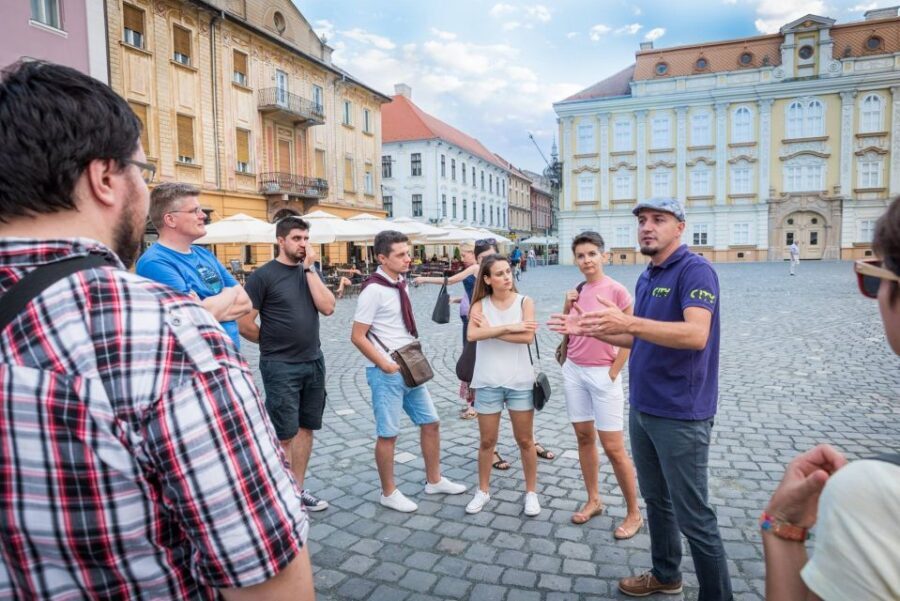
At $42 per person for a 2-hour walking tour, you’re paying for guided interpretation, not just movement through town. The math works best if you like your city time organized: you show up, meet the guide, and get an explained timeline that would take you much longer to assemble on your own.
Here’s why it feels like good value from a practical point of view:
- You get multiple eras in one session, from Mongol invasion history through Ottoman occupation and Austrian rebuilding, then to the communist revolution context.
- You learn specific place-based references like the Turkish public bath, bazaar, and Central Mosque locations from earlier times.
- You receive English or Romanian live guiding, which can save you from piecing together sources while walking.
The only value risk is the time limit. Because it’s short, you may leave wanting more depth in one subject—Ottoman traces, Austrian urban planning, or the modern society angle. That’s not a flaw; it’s just how a 2-hour tour is designed. Treat it like a strong orientation, then choose your next step.
What I’d ask the guide: Timisoara sites you can follow up on
One reviewer suggestion that’s worth taking seriously: ask about adding the Cathedral of the Three Hierarchs to the route. Even if it’s not part of the standard walk, it’s a good example of what you can do with your new context. Once you understand the city’s layers, you’ll know what to look for next.
Also, when the tour covers tech firsts like the tram connection to suburbs and early electric street lights, ask how those stories fit into Timisoara’s larger rebuilding timeline. Good guides love that question because it shows you’re paying attention to cause and effect, not just facts.
Should you book this Timisoara Classic Walking Tour?
Book it if you want a guided orientation to Timisoara that connects history to modern reality—especially the Ottoman-to-Austrian shift and the modern revolution context. This is also a great choice if you value storytelling and a personable guide, since the guide quality is a major part of the experience.
Skip it or plan a longer self-guided follow-up if your goal is to spend lots of time at one specific landmark. With only 2 hours, you get breadth and clarity, not deep time at any single site.
If you’re doing Timisoara for the first time and you want your walking day to feel meaningful from minute one, this tour is an efficient, thoughtful way to start.
FAQ
How long is the Timisoara Classic Walking Tour?
The tour lasts 2 hours.
How much does the tour cost?
It costs $42 per person.
Where do we meet for the tour?
Meet in front of the tourist information center.
What languages is the tour offered in?
The live tour guide speaks English and Romanian.
Is the tour private or group-based?
It’s listed as a private group.
What is included in the price?
You get a tour guide and the walking tour.
What will the tour cover about Timisoara’s history?
You’ll hear about the city’s history from the Mongol invasion through the Ottoman occupation and Austrian rebuilding, and you’ll also learn about the revolution against the communist regime and how society changed over recent decades.
Does the tour include information about Ottoman-era sites?
Yes. The guide explains where the Turkish public bath, bazaar, or the Central Mosque used to be located.
Can I cancel or pay later?
Free cancellation is available up to 24 hours in advance for a full refund, and there is a reserve now & pay later option (reserve now and pay nothing today).