REVIEW · TIMISOARA
Weekly Guided Tour in English – Tuesday, Thursday, Saturday
Book on Viator →Operated by Timisoara City Tours · Bookable on Viator
Timisoara makes sense fast on foot. This small-group English walk strings together the city’s big turning points, from Ottoman-era traces to the story that runs right up to 1989. I also love how the route hits major landmarks without turning into a museum day, so you leave with a map-in-your-head, not just photos.
One possible drawback: it is a pacey tour with short stops at several places, so if you want long, quiet time at each site or you hate walking in crowds (even small ones), you may feel a bit rushed.
In This Review
- Key highlights to expect
- Entering Timisoara’s Old Center in Just Two Hours
- Meeting at Palatul Culturii: Easy to Find, Easy to Start
- Stop 1: Castle of Huniade and the 1856 Castle Still Standing
- Stop 2: Libertatii Square and the Ottoman Thread
- Stop 3: Piața Sfântul Gheorghe and More Ottoman-Era Context
- Stop 4: Maria Theresia Bastion, the Fortress Piece You Can Still See
- Stop 5: Unirii Square and the Special Buildings Around It
- Stop 6: Back to Libertatii Square for the Statue and More Buildings
- Stop 7: Piata Victoriei and the 1989 Revolution Story
- Price and Value: What $24.14 Really Buys You
- What the Guides Do Well (and Why You’ll Feel It)
- Practical Tips So You Enjoy the Walk More
- Should You Book This Timisoara Guided Walk?
- FAQ
- What days does the guided tour run?
- What time does the tour start?
- How long is the tour?
- Is the tour in English?
- Where do I meet the guide?
- Where does the tour end?
- What is the group size?
- Are tickets or admission included for the listed stops?
- Is there a mobile ticket?
- Can I get a full refund if I cancel?
- Are service animals allowed?
- Is the tour near public transportation?
- Do I get confirmation after booking?
Key highlights to expect
- Small group of up to 15 people for more back-and-forth with your guide
- English-guided route that connects Ottoman-era landmarks to later Timisoara
- Free admission for the named stops, so your money stays in your pocket
- Central meeting point at Palatul Culturii, easy to find and well-placed
- A clear end at Piata Victoriei, with the 1989 revolution story brought into focus
Entering Timisoara’s Old Center in Just Two Hours
This tour is built for getting your bearings quickly. You’re not asked to spend half a day chasing buses, figuring out where things are, or guessing what you’re looking at. Instead, you follow a guided path that links the city’s layers, so each stop answers a question the last one raised.
The format also matters: it’s an about 2-hour walk with multiple short segments. That works well when you’re visiting for the first time and want context fast. Think of it like a guided history sketch, not a slow art-lovers tour.
And yes, the pace is purposeful. Several stops are around 15 to 20 minutes each, which keeps momentum and gives you enough time to see the key parts without dragging your feet the whole day.
You can also read our reviews of more guided tours in Timisoara



Meeting at Palatul Culturii: Easy to Find, Easy to Start
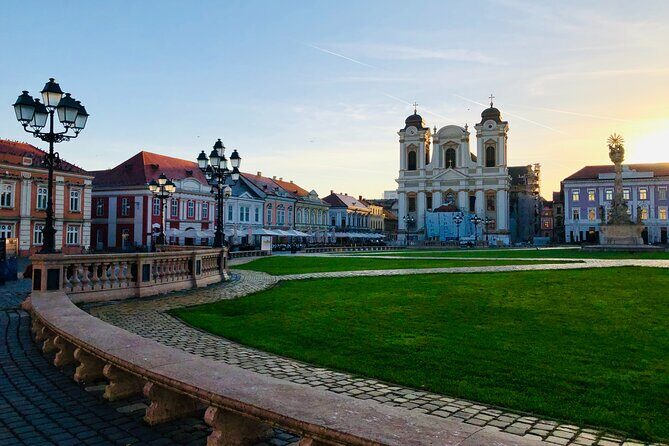
Your tour begins at Palatul Culturii, Strada Mărășești 2, Timișoara 050104, Romania with a 10:30 am start. The location is practical for two reasons: it’s in the city center, and it’s set up so you can arrive using public transportation.
You’ll also use a mobile ticket, which is one less thing to manage while you’re walking. If you like to travel light and move quickly, this setup fits how most people explore old cities.
One more practical note: the tour ends back at the meeting point. That’s helpful when you’re planning lunch or you don’t want the hassle of figuring out a second transport leg.
Stop 1: Castle of Huniade and the 1856 Castle Still Standing
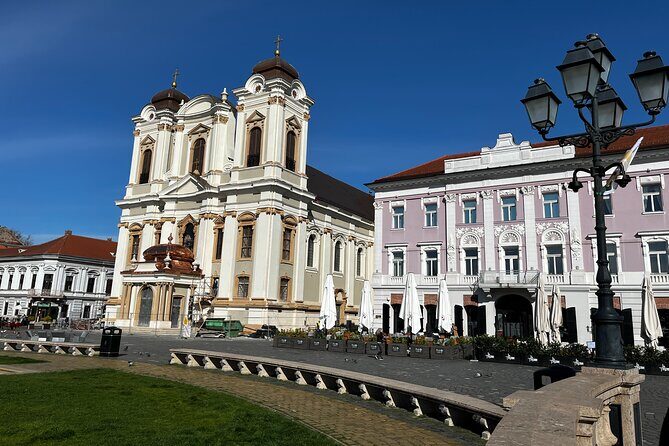
The walk kicks off at the Castle of Huniade, a site with a layered past. The idea here is simple: the place is known for having 3 different castles built, and the last one built in 1856 is still standing today.
For you, that means the first stop isn’t just a quick look. It’s an orientation moment. Once you hear how the castle story changed over time, the rest of Timisoara’s landmarks start to feel connected instead of random.
The stop runs about 15 minutes, and the best part is that the admission ticket is free for this stop. So you can spend your energy on understanding the story your guide is telling, not on hunting tickets or counting euros.
Possible drawback at this stop: since it’s short, don’t expect a detailed stop-and-stare photo session from every angle. If you’re the type who loves lingering, plan to come back later on your own after the tour sets the context.
Stop 2: Libertatii Square and the Ottoman Thread
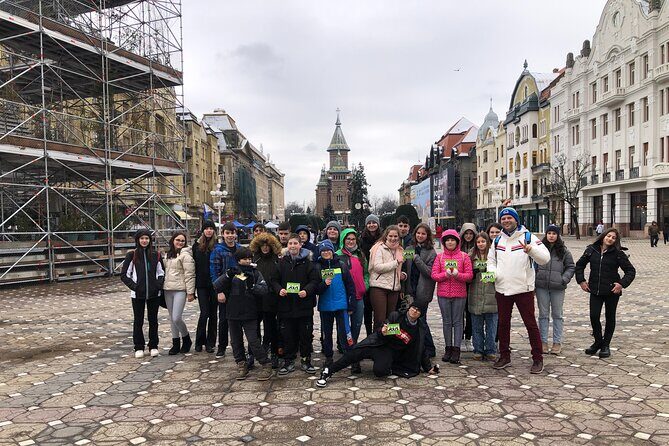
Then you move to Libertatii Square, where the tour shifts into the Ottoman era. This is where you start learning how long the city was under Ottoman reign and what happened to the buildings that were built during that time.
Even if you already know the Ottoman Empire affected parts of Southeastern Europe, what I like about this part of the tour is the way it stays local. You’re not just hearing a generic timeline. You’re connecting the political period to what you can still see in the city’s structure and place-names.
This stop is also about 15 minutes, and it’s listed as free admission. That’s a nice rhythm: the guide keeps you moving, but you’re not paying extra to understand what you’re looking at.
If you’re the kind of traveler who likes stories, this is a good point to ask follow-up questions. Ottoman-period details can sound abstract until someone ties them to a specific square in front of you.
Stop 3: Piața Sfântul Gheorghe and More Ottoman-Era Context
From Libertatii Square, you continue to Piața Sfântul Gheorghe. The focus again stays on the Ottoman period, but now you also get a spotlight on Saint George.
This is one of the smartest choices in the route. When you move between two nearby areas, you can compare what changes and what stays consistent. The guide can talk about Ottoman-era influence and then shift to the religious or cultural reference point tied to Saint George, so the square becomes more than a name on a map.
Like the prior stop, the segment is about 15 minutes and marked as free admission. That keeps the whole tour from feeling like you’re constantly paying in small chunks.
The main thing to watch here: keep your attention. Because this stop is short, it rewards people who are listening and mentally connecting what they heard in the previous square.




Stop 4: Maria Theresia Bastion, the Fortress Piece You Can Still See
Next up is Maria Theresia Bastion, about 20 minutes. This stop is valuable because it’s described as the only piece left of Timisoara’s former fortress, and the guide also explains what happened after the Ottoman times.
For you, that means you’re finally looking at a physical remnant rather than just hearing about how the city’s story shifted. It’s the kind of place where the guide’s narration helps you see why it matters.
Again, this stop is free admission, so you’re not paying to access the viewpoint or the historical marker the guide is pointing out. In a tour that costs around $24.14 per person, that small detail adds up. Your fee is mostly for the guide’s time and English storytelling, not for ticket fees at every corner.
Stop 5: Unirii Square and the Special Buildings Around It
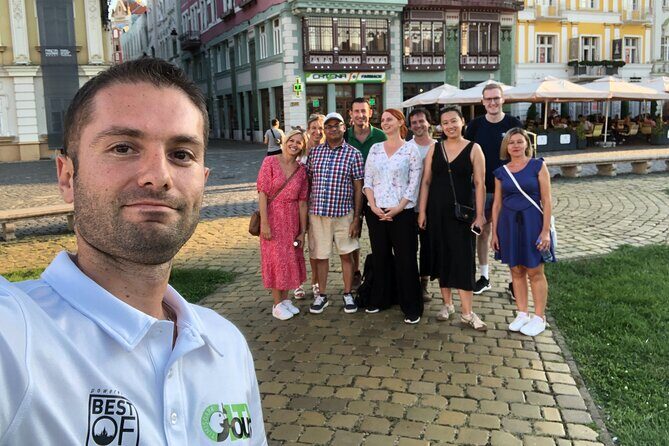
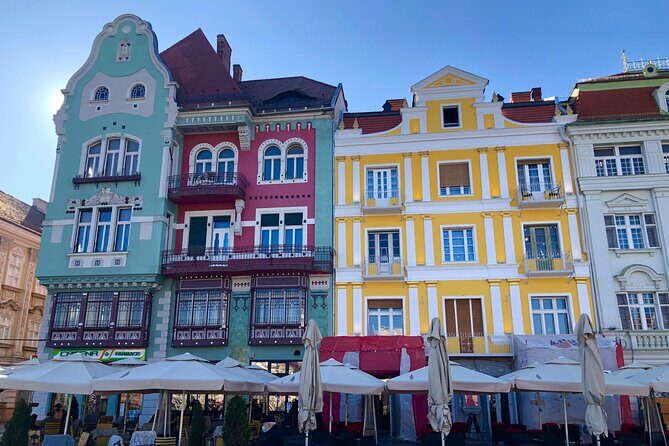
After the bastion, the route reaches Unirii Square. This is described as the most beautiful square in town, and the tour uses that stage to explain the square’s story and the special buildings found there.
This stop is about 20 minutes, and the admission is also free. What makes it worth your time is the way square tours work when they’re done well: you can see architecture and urban design as a single idea, not as random facades.
If you’re photographing, Unirii Square is a good moment to slow down just a little—within the tour schedule. Let the guide talk, then take a few shots right after they finish a key explanation. It helps you capture what you now understand.
Stop 6: Back to Libertatii Square for the Statue and More Buildings
The tour returns to Libertatii Square for another 20 minutes. This time you’ll hear about other buildings there and also about the statue in the middle of the square.
I like this choice because it avoids the classic walking-tour problem: you hit a place once, hear a quick mention, and then you walk away knowing nothing more than a location. Coming back gives the guide space to add detail—especially with that central statue, which becomes a focal point you can actually picture later.
Admission stays free, and you’re still within the overall arc of the story. It reinforces the Ottoman thread without repeating everything word for word. You should leave with a stronger sense of the square’s layout and why it’s placed the way it is.
Stop 7: Piata Victoriei and the 1989 Revolution Story
Your walk ends at Piata Victoriei, a 15-minute finale. This square is where the tour shifts from earlier empires and fortifications to the modern turning point: the Romanian Revolution from 1989 against the communism regime.
What you gain here is the full timeline feeling. Earlier stops explain how the city was shaped by external powers and defensive architecture. Then the tour brings you to a place that ties the story to the political changes of the late 20th century.
This stop is also marked as free admission, and the tour concludes back where it started, which makes it easy to continue your day.
When I’m choosing a short guided tour, I look for endings like this: not a random last stop, but a place where the narrative lands.
Price and Value: What $24.14 Really Buys You
At $24.14 per person for about 2 hours, this is priced like a straightforward city introduction. The real value is that you’re paying for an English-speaking professional guide and a route designed to connect landmarks with meaning.
A couple details push the value higher:
- The tour is limited to a maximum of 15 travelers, which usually makes questions easier and the group less chaotic.
- The named stops are listed as free admission. You’re not stacking multiple paid entries on top of the tour cost.
- It’s scheduled weekly on Tuesday, Thursday, and Saturday, so you have options if your itinerary shifts.
It’s also typically booked about 8 days in advance, so if your travel dates line up, don’t wait too long. This is the kind of tour people book when they want a clear start to their day.
What the Guides Do Well (and Why You’ll Feel It)
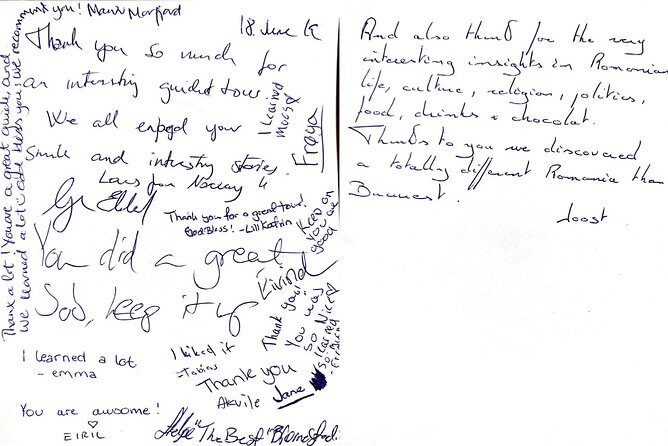
The tone you want from a guided walk is: clear, organized, and tuned to beginners. This tour’s guides have been singled out for exactly that—staying attentive, maintaining a good pace, and keeping the group engaged.
Names that have shown up include Sergiu and Dan. The common theme: they’re described as professional, helpful, and ready to answer what you’re seeing as you go. There’s also a note that a guide will wait for late guests and help people find their way, which matters more than people think when you’re navigating a foreign city.
If you want a tour where you can hear the story and still feel free to ask questions, this format is a good match.
Practical Tips So You Enjoy the Walk More
You’ll be outside for most of the tour, moving between squares and historical points. That means comfort beats style. Wear shoes that handle uneven sidewalks and take quick photos without stopping every ten steps.
Arrive a few minutes early at Palatul Culturii so you can start with everyone else. Since the tour has short segments, late arrivals can shrink the time you get to fully enjoy each explanation.
Also, if you’re someone who likes to follow along with context, keep an eye out for how the guide connects Ottoman-era changes to what you later see in fortification remnants and then to the 1989 revolution story. That thread is the whole point of this route.
Should You Book This Timisoara Guided Walk?
I’d book it if you fit any of these profiles:
- You’re in Timisoara for a short time and want the city’s story in about 2 hours.
- You like small groups and a guide who keeps the pace moving without making the experience feel rushed in a bad way.
- You want Ottoman-era clues, fortress leftovers, and the 1989 revolution story tied to real places, not just dates.
I’d think twice if you hate walking, dislike compact itineraries, or you want deep museum-style time at each site. This is designed for orientation and connection, not for long independent exploration inside each stop.
Overall, for the price and the tight narrative structure, this is a strong first-day or first-half-day choice.
FAQ
What days does the guided tour run?
It runs weekly on Tuesday, Thursday, and Saturday.
What time does the tour start?
The start time is 10:30 am.
How long is the tour?
It lasts about 2 hours.
Is the tour in English?
Yes, it’s offered in English.
Where do I meet the guide?
You meet at Palatul Culturii, Strada Mărășești 2, Timișoara 050104, Romania.
Where does the tour end?
It ends back at the meeting point.
What is the group size?
The maximum group size is 15 travelers.
Are tickets or admission included for the listed stops?
The listed stops are marked as free admission.
Is there a mobile ticket?
Yes, the tour uses a mobile ticket.
Can I get a full refund if I cancel?
Yes. You can cancel up to 24 hours in advance for a full refund.
Are service animals allowed?
Yes, service animals are allowed.
Is the tour near public transportation?
Yes, it is near public transportation.
Do I get confirmation after booking?
Confirmation is received at the time of booking.