REVIEW · TIMISOARA
The Grand Tour of Communist Ages at Timisoara
Book on Viator →Operated by Timisoara City Tours · Bookable on Viator
Communism in Timisoara still leaves marks. This small-group tour connects everyday life under the regime to the December 1989 revolution with an English-speaking guide and car rides that keep you moving. You’ll cover at least eight stops, including places tied directly to protests and aftermath.
I love the way the guide explains how the Communist Party rose to power in Romania and how that shaped what people saw, said, and feared. I also like the structure: you get street-level context in a real neighborhood, then you move to landmark spots where you can literally spot the physical evidence of the crackdown.
One thing to consider: several stops are short, so if you want long museum-style time, this is more about fast, focused history on the streets.
In This Review
- Key highlights you’ll actually feel on the ground
- The story of Timisoara’s revolution, told without the fluff
- Where the tour starts (and why timing matters at 3:00 pm)
- Șagului neighborhood: seeing communism as daily life, not just politics
- Muzeul Consumatorului Comunist: everyday objects, propaganda-by-way-of-life
- Biserica Reformata and Dec 16, 1989: the tram moment
- Timisoara Orthodox Cathedral: bullet holes, and the cost of protest
- Piata Victoriei: Victory Square and the 20 December turning point
- The guide’s job: turning dates into a coherent story
- Why the vehicle rides make the tour feel worth the time
- English, small group size, and the price: does $66.08 make sense?
- Who this tour is perfect for (and who might want something else)
- A respectful route through painful history
- Should you book the Grand Tour of Communist Ages in Timisoara?
- FAQ
- How long is the Communist Ages tour in Timisoara?
- What is the price per person?
- What time does the tour start?
- Where do I meet the guide?
- Where does the tour end?
- Is the tour offered in English?
- How many people are in a group?
- Do the stops have admission fees?
- What if I need to cancel?
- Are service animals allowed, and is it near public transport?
Key highlights you’ll actually feel on the ground
- At least eight locations in about 3 to 4 hours, so you see more than the big monuments
- A clear cause-and-effect story for how the regime took hold and why the revolution happened
- Bullet-hole moments at multiple key sites tied to Dec 1989
- Small group size (max 10), which makes questions easier
- Comfortable vehicle transfers between neighborhoods, saving you time
The story of Timisoara’s revolution, told without the fluff
Timisoara’s December 1989 uprising didn’t start as a movie scene with dramatic music. It started with real people making small, stubborn choices—then getting punished for it. What makes this tour work is that it links those choices to the long machinery of Communist rule in Romania, so the events don’t feel random.
You’re not just being pointed at a few “important buildings.” You’re learning why the Communist Party’s control system created the conditions for mass protest. That’s what makes the history click, especially if you grew up hearing simplified versions of the story.
Also, the format helps. You get guided conversation while moving between stops in a comfortable vehicle. That matters in Timisoara, where spreading out across multiple neighborhoods on foot can eat up the day.
You can also read our reviews of more tours and experiences in Timisoara.


Where the tour starts (and why timing matters at 3:00 pm)
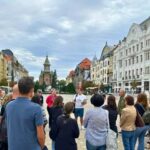
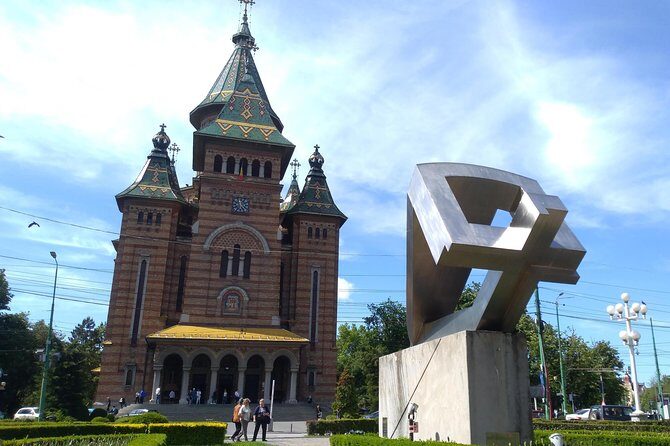
The meeting point is the Three Holy Hierarchs Metropolitan Cathedral on Bulevardul Regele Ferdinand I in Timisoara. The tour starts at 3:00 pm and ends at Piața Victoriei.
That afternoon timing is practical. You’ll have daylight for exterior details like bullet holes and street-level memorial markers, without needing to wake up early. It also lines up well with the way the route moves: you start with daily-life context, then you shift toward the most symbolic protest sites.
The tour runs about 3 to 4 hours. With a maximum of 10 travelers, it stays small enough that the guide can answer real questions instead of rushing past them.
Șagului neighborhood: seeing communism as daily life, not just politics
The tour spends time in Șagului, one of Timisoara’s neighborhoods where you can understand what life felt like during the Communist era. This is the part I think most visitors underestimate. It’s easy to treat communism like an abstract system. This stop brings it down to human scale.
You’ll get context about how the regime shaped daily routines, what people had to manage, and how public life could be constrained. Even if you already know the general timeline, this neighborhood time helps you connect that knowledge to what a person actually experienced on a normal day.
The upside: this stop is where the tour earns its off-the-beaten-track label. The main drawback is also simple: it’s not a long sit-down exhibit. It’s more about guided explanation and observation in the neighborhood setting.
Muzeul Consumatorului Comunist: everyday objects, propaganda-by-way-of-life
Next you’ll visit Muzeul Consumatorului Comunist (the Communist Consumer Museum). This is a short stop, but it carries a big punch. You’ll learn about the beginnings of the Communist regime in Romania—how it was installed and how it evolved—through objects and material culture.
The museum is also known for a private collection of objects made in Romania during the Communist era. That matters because propaganda isn’t only posters and speeches. It’s also what people used, bought, repaired, and lived with.
Because the visit is about 30 minutes, treat it like a high-impact snapshot. If you’re the type who wants to read every label and spend an extra hour, you may want to add a separate museum visit later. But for a guided “big picture” tour, this stop is exactly the right length.
Biserica Reformata and Dec 16, 1989: the tram moment
One of the most dramatic parts of the route is at the Reformed Church (Biserica Reformata). This is presented as the place where everything started, tying the story to the afternoon of 16 December 1989.
The guide connects that moment to a bold act: a young man stops a tram, and his friend climbs onto it and shouts Down with Ceausescu! Even if you’ve heard simplified versions of these events, the tour’s pacing helps you understand why a public act in a public space mattered so much.
Stop length here is short, around 15 minutes. So don’t plan on long photo sessions from every angle. Instead, use the time to listen closely to the cause-and-effect framing—why that action spread into something larger.
Timisoara Orthodox Cathedral: bullet holes, and the cost of protest
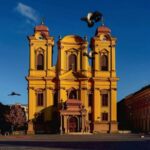
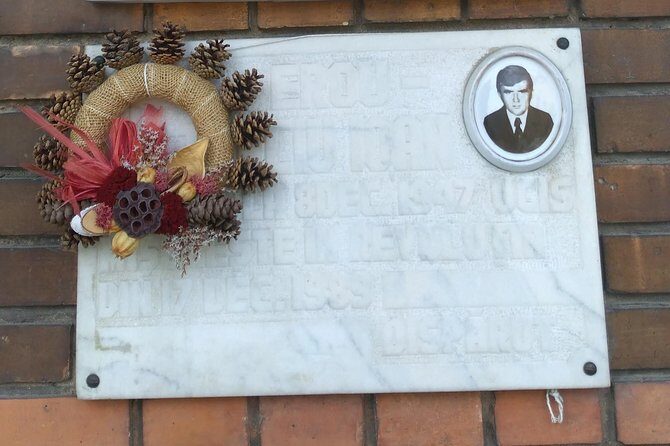
From there, the tour moves to the Timisoara Orthodox Cathedral. The story centers on young people who died while protesting on the cathedral stairs, and on the fact that the army opened fire without warning.
What you’ll take in at this stop is not abstract. You’ll see bullet holes. That visual detail turns the history into something physical, which is why this stop often lands hardest.
The practical note: you’ll have only about 10 minutes at this point, so go in with the mindset of a quick, respectful look. If you linger too long, you’ll feel rushed later. If you listen while you look, the few minutes go a long way.
Piata Victoriei: Victory Square and the 20 December turning point
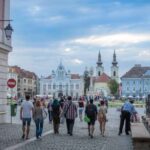
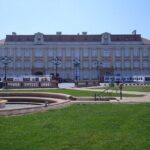
The tour ends at Piața Victoriei, the Victory Square where the events of 20 December became symbolic and public. The big detail here is scale: 150,000 people shouted VICTORY when Timisoara was proclaimed the first city in Romania free of Communism.
Before it was Victory Square, this place was called Opera Square. That name change is a reminder that revolutions rewrite the map as well as the narrative.
You’ll also be shown bullet holes on buildings around the square. Again, it’s fast—about 10 minutes—but the setting helps you absorb the meaning. The point isn’t to “check off” another site. It’s to understand how protest moved from streets and churches to city-wide identity in a matter of days.
The guide’s job: turning dates into a coherent story
What stands out most in the feedback around this tour is the guides themselves. They’re praised for being strong historians and for answering questions in a way that stays focused on the “why,” not just the “what.”
That matters because Communist history can easily become a list of names and dates. On this tour, the explanation is set up as cause-and-effect: how the party gained control, how it maintained control, and what pressures eventually pushed people to risk open confrontation.
If you like asking questions—especially the kind that start with why people did something—you’ll probably enjoy this format. It stays small enough for real conversation, not just a one-way lecture.
Why the vehicle rides make the tour feel worth the time
This isn’t a slow walk tour. You move between stops in a comfortable vehicle, which is a big part of the value. In 3 to 4 hours, you can cover multiple areas without burning energy on logistics.
That’s especially helpful if you’re visiting on a tight schedule. You get neighborhood context, museum context, and multiple “major protest” landmarks in one run. For many people, that’s the difference between learning something and running out of time to learn it.
The trade-off is also real: you’ll spend more time listening than roaming. So if you want lots of free wandering afterward, plan a little extra time in Timisoara beyond the tour.
English, small group size, and the price: does $66.08 make sense?
At $66.08 per person, you’re paying for a guided route that blends multiple sites with transport and interpretation, in English, for a group capped at 10 travelers.
For value, here’s how I’d think about it:
- You get multiple stops in one time window (at least eight locations).
- You get transport between neighborhoods, which helps you see more for fewer hours.
- You get historical explanation aimed at understanding the revolution’s roots, not just visiting memorials.
- You also get group discounts, which helps if you’re traveling with friends.
If you only want one or two landmarks, you might not need a guided route. But if you want the story connected across places—and you want someone to answer questions on the spot—this price usually feels fair.
Who this tour is perfect for (and who might want something else)
This tour is a great fit if you:
- Want the Romanian Revolution explained through the Communist era’s long build-up
- Enjoy history when it ties directly to real locations
- Are traveling with younger people who want the truth behind what they may have heard before
- Prefer a small group and guided conversation over a large bus tour
It may be less satisfying if you:
- Want a museum-heavy schedule with lots of independent time
- Prefer wide free time for photography without constant guiding
- Are strictly following a “walk only” style itinerary
A respectful route through painful history
Several stops include evidence of violence (like bullet holes) and discussion of deaths connected to the crackdown. The tour handles this by focusing on context and meaning rather than shock value.
My advice: keep your pace calm. Let the guide’s framing land before you start snapping photos. If you bring a friend who’s less interested in politics, this is still a good tour because the story is grounded in places you can see.
Should you book the Grand Tour of Communist Ages in Timisoara?
Yes—if you want a fast, coherent way to understand how Communist rule shaped Romania, and how Timisoara became the spark for the December 1989 shift.
Book this one especially if you like guided storytelling that connects daily life, power, and public protest in one route. The small group size, English offering, and history-focused guide style make it a solid use of a half-day.
If you’re the type who needs long museum time, pair this with extra independent time later. But as a first deep look at Timisoara’s Communist-era turning points, it’s a strong choice.
FAQ
How long is the Communist Ages tour in Timisoara?
It lasts about 3 to 4 hours.
What is the price per person?
The price is $66.08 per person.
What time does the tour start?
The tour starts at 3:00 pm.
Where do I meet the guide?
You meet at the Three Holy Hierarchs Metropolitan Cathedral on Bulevardul Regele Ferdinand I, Timisoara.
Where does the tour end?
The tour ends at Piața Victoriei in Timisoara.
Is the tour offered in English?
Yes, it’s offered in English.
How many people are in a group?
The maximum group size is 10 travelers.
Do the stops have admission fees?
The stops listed for the tour include admission tickets that are free.
What if I need to cancel?
Free cancellation is available. You can cancel up to 24 hours in advance for a full refund.
Are service animals allowed, and is it near public transport?
Yes, service animals are allowed, and the tour is near public transportation.