REVIEW · BUCHAREST
Guided Walking Tour of Historical Bucharest
Book on Viator →Operated by Claires Bucharest Guided Tours · Bookable on Viator
Bucharest tells its story on foot. This 3-hour walk ties together old inns, grand squares, and Cold War scars in a way that makes the city’s layout feel logical.
I love how you get big architectural variety without feeling dragged through random stops. I also like the photo-rich route—from fountains in Unirii to the views toward the Palace of Parliament.
One thing to consider: it’s a real walking tour with lots of steps, and the route can run long in the heat if you’re not used to sustained city walking.
In This Review
- Key highlights worth planning around
- Starting At Manuc’s Inn: a solid way to orient in old Bucharest
- From the Oldest Inn to St Anton Church: early Bucharest in a small span
- Old Princely Court Ruins and Vlad links: history you can see, not just read
- Unirii Square and Bulevardul Unirii: Bucharest’s power planning in plain view
- Palace of Parliament viewpoints and the “why” behind the skyline
- Churches, CEC Palace, and Victoria Avenue: details that explain daily city life
- Old centre lanes and Passage Macca and Villacrosse
- National Bank grandeur and Colțea Hospital: iconic buildings with a heartbeat
- University Square and Suțu Palace: where education meets memory
- Kretzulescu Church and the Revolution 1989 corridor
- Memorial of Rebirth, Military Circle, and Sărindar fountains
- How much walking is involved, and what to bring
- Price and value for a private 3-hour overview
- Who should book this, and who might feel annoyed
- Should you book this historical Bucharest walking tour?
- FAQ
- How long is the guided walking tour of historical Bucharest?
- Where does the tour start?
- Is pickup and drop-off included?
- Is the tour private, and what language is it offered in?
- What happens if the weather is bad?
- Can children or service animals join?
Key highlights worth planning around
- Manuc’s Inn start point: a classic old-centre anchor that helps you orient fast.
- Old Princely Court ruins and Vlad the Impaler links: history with a dramatic edge.
- Unirii Square fountains and Socialist-era boulevard views: perfect for photos and understanding city planning.
- Palace of Parliament viewpoints: you’ll see why this building dominates the skyline.
- Passage Macca and Villacrosse: a narrow side route that shows Bucharest’s layering of cultures.
- 1989 Revolution memorial route: the Ceaușescu-era finale is explained in plain, on-the-ground context.
Starting At Manuc’s Inn: a solid way to orient in old Bucharest
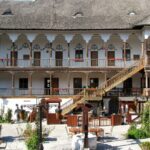
Your tour begins at Hanul lui Manuc (Manuc’s Inn) on Str. Franceză 62, in the old centre. This is a smart meeting spot because it’s easy to spot and it sets the tone right away: Bucharest’s past is close by, not locked behind a museum door.
If pickup is offered for your lodging in the old centre area, it’s included, along with hotel drop-off. Even if you’re walking to the start, you’re near public transportation, so you don’t need complicated logistics to get there.
Practical tip: wear shoes you’re happy to keep on for a few hours. The tour is moderate-fitness paced, but it’s still nonstop moving through streets and squares.
You can also read our reviews of more walking tours in Bucharest

From the Oldest Inn to St Anton Church: early Bucharest in a small span
You’ll start with the history of Bucharest’s oldest and most famous inn, which gives you a feel for how the city hosted traders and travelers long before it became Romania’s modern capital.
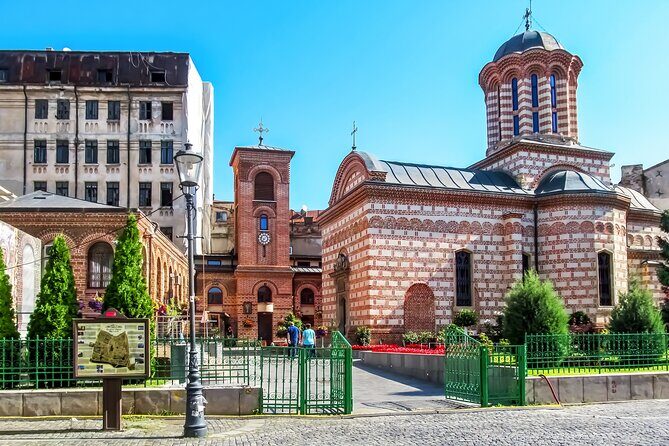
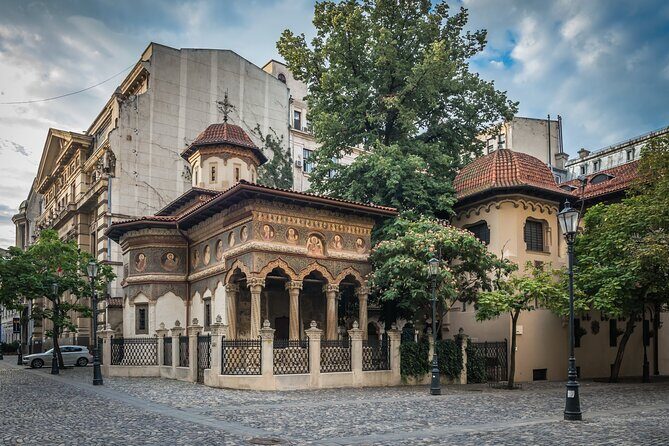
Then you move to St Anton Orthodox Church, described as the former Coronation Church of Wallachian rulers. Standing in the heart of Bucharest, it’s one of those stops where the building’s role in political life makes the street feel heavier. Even if you’re not a church person, the explanation tends to connect architecture to power.
What I like about this part of the tour is that it avoids a dry timeline. You’re learning why specific places mattered, not just what century they belong to.
Old Princely Court Ruins and Vlad links: history you can see, not just read
Next comes Old Princely Court, where you can see the ruins of the Old Princely Palace of Wallachian rulers—one of the oldest buildings in Bucharest. The guide frames it as a key point for understanding how earlier rulers lived here, long before the city expanded outward.
You’ll also connect this stop to Vlad the Impaler, which adds a gripping layer to the story. The practical value: this is a “big picture” moment early on, so later stops about dictatorship, revolution, and reconstruction won’t feel random.
Drawback to keep in mind: when a tour packs in major names, the pacing can feel brisk. If you like time to sit and really look, bring a quick camera pause mindset and don’t expect long stops everywhere.
Unirii Square and Bulevardul Unirii: Bucharest’s power planning in plain view
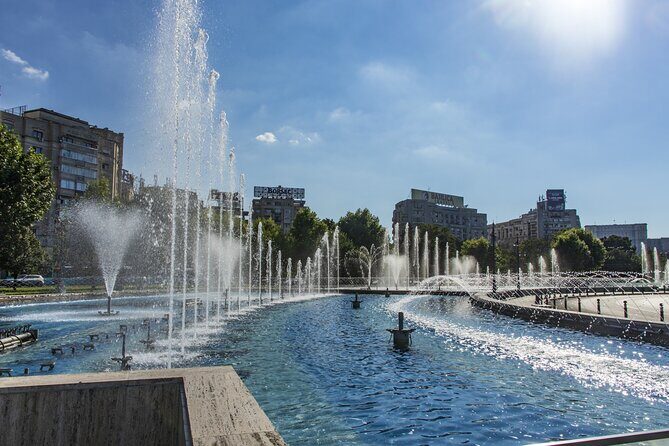
You’ll hit Piaka Unirii next, the heart of Bucharest, with renovated fountains that make the square feel carefully designed rather than merely old. It’s also a gift for photos: stone, water, wide open space, and people moving in all directions.
From there, you walk Bulevardul Unirii, formerly the Boulevard of Socialist Victory—a detail that matters because it shows how political messages were built into road layouts. You’re essentially reading ideology through urban design. That’s why this stretch feels more meaningful than a typical “square stop.”
If you’re curious about what the city wanted to look like at different points in time, this is where it clicks. You can literally see how the same area keeps getting reshaped to fit the current story of power.
Palace of Parliament viewpoints and the “why” behind the skyline
Then comes the stop that grabs almost everyone: the Palace of Parliament, a massive structure that looks over Unirii Boulevard toward the city center. Even if you’ve seen photos, the guided perspective helps you understand why this building is tied to a particular era’s ambitions and control.
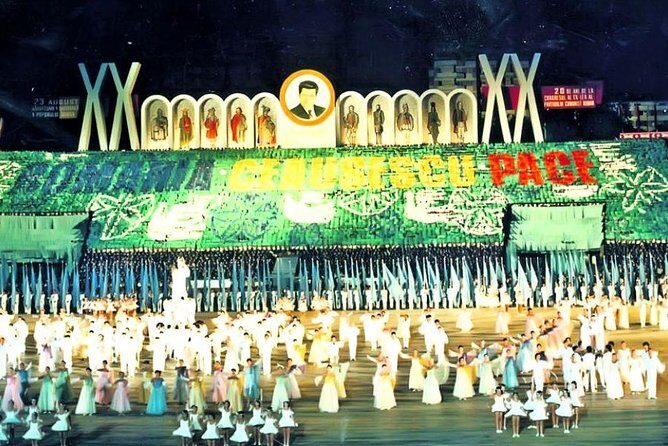
Near it, you’ll stand at Piaka Constitukiei, directly in front of the Parliament buildings for excellent photo angles. This is also where the tour’s political context becomes more specific—how Ceaușescu’s dictatorship and the Cold War shaped Bucharest.
A practical note: this area is open, so it can feel hotter or colder depending on the season. If you run sensitive to sun or wind, keep an eye on your water and take quick shade breaks when they appear.
You can also read our reviews of more guided tours in Bucharest


Churches, CEC Palace, and Victoria Avenue: details that explain daily city life
The route then spreads out into religious and civic landmarks. You’ll hear about a church built in 1724 with a fascinating past, which helps balance the heavier political stops.
You’ll also learn about the CEC palace (described as the history of the CEC palace, Bucharest). Financial buildings might sound boring, but in Bucharest they often reflect major shifts in who held influence and how the city organized itself.
Then there’s a calmer, shopping-lined stroll along part of Victoria Avenue. This section matters because it reminds you Bucharest isn’t only monuments. It’s also regular street life—shops, movement, and a city that still functions day to day.
Old centre lanes and Passage Macca and Villacrosse
At some point you’ll step into the old centre area described as rich in culture and history going back over 500 years. This is where the city’s age shows up as smaller scale: narrower paths, layered details, and a sense of “different Bucharest” than the big squares.
One standout stop is passage Macca and Villacrosse. The guide explains its past, and the location itself helps you understand how Bucharest’s commercial and social life fit into the city’s tighter corridors.
If you’re the type who loves small architectural surprises, this is one of the most satisfying segments of the tour. It also gives your feet a break from constantly hitting wide boulevards and open plazas.
National Bank grandeur and Colțea Hospital: iconic buildings with a heartbeat

You’ll pass by the grand National Bank of Romania, described as having an interesting history. This is another civic landmark where the building’s presence helps you understand how Bucharest projected authority, order, and modern identity.
Next, you’ll see Colțea Hospital and church, built in 1888. The guide treats it as an iconic central building, and it’s a good reminder that history isn’t only about palaces and protests—some of it is about healthcare, community, and institutions that endure.
You’ll also pass the National Theatre of Bucharest, noted as iconic with many changes to its design over a short history. Even if you only glimpse the exterior, the explanation gives you context for why institutions here have evolved so often.
University Square and Suțu Palace: where education meets memory
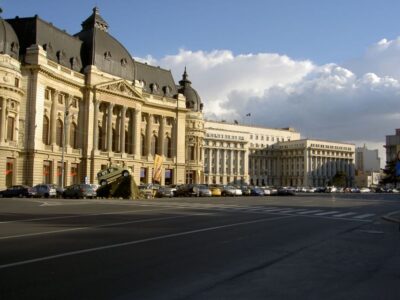
You’ll reach University Square, where you can see the oldest and largest university in Bucharest, built by Alexandru Ioan Cuza and founded in 1864. This stop helps you shift from political history back to the city’s development through education and civic life.
Then comes Suţu Palace, described as the History Museum of Bucharest and the former residence of Costache Suţu. If you want the “why” behind the city’s identity, residences turned into museums are a direct way to connect personal life and public story.
This part of the tour feels like the city reflecting on itself. You get a sense that Bucharest keeps re-reading its own past and deciding what should be remembered.
Kretzulescu Church and the Revolution 1989 corridor
The tour includes Biserica Kretzulescu, described as beautiful with an interesting history. It’s a quieter stop, which helps balance the emotional weight of the next stretch.
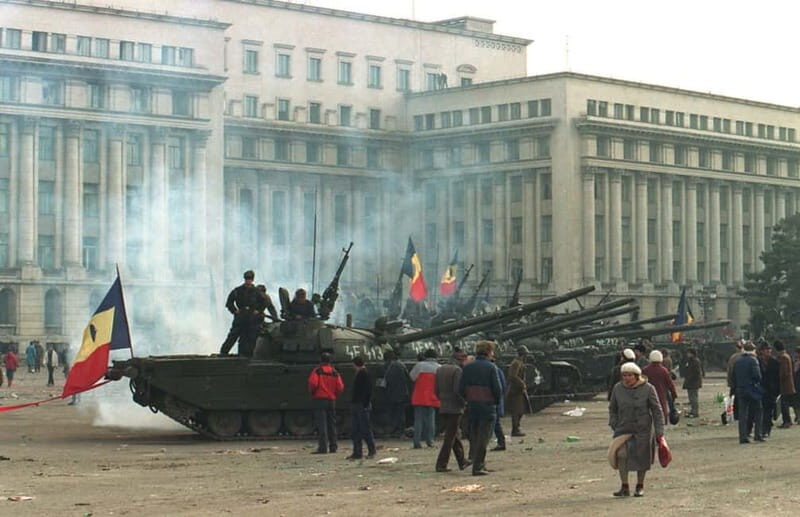
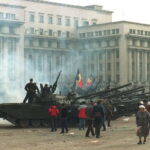
Then you enter the area where the 1989 Romanian Revolution started and where memorials commemorate the change-making events. The details matter because the guide points out key landmarks tied to the final phase of Ceaușescu’s rule, including:
- the balcony where Nicolae Ceaușescu made his final speech
- the former headquarters of the Communist party
- the Monument of National Rebirth
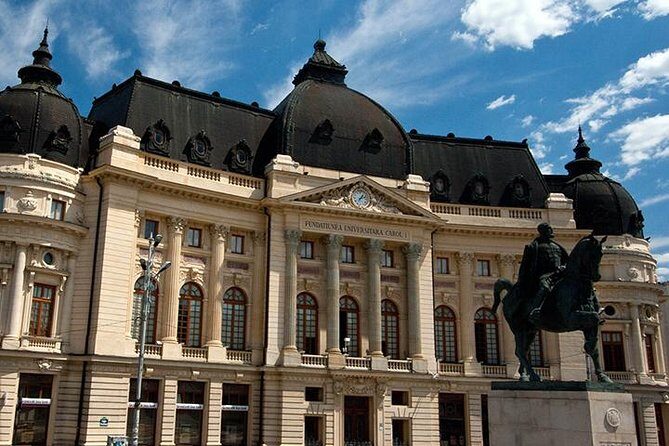
- King Carol the First’s equestrian statue
- the University library
These are big names, but you’re seeing them in relation to street geography. That’s what makes the history feel real rather than abstract.
Memorial of Rebirth, Military Circle, and Sărindar fountains
After the revolution-focused area, you’ll stand at Memorial of Rebirth, a 25-meter structure commemorating the struggles and victims of the Romanian Revolution of Christmas 1989.
Then you’ll reach the Military Circle and Sărindar Fountains, described as over 100 years old with beautiful gardens and a stunning historical building. This last segment helps you end on something visually pleasing rather than only heavy symbolism.
If you’re a photo person, this is a strong finish: water, stone, and landscaped spaces, with the city’s historical mood still in the background.
How much walking is involved, and what to bring
This is a walking tour with moderate physical fitness requirements. One guest’s device count suggested around 17,000+ steps, and the pace was described as not fast, but still substantial.
Bring:
- Comfortable shoes (you’ll be on your feet the whole time)
- Water, especially in heat
- A light layer if weather swings (open squares can feel exposed)
Also, the experience needs good weather. If conditions are poor, it may be rescheduled or you’ll get a full refund. So if you’re planning a tight schedule, don’t fix all your Bucharest sightseeing on only one day.
Price and value for a private 3-hour overview
At $30.77 per person for about 3 hours, this is priced like a solid “orientation plus story” tour. The value comes from three things you get together:
- A dense route through major sites (squares, churches, civic buildings, memorials)
- Hotel pickup and drop-off included
- A friendly, professional guide in English
It’s also a private tour, meaning it’s only your group. That typically helps you ask questions without worrying about interrupting other people or getting rushed.
Best value move: book this early in your trip. When you learn the city’s major zones first, later days turn into easy wandering instead of “where am I now?”
Who should book this, and who might feel annoyed
This tour fits you if you want:
- A big-picture understanding of Bucharest’s shifts under dictatorship and Cold War influence
- Architecture and urban planning explained in human terms
- A route that hits landmark exteriors plus some character-filled side spaces like passageways
It might not be ideal if:
- You dislike strong political discussion. The tour centers on Ceaușescu-era history and the 1989 revolution, so politics is part of the storyline.
- You want long, quiet time at each stop. The route packs in a lot, and some people found it slightly repetitive or run longer than expected.
Language is offered in English, and most guests seem to connect well. Still, if you’re very sensitive to accents or fast speech, come with a “clarify if needed” mindset and don’t be afraid to ask the guide to repeat.
Should you book this historical Bucharest walking tour?
Yes, if you’re aiming for a first-day or early-trip grasp of Bucharest that goes past postcards. The mix of Unirii Square, the Palace of Parliament viewpoints, and the 1989 Revolution memorial landmarks gives you a rare combination: civic beauty and political context in the same walk.
If you can handle moderate walking and you’re comfortable with political history being part of the guide’s narrative, this is a smart buy. If not, consider a shorter, lighter-focused tour instead.
FAQ
How long is the guided walking tour of historical Bucharest?
The tour is about 3 hours long.
Where does the tour start?
It starts at Manuc’s Inn (Hanul lui Manuc), Str. Franceză 62, București 030167, and the tour meets outside the main entrance.
Is pickup and drop-off included?
Yes. Hotel pickup and drop-off are included, with pickup details tied to the Old Centre area.
Is the tour private, and what language is it offered in?
This is a private tour/activity, so only your group participates. The tour is offered in English.
What happens if the weather is bad?
This experience requires good weather. If it’s canceled due to poor weather, you’ll be offered a different date or a full refund.
Can children or service animals join?
Children must be accompanied by an adult. Service animals are allowed.