REVIEW · BUCHAREST
Bucharest Highlights Walking Tour
Book on Viator →Operated by Bike the City · Bookable on Viator
Bucharest, with its layers, is made for walking. This highlights tour gives you a straightforward orientation of the city in about 2.5 hours, moving through places that explain how Bucharest grew from trade stops into a modern capital.
I especially like how the route mixes major landmarks with older street-level architecture, so you don’t just see names on signs—you see the city’s shape.
The other big win for me is the local guide storytelling. Guides (including Dan, Alex, Ed, Andrei, and Lucia in past departures) keep the pace relaxed, answer questions, and connect buildings to Romanian history without turning it into a lecture. If you’re short on time, this is a smart way to get your bearings fast.
One possible drawback: you’re outside for most of the walk, and the tour depends on good weather. If you book in winter, dress like you plan to stand still for 10-minute chunks at a time.
In This Review
- Key Highlights You’ll Notice Right Away
- A Smart 2.5-Hour Route for Getting Oriented Fast
- Starting at Piaţa Sfântul Anton: The Easy Way In
- Manuc’s Inn (Hanul lui Manuc): Bucharest’s Old Beginnings
- Hanul Gabroveni: When Bucharest Was a Caravan-Serai City
- BNR Palace: The Financial District as a Wall of Institutions
- Stavropoleos Monastery: Orthodox Heritage You Can See in Stone
- Palatul CEC and the Art of Old Finance on a Pedestrian Scale
- Macca Villacrosse Passage: Trading Galleries and a Touch of Shopping History
- Palatul Regal / Royal Palace: From Monarchy to Communist Echoes
- Sala Palatului: Stalin-Era Symmetry in the City’s Center
- Cismigiu Park: A Breather That Feels Like Bucharest
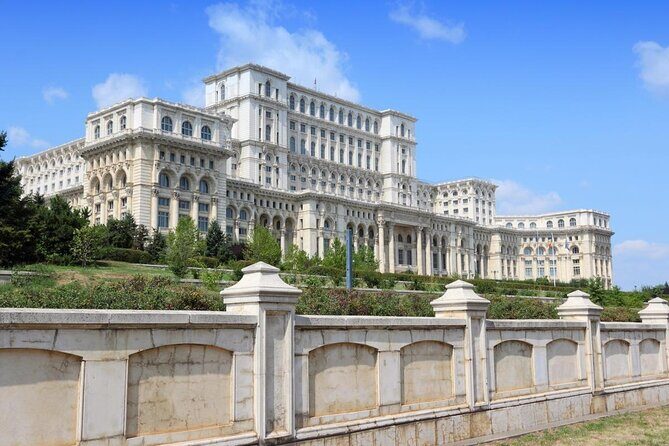
- The Palace of Parliament Finish: Massive, Historical, and Impossible to Miss
- Price and Value: Why This Tour Feels Like a Bargain
- What the Best Guides Do (And What You Should Ask)
- Who This Tour Suits Best
- Book This or Skip It?
- FAQ
- How long is the Bucharest Highlights Walking Tour?
- How much does the tour cost?
- Is the tour offered in English, and do I need a paper ticket?
- Where do I meet the guide, and where does the tour end?
- Which major stops are included?
- Are all admission tickets included?
Key Highlights You’ll Notice Right Away
- Oldest surviving Bucharest buildings first, starting with Manuc’s Inn
- Caravan-serai history explained at Hanul Gabroveni, with the trading connection made clear
- Architecture stops that work for photos and for context, like CEC Palace and the trading galleries
- A relaxed, question-friendly guide style, with time to regroup and ask anything
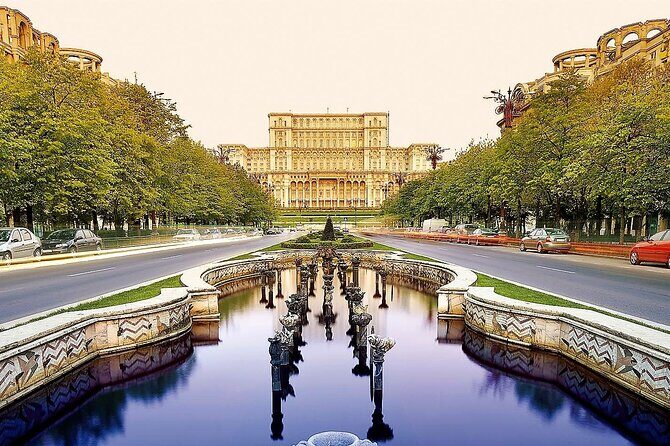
- A perfect loop finish at the Palace of Parliament, so you end where the city’s modern era dominates
- Some sites cost extra for entry, because certain admissions are listed as not included
A Smart 2.5-Hour Route for Getting Oriented Fast
If Bucharest feels like it has too many eras stacked on top of each other, this tour helps you sort them out. The walk is timed to keep momentum—enough stops to build a picture, not so many that you feel like you’re speed-running the city.
For the price (around $21.77), you’re not buying a long museum day. You’re buying a guided map made of stories and architecture. That matters in Bucharest, where street-level details can explain more than a single landmark visit.
You’ll also appreciate the group size cap (up to 25). It’s big enough to feel social, but small enough that the guide can keep track of everyone as you move from stop to stop.
You can also read our reviews of more walking tours in Bucharest

Starting at Piaţa Sfântul Anton: The Easy Way In
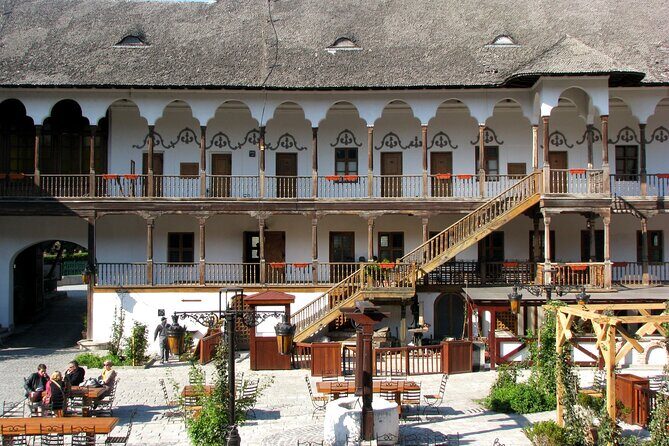
The tour begins at Piaţa Sfântul Anton (64, București 030167). This is one of those helpful setups where you’re not forced into a complicated meeting point hunt. Your guide meets you near the start, and it’s easy to find because the meeting location is specifically pinned.
From there, you’re heading toward the older core of the city and then gradually toward the Parliament area. That “old to new” direction is why this works so well for first-timers: you watch Bucharest change as you walk.
If you like having a plan for arrival day, this is a good choice. It’s offered in English, and you’ll use a mobile ticket, which cuts down on last-minute confusion.
Manuc’s Inn (Hanul lui Manuc): Bucharest’s Old Beginnings
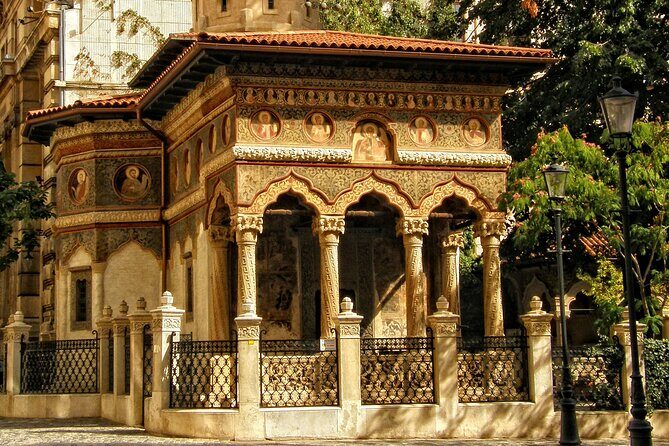
Your first stop is Manuc’s Inn, one of the oldest buildings in Bucharest. This is the moment where the tour gives you the foundation: Bucharest didn’t grow into importance by accident—it was tied to commerce, meeting points, and travelers.
You’ll be able to look at the building itself and also hear the guide’s explanation of why these early inns mattered. Think of it as a practical history lesson. The architecture isn’t just pretty; it’s evidence of how people moved, traded, and stayed.
Admission is listed as free for this stop, which is a nice early win. It also sets a tone: you’re not waiting for an expensive ticket later to start learning.
What to watch for: the building’s scale and how it reads as an old city structure still holding its identity.
Hanul Gabroveni: When Bucharest Was a Caravan-Serai City
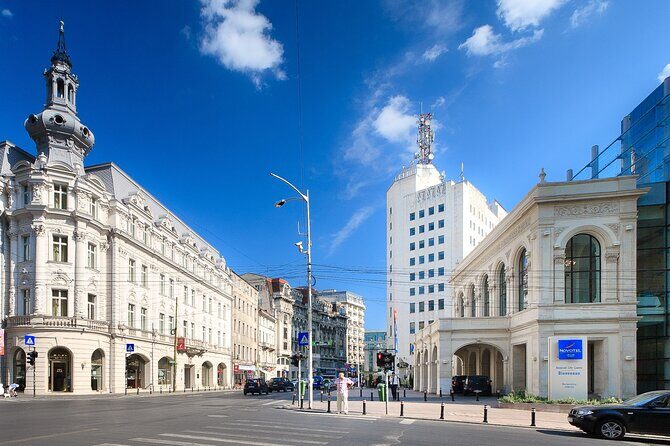
Next comes Hanul Gabroveni. Here the tour connects Bucharest’s “roots” to trading patterns from centuries ago. The key idea: at one point, a large share of buildings in the old city center functioned like caravan-serais—essentially trading complexes with spaces designed for commerce and arrivals.
Today, only a few of those structures remain, and this is one of them. That detail makes the stop more than a quick photo break. You’re seeing why the old city is worth walking through: some of it survived, and the city built around that survival.
Admission is also listed as free here. That helps keep the tour’s value strong—early stops aren’t padded with extra costs.
A practical tip: use this stop to ask your guide about what “caravan-serai” means in everyday terms. A good explanation makes the rest of the trading-era buildings feel connected, not random.
BNR Palace: The Financial District as a Wall of Institutions
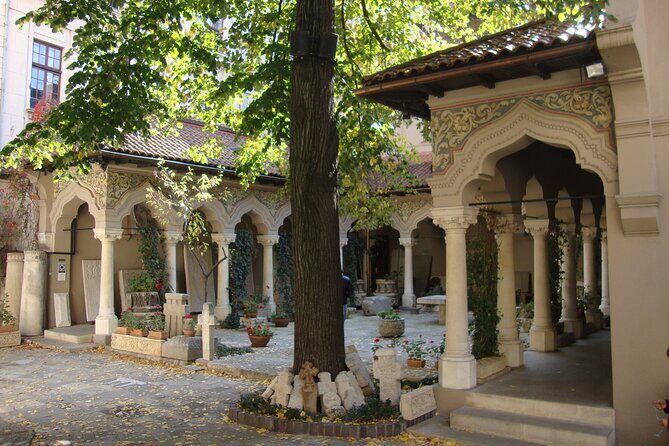
Then you move to the BNR Palace, described as the financial district area from about a century ago. Instead of “one big monument,” you’re surrounded by institutions: the National Bank, former Stock Exchange, the Palace of Trading and Commerce, and other banks.
This is where the walk starts to feel like a story about power. You’re not just seeing architecture; you’re seeing how a city can reorganize around finance and administration.
Admission is listed as free for this stop, and the time here is shorter (about 10 minutes), which is right. You’re here for orientation and context, not a long interior visit.
What you’ll likely notice: how these buildings line up and how the area feels designed for formal economic activity.

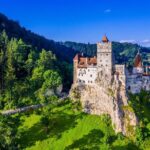
Stavropoleos Monastery: Orthodox Heritage You Can See in Stone
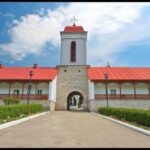
Your next stop is Stavropoleos Monastery, with a strong emphasis on Orthodox Christian heritage and architecture. Bucharest can be very secular in daily life, but the country’s religious traditions still show up in monuments like this.
This stop is short (around 10 minutes), but it’s targeted. You’re learning what the architecture communicates—how religious identity is expressed in building style, not just in words.
Admission is listed as free here, which again keeps value steady. It also helps the flow: you don’t get stuck paying for multiple interior stops one after another.
Consideration: because this is a monastery site, it’s smart to dress respectfully and keep your voice down inside or near prayer spaces if there are visitors using the area.
Palatul CEC and the Art of Old Finance on a Pedestrian Scale
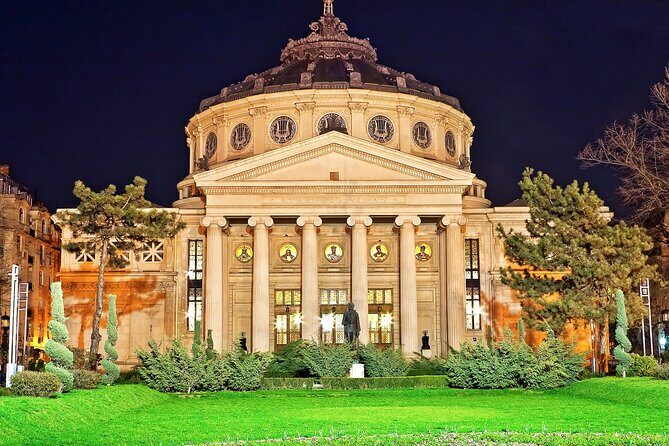
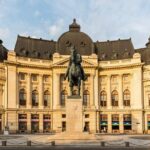
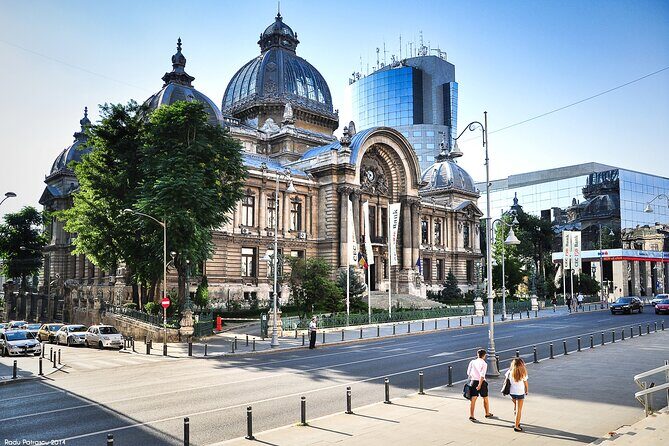
Palatul CEC is one of those buildings people describe as among the best old architecture in Bucharest. The tour frames it as part of a bigger question: why Bucharest’s oldest buildings can look younger than you expect, and how the city was shaped during roughly 600 years of existence.
Admission here is listed as not included. That doesn’t mean you won’t see it well; it means you should treat this as a exterior/approach stop unless your guide specifies otherwise. Either way, the value comes from the explanation—the “why” behind the design and the place in the city.
For me, this is a good stop to slow your pace. Look at details like symmetry, facade work, and the way the building sits in its street setting. When you understand it as part of Bucharest’s evolving finance story, the building stops being just a pretty wall.
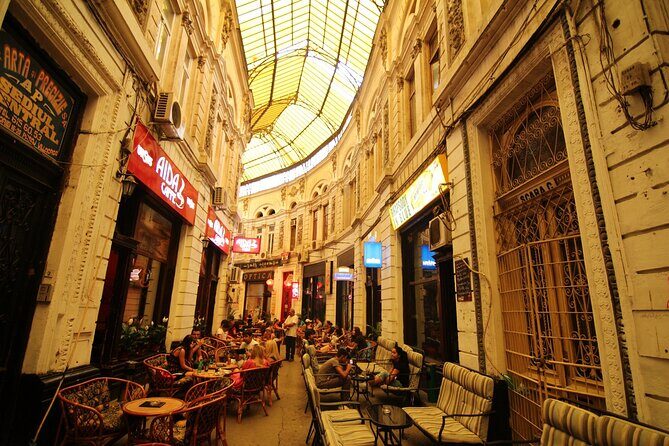
Macca Villacrosse Passage: Trading Galleries and a Touch of Shopping History
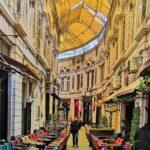
Next you get to Macca Villacrosse Passage. The tour keeps you in the financial district, but it changes the vibe. Instead of banks and formal institutions, you’re in a trading passage—one of those covered areas where commerce happens at human scale.
This is tied to spending opportunities that historically came with money concentrating in the center. The guide’s commentary helps explain why these arcades or passages mattered so much: they were where business life and daily browsing met.
Admission is listed as free for this stop. It’s also short (about 5 minutes), so don’t expect a long break. Treat it as a quick architectural reset before you head into larger, heavier landmarks.
Palatul Regal / Royal Palace: From Monarchy to Communist Echoes
You then reach Palatul Regal, the Royal Palace area, where the tour frames the place as a timeline of Romanian government. The point isn’t just that the monarchy existed—it’s that the location carried different meanings across monarchy, communism, and later democracy.
Admission is listed as not included here. Practically, that means you should plan for seeing it as a stop for orientation and interpretation, unless you decide to pay for any specific interior access separately.
Even from outside, the building’s status is clear. This is one of those places where a guide can help you connect architecture to political shifts you might otherwise feel only in broad headlines.
Sala Palatului: Stalin-Era Symmetry in the City’s Center
Sala Palatului is next, and the tour calls out its architectural style as very much in the Stalin era. This stop works best if you keep your eyes on proportions—how the space feels designed for authority and ceremony.
Admission is listed as free for this stop, and the stop is short (about 10 minutes). That fits the goal of the tour: you don’t need to spend hours inside to get the basic “this is what period this is” understanding.
If you’re traveling with someone who likes big visible changes (and someone else who likes details), Sala Palatului is a good compromise.
Cismigiu Park: A Breather That Feels Like Bucharest
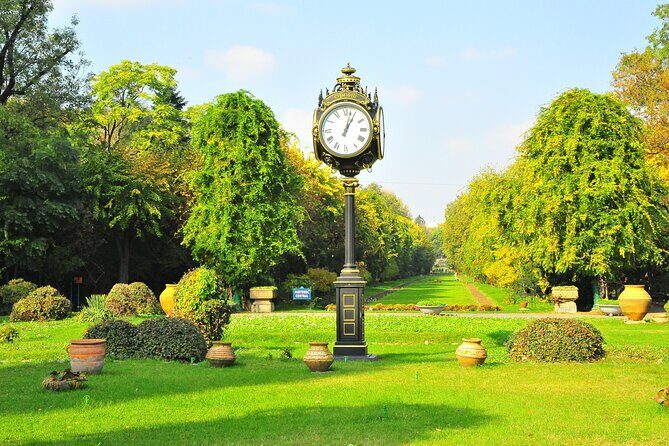
Then the walk turns into a calmer moment: Cismigiu Park. The tour highlights it as the oldest park in Bucharest.
This is one of the best pacing tricks on the route. After heavier architecture and political sites, you get a green space break. It’s not a picnic-and-nap stop, but it gives you a chance to reset your eyes and recharge your attention before the walk’s final big moment.
Admission is listed as free, and the stop is about 10 minutes. If you’re cold, this is where you’ll want to warm up your hands and take a slower breath for a minute.
The Palace of Parliament Finish: Massive, Historical, and Impossible to Miss
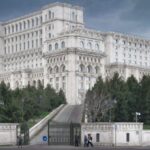
The final stop is the Palace of Parliament, and your tour ends near Piața Constituției, right by the Parliament area. This is the big finish on the route—described as the second largest administrative building in the world after the Pentagon, and heavier than it.
Admission is listed as not included. For many people, that’s totally fine, because the meaning of this site is visible from the outside. The scale alone teaches you something about Bucharest’s recent decades: decisions on a national level shape the city’s silhouette.
This is also where the tour’s “loop” logic clicks. You start with older buildings and trade history, and you end with a monumental government building. Even if you don’t go inside, you understand the shift in priorities.
Photo note: plan for wide shots here. The building is too large for typical street-level framing—step back and give your camera room.
Price and Value: Why This Tour Feels Like a Bargain
At $21.77 per person for about 2 hours 30 minutes, the value is the guide and the structure. You get a guided walk that stitches together trade history, Orthodox architecture, finance-era buildings, and modern government symbolism.
A typical self-guided approach in Bucharest often fails in one of two ways:
- You walk past important buildings without knowing what they are.
- You focus on just one era and miss the transitions.
This tour tackles both problems. With admission tickets listed as free for several stops (Manuc’s Inn, Hanul Gabroveni, BNR Palace, Stavropoleos Monastery, and Cismigiu Park, plus a free stop at Sala Palatului and Macca Villacrosse Passage), you’re not paying extra at every corner to get the learning.
The trade-off: some stops list admissions as not included (like Palatul CEC, Palatul Regal/Royal Palace, and the Palace of Parliament). That’s normal for an highlights walk—expect that you’ll be interpreting more than you’re purchasing.
What the Best Guides Do (And What You Should Ask)
From past experiences on this route, the guides tend to score big on three things: clarity, flexibility, and not rushing. People mention guides making contact before the tour, being friendly, and giving time to explore while still keeping the group together.
If you want to get extra value, ask your guide questions at two points:
- Early on, after Manuc’s Inn: ask how trade shaped Bucharest’s layout.
- Midway near the financial district: ask what changed in the city as it modernized.
You’ll also benefit if your guide has a habit of adding practical comfort breaks. One guide (Dan, in a past departure) was noted for providing bathroom breaks, breaks from cold weather, and stops for coffee or hot chocolate—exactly the kind of small help that keeps the tour enjoyable in winter.
Who This Tour Suits Best
This is a strong fit if:
- You’re a first-time visitor and want a clear city orientation quickly.
- You care about architecture and want context for what you’re seeing.
- You’re visiting in a short timeframe and don’t want to plan a full day of separate stops.
- You prefer a guide who answers questions and keeps a relaxed pace.
It’s also a good match for couples and solo travelers. The group size cap makes it easier to feel included without getting lost in a crowd.
If you’re a hardcore museum person, you might want to add standalone visits after this walk, since several “not included” stops are the ones that could become deeper if you pay for interior access.
Book This or Skip It?
Book it if you want the fastest path to understanding Bucharest’s layers: trade origins, Orthodox monuments, finance-era streets, and the political weight of the Parliament area. For the price, the value is hard to beat when you’ll be outside anyway.
Skip it or add a different option if you hate cold weather walks. The tour depends on good weather, and you’ll be standing outside at multiple points long enough that layers matter.
If you’re torn, my advice is simple: if you have 2 to 3 hours on an arrival day, take this walk. Then build the rest of your Bucharest with better instincts about where to go next.
FAQ
How long is the Bucharest Highlights Walking Tour?
It runs for about 2 hours 30 minutes.
How much does the tour cost?
The price is $21.77 per person.
Is the tour offered in English, and do I need a paper ticket?
It’s offered in English, and you’ll receive a mobile ticket.
Where do I meet the guide, and where does the tour end?
You start at Piaţa Sfântul Anton 64, București 030167, Romania. The tour ends at Piața Constituției, near the Palace of Parliament.
Which major stops are included?
The tour includes Manuc’s Inn, Hanul Gabroveni, the BNR Palace, Stavropoleos Monastery, Palatul CEC, Macca Villacrosse Passage, Palatul Regal/Royal Palace, Sala Palatului, Cismigiu Park, and the Palace of Parliament area.
Are all admission tickets included?
Not all stops include admission. Some locations are listed as admission ticket free, while others are listed as not included (including Palatul CEC, Palatul Regal/Royal Palace, and the Palace of Parliament).
If you want, tell me your travel dates and month—then I can suggest what to wear and how to time this walk with other Bucharest sights.