REVIEW · BUCHAREST
Bucharest: Guided Walking Tour with Romanian Snack
Book on GetYourGuide →Operated by MARA’S TOURS & TRAVEL · Bookable on GetYourGuide
Bucharest has a way of surprising you fast. This guided walking tour mixes big landmark moments with smaller, street-level stops, so you understand what you’re seeing as you walk. You’ll start with the Palace of the Parliament viewpoint and end around Revolution Square, with clear context for how Romania got from monarchy to communism to the post-1989 era.
I love two things about this tour: first, it’s small-group and easy to ask questions without feeling rushed. Second, the guide-led storytelling connects each building to real moments in Romanian life, from church history to the French-flavored streets on Calea Victoriei.
One drawback to consider: you’re on your feet for the full 3 hours, and only the Romanian Athenaeum entrance is optional (and it costs extra in cash only). If you want a low-walking pace day, you might prefer a slower format.
In This Review
- Key highlights that make this walk worth your time
- Getting Oriented at One Sip, Then Let Bucharest Explain Itself
- Unirii Square: The Palace of the Parliament Viewpoint in Context
- Hanu’ lui Manuc and the Old Royal Storyline
- St. Anthony’s Church: The City’s Oldest Anchor
- Stavropoleos Monastery: When Details Beat Big Buildings
- Old Town to Cărturești Carusel: Medieval Streets to Downtown Personality
- Calea Victoriei: The Street Called Little Paris
- Revolution Square: 1989 Explained Without the Fog
- Equestrian Carol I and the Photo-Friendly Finish at the Romanian Athenaeum
- The $45 Price Tag: Why This Feels Like Value
- Who This Tour Fits Best (and Who Might Skip It)
- Should You Book This Bucharest Snack Walk?
- FAQ
- What is the meeting point for the tour?
- How long is the walking tour?
- How much does it cost?
- Is the tour in English?
- How big is the group?
- What is included in the tour besides the guide?
- Which major sights are included on the route?
- Is entrance to the Romanian Athenaeum included?
- Can I cancel for a refund?
- Is there a pay-later option?
Key highlights that make this walk worth your time
- Unirii Square to the Parliament viewpoint: colossal scale, explained in plain terms
- Historic anchors in the Old Town: St. Anthony’s Church and nearby medieval remnants
- Stavropoleos Monastery: one of the stops that turns a street into a story
- Calea Victoriei, aka Little Paris: French-style architecture with local context
- Revolution Square and the Carol I statue: modern history framed for real understanding
- One Romanian snack included: a food break built into the route, not tacked on
Getting Oriented at One Sip, Then Let Bucharest Explain Itself

Most big cities can feel like a pile of postcards. Bucharest doesn’t. This tour starts at One Sip cafe on Unirii Boulevard, right by the Piata Unirii metro station, so you can arrive easily and meet your guide without stress.
From the start, the pacing is designed for comprehension. You won’t just stare at monuments; you’ll get quick context so your photos make sense later. And because the group is limited (up to 10 people), it stays conversational.
You can also read our reviews of more walking tours in Bucharest


Unirii Square: The Palace of the Parliament Viewpoint in Context
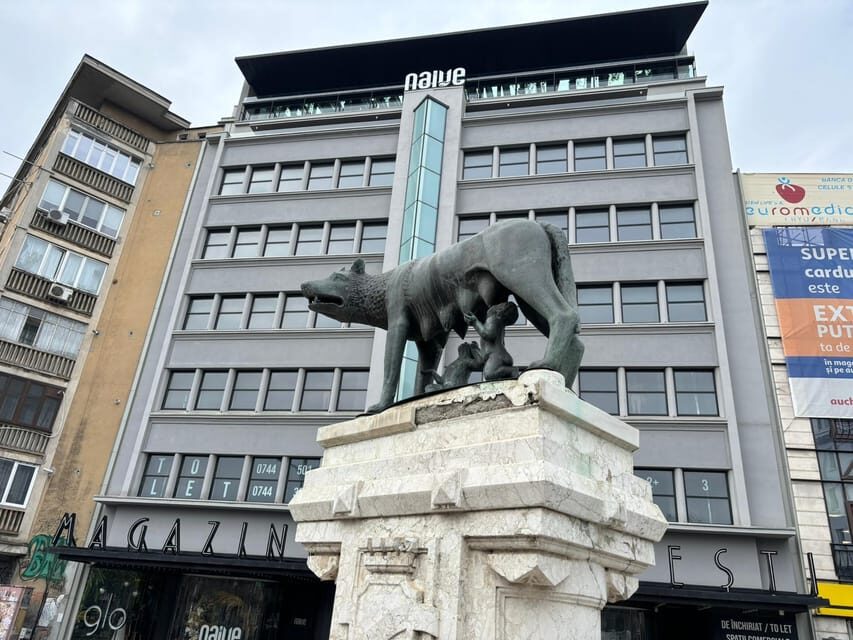
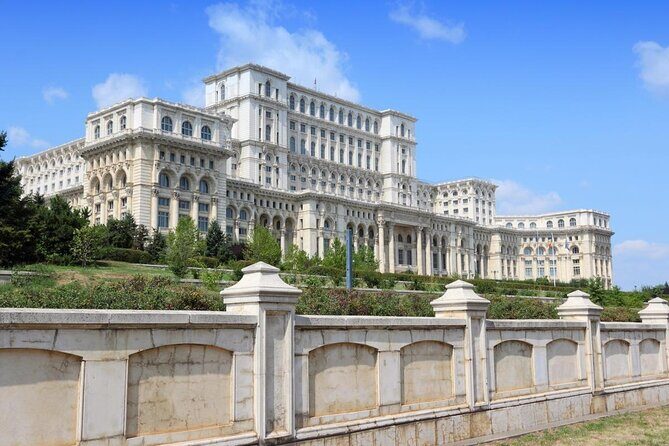
The first big moment is Piața Unirii, where you get a view toward the Palace of the Parliament. This building is famously massive, but the real value here is the guide’s framing—what it represents, why it dominates the skyline, and how that fits into Romania’s 20th-century story.
After that, you don’t hop randomly. The walk continues with nearby historic stops, so the city’s timeline keeps unfolding in your head instead of getting scrambled.
If you like your history grounded in what you can actually see from the sidewalk, this is the right kind of start.
Hanu’ lui Manuc and the Old Royal Storyline
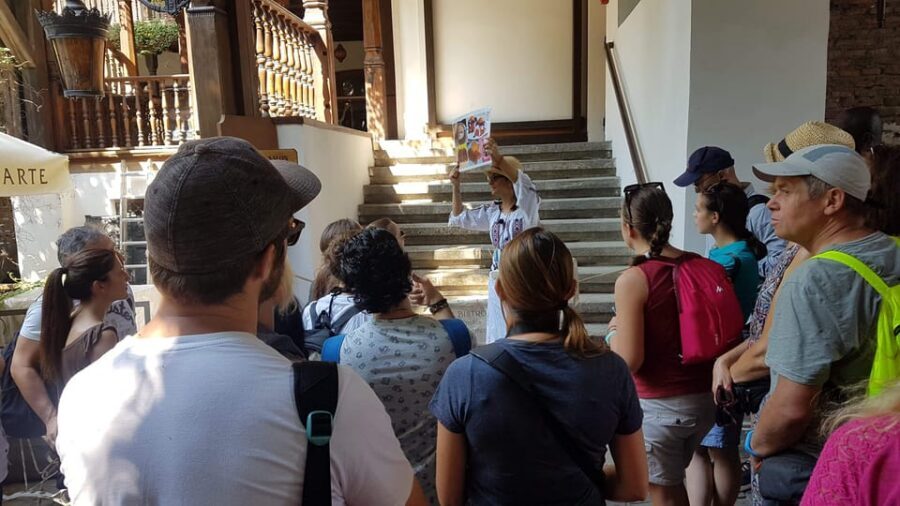
Next up is Hanu’ lui Manuc, followed by the area connected to the ruins of the former Royal Court. These are the kinds of stops where you get two benefits at once: you see recognizable Bucharest landmarks, and you learn how the city’s roles shifted over time.
This is especially helpful if it’s your first day in town. You’ll walk away with a clearer mental map: what used to be central, what moved toward the downtown energy of later centuries, and how the city’s character changed as the country changed.
St. Anthony’s Church: The City’s Oldest Anchor
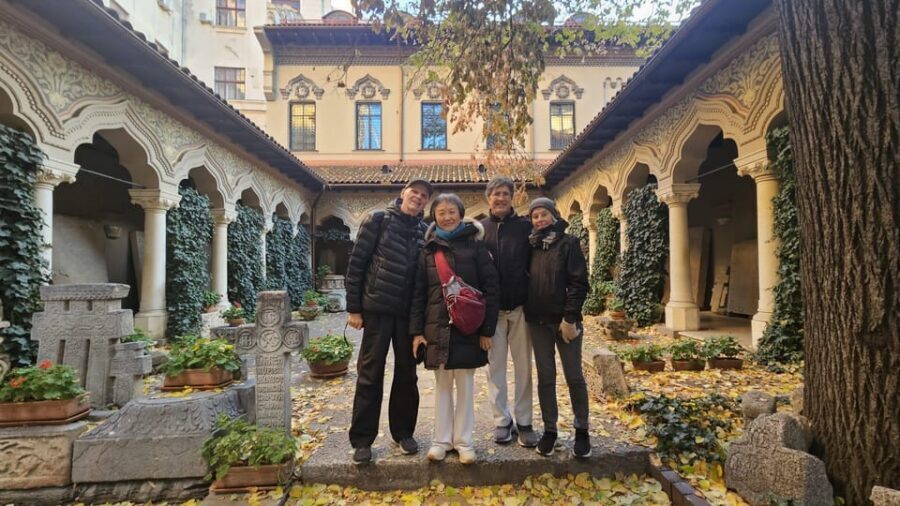
You’ll then visit Biserica Sfantul Anton (St. Anthony’s Church). The standout here is age. It’s described as the oldest in the city, and that matters because it gives you a long historical runway: you’re not jumping straight from modern politics to French boulevards.
What makes this stop work on a walking tour is how it anchors the rest of what you’ll see. Once you’ve visited a church with that kind of timeline weight, the surrounding architecture and street layout feel less like decoration and more like evidence.
A bonus: this is the kind of stop where people naturally slow down. It’s not just a photo stop. It helps you feel the scale of time in Bucharest.
Stavropoleos Monastery: When Details Beat Big Buildings
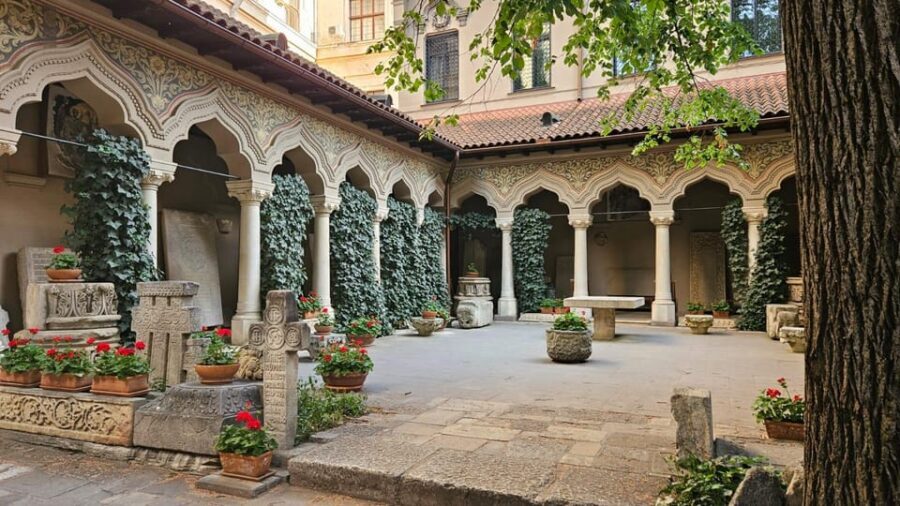
After the church stop, the tour includes a visit to Stavropoleos Monastery. The timing is set for you to actually take it in (not just rush through), and monasteries are where you often get the best “aha” moments on history tours.
Even if you’re not religious, this kind of place is about craftsmanship, community life, and continuity. A guide can also point out elements that you’d likely miss if you were walking alone—especially when they connect the building to broader Romanian cultural patterns.
If you enjoy architecture and small-scale “I can’t believe this is here” moments, this is one of the stops that tends to land hardest.
You can also read our reviews of more guided tours in Bucharest




Old Town to Cărturești Carusel: Medieval Streets to Downtown Personality
From the historic core, you’ll move through Old Town, Bucharest, with a guided walk meant to show you what’s still there and what has evolved into the city’s present-day downtown energy.
Then comes Cărturești Carusel, a stop that works well for a modern break in the middle of heavy history. It’s a place you can pause, reset, and take in a different side of Bucharest—more playful, more creative, and very “today.”
This part of the tour is useful because it stops history from becoming a lecture. You’re walking through lived city space, not museum rooms.
Calea Victoriei: The Street Called Little Paris
One of the tour’s big “sense of place” moments is Calea Victoriei Street. This street is specifically highlighted for its French-style buildings, and the guide explains why Bucharest once earned the nickname Little Paris.
Here’s why that’s valuable: you’ll start noticing design choices—facades, street proportions, and the overall rhythm of the buildings. Even if you don’t memorize dates, you’ll understand the vibe. And once you get it, you can keep spotting similar architectural flourishes on your own walks after the tour ends.
It’s a smart move to include this street in the middle of the route. By then, you’re ready to compare eras: Orthodox and medieval roots on one side, modern ambitions on the other.
Revolution Square: 1989 Explained Without the Fog

The tour ends in Revolution Square, where you get time with your guide to talk about what Communist rule meant for Romania and Bucharest—and how the country changed after the 1989 revolution.
This isn’t treated like a distant political topic. It’s positioned as lived reality: what people experienced, how cities looked and functioned, and why the post-revolution years mattered. You’ll also get a chance to ask questions, which is where this kind of stop becomes more than facts on a page.
If you want history you can actually connect to street corners and building choices, this is one of the best parts of the route.
Equestrian Carol I and the Photo-Friendly Finish at the Romanian Athenaeum

Before you wrap up, you’ll see the Equestrian Statue of Carol I. It’s a quick stop, but it helps complete the timeline the guide has been building: leadership, eras, and the way public space remembers power.
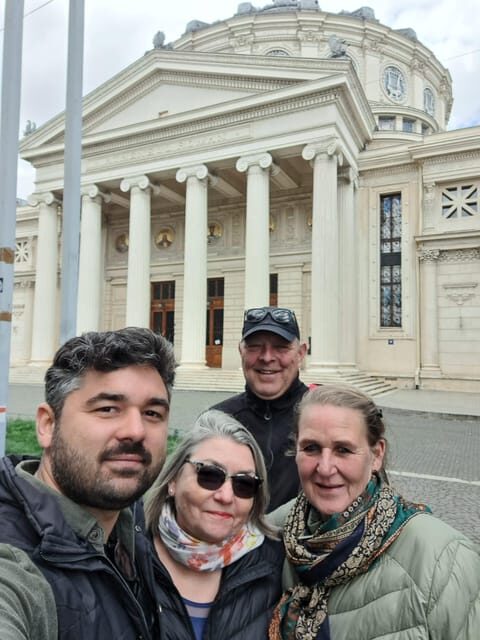
The tour finishes at the Romanian Athenaeum. You can choose an optional entrance for 15 lei (about 3 EUR), and it’s listed as cash only. Even if you don’t go inside, the exterior is a strong final frame.
Practical note: plan to use your energy wisely here. If you do the entrance, you’ll want to treat the final stretch as the “last stop, take your time” moment.
The $45 Price Tag: Why This Feels Like Value
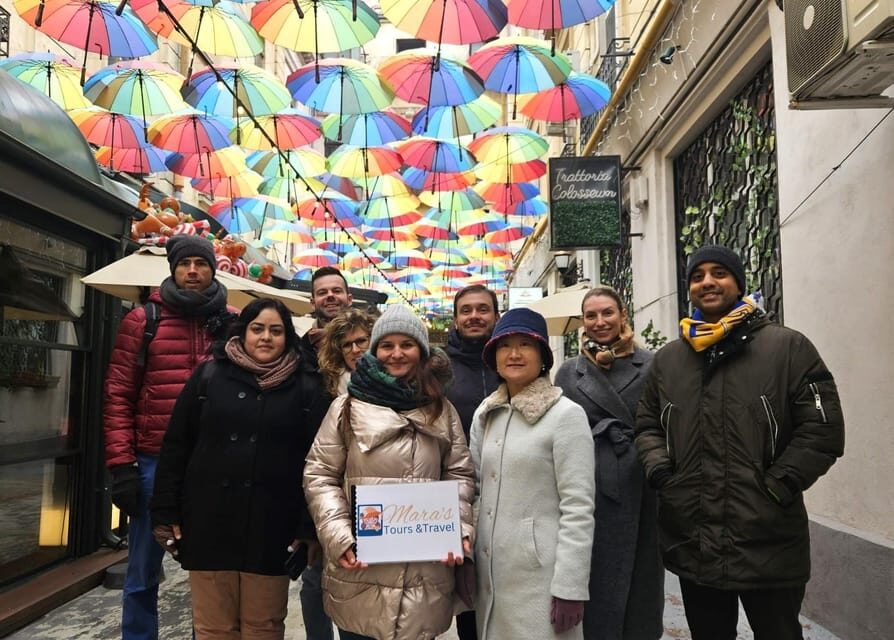
At $45 per person for a 3-hour small-group walk with an English-speaking guide plus one Romanian snack, the value comes from structure.
You’re paying for three things:
- Time saved (you’re not spending your first day figuring out where to go)
- Interpretation (you’re getting explanations that connect buildings to Romanian change)
- A real city break (the snack is built into the route, so it doesn’t become an awkward hunt)
And you’re not stuck in a giant group. With up to 10 participants, the guide can keep the pace manageable and answer questions in a way that makes the tour feel personal.
About the snack: the tour includes 1 famous Romanian snack, and recent experiences with similar pacing have included things like a Romanian-style sandwich from a pastry shop. Some guides also point guests toward sweet stops in the center, including a place known for eclairs like The French Revolution. You won’t leave empty-handed, and you’ll get a food choice that fits the neighborhood you’re walking.
Who This Tour Fits Best (and Who Might Skip It)
This tour is a good match if you:
- want a first-day Bucharest overview that you can build on afterward
- enjoy walking tours where you learn why each stop matters
- like connecting history to real places (not just reading plaques)
- want a small group and a guide you can talk to
It might be less ideal if you:
- need a very low-impact day (it’s a sustained walking route)
- want only post-communist highlights and aren’t interested in longer timeline context
For solo travelers, couples, and groups who want a guided backbone before doing independent exploring, it hits the sweet spot.
Should You Book This Bucharest Snack Walk?
If you’re spending limited time in Bucharest and you want your time to feel organized, I’d book it. The route is built around major anchors—Palace of the Parliament, old churches and monasteries, Calea Victoriei, and Revolution Square—but it doesn’t ignore the smaller, human-scale stops that make the city feel real.
The included Romanian snack is a nice bonus, and the small group size makes the experience feel less like a cattle-call city walk. Just bring sensible shoes, and decide in advance whether you want that optional Athenaeum entrance so the ending feels right for your pace.
If you want Bucharest with context and a little food on the way, this is an easy yes.
FAQ
What is the meeting point for the tour?
Meet your guide in front of One Sip cafe at Unirii Boulevard. The closest metro station is Piata Unirii.
How long is the walking tour?
The tour lasts 3 hours.
How much does it cost?
The price is $45 per person.
Is the tour in English?
Yes. The tour runs in English.
How big is the group?
This is a small group limited to 10 participants.
What is included in the tour besides the guide?
You get English-speaking guidance and 1 famous Romanian snack.
Which major sights are included on the route?
The tour includes Piața Unirii (for a view toward the Palace of the Parliament), St. Anthony’s Church, Stavropoleos Monastery, Old Town, Calea Victoriei, and Revolution Square, plus stops such as Hanu’ lui Manuc and the Equestrian Statue of Carol I.
Is entrance to the Romanian Athenaeum included?
Entrance to the Romanian Athenaeum is optional. It costs 15 lei (about 3 EUR) and is cash only.
Can I cancel for a refund?
Yes. You can cancel up to 24 hours in advance for a full refund.
Is there a pay-later option?
Yes. You can reserve now and pay later, keeping your plans flexible.