REVIEW · BUCHAREST
Bucharest: 3-Hour Dark History Tour with a Local
Book on GetYourGuide →Operated by Asociația Coolturală Nouă ne pasă! · Bookable on GetYourGuide
Bucharest keeps receipts. This 3-hour dark history walk uses the city’s real scars—cemeteries, squares, and old stories—to explain how Romania was shaped by revolution, dictatorship, and fear, including the infamous Vampire of Bucharest case. I especially like Bellu Cemetery for how architecture and symbolism turn grief into something you can actually study on foot, and guides like Alex or Elena tend to make the details stick with street-level storytelling.
Two more things I really like: you get metro tickets built into the tour so you’re not stuck figuring out transit mid-story, and there’s always time for a traditional snack that keeps the pace human. The one drawback to plan around is the walking and the standing time at outdoor stops—bring comfortable shoes, and if it’s cold, dress warm so you can stay focused.
In This Review
- Key things to know before you go
- Meeting point by Ion Luca Caragiale National Theatre
- The start: one street with six cemeteries and one big lesson
- Bellu Cemetery: funerary architecture you’ll want to photograph (and study)
- University Square: where protests and bloodshed intersect
- Interwar Bucharest and Little Paris: the sex-trade story without the tourist fluff
- The Vampire of Bucharest: why context is everything
- Revolution Square: Ceaușescu, the Securitate, and the machinery of repression
- What’s included: guide, metro tickets, and a real snack
- Price and value for a 3-hour dark history format
- Pace, walking, and what to wear
- Who this tour is best for (and who should skip it)
- Should you book Bucharest’s Dark History Tour with a Local?
- FAQ
- How long is the Bucharest Dark History Tour?
- What’s included in the price?
- Where do we meet for the tour?
- Is the tour suitable for kids?
- How big is the group?
- Can I reserve without paying right away?
Key things to know before you go
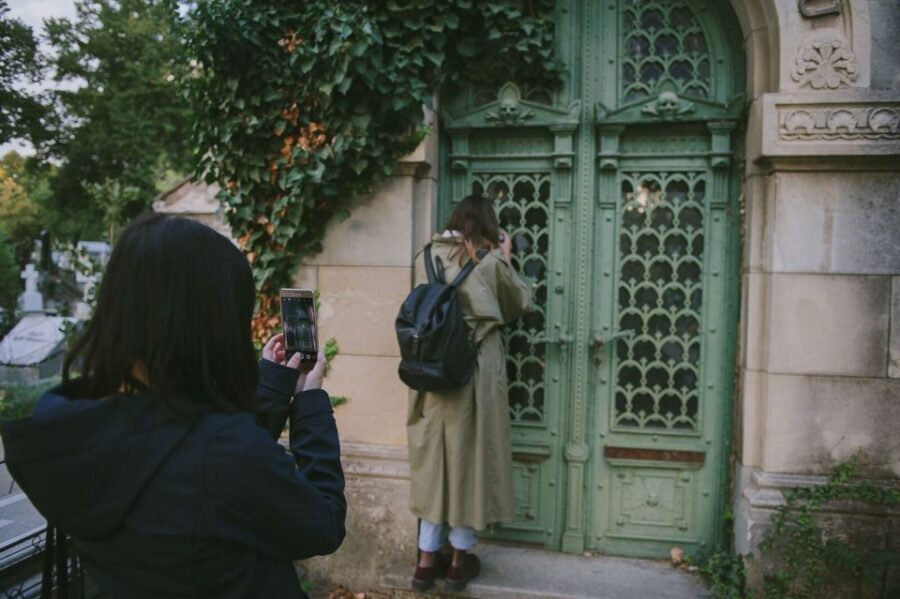
- Bellu Cemetery: national historical monument with funerary “art” and eerie stories you’ll want to look at slowly
- Multiple cemeteries on one street: you’ll start near a cluster that includes the Cemetery of the Victims of the Revolution in 1989 plus Jewish and Russian Soldiers cemeteries
- 1989 Revolution hotspots: University Square and Revolution Square tied to student protests and the uprising’s start
- Interwar Bucharest stories: the Little Paris era and what’s left of the brothel world
- Serial killer case: the Vampire of Bucharest is covered with the context that helps it make sense
- Small group size: maximum 12 people makes it easier to ask questions and keep the pace comfortable
Meeting point by Ion Luca Caragiale National Theatre
You’ll meet at the main entrance of Ion Luca Caragiale National Theatre, on Bulevardul Nicolae Bălcescu 2. It’s a practical anchor point because it’s central enough to orient yourself, but it also sets the tone: this is Bucharest with edges, not postcard Bucharest.
Once you’re grouped up, you’ll head out with a local English-speaking guide. The guides I’d chase for this tour type are the ones who can move between architecture, street history, and personal anecdotes without turning it into a lecture—names you may see include Alex, Elena, Andra, Vlad, and Irina.
You can also read our reviews of more historical tours in Bucharest



The start: one street with six cemeteries and one big lesson
The tour begins on a street near the center that holds at least six cemeteries. It’s one of the fastest ways to understand Bucharest’s history: when a city layers grief, it also layers power, ideology, and identity.
You’ll hear about several of them as part of the background, including the Cemetery of the Victims of the Revolution in 1989, the Jewish Cemetery, and the Cemetery of the Russian Soldiers. Then you’ll move toward the old historical Bellu Cemetery, where those themes—memory, politics, and mythology—turn visible.
Why this matters for you: cemeteries in Bucharest aren’t just “places to pass by.” They act like outdoor archives. And starting here helps you read what you’ll see later at University Square and Revolution Square, where the past is tied directly to the 20th-century political system.
Bellu Cemetery: funerary architecture you’ll want to photograph (and study)
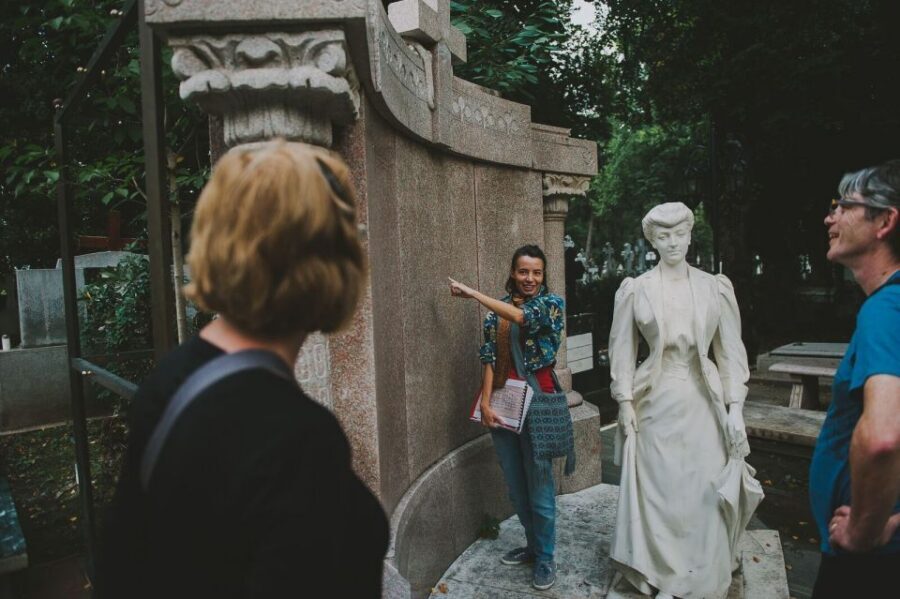
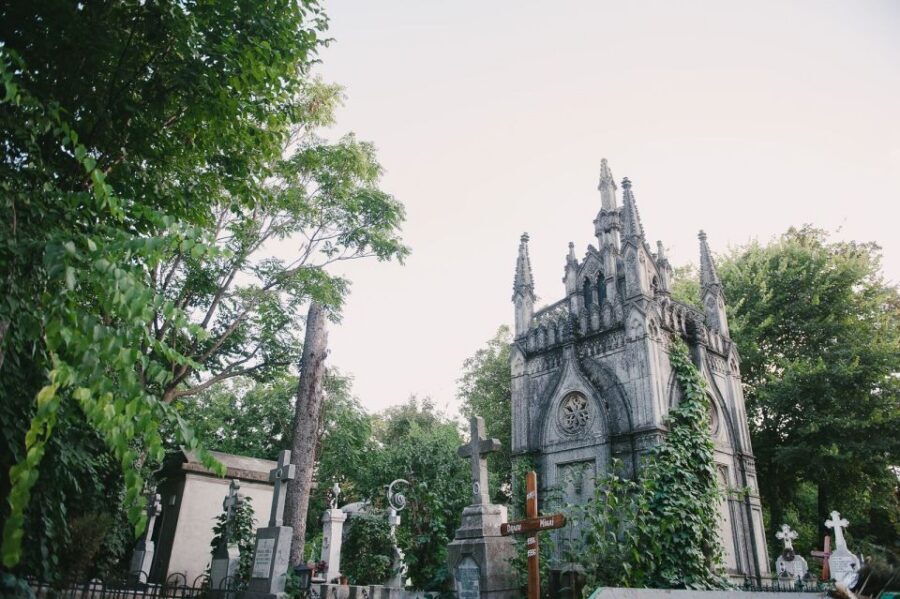
Bellu Cemetery is the emotional center of the tour, and it’s also the most visually rewarding. It’s a national historical monument, and the guide will point out funerary architectural details that can look like small monuments or mini-story worlds depending on where you stand.
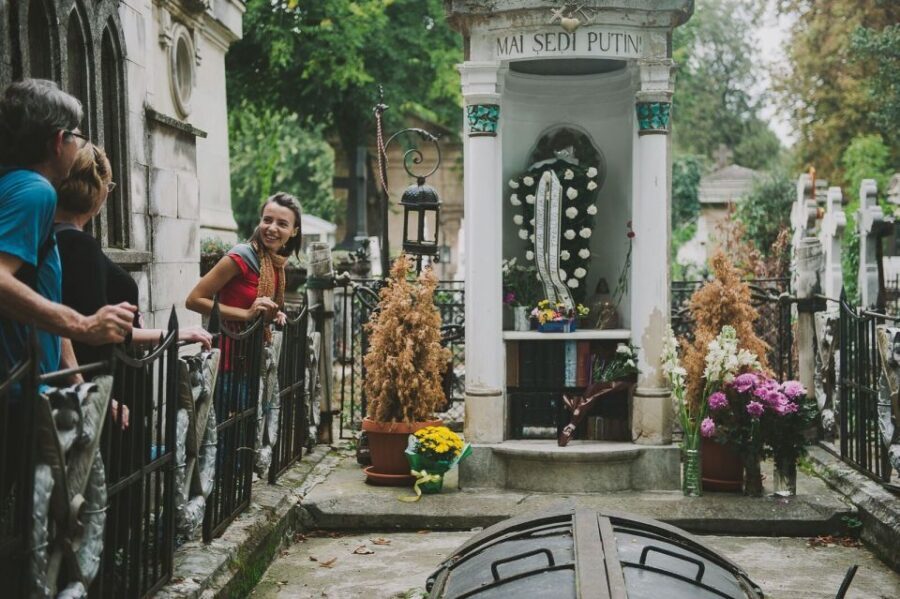
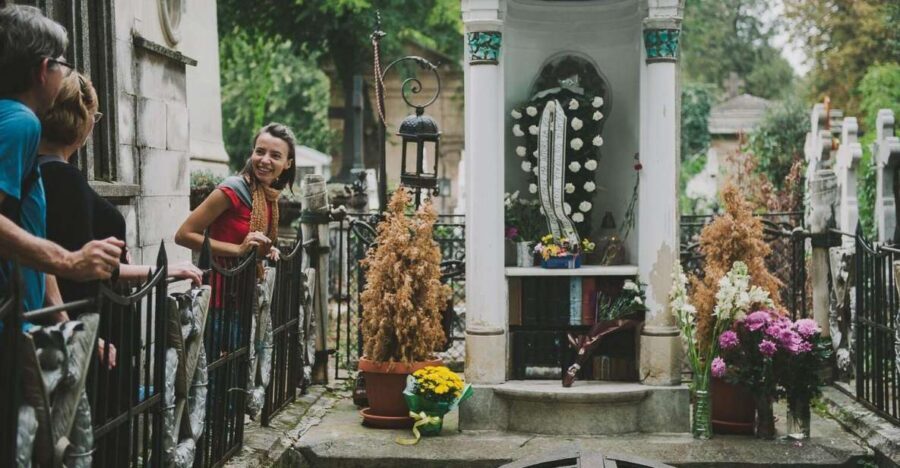
You’ll hear a mix of sad love stories and darker, more sinister mysteries—basically, the full range of what people built when they wanted to be remembered. This is the kind of stop where the guide’s style matters. If you get a storyteller like Elena or Vlad, you’ll often leave with a mental map of the cemetery, not just a list of facts.
One practical tip: expect time outdoors and keep your eyes on the details the guide calls out. The best moments here are the ones where you pause and look up—at carvings, layouts, and the shapes of the monuments—then connect them to the story being told.
Also, don’t be surprised if you notice cemetery cats and dogs. More than one guide experience includes feeding or spending a moment with the animals, and that human touch makes the cemetery feel less like a staged “spooky stop” and more like a living place.
University Square: where protests and bloodshed intersect
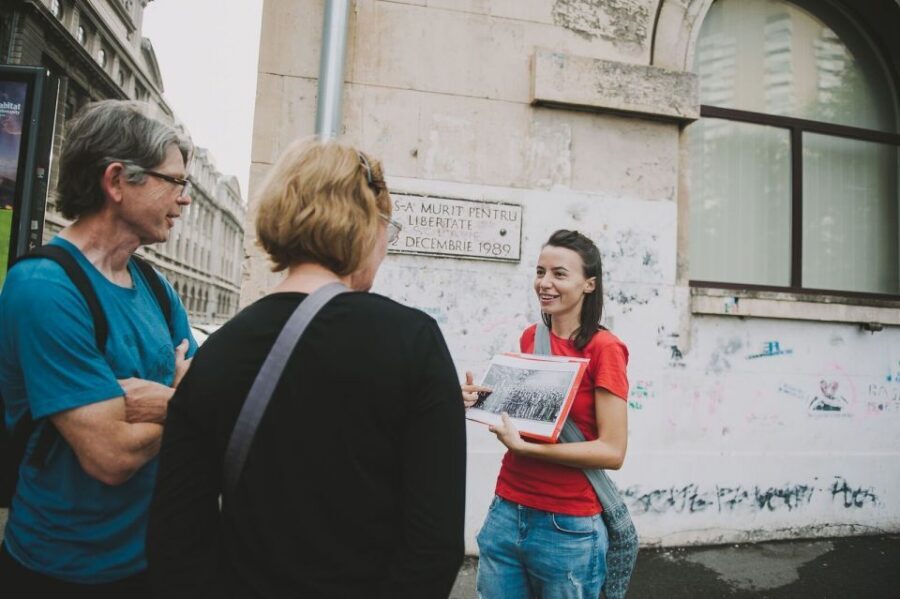
Next you’ll head to University Square, a key site tied to the Revolution in 1989 and later anticommunist student protests in the 90s. This stop is less about monuments and more about the idea that the square is a stage—where people gather, confront power, and pay for it.
The guide will connect the events to what the city looks like now, so you’re not just hearing names and dates. You’ll get a sense of how quickly public space can shift from normal life into political pressure, and how that pressure can turn violent.
Why I think this works: after Bellu Cemetery, your brain is primed to “read” memory in the street. University Square then becomes a continuation of the same theme, just with modern history instead of tombs.
Interwar Bucharest and Little Paris: the sex-trade story without the tourist fluff
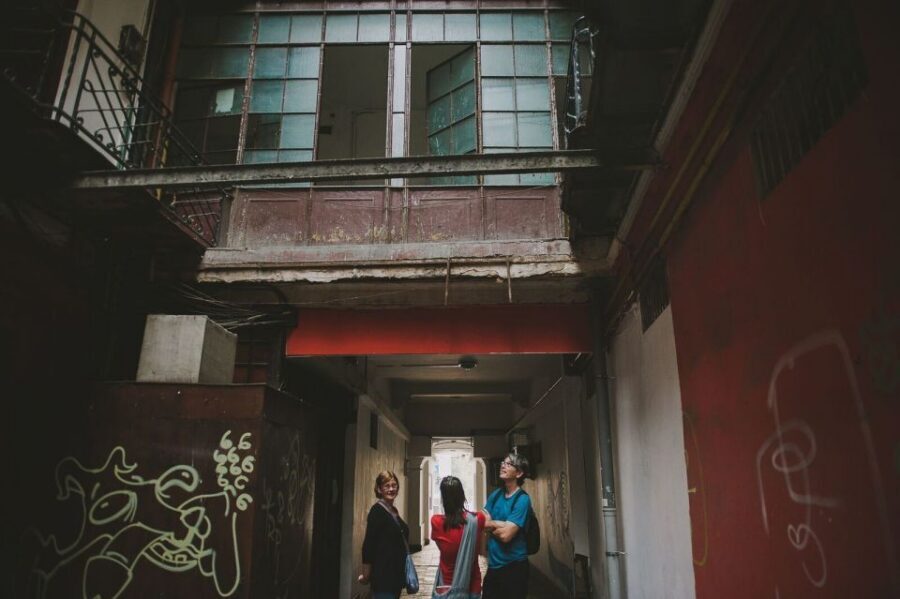
One of the tour’s more surprising turns is how it tackles the interwar period, often described as Little Paris. The guide explains the practice of sex trade in Bucharest and points toward what’s left of the former brothel world.
This isn’t presented as cheap shock value. The way it’s framed helps you understand it as part of urban life—class pressures, international influence, and changing social rules. It also helps explain why Bucharest’s “dark history” isn’t only about communist fear. It’s also about how the city functioned long before the 1940s and 1950s.
You’ll likely notice the guide using street-level cues—architecture, blocks, and the way areas evolved—to make the past feel physically nearby. For me, that’s the difference between hearing a story and actually understanding a place.
A few more Bucharest tours and experiences worth a look





The Vampire of Bucharest: why context is everything
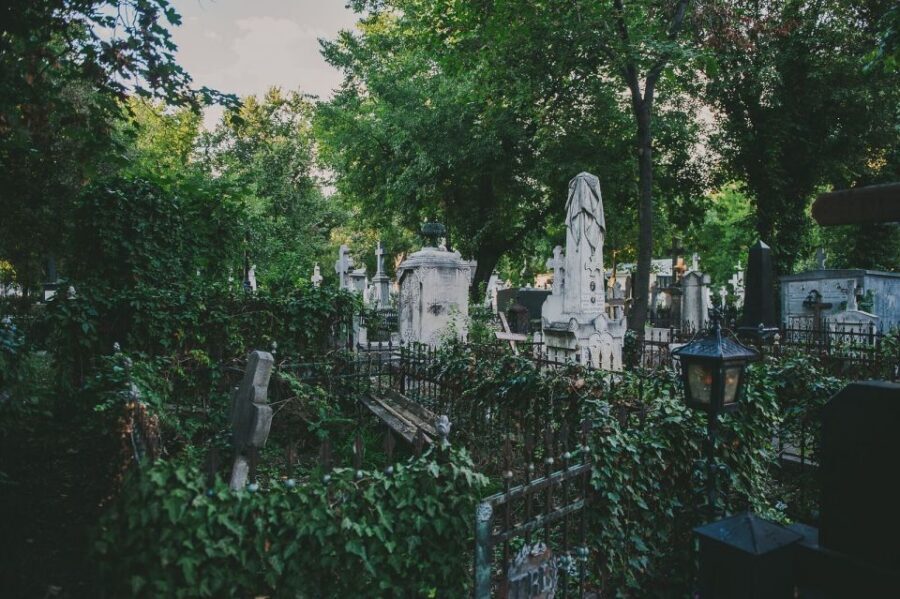
Another highlight is the serial killer nicknamed the Vampire of Bucharest, active in the early 1970s. The guide’s job here is not just to recount the case, but to explain why it landed the way it did in Bucharest—what people feared, and what the city was like when the terror hit.
You’ll probably leave this section with two takeaways: first, how rumors and fear travel in real time; and second, how difficult it is for authorities and everyday people to make sense of danger when information is incomplete.
If you’re the kind of traveler who likes crime history, this stop hits harder when you’ve already heard about the 20th-century systems that shaped the city. That’s why this tour places the 1970s case between earlier social history and later communist terror.
Revolution Square: Ceaușescu, the Securitate, and the machinery of repression
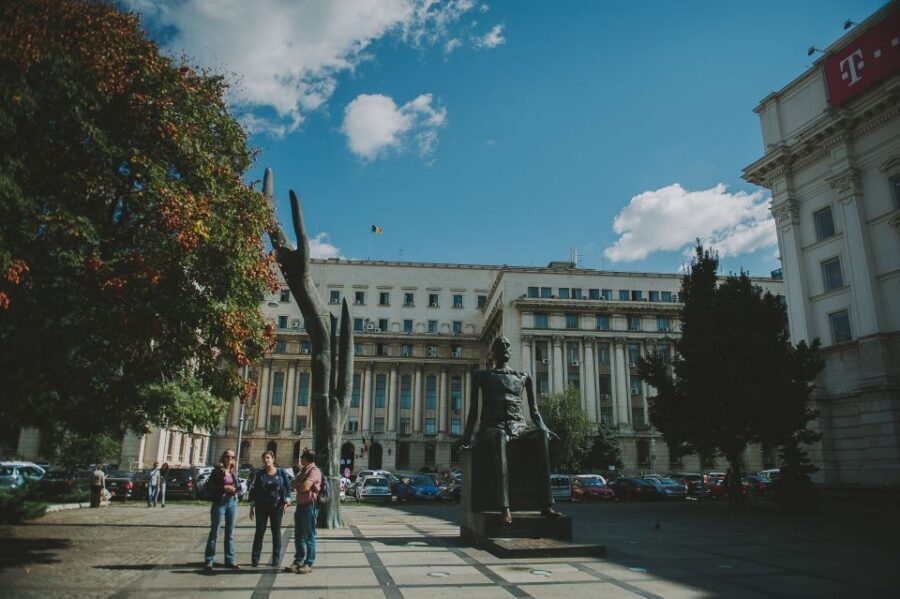
The tour ends at Revolution Square, the place where the Revolution in 1989 started in Bucharest. This is where the story gets heavy in a very direct way: prisons, labour camps, and torture methods used by the communist regime to silence critics.
You’ll learn about Ceaușescu’s dictatorship and the terror instilled through the Securitate, described as Romania’s own version of an intelligence service with deep control over daily life. The guide doesn’t just list systems; they explain how that kind of power changes what people can say, where they can go, and how they survive day to day.
For your planning, this is also the part where you want to listen with your full attention. The tour is only 3 hours, so the ending tends to compress a lot of context fast. If anything feels unclear, ask a question. The small group size makes it easy to slow down and get clarity.
What’s included: guide, metro tickets, and a real snack
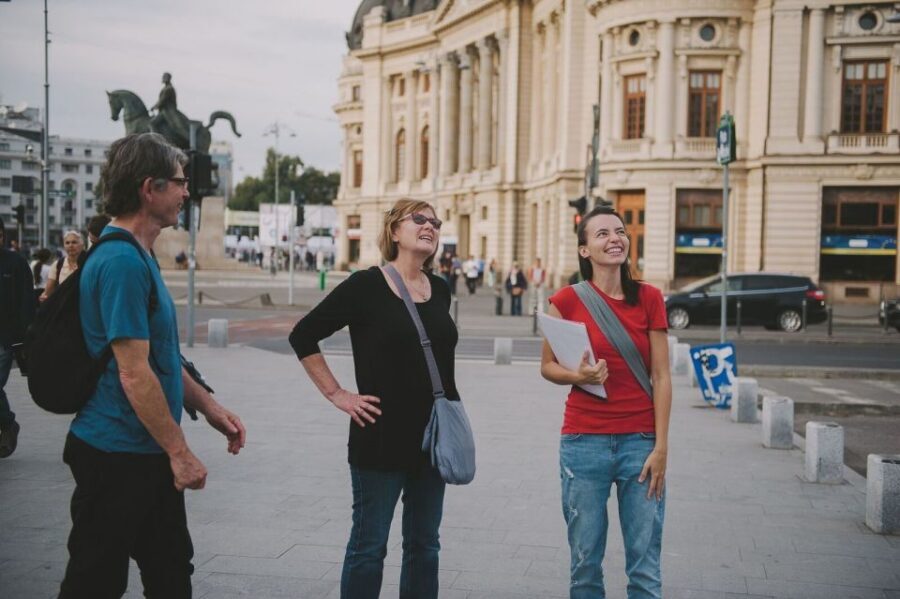
The tour includes an English-speaking local guide, metro tickets, and a traditional street snack. I like this mix because it solves two real travel problems: language and logistics.
- The guide does the heavy lifting of translating political and social history into something you can track on foot.
- The metro tickets mean you can keep the momentum of the narrative instead of pausing every time you need to figure out transport.
- The snack is a quick reset so you can keep listening without that tired, hungry drift.
You might also pick up small extras depending on the guide. One example mentioned a Romanian chocolate bar handed out at the end, which fits the tour’s vibe: informative, but still human.
Price and value for a 3-hour dark history format
At $55 per person for 3 hours, the price feels fair if what you want is focused interpretation, not a long self-guided checklist. You’re paying for a local who can connect architecture, streets, and political turning points into a single story you can remember.
Here’s how the value shows up in real life:
- Bellu Cemetery is a major site that’s easier when someone explains what you’re looking at.
- University Square and Revolution Square become far more meaningful when the guide connects them to protests, repression, and fear.
- Metro tickets and a snack mean you don’t feel nickel-and-dimed for basics while the tour is happening.
If you only want a light, fast overview, you may feel the price is “more than you need.” But if you want a guided afternoon that teaches you how Bucharest’s darker chapters connect, this is a solid use of time.
Pace, walking, and what to wear
This is a walking-focused tour. Reviews highlight a lot of walking, and the itinerary naturally mixes cemetery paths with city squares. The official tip is comfortable shoes, but I’d add one more thing: dress for the weather. Cold days can catch you while you’re focused on stories and stops.
If you’re sensitive to standing in one place for explanations, plan to take your pace seriously. Bring layers you can adjust during quick transitions between stops and time in the sun or wind.
Who this tour is best for (and who should skip it)
This tour is best for you if you like history that has a location. You should enjoy it if you want more than dates—you want cause and effect, plus how ideology and fear changed daily life in Bucharest.
It’s a strong fit for adults and for travelers who can handle intense topics. The tour isn’t suitable for children under 16 years old, so if you’re traveling as a family, you’ll need a different option.
If you’re looking for a purely spooky ghost-story vibe, you may find it more grounded and political than you expected. That said, that grounding is exactly why it works.
Should you book Bucharest’s Dark History Tour with a Local?
I’d book it if you want an afternoon that teaches you how Bucharest became Bucharest—through cemeteries, street culture, and the turning points of revolution and dictatorship. The Bellu Cemetery stop alone gives you a kind of visual and emotional learning that’s hard to recreate alone, and the metro tickets plus snack make the time efficient.
Skip it if you hate heavy historical topics, if you struggle with long walking segments, or if you want only casual sightseeing. Otherwise, for a first or second day in town, this is a memorable way to understand the city behind the surface.
FAQ
How long is the Bucharest Dark History Tour?
It lasts 3 hours.
What’s included in the price?
You get a local English-speaking guide, a traditional street snack, and metro tickets.
Where do we meet for the tour?
Meet at the main entrance of Ion Luca Caragiale National Theatre, Bulevardul Nicolae Bălcescu 2, București 010051.
Is the tour suitable for kids?
No. Travelers under 16 years old are not permitted to join.
How big is the group?
The tour operates with a maximum group size of 12 people.
Can I reserve without paying right away?
Yes. The activity offers reserve now & pay later, so you can book a spot and pay nothing today.