REVIEW · BUCHAREST
Private Bucharest: History & Food with Traditional Meal
Book on GetYourGuide →Operated by Intrepid Urban Adventures - Europe · Bookable on GetYourGuide
Bucharest turns food into a history lesson. This private 4-hour tour mixes key landmarks with a clear story of how Romanian politics and empires shaped what ends up on your plate. I like that you get a fast, practical 101 intro to the city while your guide connects street names, architecture, and ingredients.
You’ll start at the Equestrian Statue of Carol I and work outward through the parts of Bucharest that explain why the city looks the way it does. The guides have a track record of being patient and friendly too; I’ve seen names like Elaina, Mara, Ioanna, and Andra paired with positive remarks about handling kids and questions without rushing.
The one possible drawback: the food focus is strong, but it is not a constant “snack parade.” If you were expecting lots of different tasting bites beyond the included items, you might want to plan on eating more after the three-course meal.
In This Review
- Key highlights worth knowing
- Revolution Square: Where the city’s story gets political fast
- Victory Street and inter-war Bucharest: the city changes its costume
- Old Town passageways: why Bucharest food tastes like a crossroads
- People’s Palace: the city’s dramatic, uncomfortable chapter
- The traditional hanu meal: your plate becomes the map
- Carbon neutral, private format: how the experience flows
- Price and value: what you get for $140
- Who this tour suits best (and who should skip it)
- Should you book this Bucharest history-and-food tour?
- FAQ
- How long is the Bucharest tour?
- Is this tour private or shared?
- What’s included in the price?
- Where do I meet the guide?
- Is the tour carbon neutral?
- Can children join, and is there a free age?
Key highlights worth knowing
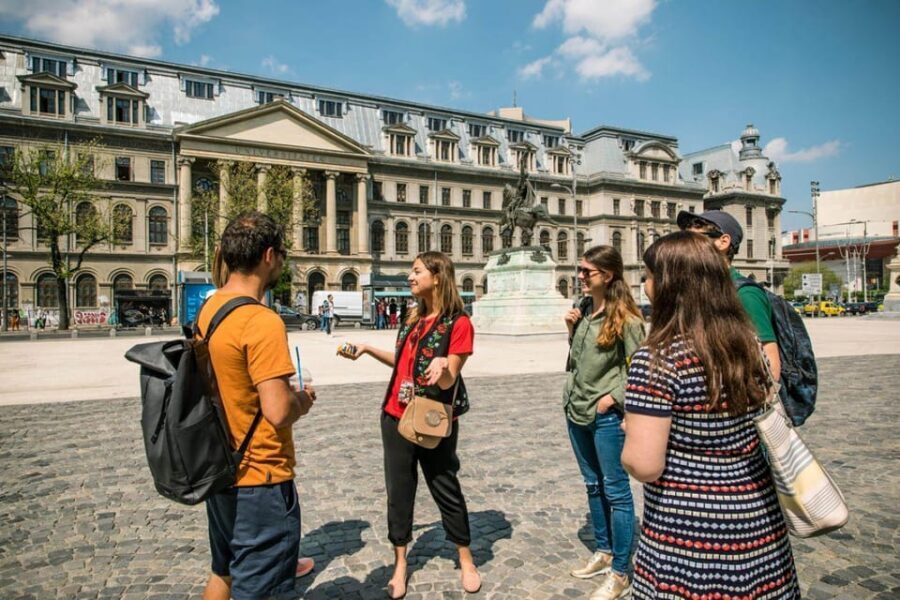
- Revolution Square to Old Town: you follow the thread from 1989 to the Ottoman crossroads that shaped local flavors
- Covrig stop: a quick salty snack tied to medieval European trade routes
- Regional cuisine map: sweet Moldova, earthy Transylvania, spicy Muntenia, explained as you walk along Victory Street
- Food-influences on the route: mici, sarmale, borscht/ciorba, and schnitzel as a living history timeline
- People’s Palace viewpoint: you get a look at Ceausescu’s megaproject without needing a museum ticket
- Three-course finish in a traditional hanu: house beer or wine (or soft drink) included with a plate-by-plate taste tour
Revolution Square: Where the city’s story gets political fast
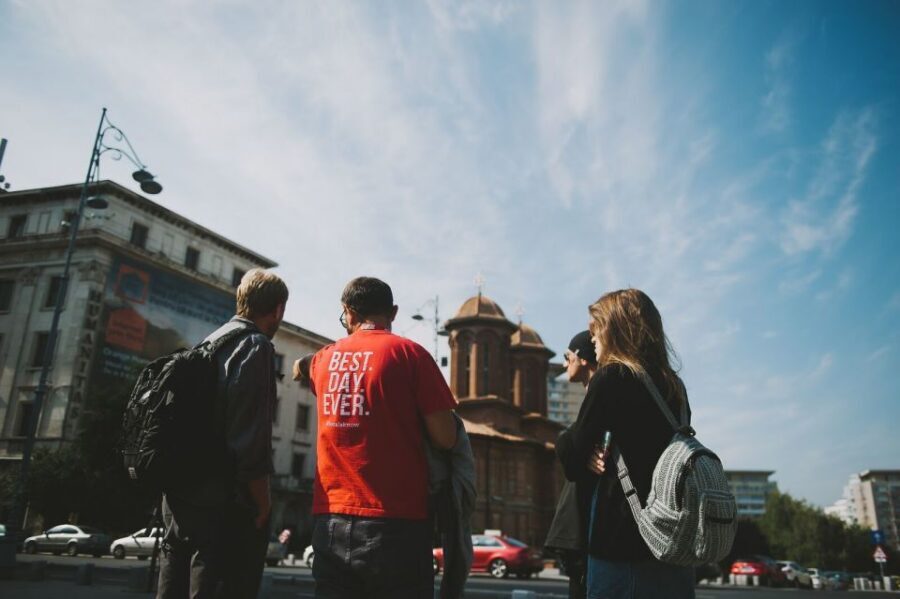
Your tour begins in Bucharest’s political center, at Revolution Square (which used to be Palace Square). This is the kind of place where you can’t help but understand the stakes. In 1989, the rallying speech by Nicolae Ceausescu ended up flipping the mood of the crowd, and the revolution took off from there.
I love how the guide uses the square like a timeline anchor instead of just listing dates. You also get a sense of how authority and culture sit side by side here. Surrounding Revolution Square are major landmarks you’ll hear about on day-one Bucharest plans: the former Royal Palace area, the Athenaeum concert hall, and Athenee Palace, tied to espionage and intrigue in the years between the wars.
If you’re the type who needs context before you start taking photos, this first segment pays off. The square gives you the “why” behind what you’re seeing. And it helps you understand why food later on isn’t treated as random comfort—it’s treated as consequence.
You can also read our reviews of more food & drink experiences in Bucharest


Victory Street and inter-war Bucharest: the city changes its costume
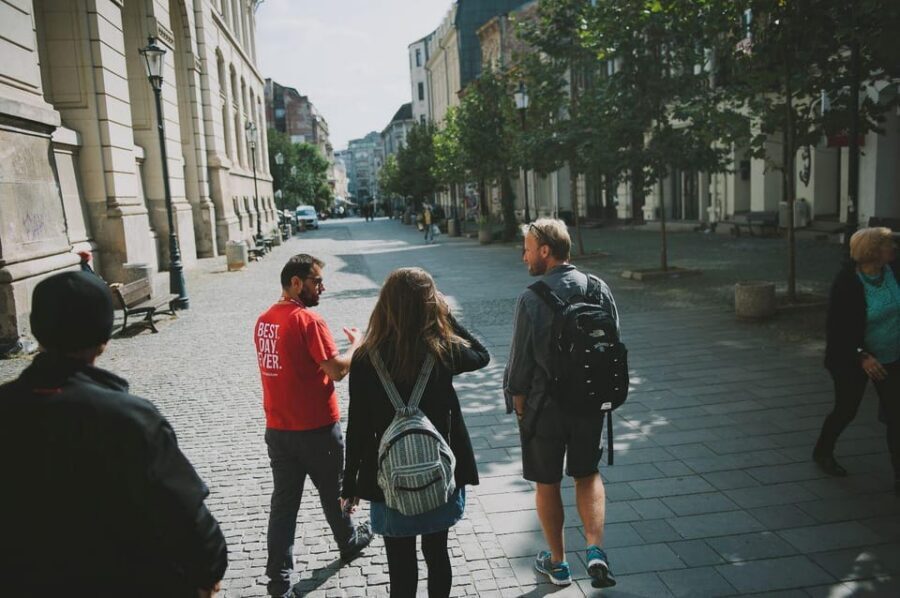
From Revolution Square you head south along Victory Street, a name that points to Romanian independence efforts. The idea is simple: the street carries the memory of the 1871 War of Independence, even though the full unification of Romania’s regions came later, in 1918. That delay matters because each region developed its own habits and flavors.
One of the most useful parts of this walk is how you get a practical regional “cheat sheet.” You’ll hear how cuisine ties to place: Moldova is described as sweet, Transylvania as more earthy, and Muntenia as spicy. It’s not just trivia. It turns into a way to taste with more intention later.
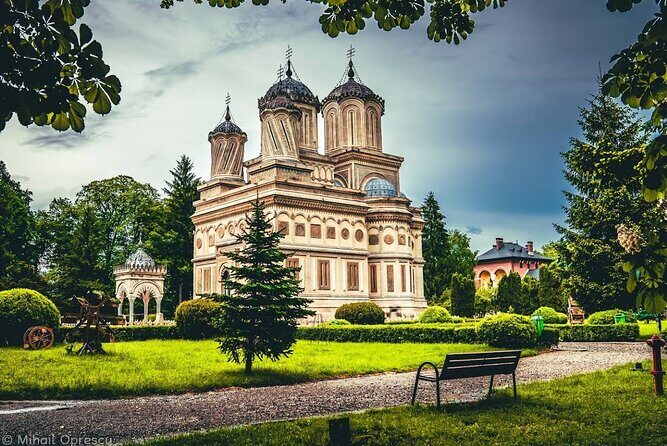
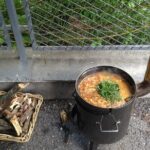
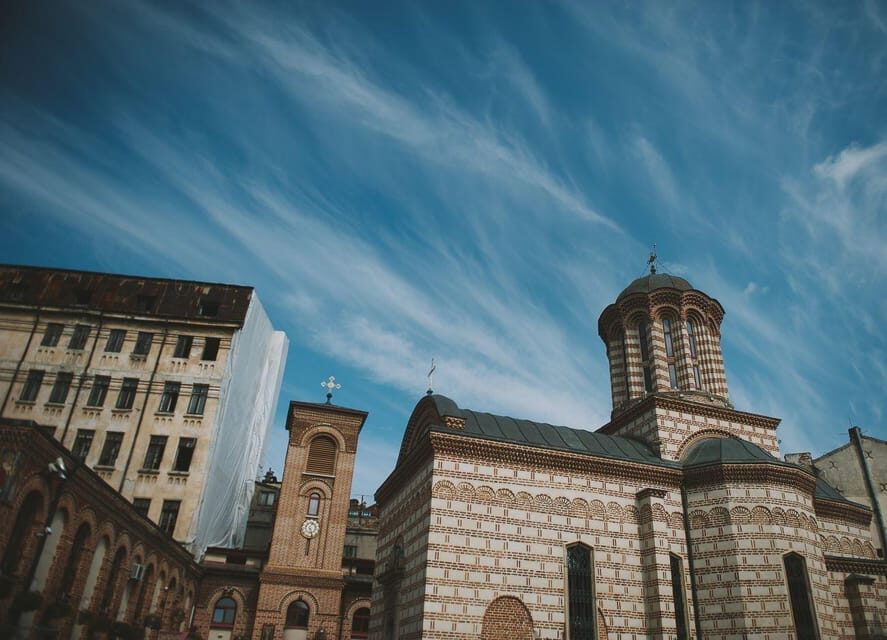
As you go, the inter-war architecture comes into view. This stretch includes landmarks like the Telephone Palace, the Military Circle, and the former National Theatre. You’ll also visit the church of Kretzulescu, one of Bucharest’s best-known churches, which helps the city feel lived-in rather than purely monumental.
A small practical note: this section is a good time to pace yourself. The guide is packing a lot into a walk, and you’ll get more out of it if you keep moving but let the stop-and-look moments land.
Old Town passageways: why Bucharest food tastes like a crossroads

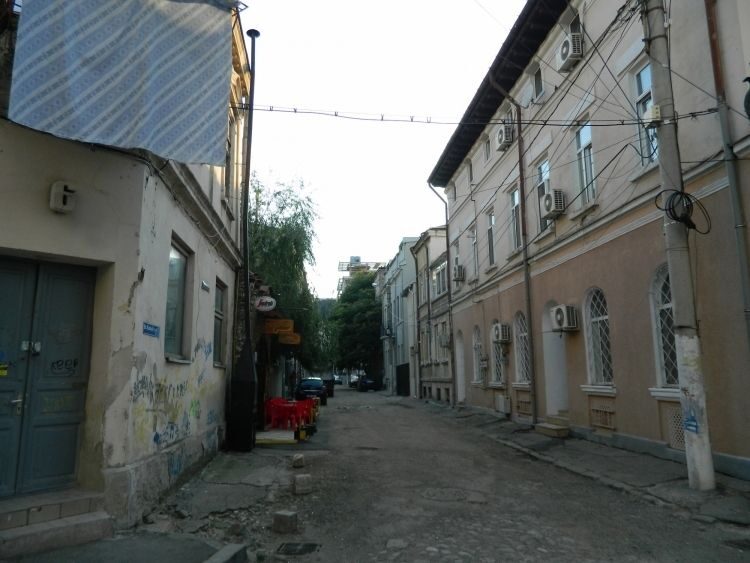
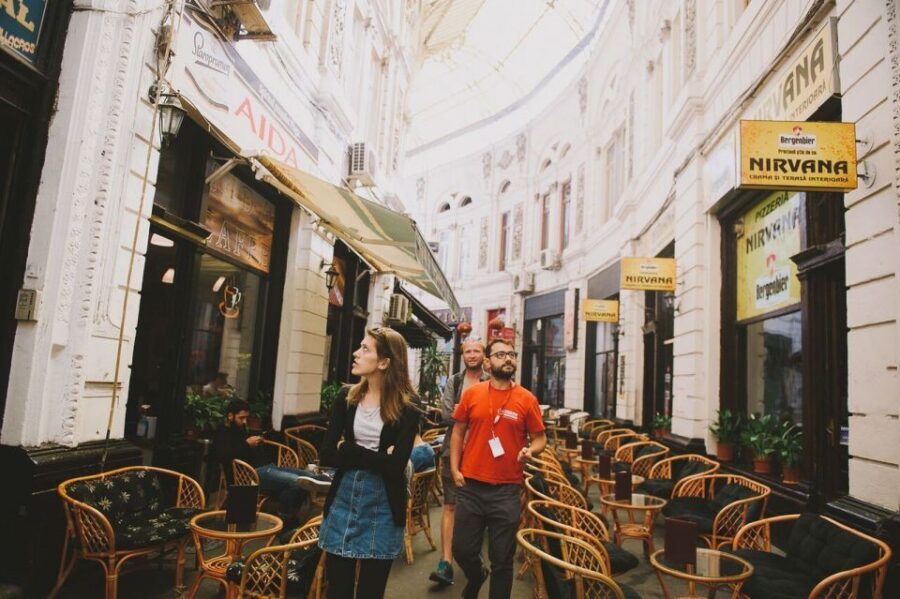
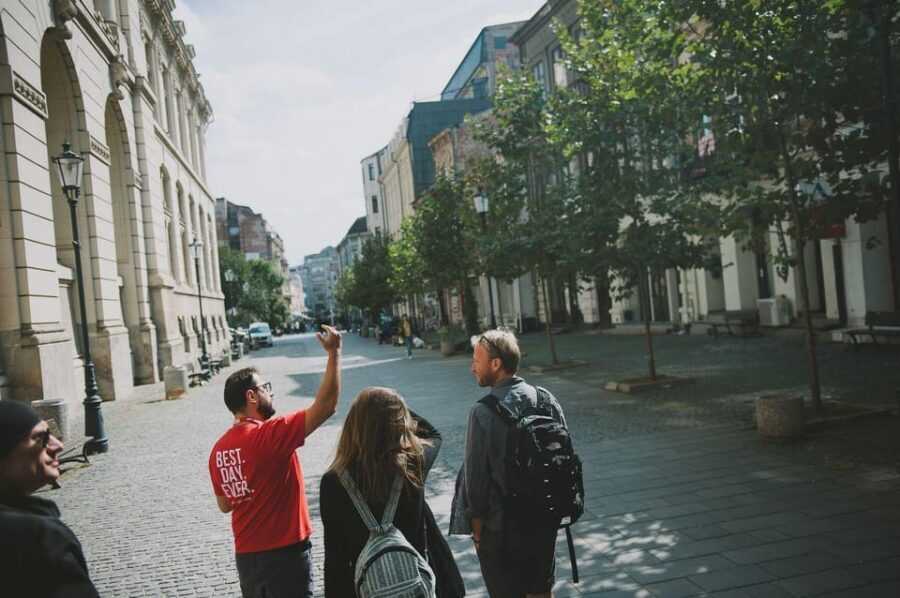
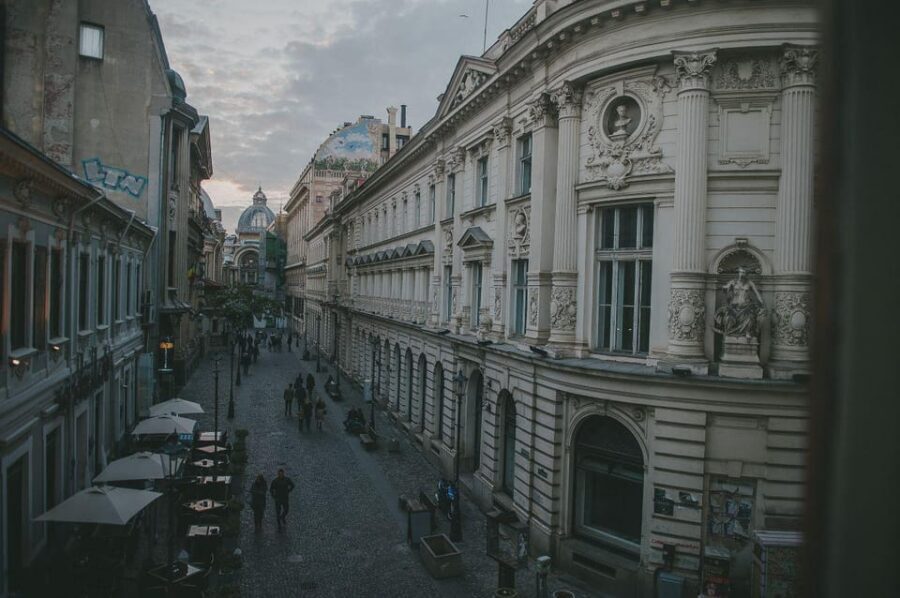
Next comes the part that feels most like wandering with purpose: Old Town. This is where the history lesson stops being abstract and starts becoming physical. You’ll move through older streets and passageways that describe medieval Bucharest as a real crossroads between East and West.
Here’s the core idea the guide puts across: Bucharest’s location made it a meeting point. Ottoman pashas rubbed shoulders with Transylvanian princes. Churches and mosques sat near each other. Over time, those overlaps shaped what people cooked and what people wanted to eat.
And then the tour connects that story directly to food. On this walk you’ll hear about Balkan and regional dishes that show up across Romanian tables:
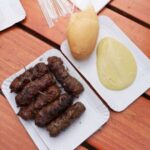
- mici (skinless sausages), often described as Balkan in spirit
- sarmale from Ottoman influence (stuffed cabbage leaves)
- borscht and ciorba, reflecting Russian-style sour soups and beet-based comfort
- schnitzel, tied to Austro-Hungarian cooking traditions
I like that the guide doesn’t treat these as separate “random foods.” They’re presented as overlapping influences—like layers of a well-used cookbook.
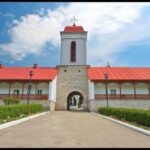
You’ll also see places that make Old Town feel calm in pockets. The route includes a mention of an orthodox monastery (with that still, reflective vibe), and Hanul Lui Manuc, a historic wooden inn. Even if you’re not shopping or going inside, these stops help you picture how people moved, ate, and gathered.
People’s Palace: the city’s dramatic, uncomfortable chapter
Before the meal, you get a look at People’s Palace, associated with Ceausescu’s push to reshape Bucharest. The point of this stop is scale and mindset: the building is tied to megalomaniac urban planning, not just architecture.
You also learn where it lands globally: it’s described as the second largest building in the world, only after the Pentagon. That kind of fact changes how you stand there. You stop seeing it as a building and start seeing it as a symbol of power and a literal rewrite of city space.
This segment is a helpful balance against the more charming parts of the walk. Bucharest can look elegant and European—then you remember how much the city has been forced to adapt under different regimes.
The traditional hanu meal: your plate becomes the map
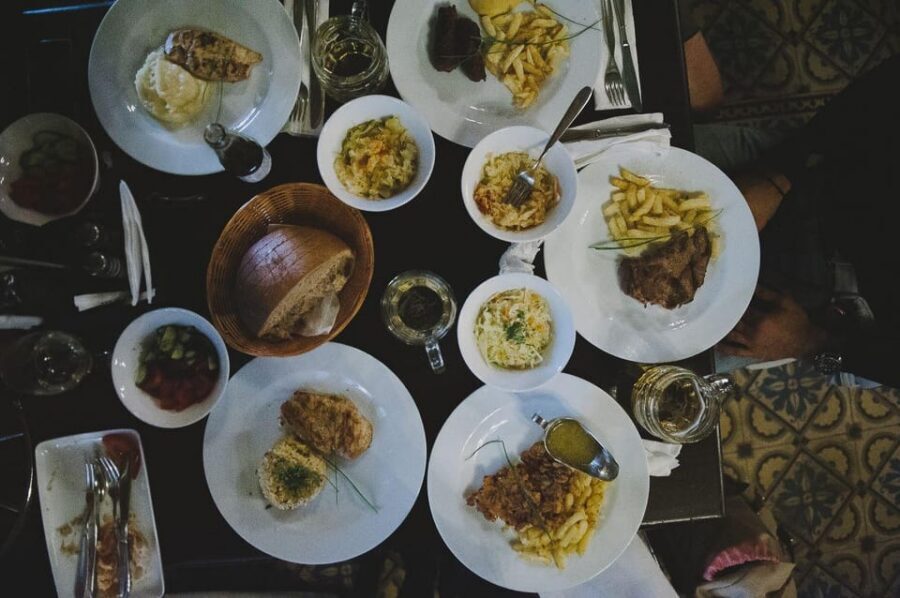
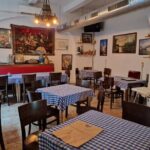
The tour ends at a traditional hanu (an inn), widely considered one of the most beautiful spots in Bucharest. The setup is built for people who want food with a story, not food that disappears in five minutes.
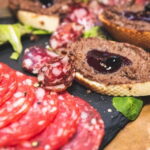
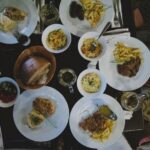
You’ll enjoy a three-course traditional Romanian meal with platters of local delicacies. The included options don’t stop at food either. You also get a house drink: beer or wine (or a soft drink), which matters because Romanian dining is often about pacing your meal with a local tipple.
What makes this tasting feel especially smart is the way it turns geography into taste. During the tour you learn how regions and rulers influenced the cuisine. Then at the end you get the payoff: you eat versions of those influences as a single meal rather than a scattered list of dishes.
There’s also a fun historical framing the guide gives you about alcohol. A legend ties Dacian-era life to wine: it’s said that Burebista banned wine production because so much was consumed. The story pivots to how Dacians then brewed beer instead. Whether or not you take every detail literally, the effect is practical: you’ll be ready to recognize that Romania’s drink culture has always been adaptive, not stuck in one tradition.
If you’re worried about appetite, here’s the straightforward read: you’re getting a real multi-course meal, plus earlier tastings like the covrig (a salty daily snack). But if you’re someone who needs frequent micro-tastings all the way through, you may want to eat something light before you start and keep room for a larger final meal.
A few more Bucharest tours and experiences worth a look
Carbon neutral, private format: how the experience flows

This is a private group tour, which usually means you’re not wedged into a “follow the leader” crowd. With a smaller setup, the guide can slow down for questions, and that’s a big deal when you’re learning a story that connects politics, food, and architecture.
The experience is also described as carbon neutral, operated by an eco-certified company committed to using travel as a force for good. If you care about travel footprint, this tour gives you a way to check that box without turning your day into a compromise on content.
Duration matters here too. With 4 hours, the tour fits into a first-day schedule without swallowing the whole day. It’s long enough to cover Revolution Square, inter-war streets, Old Town, and People’s Palace, but short enough that you can still plan a separate dinner on your own.
And if you’re traveling with kids, this one is explicitly child-friendly. Children under 6 can join free of charge, and it’s worth telling the supplier at booking time if you’re bringing a younger child.
Price and value: what you get for $140
At $140 per person for a 4-hour private tour, you’re paying for two things at once: guided city context and a full three-course meal. That combination is where value shows up.
If you only wanted photos and a few landmarks, you could build a cheaper self-guided walk. But you’d lose the chain of explanation that connects street names, architecture, and cuisine. Here, you get that link, plus the meal at the end is included, including a house drink.
So the value math is easiest if you fit this profile:
- it’s your first or second day in Bucharest
- you like history explained in plain language
- you want food included, but you also want to understand why it exists
If you mainly want a strict food-tour vibe with lots of different tastings, you might feel slightly short on quantity, since the itinerary is still a walking tour with one snack moment and then the three-course landing.
Who this tour suits best (and who should skip it)
This fits you well if you’re aiming for a first-time orientation that doesn’t feel like a list of must-sees. I especially like it for people who enjoy when a meal is tied to a larger story.
It’s also a solid pick for families, because the guides have been noted for working at a pace that includes children and answers questions without making them feel like an inconvenience.
Skip it if your top priority is nonstop street food sampling. This experience is built more like a guided history walk that ends with a real sit-down Romanian meal, not a buffet of dozens of tiny bites.
Should you book this Bucharest history-and-food tour?
Yes, if you want Bucharest explained through what you see and what you eat. The tour’s best move is the way it connects major historical turning points—Revolution Square, inter-war architecture, Ottoman-era Old Town, and People’s Palace—to the flavors influenced by those eras.
Book it if:
- you want a structured 101 so the city makes sense fast
- you’re excited to learn how Romanian cuisine reflects regional differences
- you care about a private, carbon neutral tour format
- you’d appreciate a guide who works well with kids (and answers questions calmly)
Think twice if:
- you’re hunting for a heavy snack-heavy food crawl all afternoon
- you prefer purely museum time with fewer walking segments
If your ideal day is walking through Bucharest with a narrative in your head, then sitting down to a three-course Romanian meal that ties it together, this is a strong bet.
FAQ
How long is the Bucharest tour?
The tour lasts 4 hours.
Is this tour private or shared?
It’s a private group tour.
What’s included in the price?
The experience includes a local English-speaking guide, a three-course Romanian meal, and a house beer or wine (or a soft drink).
Where do I meet the guide?
You meet at the Equestrian Statue of Carol I in Sector 1, Bucharest (030167), Romania.
Is the tour carbon neutral?
Yes. The tour is described as carbon neutral and run by a company committed to using travel as a force for good.
Can children join, and is there a free age?
Yes. This is a child-friendly tour, and children under 6 are permitted to join for free. You should inform the supplier at booking if you’ll be bringing a child under 6.