REVIEW · BUCHAREST
3h Bucharest Private Walking Tour – only your group
Book on Viator →Operated by Supplier · Bookable on Viator
A walk like this turns Bucharest into a story. You get a private, only-your-group pace while covering the city’s biggest landmarks, with context on Romania’s history and culture. I love that the plan moves in a tight loop of sights, so you leave with a clear sense of how the city is built and why it matters.
Two things really land well. First, the guide approach: Nicolae is noted for packing in solid information without turning it into a lecture, and for adjusting to what you care about and how fast you walk. Second, the tour feels efficiently timed—your pickup is prompt at your centrally located hotel, and the experience can run a bit longer than the standard 3 hours.
One possible drawback: most stops are outdoors or quick-view stops, so if you want lots of time for deep interior exploring, you may feel a bit rushed—especially around the one place where an admission ticket isn’t included.
In This Review
- Key highlights worth knowing before you go
- A Private 3-Hour Walk That Helps You Read the City
- Hotel Pickup Keeps the Start Stress-Free
- Stop-by-Stop: Ateneul Roman to the Heart of Revolution History
- Ateneul Roman (Philharmonic Hall): Bucharest’s Big, Beautiful Showpiece
- Piaka Revolukiei: A Square Built on a Turning Point
- Calea Victoriei: The Main Artery That Still Feels Like a Plan
- From the French-Themed Passage to a Bank Palace
- Macca Villacrosse Passage (Mall from 1891): Where Shopping Meets History
- Palatul CEC: The Beauty of a Financial Landmark
- Stavropoleos Monastery and Curtea Veche: Faith and Power by the River
- Stavropoleos Monastery (1724 Greek-built): A Quiet Pause in the Middle of Streets
- Muzeul Curtea Veche: Vlad the Impaler Meets the Dâmboviţa River Story
- Manuc’s Inn: A Spy Story Inside the Old Town Mood
- Hanul lui Manuc (Manuc’s Inn): Double-Agent History in an Inn
- Carturesti Carusel and University Square: Culture You Can Feel
- Carturesti Carusel: The Bookstore-and-Souvenir Stop
- University’s Square: A Place to Look Back at the Day
- Price and Value: Why $119.21 Can Make Sense
- What This Tour Is Best For (and When It Isn’t)
- Should You Book This Bucharest Private Walking Tour?
- FAQ
- Is this tour private?
- How long is the Bucharest private walking tour?
- Is hotel pickup included?
- Is the tour in English?
- Do I need admission tickets for the stops?
- Can I cancel for free?
Key highlights worth knowing before you go
- Only your group, real private pacing: You can set the tone and tempo with your guide.
- Hotel pickup from a central location: Less hassle at the start, more time for walking.
- Nicolae-style history that fits the streets: Clear context tied to what you see in front of you.
- A smart mix of architecture + turning points: Concert hall glamour, revolution-era sites, and old passages.
- Most admissions are listed as free: You spend more time sightseeing and less time budgeting tickets.
A Private 3-Hour Walk That Helps You Read the City
Bucharest can look grand at a distance and confusing up close—wide avenues, mixed-era architecture, and stories layered on top of each other. This tour is designed to help you decode what you’re seeing in a few hours, not just check off names.
The value is the format. A private walking tour means you’re not stuck waiting for other people’s questions or dragging through a pace that doesn’t fit your legs. You’ll get a guided overview of Bucharest’s main attractions while also learning how Romania’s history and culture connect to the buildings and squares you pass.
And because it’s structured into a compact route—about ten stops in roughly three hours—you avoid the common problem of “too much travel time, not enough looking time.” It’s also offered in English, so you can focus on meaning, not on guessing.
You can also read our reviews of more walking tours in Bucharest


Hotel Pickup Keeps the Start Stress-Free
You meet your guide at a centrally located hotel, with pickup offered. That matters more than it sounds. The first 20 minutes of a city walk can decide whether the day feels smooth or chaotic, and pickup helps you skip the scramble.
You’ll also get a mobile ticket, which is practical if you’re juggling phone directions and other reservations. The tour is near public transportation too, which is helpful if you’re already in the area or want an easy fallback.
One more practical note: the tour is described as suitable for most travelers, and service animals are allowed. So if you’re traveling with assistance needs, this setup is built with inclusivity in mind.
Stop-by-Stop: Ateneul Roman to the Heart of Revolution History
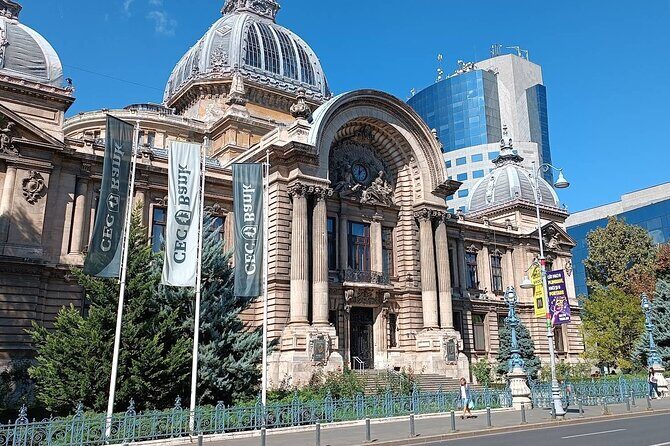
Ateneul Roman (Philharmonic Hall): Bucharest’s Big, Beautiful Showpiece
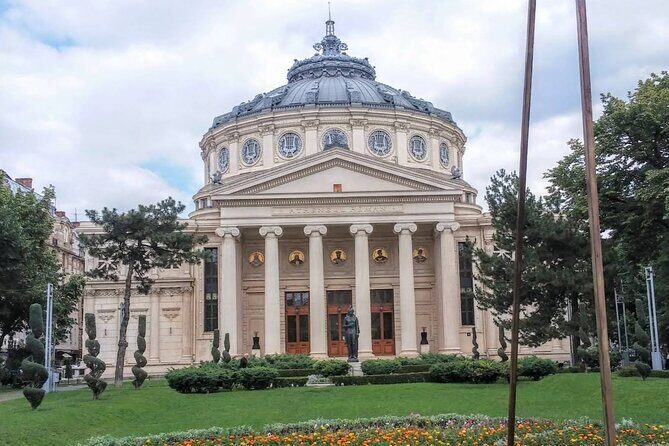
Your first stop is Ateneul Roman, described as a philharmonic concert hall and commonly considered one of Bucharest’s most beautiful buildings. Even without an interior ticket, the exterior is the point here. Think architecture first: this is the kind of landmark you’ll want to look at slowly, because the details are part of the story of the city’s self-image.
Timing is around 20 minutes, and admission is listed as not included. That doesn’t mean you can’t enjoy it—it means you should treat it as a sight-focused stop. If your priority is interiors, plan to buy that ticket separately.
Potential drawback: if you’re hoping the bulk of your time goes inside, this tour keeps that to a minimum. But if you like seeing iconic architecture and getting context, it’s a strong start.
Piaka Revolukiei: A Square Built on a Turning Point
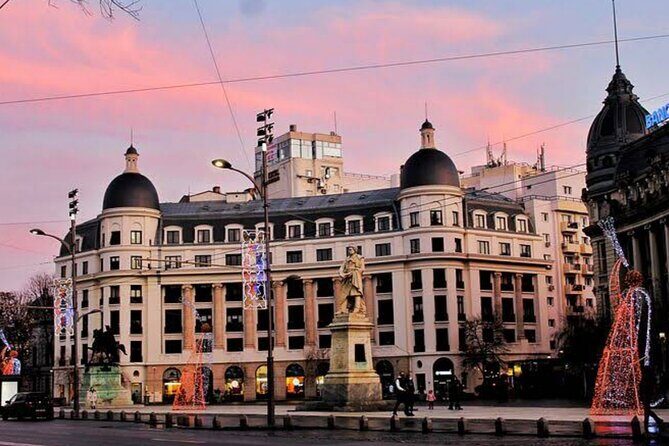
Next comes Piaka Revolukiei, where the most important part of the 1989 revolution took place. This is paired with a major historical anchor: the building where the former headquarters of the Romanian Communist Party was located.
This stop is listed at 20 minutes, with free admission. The best way to use this time is to focus on contrasts. Revolution-era history sits right in the open here, so your guide’s job is to translate what you’re seeing into what it meant—who had power, what changed, and how public spaces carry memory.
Consideration: because it’s a prominent square, expect it to be more open and exposed than some side streets. Bring what you need for weather.
You can also read our reviews of more private tours in Bucharest



Calea Victoriei: The Main Artery That Still Feels Like a Plan
Then you roll onto Calea Victoriei, described as the main artery on which the city was built. It’s only around 10 minutes, with free admission, but it’s a useful transition.
Here’s why it matters: walking a major avenue gives you a sense of scale fast. You start to feel how Bucharest’s neighborhoods relate to each other—where movement funnels and where sightlines stretch. Even a short stop can help you understand the city’s layout so the rest of your day makes sense.
From the French-Themed Passage to a Bank Palace
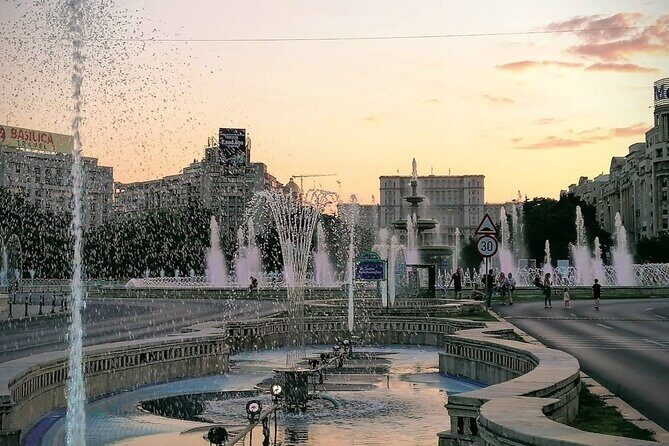
Macca Villacrosse Passage (Mall from 1891): Where Shopping Meets History
You get a quick look at Macca Villacrosse Passage, described as the first mall in Bucharest, built in 1891 by a French architect. This is a fun pivot from squares and politics into everyday urban life—because commerce is also part of a city’s history.
Time is about 5 minutes, with free admission. At this point in the walk, you’ll be doing more “quick satisfaction” than deep exploration. Still, that’s the point: you’re learning how the city evolved, not trying to tour every building like a museum day.
Potential drawback: because it’s brief, you’ll want to slow down for a minute on your own after your guide’s key points—otherwise the details might blur.
Palatul CEC: The Beauty of a Financial Landmark
Next up is Palatul CEC, described as the CEC bank headquarters and one of the most beautiful buildings in Bucharest. It’s another short stop—5 minutes, free admission.
This is a great reminder that cities don’t only show their culture in churches and palaces. Institutions also build statements. A bank headquarters in a prime location becomes part of how a city portrays stability and power, and your guide’s context turns the façade into something meaningful.
If you like architecture and symbolism, don’t treat this as a throwaway stop. Even five minutes can be enough when someone helps you notice the right features.
Stavropoleos Monastery and Curtea Veche: Faith and Power by the River
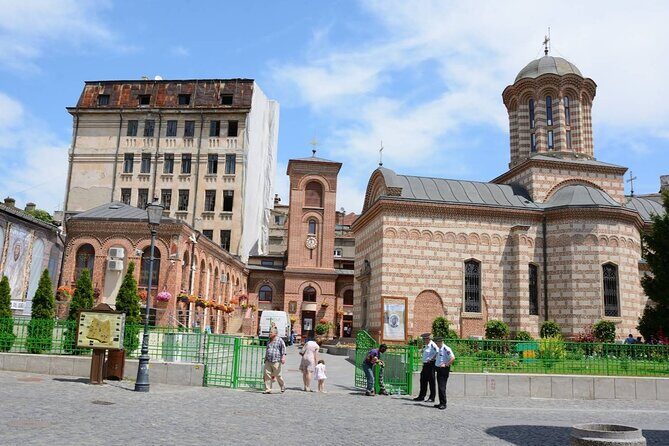
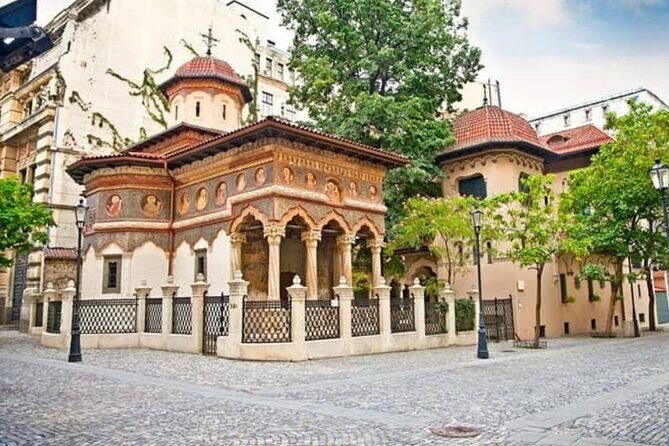
Stavropoleos Monastery (1724 Greek-built): A Quiet Pause in the Middle of Streets
You then reach Stavropoleos Monastery, built by a Greek in 1724. It’s listed for 10 minutes, with free admission.
Monastery stops are often the emotional reset of a walking tour. The streets keep moving, but these spaces slow you down. Even if you don’t go deep into interior viewing, you get a tangible sense of time passing through architecture and tradition.
Consideration: monasteries can be subject to hours and entry rules, so if you want to step inside, go with a flexible mindset. The tour keeps this stop short, so follow your guide’s lead on what’s feasible during your time window.
Muzeul Curtea Veche: Vlad the Impaler Meets the Dâmboviţa River Story
After that, you’ll visit Muzeul Curtea Veche, described as a palace built by Vlad the Impaler on the bank of the Dâmboviţa River. The note also connects it to how the city developed around this area.
This is around 5 minutes, with free admission. Quick, yes—but the name alone carries weight, and the river setting is a big part of why Bucharest grew where it did. Your guide’s job here is to connect the palace past to the modern city shape.
If you want more museum time, treat this stop as orientation. The tour gives you the “why” so that if you decide to return later, you’ll know exactly what to focus on.
Manuc’s Inn: A Spy Story Inside the Old Town Mood
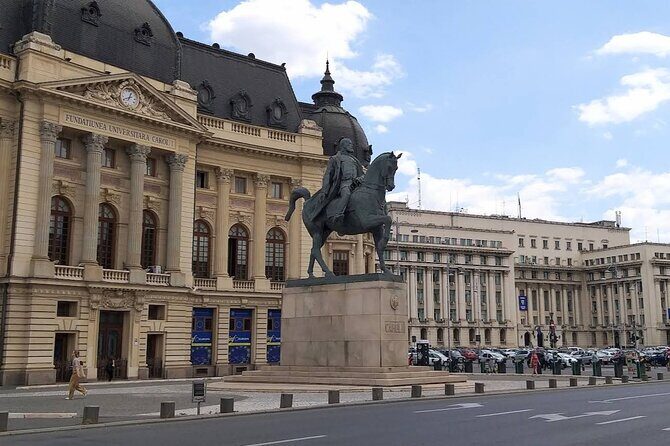
Hanul lui Manuc (Manuc’s Inn): Double-Agent History in an Inn
Next is Manuc’s Inn (Hanul lui Manuc), described as an inn built by a boyar from Moldavia who was a double spy agent for both the Ottoman Empire and the Russian Empire. It’s listed at about 5 minutes, free admission.
This stop is pure story fuel. Inns were crossroads where news moved. When you pair that with espionage, you start to see the building as a stage for power shifts—not just a place to rest.
Potential drawback: because it’s brief, you may not get a full sense of the space unless you pay attention to what your guide highlights. If you’re very detail-oriented, take a few extra seconds for your own look once the group moves on.
Carturesti Carusel and University Square: Culture You Can Feel
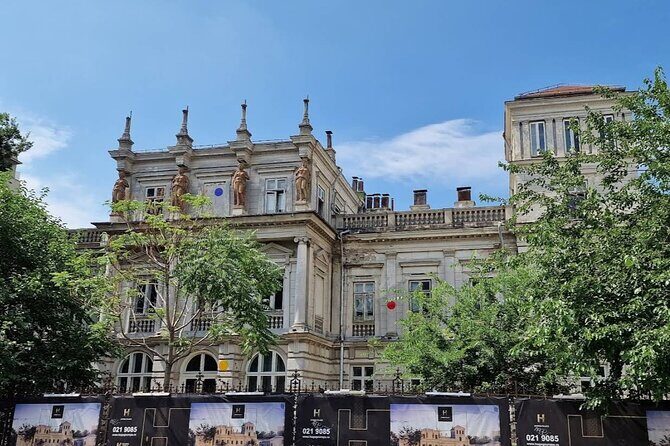
Carturesti Carusel: The Bookstore-and-Souvenir Stop
The tour then hits Carturesti Carusel, described as the most beautiful bookstore and souvenir shop in Bucharest. Time is 10 minutes, free admission.
This isn’t just a retail break. It’s a chance to connect to Romanian culture through books, maps, and gifts you can actually use later. If you like collecting a few high-quality items instead of random trinkets, this stop is a good use of time.
I also like that it’s paired at the end of the “heavy history” stops. It gives your brain a lighter moment right before the final square.
University’s Square: A Place to Look Back at the Day
Finally, you’ll reach University’s Square, with about 10 minutes and free admission. It’s the public square in front of the University of Bucharest.
This ending spot works because it gives you a wider view of what you learned. You’re looking at a place tied to education and public life, not just monuments. After a walk packed with revolutionary history, architecture, and old-world passages, the university scene can feel like the future facing the street.
Price and Value: Why $119.21 Can Make Sense

At $119.21 per person for about 3 hours, this tour isn’t the cheapest way to do Bucharest. But the value comes from the private setup and the tight structure.
You’re paying for:
- A guide who can tailor the pace and interests
- Pickup at your centrally located hotel
- A loop of major landmarks with mostly free admissions
- English interpretation, without the overhead of a big group
If you’re visiting as a couple or small family and you’d otherwise be paying for several separate tickets plus trying to navigate history alone, this can pencil out well. And the fact that the experience can run a bit longer than the standard 3 hours (based on a notable guide pattern) adds to the sense that you’re getting time, not just a route.
What This Tour Is Best For (and When It Isn’t)
This works best if you:
- Want a first-time orientation to Bucharest’s main attractions
- Like your history connected to real places, not delivered as a textbook
- Prefer a guide who adjusts to your pace and interests
- Plan to walk anyway, so you’re not paying for a sit-in-vehicle tour
It may not be ideal if you:
- Want long museum-style time at multiple interior sites
- Prefer a self-guided format where you stop whenever you feel like it
- Are extremely time-pressed and need a slower, more flexible route
Should You Book This Bucharest Private Walking Tour?
If you’re deciding whether to do a guided walk, I’d lean yes—especially for a first visit. The strongest reasons are the private, only-your-group pacing and the guide style described as full of information without dragging you along. Add the prompt hotel pickup and the fact that the route includes major sites tied to Bucharest’s identity, and you get a compact overview that’s easy to build on later.
Book it if you like walking, architecture, and history with practical street-level context. Skip it if you’re craving long interior time in every stop. For most people trying to get oriented quickly and enjoy the city’s big stories, this is a solid bet.
FAQ
Is this tour private?
Yes. It is a private tour/activity, and only your group will participate.
How long is the Bucharest private walking tour?
It runs for about 3 hours.
Is hotel pickup included?
Pickup is offered, and you meet your guide at your centrally located hotel.
Is the tour in English?
Yes, it is offered in English.
Do I need admission tickets for the stops?
Admission for Ateneul Roman is not included. The other listed stops are shown as free.
Can I cancel for free?
Free cancellation is available up to 24 hours in advance for a full refund.