REVIEW · CLUJ NAPOCA
Cluj-Napoca Walking City Tour
Book on Viator →Operated by Rolandia · Bookable on Viator
Cluj-Napoca’s center teaches fast. This is a max 10 people walking tour with an English guide, and I like that it gives you quick city orientation while connecting the buildings to Cluj’s academic and cultural identity. One heads-up: admission isn’t included for the cathedral and Banffy Palace, so you may still need separate tickets.
In about 2 to 3 hours, you’ll move through the old-town core and focus on big architectural stops: a cathedral with Gothic interior touches, a Gothic palace now hosting an art gallery, and a Transylvanian history museum where admission is included. It’s a practical way to get your bearings without spending half a day figuring things out.
The main consideration is simple: you’re walking, and two stops are sight-focused rather than guaranteed-in-your-hands museum time. If you’re the type who hates paying extra at the door, plan your budget for those non-included entrances.
In This Review
- Key highlights worth planning around
- Cluj-Napoca in 2 to 3 hours: what you really get
- Starting at Carolina Obelisk: where to show up and why
- Catedrala Sfantul Mihail: what to notice inside
- Banffy Palace: Gothic power meets later civic life
- National Museum of Transylvanian History: the included time saver
- The architecture story: Gothic, Baroque, and how Cluj thinks
- Guide impact: Andrea, Roxana, Robert, and Joseph
- Price and value: what $63.68 buys (and what it doesn’t)
- Pacing, walking comfort, and who will enjoy it most
- What to check before you go, so nothing feels off
- Should you book this Cluj-Napoca walking tour
Key highlights worth planning around
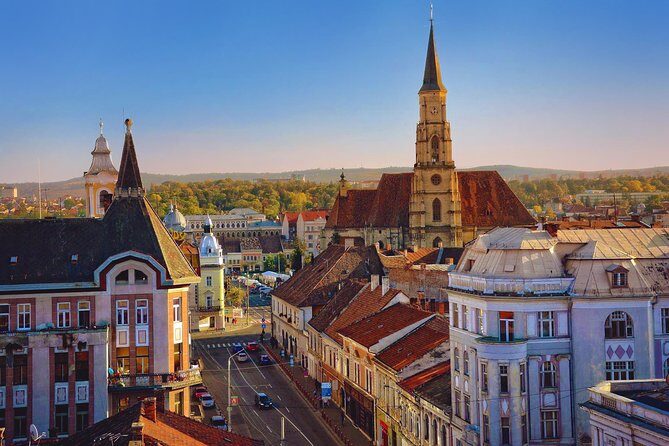
- Max 10 travelers means real guide attention on a short, efficient route
- English-speaking guide (and sometimes a multi-lingual one) keeps the storytelling clear
- Included National Museum admission helps you control costs and time
- Old-town landmarks center on Transylvania’s Gothic and Baroque mix
- Great orientation for your next day in Cluj-Napoca
Cluj-Napoca in 2 to 3 hours: what you really get
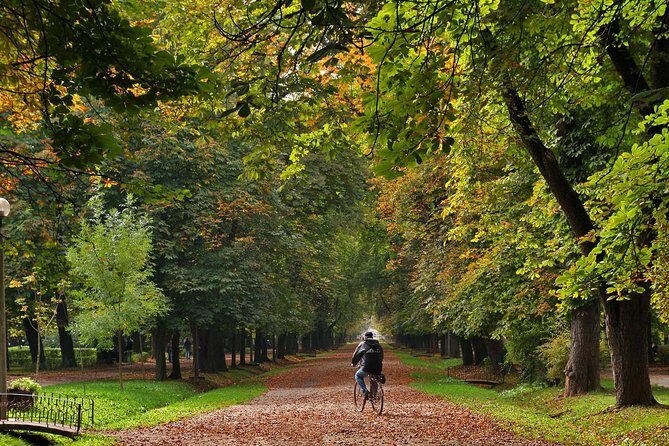
This tour is built for people who want the city’s “where am I and what should I notice” answer quickly. With a tight group size and a timed, walking-first route, you don’t just see buildings—you understand what kind of city you’re standing in.
You’ll spend time at three main stops, each with a different angle. The cathedral gives you the religious and medieval layer. The palace shows how noble power and later civic uses reshaped the same walls. Then the museum grounds the story with Transylvanian context.
I like that the timing is realistic. Two to three hours is enough to feel oriented, without dragging so long that you start rushing photos.
You can also read our reviews of more walking tours in Cluj Napoca


Starting at Carolina Obelisk: where to show up and why
Your meeting point is Carolina Obelisk, Piața Muzeului 2, Cluj-Napoca. The tour also ends back at the same point, which is useful if you’re lining up dinner plans afterward.
Arrive a bit early. One snag that can happen on any meeting-based walking tour is people missing the exact spot and then losing time. The tour format expects you to be there on time, because the whole route is timed around specific locations.
If you’re coordinating with friends, set a clear plan for who’s meeting where. Having a single “we’re all here” moment prevents the kind of confusion that turns a short tour into a stressful wait.
Catedrala Sfantul Mihail: what to notice inside
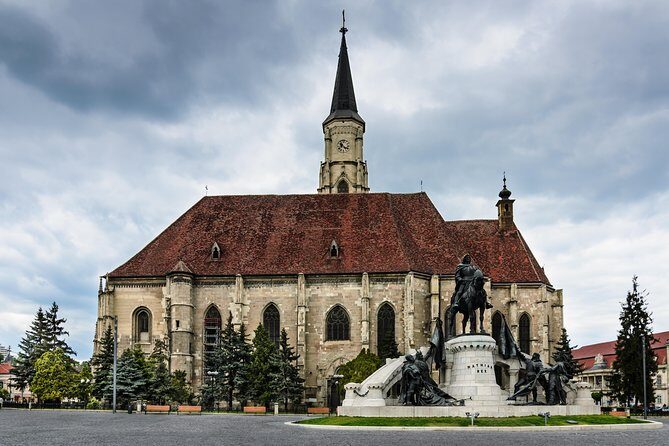
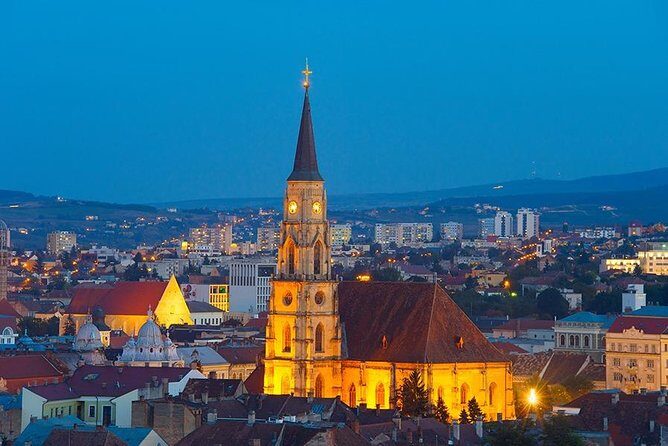
Catedrala Sfantul Mihail is the city’s signature landmark for a reason. It’s a Catholic cathedral and is described as the second largest in Transylvania, located right in the old-town center.
The outside gets you the big-picture impression. The inside is where your eyes should slow down. You’ll hear about a Gothic design influence that takes you back to the 14th century, plus medieval frescoes inside the cathedral.
Important budget note: cathedral admission is not included. Also, since you’re walking, you’ll want to be prepared for the possibility that interior access can be limited by openings and closures on the day you go.
If cathedral details matter to you—frescoes, style changes, medieval features—this stop is a strong use of your time. It’s also a good “anchor” landmark for learning how the old center is laid out.
Banffy Palace: Gothic power meets later civic life
Next up is Banffy Palace, a Gothic-style building tied to the Banffy noble family. Today it’s home to an art gallery, which means you’re not just looking at an old structure—you’re seeing a building repurposed.
What makes this stop interesting is the way the building’s story is described as moving through different eras. It’s had many functions, including a protocol residence, a nationally known casino, an apartment building, spaces for industrial companies, and even a cinema.
Admission here is also not included, so plan for a ticket if the gallery or interior access is part of what you want to get out of the visit. Even without paying extra for interior time, the palace’s exterior architecture can still help you read the city’s style shifts.
I like how this stop trains your eye. You start noticing how Cluj’s architecture doesn’t sit in a museum bubble. It keeps getting reused, and that reuse is part of the city’s personality.
National Museum of Transylvanian History: the included time saver

The museum stop is National Museum of Transylvanian History. Here, the big practical win is that admission is included.
You’ll spend about 30 minutes there. That’s not enough for a full museum marathon, but it’s a good primer. You’ll get enough context so the rest of your Cluj day makes more sense—especially if you plan to read signage, visit other sites, or connect what you see in churches and palaces to broader regional stories.
Because admission is included, you also avoid the most common budget surprise on this type of tour: paying for one place but not for another. Here you get a guaranteed “included value” moment.
If you enjoy history but don’t want to commit to a long indoor session, this museum stop hits the sweet spot.
You can also read our reviews of more city tours in Cluj Napoca

The architecture story: Gothic, Baroque, and how Cluj thinks
Cluj’s reputation as a capital for academics, technology, and culture isn’t just marketing. On this walk, you get the physical evidence of that claim by linking old buildings to modern use.
Your route highlights a mix of architectural styles around the center. You’ll see Gothic design influences in the cathedral and Banffy Palace, then you’ll meet the city’s cultural layer through the palace’s gallery use. The museum stop adds the regional context so you can connect buildings to people and eras.
One reason this tour works so well for first-timers is that it helps you build a mental map. When you later wander independently, you’re not only chasing pretty facades—you’re recognizing what you’re looking at and why it matters.
If you love architecture, this is the kind of tour where small details start to register. Styles stop being abstract, and you can start comparing what you’re seeing from stop to stop.
Guide impact: Andrea, Roxana, Robert, and Joseph
The difference between an average walking tour and a great one is usually the guide. In this case, the overall feedback points to guides who connect the city story to what you’re standing in front of.
I’m especially glad to see names like Andrea, Roxana, Robert, and Joseph showing up in the guide experiences. That matters because it suggests continuity of guiding quality rather than a one-off win.
In one example, Andrea’s approach included an opening history talk that went back to around 200 AD to explain how Cluj’s identity evolved. That kind of start makes later stops click. In another experience, Robert focused on history, architecture, and how the city space works, including how the tour helps you orient yourself for the following days.
Roxana’s route-focused attention was also called out, and Joseph’s adaptability was mentioned too. If you like explanations that adjust to your pace and questions, keep an eye out for that in the way your guide talks with the group.
Price and value: what $63.68 buys (and what it doesn’t)
At $63.68 per person, this tour sits in the “solid deal for a guided orientation” zone, mainly because part of the cost covers a professional English-speaking guide and the included museum admission.
Here’s the practical breakdown:
- You do get a guide plus museum entry at the National Museum of Transylvanian History.
- You don’t get admission included for Catedrala Sfantul Mihail and Banffy Palace.
So your true budget depends on whether you want to go inside the cathedral and palace spaces that require tickets. If you’re happy doing exterior viewing only where needed, you’ll spend less. If you want full interior access, set aside extra for those admissions.
A final value point: small-group format. A 10-person limit is what lets the guide answer questions and keep the group moving without turning into a loud stampede. On a short 2 to 3 hour walk, that attention can matter more than you’d think.
Pacing, walking comfort, and who will enjoy it most
This is a walking city tour, so your comfort comes down to basic things: sturdy shoes and a pace you can keep for about 2 to 3 hours. If you’re managing mobility issues, you’ll want to consider whether this kind of old-town walking works for you, since the tour format doesn’t mention vehicle support.
It’s also a good match if you:
- are visiting Cluj for the first time and want orientation fast
- like architecture without needing a full-day self-guided plan
- want museum context but not a long indoor session
It’s less ideal if your must-do list is all interior museums, because two stops have ticket gaps, and the museum time is timed at about 30 minutes.
For families, children are allowed but must be accompanied by an adult. If you’re traveling with kids, bring patience and snacks if you need them, since meals aren’t included.
What to check before you go, so nothing feels off
The main “gotcha” is admissions and access timing. The cathedral and Banffy Palace do not include admission, and opening hours can affect whether you’re able to see everything you planned.
Before booking—or before heading out on the day—make a simple plan:
- decide whether you want to pay for cathedral and palace interior access
- wear comfortable shoes so you don’t feel rushed
- set your meeting plan for the exact starting point at Carolina Obelisk
One more tip: if you’re hoping for a specific viewpoint like a tower panorama, ask your guide if it’s part of your exact route. One past experience mentioned a Fireman Tower climb, which suggests some routes may add skyline views depending on the day and flow.
Should you book this Cluj-Napoca walking tour
Book it if you want a fast, high-value orientation to Cluj-Napoca’s center. The combination of a small group, an English-speaking guide, and an included history museum stop is a practical way to learn the city without planning a full day.
Don’t book it if you’re trying to avoid extra entrances entirely. Since cathedral and Banffy Palace admissions are not included, your final cost can creep up if you want interior access at both stops.
If your goal is to understand Cluj’s identity—academics, tech, culture—through real buildings and their changing roles, this tour is a strong first move. And if you keep an eye on what’s ticketed and arrive at Carolina Obelisk on time, the experience tends to go smoothly.