REVIEW · CLUJ NAPOCA
Maramures: 2 Days in Rural Romania
Book on Viator →Operated by George Turism · Bookable on Viator
Maramureș moves at a slower speed. This two-day rural Romania trip strings together wooden churches, folk-art cemetery visits, and a steam train ride in Carpathian country. It’s built for people who want places most foreign visitors skip, without doing it alone.
I especially love the Surdesti Wooden Church stop and the Merry Cemetery in Săpânța. The first gives you real craftsmanship you can see up close. The second is one of those places where the stories feel bright and human, even though it’s a cemetery. One possible drawback: if you’re picky about pork or other meals, don’t assume alternatives will happen automatically—one vegetarian-leaning experience reported fixed pork menus despite advance notice.
In This Review
- Key things that make this Maramureș tour worth your time
- Maramureș in Two Days: What You’re Really Signing Up For
- Getting to the Start: Cluj-Napoca Pickup and the 8:30am Rhythm
- Day 1: Surdesti, Săpânța, and Barsana as a Single Story
- Surdesti Wooden Church: The Tallest Wooden Landmark Trip-Makers Actually Need
- Săpânța’s Merry Cemetery: Over 300 Painted Tombstones
- Barsana Monastery: A New Build With Traditional Motifs (and a Surprise Inside)
- The Overnight at a 3-Star Guesthouse: Why It’s Part of the Value
- Day 2 on the Mocănița Steam Train: The Vaser Valley Ride
- Bogdan Vodă Wooden Church (St. Nicholas Stop): A Clean Finale to Day 2
- Sacel Pottery Stop: Tradition You Can Watch in Real Time
- Price and Value: Is $506.70 Really Fair for Two Days?
- Food Reality in Maramureș: Vegetarian Options vs. Fixed Pork Menus
- Guide and Pace: When It Works, It Feels Effortless
- Who Should Book This Maramureș Tour (and Who Might Skip It)
- Quick Practical Tips Before You Go
- Should You Book This Maramureș 2-Day Rural Romania Tour?
- FAQ
- What is the duration of the Maramureș 2 Days in Rural Romania tour?
- What time does the tour start, and where do we meet?
- Is the tour offered in English?
- How many people are in the group?
- Are tickets and admissions included?
- Is there a vegetarian option?
- What does the steam train experience include?
- Where do we spend the night?
- What is the cancellation policy?
- FAQ
- What is the tour price per person?
- Are there any age rules for children?
- What about physical requirements?
Key things that make this Maramureș tour worth your time
- Small group size (max 15) means more flexible pacing and fewer “herd mode” moments.
- Wooden churches in different villages: Surdesti, Barsana, and the Bogdan Vodă church stop.
- Merry Cemetery’s painted tombstones: over 300, with scenes from everyday life.
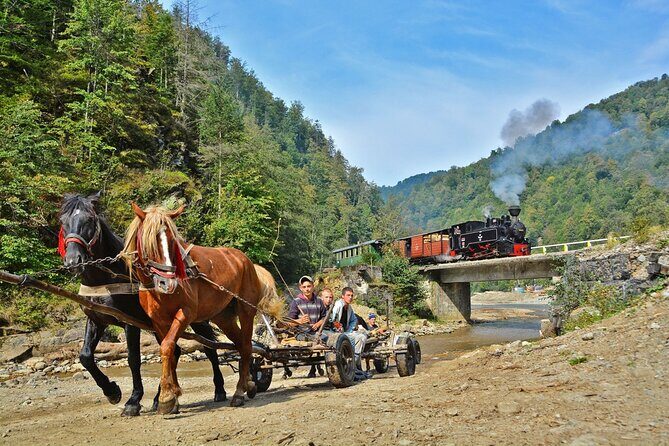
- Mocănița steam train through the Vaser Valley for about 2 hours.
- Night in a 3-star guesthouse so you wake up in the region, not back in the city.
- English-speaking guide (and pickup from Cluj-Napoca) to reduce stress on rural roads.
Maramureș in Two Days: What You’re Really Signing Up For
This isn’t a “check the boxes fast” tour. It’s more like a guided road trip that turns rural Maramureș into an easy, story-filled path. You start out from Cluj-Napoca, drive into the region over the Carpathians, and then slow down with church visits, folk art, and that signature steam train.
You’ll get a mix of visual impact and cultural context. Wooden churches are the obvious draw, but the rest of the route explains why Maramureș is different: the cemetery art, a monastery with “naive” interior painting surprises, and a pottery stop where tradition feels like a job passed down. The small group format helps, too. It makes it easier to ask questions and actually hear answers instead of just catching a sentence while walking.
The “two days” structure also matters. You’re not sleeping in a hotel in Cluj and commuting every day. Spending the night at a 3-star guesthouse lets you experience the region on its own terms.
A few more Cluj Napoca tours and experiences worth a look
Getting to the Start: Cluj-Napoca Pickup and the 8:30am Rhythm
Start time is 8:30am from the Cluj-Napoca area, and pickup is offered. The exact pickup time is shared the day before—so you’re not guessing at sunrise. For a tour like this, that detail is a big deal. Maramureș stops are spread out, and you don’t want to lose time hunting for buses or meeting points.
Because you’re traveling by road between villages, plan for a full morning feel. You’ll be stepping out of the vehicle, walking a bit around churches and cemetery grounds, and then getting back in again. Moderate physical fitness is recommended, so you’ll want to be comfortable with uneven paths and some standing while you look around.
Also, this is offered in English with a small group cap of 15 travelers. That combination usually means you can keep up with the pace and the explanations without your brain turning into soup.
Day 1: Surdesti, Săpânța, and Barsana as a Single Story
Day 1 is built like a thematic arc: craftsmanship and local artistry, then folk art told through graves, and finally a monastery that mixes old-world style with newer woodwork. In practice, it means you’ll spend your first day absorbing different forms of rural culture—religious architecture, community storytelling, and regional artistic touches.
Here’s the rhythm you can expect: one main stop in the morning, one in the afternoon, then another monastery visit. Each stop is around 1 hour, so you’re not stuck for too long in any one place, but you do get time to actually look. Admissions are included for some stops and free for others, which keeps the day from feeling like a constant ticket-line exercise.
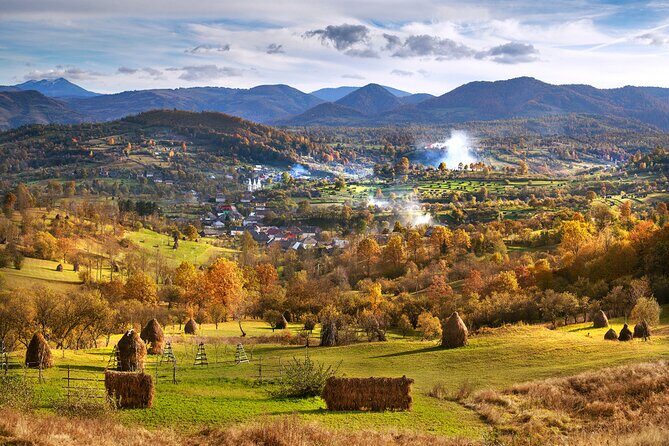
You’ll also be driving over the Carpathians into Maramureș territory. If you like road travel with views and photo stops, this is where you feel the “you’ve left the city behind” shift.
Surdesti Wooden Church: The Tallest Wooden Landmark Trip-Makers Actually Need
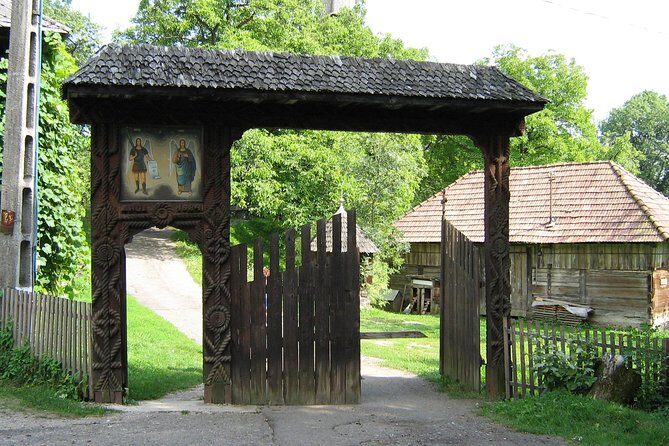
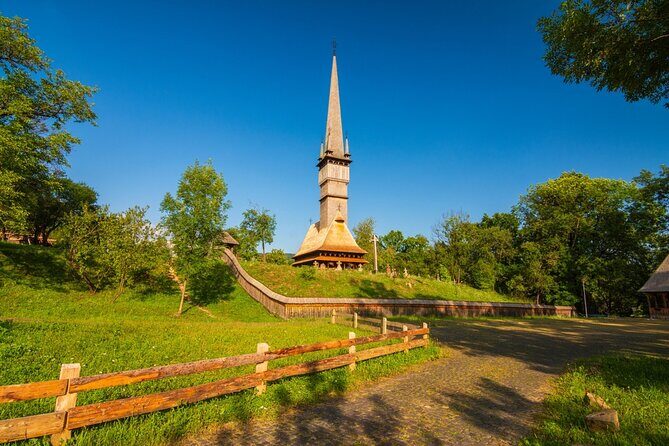
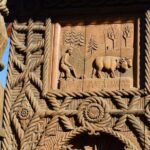
Surdesti is the kind of stop that rewards slow looking. You’ll visit the tallest wooden church in Surdesti, and that simple fact changes how you experience the building. Instead of just seeing wood and carvings, you start noticing scale and structure—how the form holds up, how the details sit across such height.
Right after, you’ll also visit a popular artist from the area. The exact person isn’t named in the tour outline, but the point is clear: you’re not just viewing a church; you’re seeing how creativity lives in the region beyond tourism. This combo helps you connect the architecture to a broader culture of making.
Practical tip: wear shoes you trust. Church surroundings can be uneven, and you’ll want your footing for photography and up-close inspection.
Săpânța’s Merry Cemetery: Over 300 Painted Tombstones
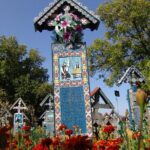
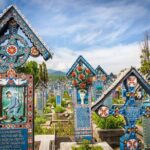
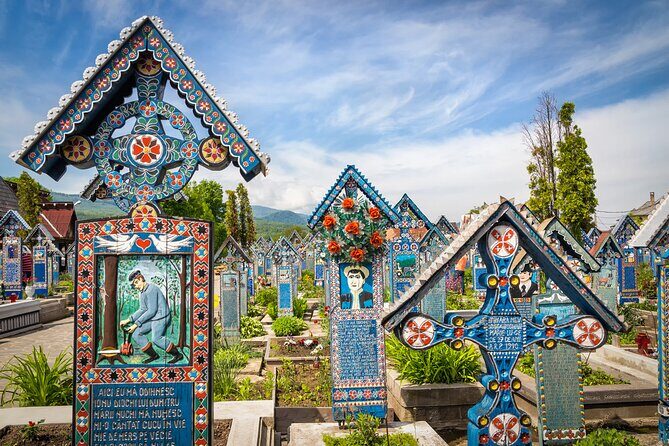
If you like places that feel emotionally specific, you’ll probably love the Merry Cemetery in Săpânța. It contains over 300 tombstones with paintings that show cheerful scenes from the lives of the deceased.
This stop works because it’s not “sad cemetery sightseeing.” The art style is bold and personal, and it changes how you interpret the landscape. You’re looking at a community’s way of remembering—almost like a book of portraits, but carved in stone and painted by hand.
Your time here is about 1 hour, and that’s usually enough to wander slowly, read what you can, and soak in the overall style without rushing. If you’re the type who gets stuck staring at small details, you’ll still have time to do it, because the cemetery is built for lingering.



Barsana Monastery: A New Build With Traditional Motifs (and a Surprise Inside)
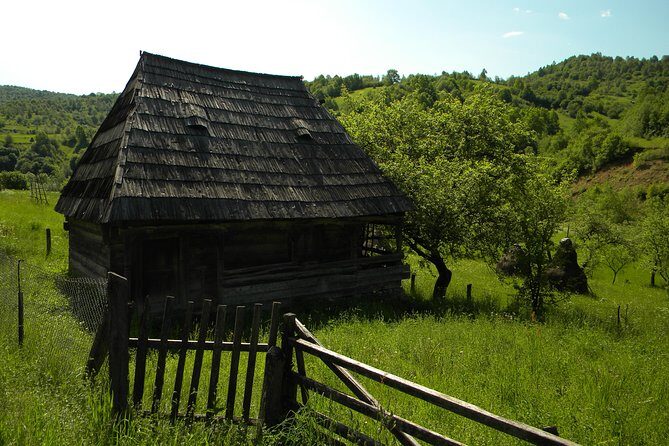
Barsana gives you the monastery side of Maramureș, with a twist. You’ll visit a new wooden monastery built in the 1990s, but it carries traditional motifs. That contrast is the interesting part: it shows you the region isn’t frozen in the past. It keeps shaping new things with familiar patterns.
You’ll also get a real “wait, what?” moment—naive interior paintings. The word naive here isn’t an insult. It points to a style that can feel direct, human, and slightly surprising compared to more formal church painting styles you might expect elsewhere.
This is listed as an entry free stop, and it fits well into the day because it’s both visually distinct and emotionally calmer than the cemetery. Allow about 1 hour to look around and take it in.
The Overnight at a 3-Star Guesthouse: Why It’s Part of the Value
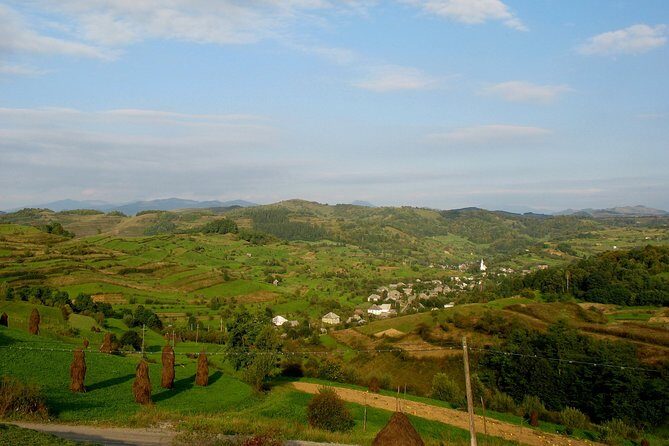
The tour includes spending the night at a 3-star guesthouse in the region. That matters for two reasons.
First, it saves you decision fatigue. You don’t have to sort out what to do with lodging after a packed first day. Second, you get to wake up closer to where the action is. That makes the second day feel less like a commute and more like a continuation of the same rural immersion.
Also, because you’re in a small group, your evening is quieter and easier to manage. You can plan your breakfast timing and not worry about syncing with a giant bus schedule.
Day 2 on the Mocănița Steam Train: The Vaser Valley Ride
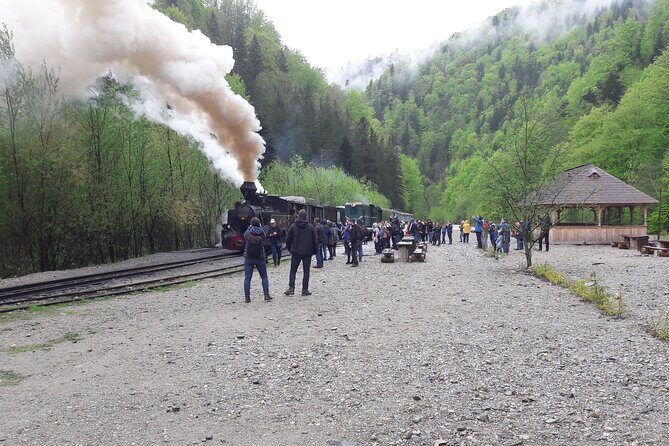
Day 2’s star is the Mocănița Maramureș steam train. You’ll ride for about 2 hours along the Vaser Valley, described as secluded and meandering. This is one of those experiences where the journey is the point, not just the photos at the stops.
A steam train in rural Romania isn’t just nostalgia. It’s a slow way of moving through a region that doesn’t always feel built for fast tourism. If you like watching countryside change gradually—houses thinning out, hills getting closer—that’s what this ride gives you.
This stop includes admission, so you’re not adding extra costs midstream. Bring a layer, too. Even when the day is warm, train rides can feel cooler than expected, especially when you’re sitting for stretches.
Bogdan Vodă Wooden Church (St. Nicholas Stop): A Clean Finale to Day 2
After the train, you’ll go to a wooden church stop listed as the Wooden church of St. Nicholas, at Bogdan Vodă. The tour describes it as beautiful, and wooden churches tend to do the same thing every time: they force you to look at the structure differently. You can spot craftsmanship patterns and joins that aren’t obvious from the road.
This stop is about 2 hours and is entry free. That’s a good amount of time, because you’ll want to photograph, walk around enough to see the church from different angles, and take in whatever you can before you start heading back to Cluj.
If you’re tired by day two, this is still a good “sit down and watch” type of stop. Wooden churches aren’t rushed in the way some museum stops can be, so you can match your pace to your energy.
Sacel Pottery Stop: Tradition You Can Watch in Real Time
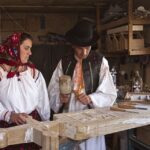
The final stop is Sacel, where you’ll visit a traditional pottery maker. You’ll learn about the trade and also hear how the tradition runs back a couple of generations in the family.
That’s the kind of ending that lands well. After two days of churches and a steam train, pottery brings the focus back to everyday making. It’s also practical in the sense that you can understand the work better than you can read about it. Even if you don’t know pottery jargon, you can still follow the steps and appreciate how long-term skill shows up in the results.
This stop is entry free and lasts about 1 hour, so it’s paced like a “finish strong” wrap-up rather than a long final detour.
Price and Value: Is $506.70 Really Fair for Two Days?
At $506.70 per person, this isn’t a budget add-on. But it also isn’t just “a driver and a map.” You’re paying for several things working together:
- Round-trip guiding and transport across rural Maramureș from Cluj-Napoca
- A small group format (max 15) with English support
- Admissions covered for major sights: Surdesti Wooden Church, Merry Cemetery, and the Mocănița steam train
- A night in a 3-star guesthouse
- Additional free-entry stops that still take time and expertise to route properly
If you price these pieces separately, the overnight and the steam train ticket alone can swing the math. The value question mostly comes down to what you care about: if you want a structured route that hits the region efficiently without figuring out rural timing, this tour can feel fair. If you only want one or two stops and would rather control everything yourself, then the per-person cost can feel heavy.
My advice: treat this as a “buy convenience and context” purchase. The route is dense, but it’s dense in places where someone has to do the organizing.
Food Reality in Maramureș: Vegetarian Options vs. Fixed Pork Menus
This is the one area where you should pay attention.
The tour information says a vegetarian option is available if you advise at booking. That’s good. But there’s also a real-world caution from a less ideal meal experience: a pork-only fixed menu showed up on at least one meal moment, including during lunch on the Mocănița train ride, and advance guidance wasn’t followed as expected.
So here’s the practical takeaway: if you avoid pork (or have any strict dietary rule), message the provider again after booking, not just at signup. Ask directly how meals will be handled on the steam train lunch and whether you’ll get a full alternative instead of a limited substitution.
Also, don’t assume you’ll have a quick chance to buy something else nearby during the train segment. Plan with the idea that the meal is part of the schedule, not an optional extra.
Guide and Pace: When It Works, It Feels Effortless
The quality of the guiding can make or break a rural tour, and this one has a strong signpost: the guide Andrei was praised for being exceptionally well informed and considerate, with flawless English and a safe, careful driving style over lots of miles.
Even if your guide isn’t Andrei, use that as a mental benchmark. A good Maramureș guide should explain what you’re looking at—why certain motifs repeat, what makes one wooden church different from another, and how folk art fits into everyday memory. When that explanation comes through clearly, the long drive stops feeling like wasted time.
The pace is also important. Each major stop is about 1 to 2 hours, so you’re not stuck in one place so long that you start feeling bored, but you get enough time to actually see details.
Who Should Book This Maramureș Tour (and Who Might Skip It)
This tour fits best if you:
- Want authentic rural stops you can’t easily piece together on your own
- Care about wooden architecture, folk art, and traditional crafts
- Like small-group travel and a clear day plan
- Prefer someone handling driving and ticket logistics in English
You might think twice if:
- Your dietary needs are strict and you can’t risk a meal mismatch (double-check meals in advance)
- You want free-roaming time and lots of independent wandering
Also, remember the physical side. It’s marked for moderate fitness, which usually means comfortable walking and standing, not extreme hiking. Still, plan for uneven terrain around churches and cemetery areas.
Quick Practical Tips Before You Go
A few small things can make this trip smoother:
- Wear shoes with grip. Wooden church surroundings and cemetery grounds can be rough underfoot.
- Bring a layer for the steam train ride. Sitting still for 2 hours can cool you down.
- If you’re vegetarian or avoiding pork, confirm your meal plan twice: at booking and again after confirmation.
- Have your camera ready for painted details at Merry Cemetery—those scenes are designed for close viewing.
- Keep your day flexible for photos and walking time. Even though stops are timed, rural places move at their own pace.
Should You Book This Maramureș 2-Day Rural Romania Tour?
If you want a structured, small-group way to experience Maramureș beyond the usual city routes, I’d say this is a strong choice. The best reasons are simple: wooden churches, Merry Cemetery, and that Mocănița steam train ride through the Vaser Valley, all tied together with English guiding and an overnight in the region.
The only real “pause” comes from meals. Vegetarian options exist, but at least one meal situation didn’t match expectations for a pork-avoidant traveler. If that applies to you, book only after you’ve confirmed exactly what you’ll eat on scheduled meals—especially the train lunch.
If your dietary needs are straightforward and you’re excited about the mix of churches, folk art, and steam train travel, this tour is a solid use of two days. You’ll come away with images and stories that feel very specific to Maramureș, not generic Romania sightseeing.
FAQ
What is the duration of the Maramureș 2 Days in Rural Romania tour?
It runs for approximately 2 days.
What time does the tour start, and where do we meet?
The start time is 8:30am, with a pickup offered from Cluj-Napoca. The exact pickup time is shared the day before.
Is the tour offered in English?
Yes, it is offered in English.
How many people are in the group?
The group size is capped at a maximum of 15 travelers.
Are tickets and admissions included?
Admission tickets are included for Surdesti Wooden Church, Merry Cemetery, and the Mocănița Maramureș steam train. Barsana Monastery, the wooden church stop in Bogdan Vodă, and the Sacel pottery maker visit are listed as admission free.
Is there a vegetarian option?
Yes. A vegetarian option is available if you advise at the time of booking.
What does the steam train experience include?
You ride the Mocănița Maramureș steam train through the Vaser Valley for about 2 hours, and admission is included.
Where do we spend the night?
You spend the night at a 3-star guesthouse.
What is the cancellation policy?
Free cancellation is available up to 24 hours before the experience start time for a full refund.
FAQ
What is the tour price per person?
The price is $506.70 per person.
Are there any age rules for children?
Children must be accompanied by an adult.
What about physical requirements?
Travelers should have a moderate physical fitness level.