REVIEW · CLUJ NAPOCA
Cluj-Napoca: 2.5-Hour Guided Walking Tour
Book on Viator →Operated by George Turism · Bookable on Viator
Cluj’s old center clicks fast. This 2.5-hour guided walking tour helps you get oriented with history and architecture instead of chasing streets with a map. You’ll move through the core of Cluj-Napoca at an easy pace, hitting major landmarks in one morning or afternoon.
I especially like that it’s a small-group experience (up to 20 people) where you get time to ask questions and take photos. I also like the smart, money-saving stop format: the Franciscan Church, St. Michael’s, and the other sights on the route are listed with free admission tickets.
One thing to consider: it’s not suitable for impaired mobility, and it’s a good-weather walk. On very hot days, you’ll want comfortable shoes and to be ready for schedule changes if the weather becomes unsafe.
In This Review
- Quick hits before you go
- Cluj-Napoca’s old center is easier when someone points the story
- Price and value: what $34.84 buys you in real terms
- Meeting at Piața Muzeului and planning your time for an easy afternoon
- Stop 1: Franciscan Church and why “oldest” matters in Cluj
- Stop 2: Catedrala Sfantul Mihail, Union Square, and the King Matthew connection
- Stop 3: Babeș-Bolyai University area and “The Intellectuals’ Street”
- Stop 4: Piața Avram Iancu and the feel of turn-of-the-century architecture
- How the guide shapes the walk: Daniela, Cristin, Cristina, and Cristian
- Small-group walking: what you’ll actually do for 2.5 hours
- Who this tour fits best in your Cluj plans
- Should you book this Cluj-Napoca walking tour?
- FAQ
- How much does the Cluj-Napoca guided walking tour cost?
- How long is the tour?
- Where does the tour start and end?
- Is the tour offered in English?
- Is admission included for the churches and landmarks?
- How many people are in a group?
- Do I need to arrange transport for this experience?
- Is the tour suitable for people with impaired mobility?
- What happens if the weather is bad?
Quick hits before you go
- Up to 20 people keeps it personal enough for real questions
- Free-entry stops at the Franciscan Church and Catedrala Sfantul Mihail
- Union Square + St. Michael’s is a high-impact history cluster
- Babeș-Bolyai University area ties architecture to education and civic identity
- Piața Avram Iancu spotlights turn-of-the-century city design
Cluj-Napoca’s old center is easier when someone points the story
A guided walk is worth it in Cluj-Napoca because the city’s center rewards “place + context.” You’re not just passing buildings. You’re connecting churches, squares, and street corners to how the city developed and what each place meant to different communities over time.
The tour is also a practical way to “map” the city without doing it the hard way. You start in the right location—Piața Muzeului—and you finish back there. That means less time figuring out where you are, and more time actually seeing.
You’ll be walking in a group with a professional guide, and the group size stays small. That matters, because it’s the difference between a lecture-from-the-front and a walk where you can ask one more question when something catches your eye.
You can also read our reviews of more walking tours in Cluj Napoca
Price and value: what $34.84 buys you in real terms
At $34.84 per person for roughly 2 hours 30 minutes, the value comes from three things: a guide, an efficient route, and time saved.
First, you’re paying for a professional guide rather than just hoping you interpret architecture correctly. You’ll get explanations of the buildings and what’s going on around them in plain language.
Second, you’re paying to skip the “guidebook shuffle.” Instead of picking one church and then trying to build a route on your own, you get a tight morning/afternoon route through key anchors.
Third, the tour includes several stops with listed free admission. That’s not just nice—on a walking tour, it keeps the experience moving and keeps your total spend from creeping upward.
There’s one nuance: the walking time and how packed the explanations feel can vary with the group. If you end up with a smaller group, you might notice less interaction simply because there are fewer people to bounce ideas off. The best version of this tour is when you feel free to ask questions and the guide can slow down when you want details.
Meeting at Piața Muzeului and planning your time for an easy afternoon
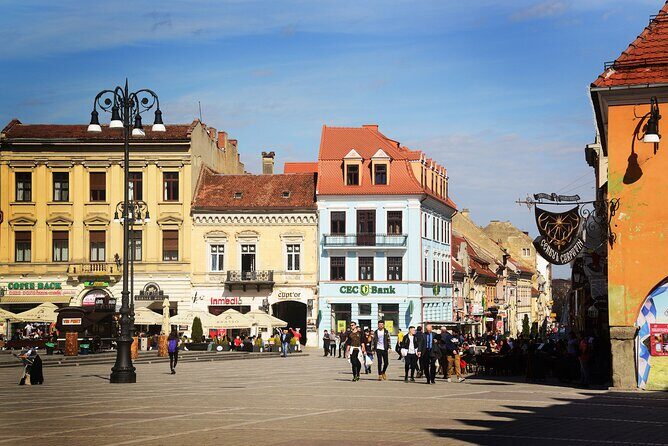
You meet at Piața Muzeului, Cluj-Napoca, and the tour ends back at the same meeting point. That’s a big help for planning. It’s also convenient if you’re using public transport, since the start area is close to it.
You’ll receive confirmation at booking time, and you’ll use a mobile ticket. That’s good for convenience—no last-minute searching for paper tickets.
The walk is designed for most people, but it’s not listed as suitable for impaired mobility. The route is on foot, and you should assume you’ll be doing real street walking and standing for explanations.
Timing note: it’s approximately 2 hours 30 minutes, but one guide-run can run longer when people are engaged. If you have a tight reservation later, build in a small buffer.
And finally, weather matters. The tour is described as requiring good weather. If conditions are unsafe—like extreme heat—expect a switch to another date or a full refund, so keep an eye on messages around tour time.
Stop 1: Franciscan Church and why “oldest” matters in Cluj
Your first stop is the Franciscan Church, described as the oldest building in Cluj-Napoca, dating back to the 13th century. This is the moment where the tour starts giving you perspective. When you see something that old, it makes every later building feel like a chapter in the same story.
What I like about starting here: it’s a reset point. Instead of jumping straight into the biggest looking landmark, you begin with age and continuity. The guide can connect the church’s endurance to the broader flow of Cluj’s history and architecture.
You’ll have about 20 minutes at this stop, and the listing says admission is free. That short time window is ideal for a walking-tour format—enough to understand what you’re looking at, without turning the whole experience into a long sit-down visit.
Potential drawback: if you expect a long interior deep-dive, the time here is limited. Still, for first-time visitors, it’s a strong start because it sharpens your eye before the tour moves into squares and civic spaces.
Stop 2: Catedrala Sfantul Mihail, Union Square, and the King Matthew connection
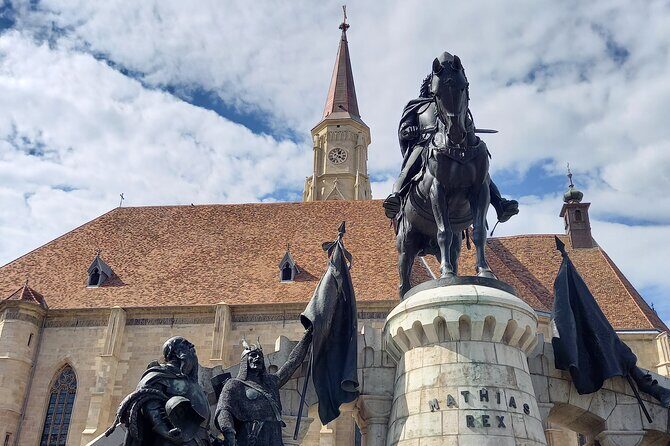
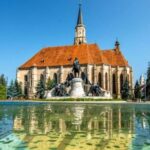
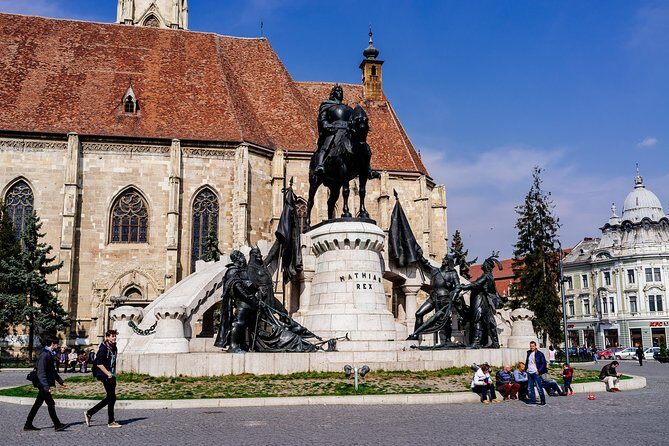
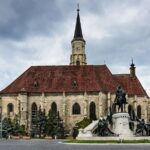
Next is Catedrala Sfantul Mihail, St. Michael’s church, with a setting that feels built for viewing. This part of the route is tied to Union Square, and you’ll see multiple layers of the city at once: the church’s presence, the surrounding buildings, and key statues.
The stop highlights include the idea that St. Michael’s church is ever-changing—so you’ll want to listen for what the guide explains about how it has evolved over time. It’s also a chance to notice how architecture and public space work together.
You’ll also see the statue of King Matthew Corvinus and learn how that figure fits into the city’s identity. Even if you only know Corvinus from school or a quick read, the guide’s local framing helps you place the monument in the urban story.
Like the first stop, this is listed as around 20 minutes and with free admission tickets. That keeps it efficient and means you stay moving rather than waiting around.
Small reality check: church exteriors and squares can be busy with pedestrians and everyday life. The upside is atmosphere. The downside is that it can take a moment to find the best spot for photos or to hear every detail if the area is crowded.
You can also read our reviews of more guided tours in Cluj Napoca


Stop 3: Babeș-Bolyai University area and “The Intellectuals’ Street”
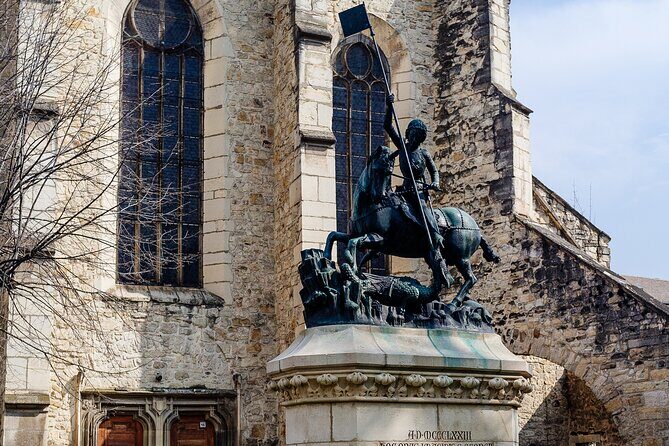
The tour then moves to the former “The Intellectuals’ Street” area, connected to the Universitatea Babeș-Bolyai din Cluj-Napoca. This is where the walk shifts from purely religious or monumental architecture to the city’s education and civic identity.
I like this stop because it shows how architecture isn’t only about churches and grand squares. A university district reflects what a city values: learning, debate, and cultural influence.
You’ll get around 20 minutes here, which is enough for the basics and to understand why this street name and university presence mattered. If you’re curious about how Cluj developed its role as an intellectual center, this is the stop that clicks it into place.
Admission is listed as free for this segment, too, so you aren’t forced into extra ticketing or scheduling. You can just focus on the explanation and the urban scene.
Possible drawback: if you were hoping for a full inside-campus tour, the time window is short and the walking format means you’ll likely stay oriented to the street and key building fronts. Still, as part of an overview walk, it works.
Stop 4: Piața Avram Iancu and the feel of turn-of-the-century architecture
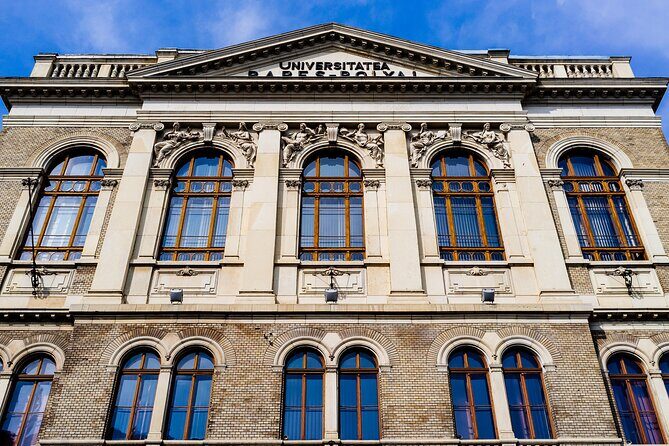
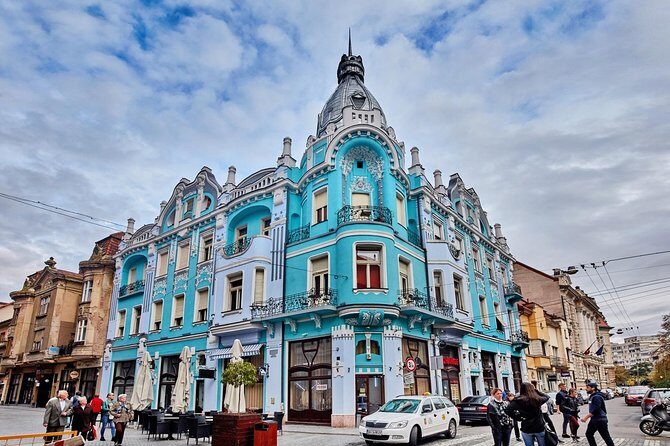
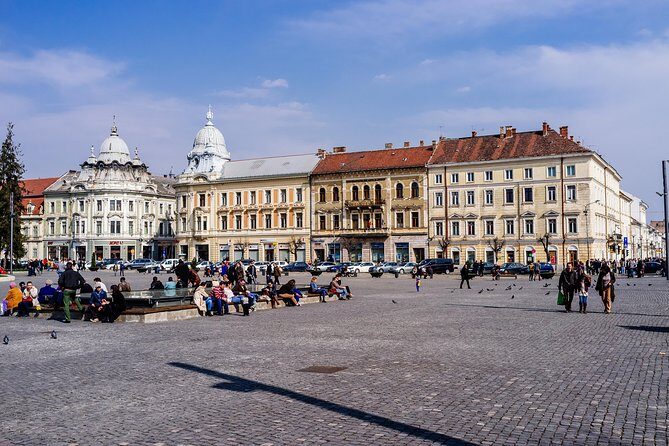
Your final stop is Piața Avram Iancu, another key square. This is where you get a stronger sense of Cluj’s architectural rhythm as it developed into the turn-of-the-century period.
The route description points you toward the city’s “turn of the century architecture.” In plain terms, that means the square becomes a visual lesson: façades, proportions, and public-space design all make more sense when you’ve already seen the older church anchor and the civic symbolism around Union Square.
You’ll have about 20 minutes here, again with free admission tickets listed. It’s a classic walking-tour finale: a place to look around, take photos, and let the guide connect the “why” of what you saw earlier to what you’re seeing now.
If you’re the type who likes to linger, this is the best stop to do it—because squares give you natural viewpoints from multiple angles.
How the guide shapes the walk: Daniela, Cristin, Cristina, and Cristian
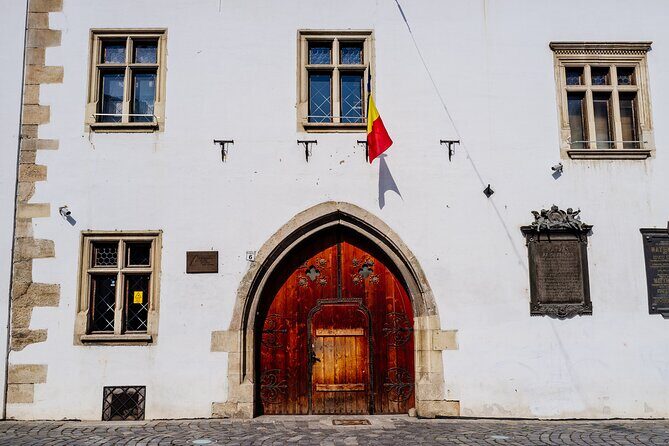
This tour’s biggest strength isn’t just the route—it’s how the guide explains it. The guide experience shows up clearly in the feedback pattern, and it’s easy to see why: on a walking tour, you only get one shot to make architecture meaningful.
I’ve seen guides named Daniela, Andre, and Cristina/Cristin/Cristian connected with strong results. The common thread is how they handle pacing and teaching: clear explanations, friendliness, and a willingness to slow down when someone has questions.
Punctuality also matters on a walk tour, and some guides have been praised for that. You don’t want to start late and then feel rushed during the stops.
There’s also a practical lesson in how they approach engagement. One response connected a more interactive experience to having a fuller group size. So if you’re trying to maximize your chances of a highly chatty, question-friendly tour, you might pick a departure time that tends to attract more people.
Balanced note: not every run feels exactly the same. If you end up with a smaller group or if the day runs tighter than expected, you could find the explanations less dynamic. Still, the overall format supports a relaxed pace where you can ask questions and take photos.
Small-group walking: what you’ll actually do for 2.5 hours
The tour’s highlights emphasize three things: skip map-and-guidebook stress, get history and architecture context, and keep a friendly pace with time for photos and questions.
That means you should expect a “walk + stop + explanation” cadence rather than a long series of rapid-fire photo stops. The good version of this tour lets you build a mental map of the center while you learn.
You’ll also get a clear list of what you’ll see, and that helps you prepare mentally. With the Franciscan Church, St. Michael’s at Union Square, the university area, and Piața Avram Iancu, you’re covering both sacred and civic anchors.
Since transport isn’t included, you’ll want to arrive on your own via your chosen route and then treat the tour day as a self-contained block.
Who this tour fits best in your Cluj plans
This is a strong fit if you’re:
- Visiting Cluj-Napoca for the first time and want an orientation walk
- Interested in architecture and how it ties to local identity
- Traveling with someone who likes history but doesn’t want a museum-style day
- Looking for a small-group morning/afternoon plan that includes photo time
It’s also a good option if you’re not into planning. The tour structure does the route-building for you, and you can spend your energy on understanding what you’re seeing.
It’s not a great fit if:
- You need accessibility support for impaired mobility
- You want a long indoor itinerary with lots of ticketed time
- You’re trying to squeeze this into the exact middle of a very tight schedule without buffer, given weather dependence and possible timing variation
Should you book this Cluj-Napoca walking tour?
If you want an efficient, friendly way to understand Cluj-Napoca’s core—without spending your vacation time arguing with a map—this tour is a solid choice. The route hits meaningful anchors, and the listed free admission stops help it feel financially light.
I’d book it if you value:
- A guided connection between buildings and story
- A pace that leaves room for questions and photos
- A route that brings together churches, civic squares, and education-area context
I’d think twice if you have mobility constraints or if you’re set on a long, slow, deeply inside-focused visit. Also, if you’re traveling in peak heat season, plan a little flexibility so you’re not disappointed if weather triggers a change.
If you do book, wear comfortable shoes, bring water, and show up ready to look up as much as you look ahead. Cluj rewards that habit.
FAQ
How much does the Cluj-Napoca guided walking tour cost?
The price is $34.84 per person.
How long is the tour?
It runs for approximately 2 hours 30 minutes.
Where does the tour start and end?
You start at Piața Muzeului in Cluj-Napoca, and the tour ends back at the meeting point.
Is the tour offered in English?
Yes, it’s offered in English.
Is admission included for the churches and landmarks?
For the listed stops, admission tickets are marked as free for the Franciscan Church and Catedrala Sfantul Mihail.
How many people are in a group?
The tour has a maximum of 20 travelers.
Do I need to arrange transport for this experience?
Transport is not included, so you’ll get to the meeting point on your own. The meeting point is near public transportation.
Is the tour suitable for people with impaired mobility?
No, it’s not suitable for people with impaired mobility.
What happens if the weather is bad?
The tour requires good weather. If it’s canceled due to poor weather, you’ll be offered a different date or a full refund.