REVIEW · CLUJ NAPOCA
3 Day Tour of Maramures
Book on Viator →Operated by Maramures Tours · Bookable on Viator
Maramureș feels like a time machine with purpose. This 3-day private tour strings together wooden heritage and real village life, then adds two serious stops that explain Romania’s 20th-century story. You start in Cluj-Napoca and finish back at the same meeting point, with a professional local guide handling the route and context.
What I especially like is how the days balance beauty with meaning. You spend time at Merry Cemetery, where painted wooden crosses and witty epitaphs create a community record, and you also get the Memorial of the Victims of Communism and of the Resistance in Sighet, using an old prison turned museum to show Romania’s history from 1945 to 1989.
One consideration: this is a lot of driving and touring in a short window, and it’s marked for moderate physical fitness. If you’re the type who needs long meal breaks or lots of downtime, you’ll want to plan your energy around the packed schedule.
In This Review
- Key highlights before you go
- Value and Price: What You Get for $763.34 in 3 Days
- Day 1 in Sighet: Wooden Epitaphs, a Tall Wooden Church, and Memory Museums
- Merry Cemetery and its witty epitaph tradition
- Sapânța-Peri Monastery: a 75-metre wooden church
- The Memorial of the Victims of Communism and of the Resistance (Sighet)
- Elie Wiesel Memorial House and Jewish Museum in Maramureș
- Day 2 in the Villages: Barsana’s Wood Complex and Crafts You Can See
- Barsana Monastery and the largest wood carving workshop
- Botiza: wool rugs dyed with plants
- Sacel: Dacian-style pottery and ritual masks (if available)
- Day 3: Breb, Sarbi, and Budesti’s Wooden Church Plus an Optical Illusion
- Breb: friendly locals and a crafts workshop
- Sarbi: water-powered farm machines still operating
- Budesti: optical illusion plus a medieval wooden church
- Small-Group Advantage: Why the Guide Makes It Click
- Practical Notes: Timing, Getting Around, and What to Pack
- Should You Book This Maramureș Tour?
- FAQ
- What is the duration of the Maramures tour?
- Where does the tour start and end?
- What time does the tour start?
- What language is the tour offered in?
- Is this a private tour?
- What’s included in the price?
- What is not included?
- Are entrance fees included?
- What physical fitness level is required?
- What is the cancellation policy?
Key highlights before you go
- Săpânța blue at Merry Cemetery, where epitaphs turn graves into stories
- A 75-metre wooden church at Sapânța-Peri Monastery in a striking setting
- Sighet’s memory museums: prison exhibits plus Jewish culture and Holocaust focus
- Barsana’s wood complex and a large wood-carving workshop in the same area
- Hands-on craft encounters with rug weaving, Dacian-style pottery, and masks (when available)
- Water-powered farm machines at Sarbi for a rare look at communal work
Value and Price: What You Get for $763.34 in 3 Days
At $763.34 per person, this isn’t a bargain tour. The value comes from what’s included versus what’s not. You’re paying for private transportation, a professional local guide, 3-star accommodation for 2 nights, and included entrance fees at multiple stops. That package matters in Maramureș, where you’re not just hopping between sights—you’re moving between villages with very specific craft and church traditions.
The other big value is how the itinerary mixes ticketed heritage sites with free-time stops that focus on meeting makers. This reduces the feeling that you’re spending the whole trip inside buildings. You still get major museums, but you also get the human side: weaving rugs, pottery, wood carving, and practical local life.
What’s not included is meals, drinks, snacks, and travel insurance, plus tips and souvenirs. That means you’ll want to budget for food each day, especially on the driving-heavy segments.
You can also read our reviews of more tours and experiences in Cluj Napoca.
Day 1 in Sighet: Wooden Epitaphs, a Tall Wooden Church, and Memory Museums
Day 1 is split between three major stops in Sighet plus a wooden church visit. It’s a powerful start because it sets up the region’s identity: faith, community, and the hard history that shaped modern Romania.
Merry Cemetery and its witty epitaph tradition
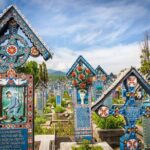
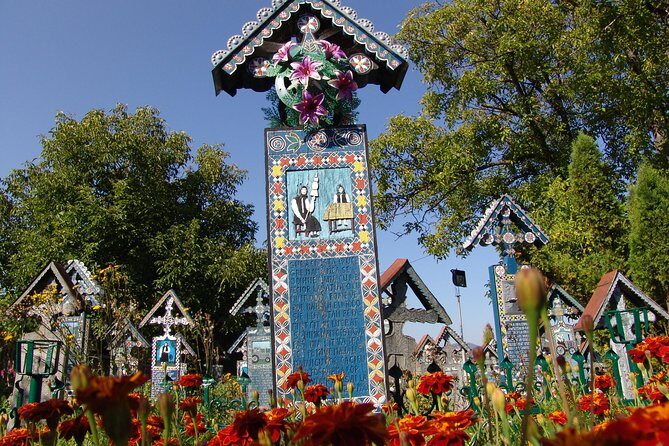
The Merry Cemetery is famous for a reason. The crosses are carved from wood, painted in vivid colours dominated by Săpânța blue, and decorated with epitaphs and images. The epitaphs don’t just list dates—they read like a community chronicle in verse, including virtues and vices, sometimes with humour.
You’ll get two things here: craft details (the wooden carving and paintwork) and a social idea. In many cemeteries, grief is kept private. Here, memory is public and even playful, which makes the place feel less like a grim list and more like a record of real people.
Practical note: you’ll have about 1 hour 30 minutes at the cemetery, so it’s enough time to walk slowly and read epitaphs, not just take photos.
Sapânța-Peri Monastery: a 75-metre wooden church
Next comes Sapânța-Peri Monastery, described as the tallest wooden church in the world at 75 metres high. You get about 30 minutes, plus the setting is presented as beautiful, so it’s one of those stops where the short time works because the impact is immediate.
This is a good breather between museums. Even with limited minutes, you’ll notice how wood structure can still create grand scale. If you’re a fan of architecture, use the time to look at how the craftsmanship holds up at height.
The Memorial of the Victims of Communism and of the Resistance (Sighet)
Then you shift from wood to the history of oppression. This memorial is housed in an old prison turned museum. You’ll learn Romania’s more recent history from 1945 to 1989, framed around the totalitarian experience and the nature of Communism.
Cells are now exhibits, so the message is physical, not abstract. You get an environment that forces you to confront what confinement looked like, rather than reading it like a textbook. It’s also noted as one of the most interesting and best documented museums in Romania, and it’s compared to major European memory sites.
You’ll have about 1 hour 30 minutes. That’s enough time to read and absorb, but if you tend to skim, you may miss what makes this museum effective.

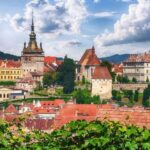
Elie Wiesel Memorial House and Jewish Museum in Maramureș
The Elie Wiesel Memorial House adds another layer of memory. It’s the birthplace of Elie Wiesel, Nobel Peace Prize winner and author of Night, and today it hosts the Jewish Museum in Sighet, with many displays focusing on the Holocaust.
If you wish, the tour notes additional optional areas like the Sephardic Synagogue, the Jewish Cemetery, and the Holocaust Monument. You’ll have about 30 minutes here, so decide early what matters most to you. If you’re most interested in the core exhibitions, focus on those and don’t spread yourself too thin.
Day 2 in the Villages: Barsana’s Wood Complex and Crafts You Can See
Day 2 leans into hands-on cultural work and village life. You’ll notice the itinerary uses a pattern: a major monastery complex, then smaller stops in villages to meet specific craftspeople.
Barsana Monastery and the largest wood carving workshop
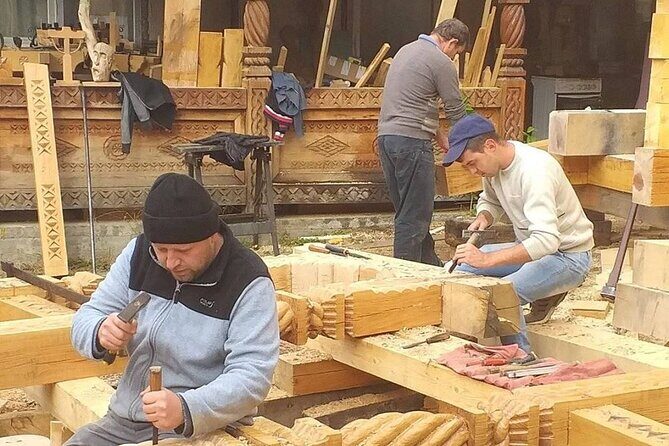
Barsana Monastery is described as the most impressive monastery of Northern Transylvania, a huge complex built in wood. You also visit a largest wood carving workshop in the same village area.
You’ll have 1 hour 30 minutes. This is the right length for a complex like Barsana because you need time to orient, look closely at wood details, and still enjoy the setting instead of speed-walking.
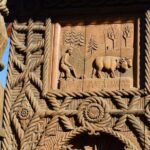
Why it’s valuable: wood monasteries aren’t just buildings. They’re a living craft tradition. Watching and learning about how carving and decoration are done in the workshop connection gives the monastery meaning beyond photos.
Botiza: wool rugs dyed with plants
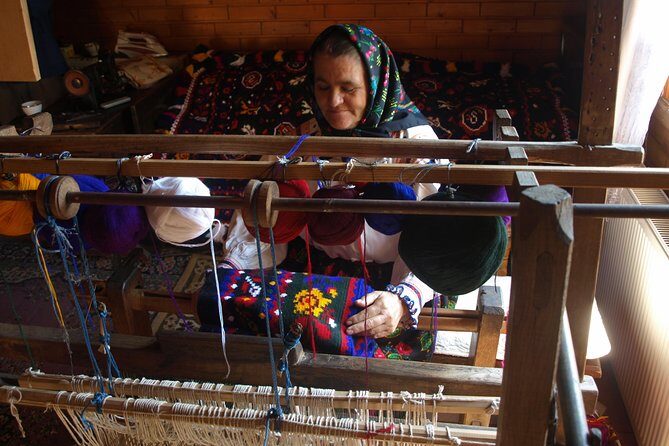
Botiza is for textiles. You’ll visit a lady who weaves woollen rugs, coloured with dyes made from plants, and decorated with antique motifs. The craft is recognized on the Representative List of the Intangible Cultural Heritage of Humanity (since 2016).
You also get time with people working in the fields and a stop at a mineral spring. This pairing matters. It shows the rug weaving isn’t a staged performance—it’s part of everyday survival and skilled labour.
You’ll have 1 hour, and entrance here is free for this stop as listed.
Sacel: Dacian-style pottery and ritual masks (if available)
In Sacel, you’ll meet the only ceramist still making Dacian style unglazed pottery, then you may meet additional makers if available. The itinerary suggests you might also see wool and sheepskin ritual masks, plus meet a wood carver and a lady living in her 100-year-old wooden house.
This stop is about living continuity. It’s one thing to view heritage items in a museum; it’s another to see tools and techniques being used by people who still make them.
You’ll have about 1 hour 30 minutes, and the stops are listed as free for admissions.
One consideration: “if available” means you should keep expectations flexible. Crafts are schedules and demand, not always a guaranteed show.
Day 3: Breb, Sarbi, and Budesti’s Wooden Church Plus an Optical Illusion
Day 3 brings lighter, playful curiosity while still holding onto tradition. You start with friendly local encounters, then move into practical technology, and end with a visual trick and a medieval wooden church.
Breb: friendly locals and a crafts workshop
In Breb, you’ll meet friendly locals, including the village poet, and visit a crafts workshop. You get about 1 hour 10 minutes.
This is the part of the tour that helps the whole trip feel human. A poet in the mix tells you something about cultural life here: art and identity aren’t separate from daily living.
Sarbi: water-powered farm machines still operating
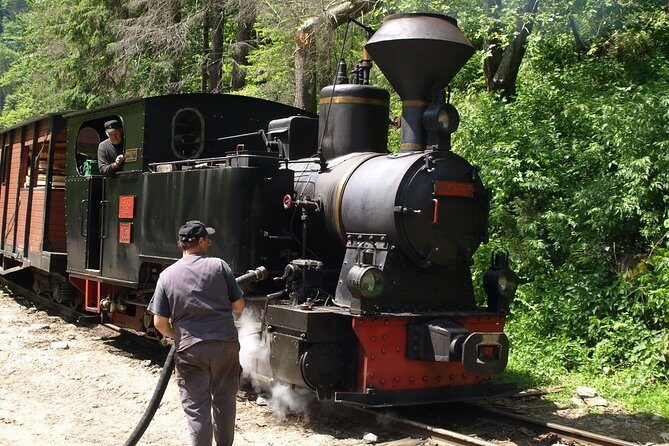
Sarbi is all about community work done the old way. You’ll visit water-powered farm machines still used for community needs: a fulling mill, a carding mill, a whirlpool, and an alcohol distillery.
You’ll have about 1 hour, and this is a rare type of stop because it’s functional heritage. You aren’t just seeing relics; you’re seeing systems built to do repeated work.
If you like “how things work,” this will be one of your favourite hours.
Budesti: optical illusion plus a medieval wooden church
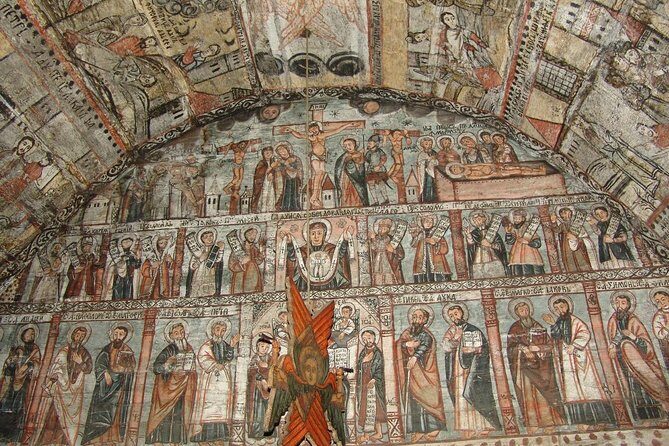
Finally, Budesti gives you two endings in one. First, you’ll see Romania’s most weird optical illusion. Second, you’ll see a fine medieval wooden church.
You’ll have about 1 hour, and then return to Cluj-Napoca where the tour ends back at the meeting point.
This final stop is a good way to cap the trip: after serious history and deep craft, you get wonder and a classic wooden church finish.
Small-Group Advantage: Why the Guide Makes It Click
This tour is described as private, meaning only your group participates. That matters because Maramureș doesn’t really reward a rushed script. A good guide changes the pace from “see sights” into “understand people.”
One highlight from a standout review was the impact of the local professional guide named Teo. The comments emphasize that the experience felt like meeting people in their daily lives, not just passing through checkpoints. The best part wasn’t only the itinerary—it was translation and context that helped visitors talk with makers almost like direct conversation, plus the way local trust transferred to the group.
Even if you’re not trying to be extra social, you’ll likely feel the difference between a generic guide and a person who can read the room here. The itinerary is built around meeting craftspeople and seeing community work, so guidance quality is not a small factor—it’s the whole point.
Practical Notes: Timing, Getting Around, and What to Pack

The tour starts at 9:30 am at Piața Unirii 15, Cluj-Napoca 400394. It runs for about 3 days, ending back at the meeting point. You’ll have 2 nights in 3-star accommodation, and breakfast is included for 2 mornings.
Because meals aren’t included, I suggest planning your lunches and dinners as part of your trip budget. Also, because you’re leaving early and visiting several stops per day, a snack strategy helps. Even a small bag of non-messy snacks can save you when timing shifts or you want to keep moving.
On physical comfort: the tour calls for moderate physical fitness. That doesn’t mean it’s hiking-heavy based on the info given, but it does suggest you should expect walking, standing, and moving between indoor and outdoor spaces.
Finally, keep the language in mind. It’s offered in English, and you’ll receive a mobile ticket. If you have dietary restrictions, you’ll want to handle them directly since meals aren’t included.
Should You Book This Maramureș Tour?

Book it if you want a strong mix of wooden heritage, living crafts, and real community context, and you like a guide-driven experience where the stops connect to each other. The itinerary is built to give you both the “wow” (wood churches, tall towers, painted cemeteries) and the “why” (prison museum history and Jewish memory in Sighet).
Skip it if you want a slow-paced trip with lots of free time, or if you hate tours where you’re in motion most of the day. Also, factor in food costs since meals and drinks aren’t included, and make sure your expectations match a moderate-fitness schedule.
If you’re the kind of traveller who cares about how people make things and how communities remember, this is the kind of itinerary that tends to stick with you.
FAQ
What is the duration of the Maramures tour?
The tour runs for 3 days approximately.
Where does the tour start and end?
It starts at Piața Unirii 15, Cluj-Napoca 400394, Romania and ends back at the same meeting point.
What time does the tour start?
The start time is 9:30 am.
What language is the tour offered in?
The tour is offered in English.
Is this a private tour?
Yes. It’s private, so only your group will participate.
What’s included in the price?
Included items are private transportation, all fees and taxes, 3-star accommodation for 2 nights, a professional local guide, and breakfast for 2 mornings.
What is not included?
Meals, drinks, snacks, travel insurance, tips, and other personal expenses are not included.
Are entrance fees included?
Yes for the stops listed with tickets included, such as Merry Cemetery, Sapânța-Peri Monastery, the Memorial of the Victims of Communism and of the Resistance, and the Elie Wiesel Memorial House. Other stops are listed as admission ticket free.
What physical fitness level is required?
The tour is listed for travellers with a moderate physical fitness level.
What is the cancellation policy?
You can cancel up to 3 days in advance for a full refund. If you cancel less than 3 full days before the start time, the amount paid is not refunded.