REVIEW · CLUJ NAPOCA
Cluj-Napoca: 2.5-Hour Guided Walking Tour
Book on GetYourGuide →Operated by GEORGE TURISM · Bookable on GetYourGuide
Cluj tells its stories on foot. In a 2.5-hour guided walk, you’ll see how German, Hungarian, and Romanian influence shaped the old city and still shows up in the buildings and street names.
I especially like the way the tour turns landmarks into people and events, with stop-by-stop context that makes Cluj feel understandable fast. I also love pairing the Matthias Corvinus sites with the Gothic drama of St. Michael’s Church, then finishing in the more formal, 1900s-looking city center.
One thing to consider: it’s still a solid stretch of walking, and the tour is marked as not ideal for people with limited mobility, even though it claims wheelchair access. If you’re sensitive to uneven sidewalks or long distances, plan carefully.
In This Review
- Key highlights worth knowing
- A 2.5-hour route that actually helps you read Cluj
- Meeting up and what to bring before you start
- The Corvinus story begins: the birth house and the wine angle
- Union Square and St. Michael’s Church: why Gothic matters here
- The Street of the Intellectuals: universities, fear stories, and medieval guilds
- Defensive walls to Avram Iancu Square: a shift from protection to ceremony
- Pacing and breaks: how the tour feels in real life
- Value check: is $34 worth it?
- Who this tour suits best
- Should you book this Cluj-Napoca walking tour?
- FAQ
- How long is the Cluj-Napoca guided walking tour?
- What does the price include?
- How much does it cost per person?
- What languages are offered?
- Where is the meeting point?
- Is the tour wheelchair accessible?
- What should I bring?
- Is it possible to cancel and get a refund?
Key highlights worth knowing
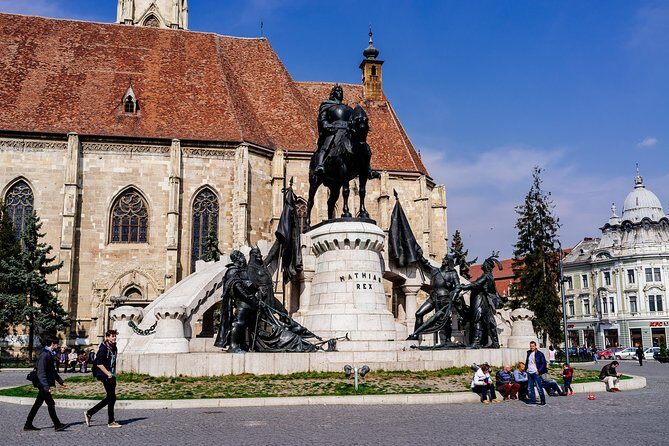
- Matthias Corvinus birth house + Corvinus equestrian statue: the tour ties his legend to real places you can stand in front of.
- St. Michael’s Church Gothic details: you get a clear reason to care about the architecture before you look up.
- Street of the Intellectuals: you’ll connect the university atmosphere with how Cluj grew.
- Witches and medieval fear: you’ll hear the stories that shaped local Middle Ages thinking.
- Old walls to newer squares: defensive-wall remains give context, then Avram Iancu Square shifts the mood.
- Orthodox Cathedral and National Theatre: you finish with 1930s and 1906 landmarks designed by notable architects.
A 2.5-hour route that actually helps you read Cluj
This guided walking tour is built for orientation. If Cluj is new to you, it’s one of the better ways to get your bearings without guessing. In 2.5 hours, you cover a lot of ground through the center: medieval references, Austro-Hungarian-era architecture, and a jump into the early 1900s civic look.
At a price of $34 per person, the value depends on what you want. If you like history you can see with your feet—rather than just photos—this is a strong deal. If you mainly want to wander with zero talking, you might find it a bit structured. But for most first-time visitors, it’s the kind of tour that gives you an internal map for the rest of your stay.
Also, the tour guide experience matters here. Multiple guides are mentioned by name in past experiences, including Daniela, David, Andrei, Adrian, and Urzica. The common thread is storytelling plus practical pacing, with room for questions and occasional seated breaks.
You can also read our reviews of more walking tours in Cluj Napoca
Meeting up and what to bring before you start
Meeting point can vary depending on the option you book, so I suggest you arrive a few minutes early and confirm the exact spot ahead of time. English and German are supported, and the guide is live the whole way.
Bring comfortable shoes first. This is a walking tour, and the emphasis is on stepping between sites. Add a sun hat if it’s bright. And bring a face mask or protective covering, since it’s listed as something to have.
Pets are not allowed, so plan your day if you’re traveling with an animal companion.
The Corvinus story begins: the birth house and the wine angle
One of the smartest moves on this tour is starting with Matthias Corvinus. He’s a major 15th-century figure in the region, and the guide doesn’t treat him like a trivia question. You visit his birth house, then you hear stories about his life and why he matters to Hungarian history.
What I like about this opening is that it gives you a framework before you move into the churches and squares. Once you know what the Corvinus connection is, the rest of the walk feels less like random architecture hunting.
The tour also brings in the importance of wine in the region. You might not expect wine to be part of a city-center walking route, but it fits Cluj’s wider cultural and economic background. Even if you don’t end up tasting anything that day, you leave with a better sense of what helped shape livelihoods in the region.
Practical note: the Corvinus stop is more than just a facade. You’re there to listen, then you’re moving on quickly, so don’t plan on long reading breaks unless the guide pauses.
Union Square and St. Michael’s Church: why Gothic matters here
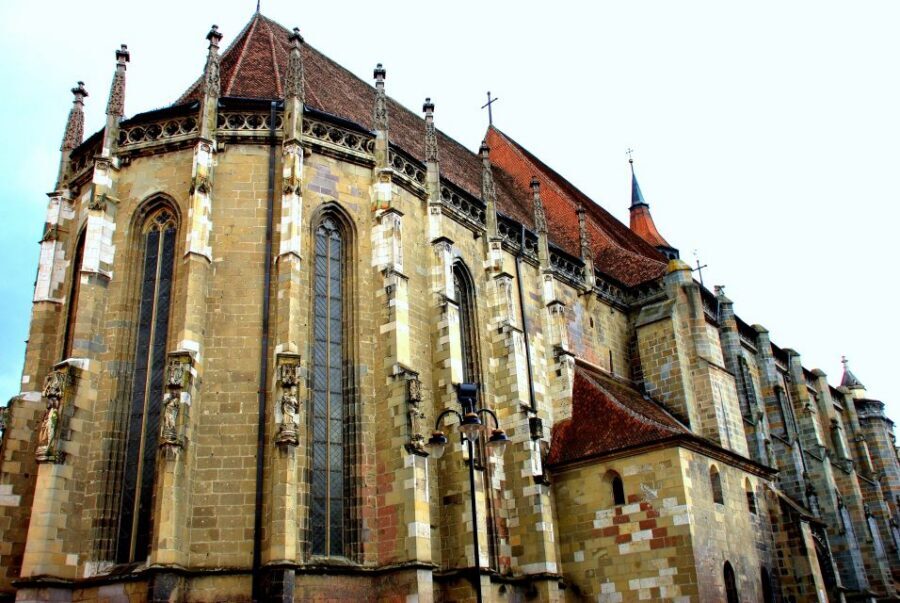
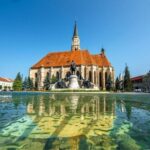
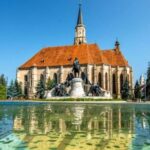
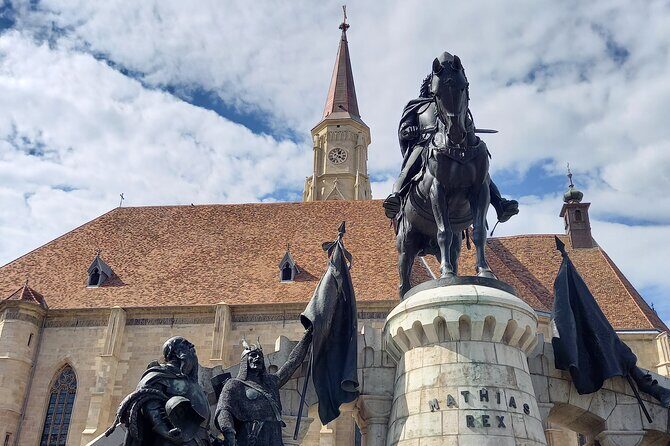
After Corvinus’s birthplace, you head toward Union Square, where the centerpiece is the striking St. Michael’s Church. This is classic Gothic style from the 14th century, and the tour helps you look at it with purpose.
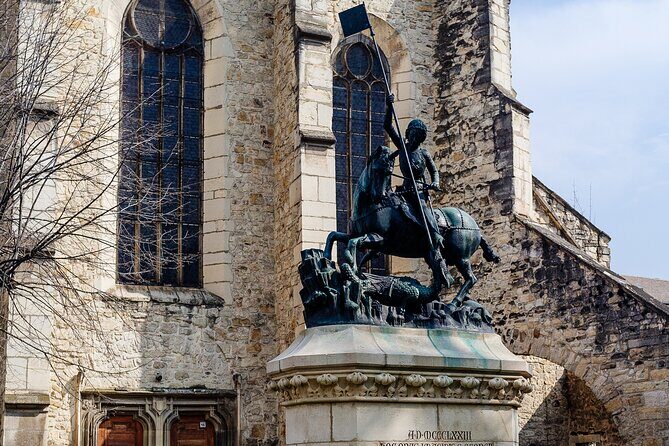
Here’s what changes on a guided walk: instead of you wondering what makes the style Gothic beyond “it’s old,” you learn what to notice—shape, form, and how the building fits the period’s ambition and identity. The guide also points out the equestrian statue of Corvinus positioned in front of the church, which creates a visual link between power (the statue) and spirituality (the church).
If you’re the type who likes architecture, this is one of the best segments. If you don’t care about churches, the Corvinus connection and the statue placement still make the stop worth your time, because you’re understanding why that sightline exists.
Tip from how this tour plays out: bring your neck-friendly attitude. Expect to look up. You’ll get more out of it if you’re ready for that.
The Street of the Intellectuals: universities, fear stories, and medieval guilds
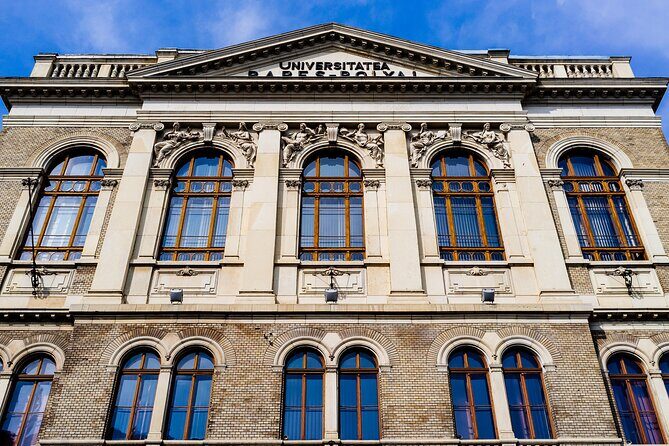
Next comes the Street of the Intellectuals, known for educational institutions including Babeș-Bolyai University. This part of the route does something useful: it shows you that Cluj isn’t just medieval walls and old churches. It’s also a modern learning city, and the tour connects that to how the city formed.
Then the guide shifts into medieval storytelling. You’ll hear about the fate of witches living in Cluj in the Middle Ages. You’ll also learn about the formation of guilds—how trades organized themselves and why that mattered for daily life.
This is also where the guide’s talent shows. A strong guide can turn heavy topics into understandable local history without getting lost in gloom. From past experiences with guides like Daniela and David, the storytelling tends to stay organized and tied to what you’re seeing on the street.
If you’re hoping for more culture than history, you may want to be in the right mood here. This segment leans clearly historical and religious, so it’s not a food-or-market-focused walk.
You can also read our reviews of more guided tours in Cluj Napoca


Defensive walls to Avram Iancu Square: a shift from protection to ceremony
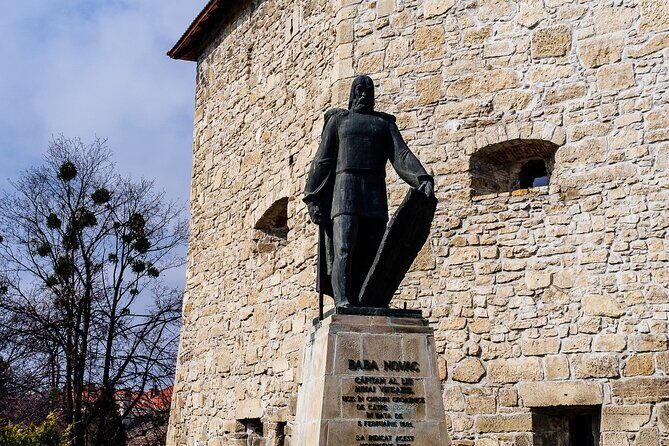
As you continue, you pass the remains of the city’s defensive walls. Seeing remnants like this in context is valuable. You get a physical sense of how Cluj once thought about security, and you can better understand why the old center developed the way it did.
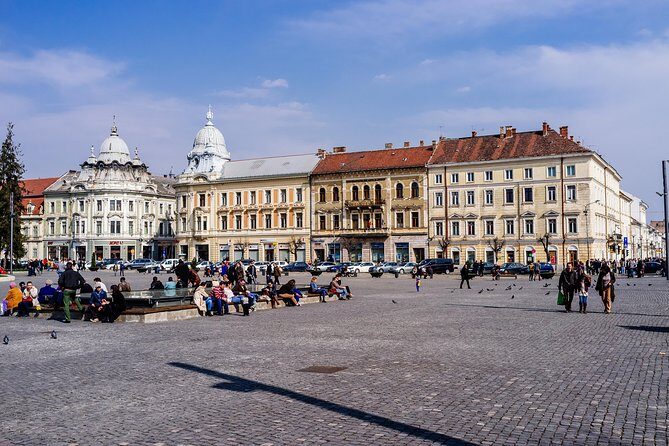
From there, the tour moves into a newer part of the old city: Avram Iancu Square. This shift changes the feel. The defensive story gives way to a more formal civic layout, where monuments and major institutions take the spotlight.
The Orthodox Cathedral here was built in the 1930s, and the guide’s explanation helps you understand why it belongs on this timeline. Then you finish the square area with the National Theatre, built in 1906 by a team of Viennese architects.
I like ending here because it closes the loop. Earlier, you saw medieval and Renaissance-era power symbols. Now you see civic identity in the 1900s—how a city chooses what to build when it wants to project confidence.
Pacing and breaks: how the tour feels in real life
A 2.5-hour walking tour can either feel brisk or stressful. The good news is that this tour is described as adjustable. In past experiences, guides have offered short seated moments during the walk, and the pacing can adapt to the group’s interest level and energy.
If you like a steady rhythm, you’ll get it. If you ask questions, you’re not punished for it. And if you’re the type who wants explanations to match your own background—general overview versus more detail—you can usually guide the conversation.
One caution: this is still a walking tour, not a stop-and-stare museum outing. Wear shoes that handle lots of city pavement. If you’re planning to combine this with nightlife or a long dinner afterward, I’d give yourself a calm evening.
Value check: is $34 worth it?
For $34 per person, you’re paying for two things: time with a live guide and a tight route through key sights. The tour lasts 2.5 hours, which means you’re not wandering for half a day and still uncertain what you’re looking at.
Where the value shows up is in the stop-to-stop connections: Corvinus to the statue and the church, guilds and witch stories to the medieval city mindset, defensive wall remnants to the way the center expanded. If you do this solo, you’d likely spend extra time researching each site and still miss some of the links.
For couples and groups, it’s also efficient. One guide voice can handle all the context for the whole group, so you’re not splitting into separate reading sessions.
Who this tour suits best
This tour fits you if:
- you’re visiting Cluj-Napoca for the first time and want a history map
- you like seeing major architecture with an explanation attached
- you want the Corvinus story without needing to research ahead
- you enjoy question-friendly guiding, with flexible pace
It may be less ideal if:
- you want lots of interiors (the data here focuses on outdoor sightlines and historical context rather than museum-style entry)
- you have limited mobility or struggle with long walking segments
- you’re expecting a food-focused or nightlife-style itinerary
Should you book this Cluj-Napoca walking tour?
I’d book it if you want a smart introduction to Cluj in a short window. The combination of Matthias Corvinus, St. Michael’s Church, and the ending at Avram Iancu Square creates a clean storyline: power and faith, then city identity as it modernized.
If you’re on the fence because of walking, consider your own limits honestly. The tour is listed as wheelchair accessible, but it’s also not recommended for people with limited mobility and not suitable for mobility impairments. If that applies to you, you might want to look for a less walking-heavy option.
If you’re comfortable on your feet and you like history that connects to what you can see, this is a solid choice for day one or day two.
FAQ
How long is the Cluj-Napoca guided walking tour?
The tour runs for 2.5 hours.
What does the price include?
It includes a 2.5-hour guided tour of Cluj.
How much does it cost per person?
The price is $34 per person.
What languages are offered?
The live tour guide is available in English and German.
Where is the meeting point?
The meeting point may vary depending on the option booked.
Is the tour wheelchair accessible?
The activity lists wheelchair accessibility, but it also notes it is not recommended for people with limited mobility and is not suitable for people with mobility impairments. If you have mobility concerns, check your needs carefully before booking.
What should I bring?
Bring comfortable shoes, a sun hat, and a face mask or protective covering.
Is it possible to cancel and get a refund?
Yes. Free cancellation is offered up to 24 hours in advance for a full refund.