REVIEW · BUCHAREST
4h Jewish Legacy in Bucharest – Private Tour by Car and Walking
Book on Viator →Operated by Supplier · Bookable on Viator
Jewish Bucharest, four hours, and it’s moving. This private car-and-walking tour threads together active synagogues, a Jewish history museum, and the Holocaust Memorial—plus you get pickup and drop-off so you’re not juggling taxis. What I like most is the pace (comfortable travel time between stops) and the chance to hear from English-speaking Jewish guides at the temple and museum. One heads-up: entrances aren’t included, and some sites like the Jewish Theatre—or even a synagogue—can be limited by closures or rehearsals.
This is also the kind of tour where the guide’s personal clarity really matters. Guides such as Radu and Sebastian are highlighted for strong English and for explaining Romania’s role in the Holocaust without softening the facts. That’s powerful, but it also means the day includes an emotional stop, and you should be ready for that.
Finally, this is built for real-world Bucharest. The schedule is tight but not frantic: you’ll do about one hour per major stop, then move by climate-controlled vehicle. If you dislike paying a few extra site fees once you arrive, plan for that in your budget—on-site tickets run from 25 RON to 30 RON for the paid stops, while the memorial is free.
In This Review
- Key highlights before you go
- A comfortable 4-hour route through Jewish Bucharest
- Choral Temple: from Vienna-inspired copy to living synagogue
- Holy Union Temple museum: Jewish community life plus Moses Rosen
- Holocaust Memorial: zachor in Hebrew, built for memory
- Teatrul Evreiesc de Stat: Hebrew culture and why schedules matter
- When synagogues are closed: how the day adapts
- Why the private format is worth paying for
- Price and on-site ticket reality (the part to budget for)
- Who should book this tour, and who might not love it
- How to get the most out of the day
- Should you book Jewish Legacy in Bucharest?
- FAQ
- FAQ
- What is the duration of the tour?
- Where does the tour take place?
- What does the price include?
- Are entrance fees included for the stops?
- What is the start time?
- Is pickup available?
- Is this tour private?
- What language is the tour in?
- What if the theatre or a synagogue is closed when we arrive?
- Can I get a refund if I cancel?
Key highlights before you go
- Private, car-based route: less transit stress and more time at each landmark
- Jewish guides at key stops: temple and museum context with real names and lived detail
- Choral Temple’s WWII restoration: a story that connects Bucharest to wider European Jewish history
- Holy Union Temple museum focus: exhibitions plus a major liturgical collection tied to Moses Rosen
- The Holocaust Memorial’s one-word design: zachor (remember) built into the monument’s structure
- Jewish Theatre is conditional: you can visit only if there are no rehearsals
A comfortable 4-hour route through Jewish Bucharest
This tour runs about 4 hours starting at 10:00 am, with a private guide in English and a climate-controlled vehicle for the ride portions. You’ll also get pickup and drop-off at your hotel, which matters in Bucharest—saves time, saves energy, and spares you the runaround after a museum stop.
The format is simple: car between sights, then walking inside each location. Most people will be fine with the pace, and the sites are positioned near public transportation in case you’re curious later. If you like context more than checklists, this works well because the guide keeps tying what you see to what happened and why it still matters.
The value is also in the route design. Bucharest’s Jewish landmarks aren’t all grouped in one walkable bubble, so the car is the difference between a “see it fast” day and a “understand it” day. At $130.97 per person, you’re paying for that private time plus the English guide, not just admission line time.
You can also read our reviews of more walking tours in Bucharest

Choral Temple: from Vienna-inspired copy to living synagogue
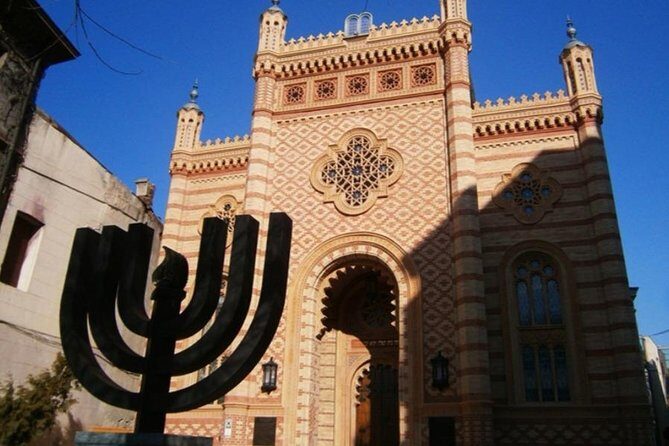
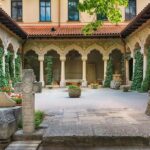
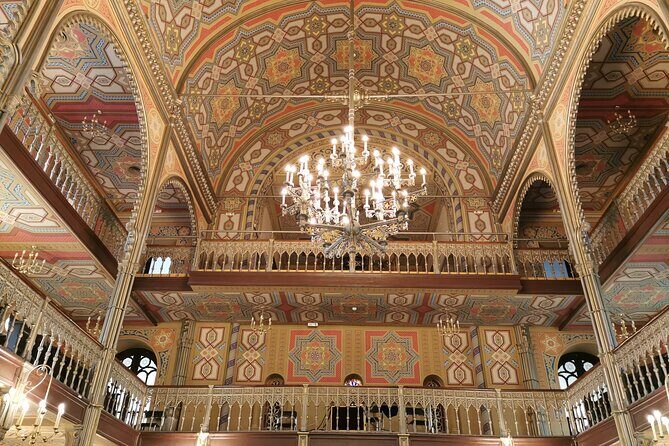
Your first stop is the Choral Temple, a synagogue in Bucharest that’s a copy of Vienna’s Leopoldstadt-Tempelgasse Great Synagogue. That Vienna-to-Bucharest connection gives you an immediate “this wasn’t isolated” feeling—European Jewish culture moved, adapted, and rebuilt.
The building’s modern story is harder. It was devastated by far-right Legionaries/Nazis, then restored after World War II in 1945. Today it still holds daily religious services in a small hall, and it’s one of the few synagogues that remains active in Bucharest and in Romania.
Practical tip: admission isn’t included, so expect an extra 30 RON ticket at the door. Also, because this is an active synagogue, things can run differently than a museum—go in with a respectful mindset and you’ll get more out of the moment. If you’re hoping for a “tour-only” vibe, this stop is more of a working place.
Holy Union Temple museum: Jewish community life plus Moses Rosen
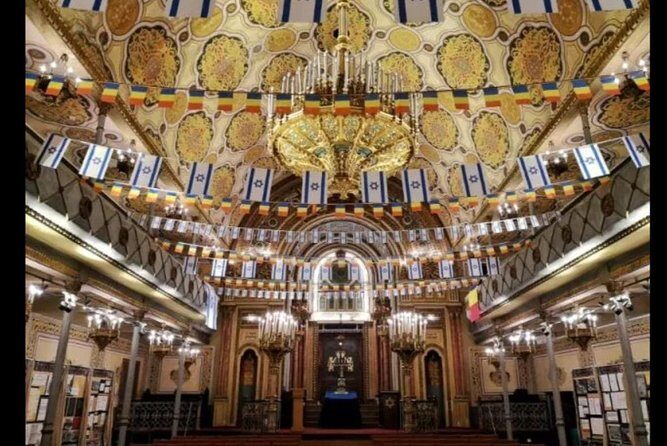
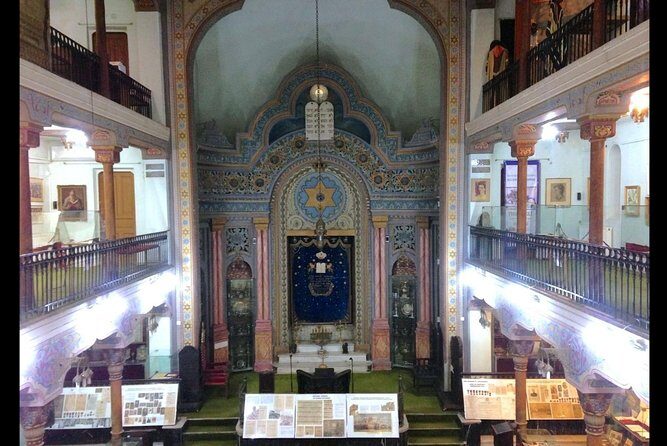
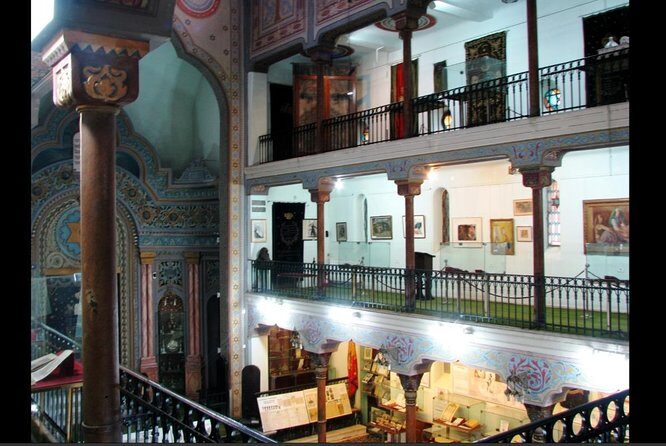
Next up is the Museum of History of the Jewish Community, housed in the Holy Union Temple synagogue. The synagogue was constructed in 1836, and since 1978 it has functioned as a museum focused on Jewish history in Bucharest.
What I like about this stop is how the museum balances everyday life with objects that carry meaning. You’ll see separate exhibitions explaining how a once vibrant Jewish community lived, and you’ll also encounter a serious liturgical collection. A key name here is Moses Rosen, Romania’s chief rabbi from 1964 to 1994, who assembled much of what’s now in the museum.
This is where the tour stops being only emotional and becomes specific. Instead of vague “this is important,” you get details you can hold onto—how community life worked, what people valued in worship, and how heritage was preserved enough to become museum material.
Admission isn’t included here either, and the ticket cost is listed as 30 RON. Budget time for the exhibitions so you’re not sprint-reading; even if you only linger on a few sections, the museum is dense with names, themes, and artifacts.
Holocaust Memorial: zachor in Hebrew, built for memory
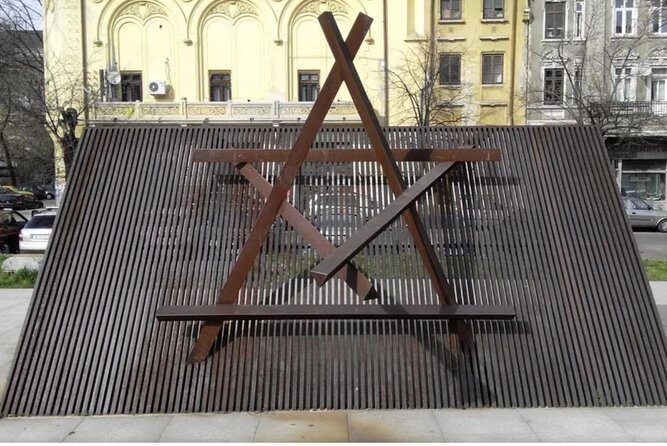
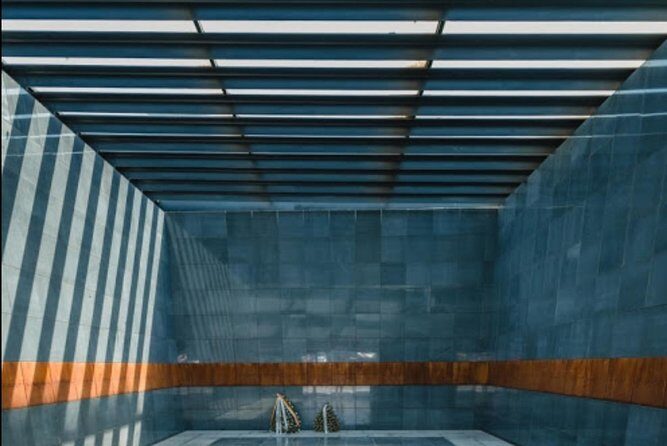
The Holocaust Memorial is unveiled in October 2009, and it’s unflinching about Romania’s role in the genocide of Europe’s Jews. The message is guided by findings from the Wiesel Report commissioned by the Romanian government: it concludes that, outside Germany, Romania was responsible for the deaths of more Jews than any other country.
The monument itself is simple and striking. It’s built around a column where each side has a single Hebrew letter. Put together, the letters read zachor, meaning remember. There’s also a hall of remembrance and plaques listing many Romanian Holocaust victims’ names.
This stop works best when you slow down for it. You don’t need to be a history expert to feel what it’s doing—reducing an incomprehensibly large tragedy into a design you can’t quickly forget. Expect this part of the day to land emotionally.
Good news: admission is free. Plan to spend a full hour here, even if you think you’ll be “done quickly.” The names and the structure are the point.
Teatrul Evreiesc de Stat: Hebrew culture and why schedules matter
The final stop is Teatrul Evreiesc de Stat (the Jewish State Theatre), described as an edifice of Hebrew culture. This is the moment that widens the day from history into living language and performance culture.
One caution: the Jewish Theatre can be visited only if there are no rehearsals. So you might walk in expecting a quiet “see the building” stop, and instead you could find it limited by what’s happening backstage. The tour’s own notes and real-world experience both point to this kind of timing issue.
If the theatre is available, you’ll likely connect the dots between what you learned earlier and how culture survived through art. One guide’s experience also highlighted conversations tied to the Yiddish theatre world, including mention of Marcel in connection with that side of programming. Even without that exact moment, the theatre stop is where the day can feel less like a history lesson and more like a statement about continuity.
The entrance fee for the Jewish State Theatre is listed as 25 RON (about €5). It’s not included, so keep that in your plan.
You can also read our reviews of more private tours in Bucharest




When synagogues are closed: how the day adapts
This tour is built around real buildings, and real buildings sometimes aren’t cooperative. The notes mention the Mamular Synagogue is not open every day, and the Jewish Theatre is restricted by rehearsals. Add in the fact that religious holidays can affect access, and it’s smart to enter with flexibility.
In practice, that means a guide may adjust the route or time spent in certain areas. Some tours also include “drive-by” context when an expected interior visit isn’t possible. If you’re the type who gets upset when a plan changes, make peace with that now: the guide’s job is to help you see what’s possible, not to pretend doors always open.
It’s also one reason I like the private setup. If one stop is limited, you’re not stuck waiting in a crowd while the itinerary tries to stay rigid. A good English-speaking guide can still make the day coherent even when a door is closed.
Why the private format is worth paying for
You’re not just buying four hours of sightseeing. You’re buying a guide who can explain what you’re seeing as you’re seeing it. In the experiences shared, guides such as Radu and Sebastian are praised for making the tour feel personal and clear, including straight talk about difficult history.
The private format also helps with pacing. Each major stop is timed at about one hour, and the car travel keeps the day comfortable instead of turning into a long tram-bus grind. That matters in Bucharest, where weather and timing can turn a “small walk” into an all-day mission.
And because it’s private, your group can set the tone. If you’re more interested in architecture, you can ask. If you want more context on the Holocaust Memorial’s message and sources, you’ll be able to linger. A group tour tends to smooth out nuance; a private tour gives you room for it.
Price and on-site ticket reality (the part to budget for)
At $130.97 per person for a 4-hour private tour, the base price covers a professional English guide and private transportation. What’s not included are the entrance fees for paid stops:
- Choral Temple: 30 RON
- Museum of History of the Jewish Community: 30 RON
- Jewish State Theatre: 25 RON
- Holocaust Memorial: free
So your on-site spending is likely coming mostly from the three paid locations. If you’re budgeting in euros, the listed conversions show roughly €5 for the theatre and about €6 each for the other two paid stops. Even if exact exchange rates vary, the totals are predictable, and you won’t get surprised halfway through the day.
The real value angle is this: without a private guide and a car, you could still visit individual sites, but you’d spend more time sorting logistics and less time getting the stories behind the buildings. This tour compresses that work into one day with an English-speaking guide handling the connections.
Also, this tour tends to get booked ahead (an average booking window of 32 days). If you’re traveling in peak times, don’t assume you can wait.
Who should book this tour, and who might not love it
This experience is a strong match if you want a guided, respectful overview of Jewish Bucharest through places that still hold meaning today. It’s also great for first-time visitors who don’t want to stitch together transport and history on their own.
You’ll likely enjoy it if you:
- appreciate clear English explanations with specific names and events
- want to see the memorial and understand its message, not just take photos
- prefer comfort and time efficiency (car + short walk)
It may be less satisfying if you hate schedule uncertainty. The theatre stop depends on rehearsals, and some synagogue access can change. If your trip is built around guaranteed interior visits every day, build in flexibility.
How to get the most out of the day
A few practical moves will help you squeeze more meaning out of the hours:
- Bring a little patience for timing. When rehearsals or holiday schedules affect access, a good guide shifts the day—let them work.
- Plan your questions. Ask about the link between Bucharest and Vienna at the Choral Temple, or the role of Moses Rosen in the museum collection.
- Treat the Holocaust Memorial like the center of the day, not a quick stop. Give yourself room to stand, read, and absorb.
If you do those things, the day feels less like a route and more like a story arc—from community life, to loss, to memory, and back toward culture.
Should you book Jewish Legacy in Bucharest?
I’d book it if you want a focused 4-hour window into Jewish Bucharest with the comfort of a private vehicle and the kind of guidance that explains the hard parts without skipping them. The value is strongest when you want structure: you get four key stops, each handled with about an hour of time, plus hotel pickup and drop-off.
I’d hesitate only if your priority is guaranteed access to every interior space, every time. With the theatre and some synagogues subject to rehearsals or opening schedules, you need a flexible mindset. If that’s you, this tour is a meaningful way to see Bucharest beyond the usual postcard stops.
FAQ
FAQ
What is the duration of the tour?
The tour is about 4 hours.
Where does the tour take place?
It takes place in Bucharest, Romania, visiting multiple Jewish landmarks around the city.
What does the price include?
The price includes a professional English guide and private transportation.
Are entrance fees included for the stops?
No. Entrance fees are not included for the Choral Temple, the Museum of History of the Jewish Community, and Teatrul Evreiesc de Stat. The Holocaust Memorial is free.
What is the start time?
The tour starts at 10:00 am.
Is pickup available?
Yes, pickup is offered, with convenient pickup and drop-off at your hotel.
Is this tour private?
Yes. It’s a private tour/activity, and only your group participates.
What language is the tour in?
The tour is offered in English.
What if the theatre or a synagogue is closed when we arrive?
The Jewish Theatre can be visited only if there are no rehearsals. The notes also mention that some synagogues are not open every day, so access can be limited and the guide may adjust what’s possible.
Can I get a refund if I cancel?
Free cancellation is available up to 24 hours in advance for a full refund. If you cancel less than 24 hours before the start time, the amount paid is not refunded.