REVIEW · BUCHAREST
The Real Story of Gypsies – Slavery in Romania
Book on Viator →Operated by BUSINESS TRAVEL SOLUTIONS · Bookable on Viator
Bucharest holds painful truths in plain sight. This 3-hour walking tour connects major landmarks to the Roma experience in Romania, from forced slavery to remembrance and craft. I love that it pairs serious learning with a practical ending at a real artisan shop.
Two things I especially like: the tour is guided in English, and the flow is built around clear stops you can actually locate and revisit later. I also like the group size cap (up to 15), which keeps questions possible without the guide feeling rushed.
One drawback to consider: you’ll spend time at places tied to persecution and genocide, so this isn’t a casual “see sights” stroll—it asks you to be ready for heavy topics, and the pace may feel emotionally weighty.
In This Review
- Key highlights you’ll feel in real life
- A 3-hour walk through Roma slavery, persecution, and craft
- Where the tour starts: Teatrul Ion Creangă to central Bucharest
- Stop 1: Platoul Piata Amzei and the site of an old slaves market
- Stop 2: Palatul Stirbei and how big buildings shape memory
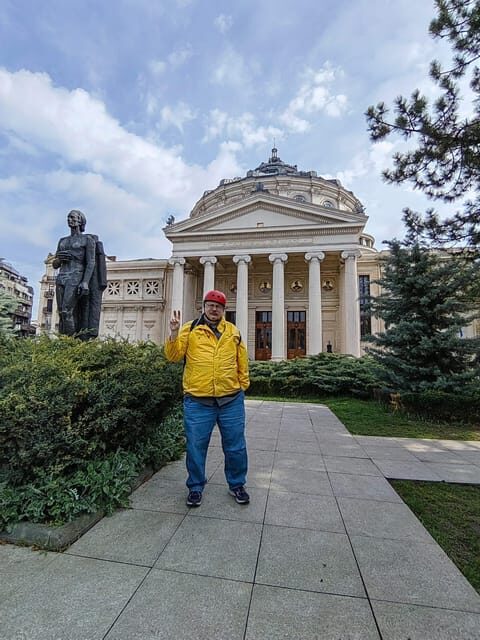
- Stop 3: Ateneul Roman and how the arts affected perceptions
- Stop 4: Cismigiu Park, the oldest garden, with myths and truths
- Stop 5: The Holocaust Memorial in Romania and Roma victims
- Stop 6: The Iuliu Maniu statue and the word Gypsies
- Stop 7: Mesteshukar ButiQ and Roma copper craftsmanship
- Price, pace, and why this feels like more than sightseeing
- Who should book this tour (and who might skip it)
- Practical expectations for your walking morning
- Should you book The Real Story of Gypsies – Slavery in Romania?
- FAQ
- How long is the tour?
- What does it cost?
- Where does the tour start?
- Where does the tour end?
- What time does it start?
- What language is the tour offered in?
- What is the maximum group size?
- Is a mobile ticket provided?
- Is admission included at the stops?
- Is there free cancellation?
Key highlights you’ll feel in real life
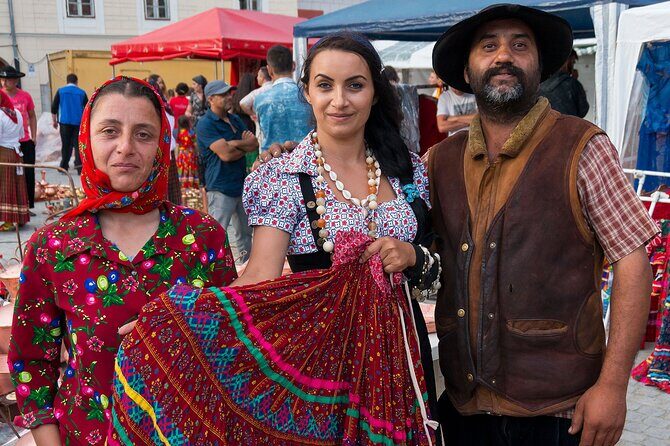
- Old slave market site in Piata Amzei sets the tone with a hard historical starting point
- Palatul Stirbei (built in 1835) connects architecture and power to Roma history
- Ateneul Roman ties arts and public perception into the story
- Cismigiu Park offers a calmer stretch while the guide weighs myths vs truths
- Holocaust Memorial includes Roma victims in the remembrance narrative
- Mesteshukar ButiQ shop lets you see Roma copper craftsmanship up close
A 3-hour walk through Roma slavery, persecution, and craft
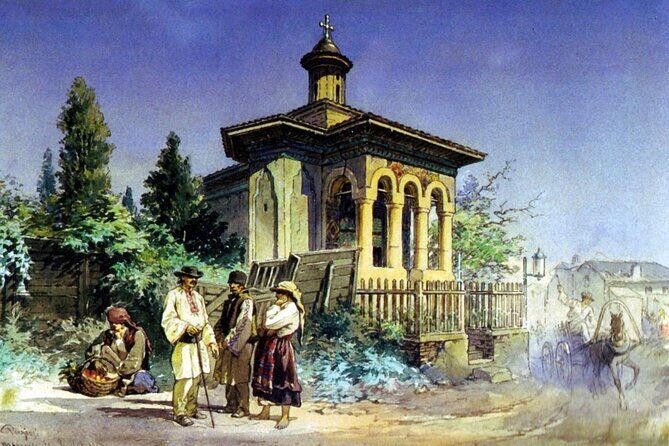
If you want Bucharest beyond palaces and photos, this tour helps you read the city like a living document. You move through central areas where history isn’t hidden in a museum basement—it’s outside, on streets, in public buildings, and in memorial spaces.
The tour is designed for a normal walking morning: about 3 hours total, with roughly 1 hour 20 minutes of walking time and the rest spent at stops. Each stop includes time for the guide to explain what you’re seeing, so you’re not just passing by landmarks—you’re connecting them to the Roma story in Romania.
At $30.04 per person, it’s not a bargain in the “cheap ticket” sense. But for what you get—an English-speaking guide, multiple meaningful sites, and a direct link to living craft—it’s good value. You’re paying for interpretation, not just proximity to monuments.
You can also read our reviews of more tours and experiences in Bucharest.
Where the tour starts: Teatrul Ion Creangă to central Bucharest
The meeting point is Teatrul „Ion Creangă” (Sala Mare), on Strada Piața Amzei 13, near the central grid of Bucharest. The tour starts at 10:00 am and ends at Mesteshukar ButiQ (MBQ) on Bulevardul Mihail Kogălniceanu 12.
This is handy if you’re staying anywhere in central Bucharest, or if you like to get oriented early in the day. The tour also notes that it’s near public transportation, which matters because you’ll want a stress-free commute to the start.
You’ll also want comfortable shoes. It’s a walking tour, and you’ll be on foot for a meaningful chunk of time, even if the stop time keeps it from feeling like an all-day hike.
Stop 1: Platoul Piata Amzei and the site of an old slaves market
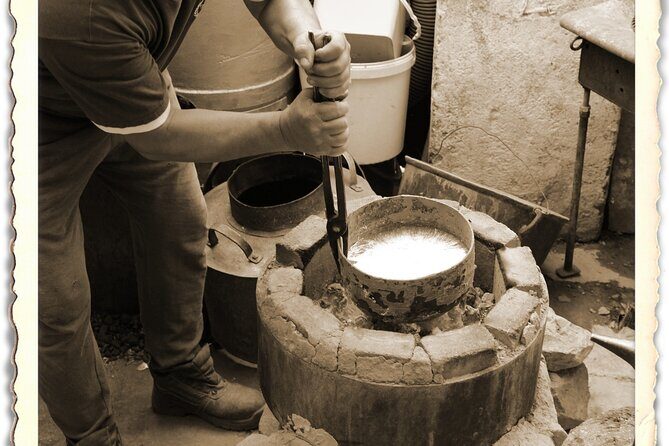
Your first stop is Platoul Piata Amzei, linked to the Romana Square area. This is a heavy opening on purpose: the tour starts at the site of an old slaves market, described as a haunting reminder of Romania’s complex history with the Roma community.
What makes this first stop powerful is that it frames everything else that comes after. Without it, the later memorials and discussions can feel disconnected. With it, the story becomes linear: exploitation and discrimination weren’t random events. They shaped identity, social roles, and how Roma people were seen by the wider society.
A practical note: because the tone is somber right away, come ready to listen. This isn’t the kind of stop where you’ll want to multitask or skim your phone.
Stop 2: Palatul Stirbei and how big buildings shape memory
Next you head to Palatul Stirbei, a palace in Bucharest built in 1835. The tour explains that the palace ties into an important moment in Roma history through its owner—so you’re not just admiring the building. You’re connecting architecture to human consequences.
This kind of stop can be surprisingly useful for understanding Bucharest itself. Public buildings and elite spaces often survive while the lives affected by them fade from everyday awareness. When the guide links a famous landmark to Roma history, it changes how you read the city’s skyline.
The main consideration here is timing. The stop is brief (around 10 minutes), so you’ll want to pay attention to the guide’s explanation rather than trying to “sightsee” like you’re on your own schedule.
Stop 3: Ateneul Roman and how the arts affected perceptions
From there, you pass by the Ateneul Roman (the Romanian Athenaeum). It’s described as an iconic symbol of national pride and cultural heritage, and the guide uses that setting to discuss how the arts helped shape perceptions of the Roma community throughout history.
This is one of those stops that can broaden your thinking. Instead of only focusing on persecution, it asks a second question: how did culture influence attitudes, stereotypes, and social distance? When you connect a national art symbol to Roma history, you start to see that public narratives can do harm, even when they look “refined.”
At about 15 minutes, it’s long enough for explanation but short enough that you still keep momentum. If you love architecture, you might want to glance at details quickly and then let the guide do the heavy lifting on meaning.


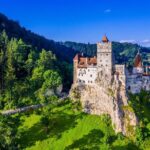
Stop 4: Cismigiu Park, the oldest garden, with myths and truths
Then you get a change of pace in Cismigiu Park, described as the oldest and largest garden in Bucharest. Even though the setting is green and calm, the tour doesn’t turn into a casual nature break. The guide uses the park to explore more truths and myths about the Roma community.
I like stops like this because they remind you that Roma history isn’t only about paperwork and violence. It also lives in stories, stereotypes, and the way communities get talked about. In a park, you’re physically in a shared public space—so the discussion about myths versus truths lands differently than it would in a sealed museum room.
The practical benefit: it’s a comfortable breathing point in the middle of a serious route. You’ll still be learning, but you can also slow down your body for a moment before the next emotional section.
Stop 5: The Holocaust Memorial in Romania and Roma victims
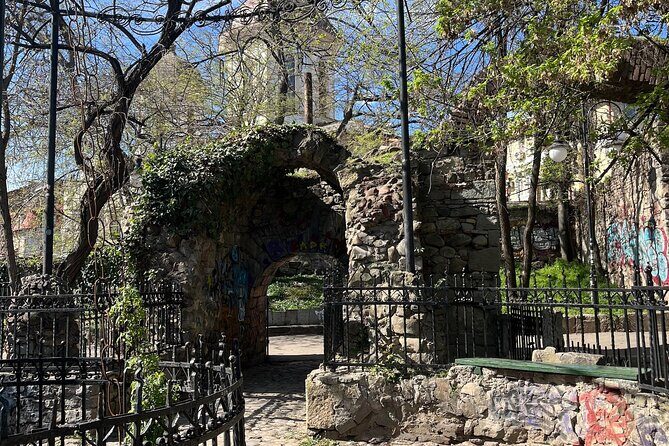
After the park, the tour takes a somber turn to the Holocaust Memorial, described as an important landmark commemorating the Holocaust in Romania. Here you pay homage to victims of that dark chapter, including the thousands of Roma lives lost to persecution and genocide.
This stop is crucial, and it’s also one of the reasons this tour feels more meaningful than a simple “Roma history” walk. It places Roma persecution within the larger framework of genocide and mass violence, so the Roma story isn’t isolated or treated as a side note.
Because this is a memorial site, keep your behavior respectful and expect the mood to slow down. The itinerary gives about 15 minutes, which should be enough for the guide’s context and for a quiet moment.
Stop 6: The Iuliu Maniu statue and the word Gypsies
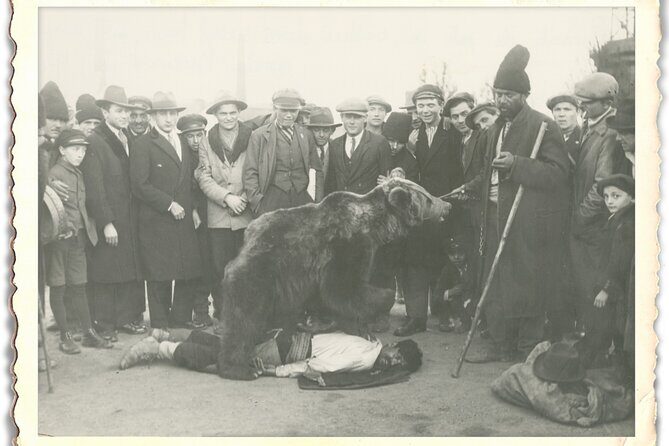
Next you visit the Iuliu Maniu statue, tied to another significant moment in Roma history—specifically, a time when they were still very much called Gypsies.
This is a small but important detail: names matter. What people get called can signal how they’re categorized, judged, and treated. Seeing that shift discussed in a public space helps you understand how labels can stick, and how language reflects power.
The stop is listed for about 15 minutes, so it’s another listen-first moment. If language and terminology are sensitive topics for you, this is still worth it, but take it slowly. The guide’s role is to keep the topic grounded and understandable.
Stop 7: Mesteshukar ButiQ and Roma copper craftsmanship
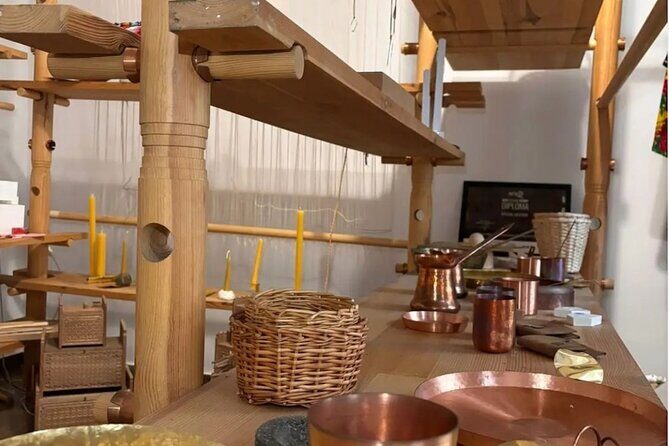
The tour ends at Mesteshukar ButiQ (MBQ), a small shop where products are described as manufactured only by Roma craftsmen. The stop is also the chance to witness Roma craftsmanship firsthand, with a focus on work with copper.
I like this ending because it turns the story toward continuity. You’ve spent the morning on suffering, memory, and identity. Then you finish with something tangible: skill you can see, materials you can understand, and craft that continues today.
It’s also a helpful way to balance the emotional weight. Not in a “let’s forget” way, but in a “this culture persists” way. If you want to support artisans thoughtfully, the shop stop is the place to do it.
The itinerary notes 15 minutes here, which is usually enough time to look and ask questions without dragging the group out.
Price, pace, and why this feels like more than sightseeing
At $30.04 per person for about 3 hours, you’re paying for a guided route through several major, emotionally significant sites in central Bucharest. Each stop notes free admission tickets, which helps you avoid surprise costs and keeps the day simple.
The pace is also realistic: stops range from 10 to 15 minutes, with walking time built into the overall structure. That structure matters because these sites don’t lend themselves to “wander and guess.” You’ll get better value from the guide’s framing than from trying to figure it out yourself on the fly.
Group size is capped at 15 travelers, so it tends to stay conversational rather than lecture-only. If you like asking questions, this format usually works well.
One more practical point: the tour uses a mobile ticket, so you can keep it on your phone and move fast at the start point.
Who should book this tour (and who might skip it)
Book it if you:
- Want a context-focused walk through Bucharest, not just photos
- Prefer a route with clear stops in central areas
- Care about Roma history as part of Romania’s public story
- Like guides who can handle questions in English (the tone from past experiences suggests you can ask and get real attention)
Consider skipping if you:
- Don’t handle heavy topics well. The route includes sites connected to slavery and genocide remembrance.
- You’re looking for a light, entertainment-first walking tour. This one is structured around learning and reflection.
If you’re the type who likes to pair a city walk with museums later, this tour can set your lens. It gives you names, places, and themes that help you interpret other sites you might visit the same week.
Practical expectations for your walking morning
- Start time is 10:00 am.
- Expect about 1 hour 20 minutes of walking time total, not constant marching.
- You’ll see a mix of public squares, landmark buildings, a park, and memorial space.
- The tour is offered in English and designed so most travelers can participate.
- Max group size is 15—expect a more personal feel than huge-departure tours.
Should you book The Real Story of Gypsies – Slavery in Romania?
Yes, if you want an honest, place-based introduction to Roma history in Bucharest—one that takes you from the site of an old slaves market to remembrance at the Holocaust Memorial, and then finishes with real Roma craftsmanship in a copper-focused artisan shop.
My decision rule is simple: if you’re okay with the emotional weight and you care about understanding how history shows up in a city, this tour is strong value for the money. If you only want upbeat sightseeing, choose something else and save this for a day when you can give it your full attention.
FAQ
How long is the tour?
The tour runs for approximately 3 hours.
What does it cost?
The price is $30.04 per person.
Where does the tour start?
It starts at Teatrul „Ion Creangă” – Sala Mare, Strada Piața Amzei 13, 030167 București, Romania.
Where does the tour end?
It ends at Mesteshukar ButiQ [MBQ], Bulevardul Mihail Kogălniceanu 12, București 030167, Romania.
What time does it start?
The start time is 10:00 am.
What language is the tour offered in?
The tour is offered in English.
What is the maximum group size?
The tour has a maximum of 15 travelers.
Is a mobile ticket provided?
Yes, it includes a mobile ticket.
Is admission included at the stops?
The stops listed in the route show admission ticket free.
Is there free cancellation?
Yes. You can cancel up to 24 hours in advance for a full refund.