ArtCrawl turns a normal evening into a focused look at contemporary art in Cluj-Napoca. You hop between three venues—White Cuib, Galeria Quadro, and MATCA artspace—and each stop is free to enter. What makes it work is the pacing: short gallery visits with enough time to actually look, not just rush.
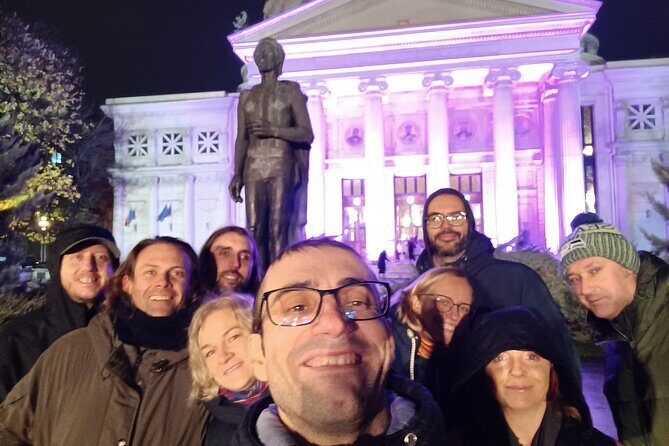
I especially like the small group size (max 12). It keeps the questions coming and helps you notice what the guide points out. And the local art guide—Helga—can help you translate what you’re seeing into something you can talk about later, instead of leaving with a pile of names and no meaning.
One thing to weigh: there’s no private transportation, and the tour end point can vary by group. So you’ll want to be comfortable using public transport or walking a bit, and you’ll also need decent weather since the experience depends on it.
In This Review
- Key things to know before you go
- Why this ArtCrawl route works for Cluj’s art scene
- Price and value: what $41.70 buys you (and what it doesn’t)
- Timing, meeting points, and what to expect when you arrive
- Stop 1: White Cuib and the charm of small contemporary galleries
- Stop 2: Galeria Quadro and how to compare styles fast
- Stop 3: MATCA artspace for a real sense of the current scene
- What I’d watch for during the walk (so you get more than photos)
- Who should book ArtCrawl (and who might prefer something else)
- Should you book ArtCrawl? My take
- FAQ
- How long is the ArtCrawl tour in Cluj-Napoca?
- What does the tour cost?
- Is the tour offered in English?
- Do I need to pay for admission to the galleries?
- What’s included in the tour?
- Where does the tour start?
- How many people are in the group?
- What happens if the weather is poor?
- Is confirmation sent after I book?
Key things to know before you go
- Three contemporary stops in 2–3 hours: White Cuib, Galeria Quadro, and MATCA artspace
- Free admission at every venue: all three stops list tickets as free
- Helga as your local guide: a real art-scene connection, not generic museum talk
- Small group for better conversations: maximum 12 travelers
- Mobile ticket + English-led tour: easy logistics, clear language
- Tuesday evening schedule (5:00 PM–8:00 PM listed): plan around that time window
Why this ArtCrawl route works for Cluj’s art scene
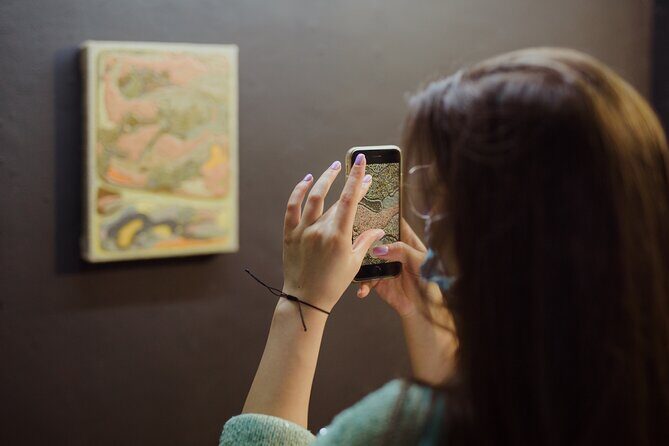
Cluj-Napoca has a way of surprising you. Even if you already know the big sights, the art scene feels more like how a city breathes day to day—new ideas, small spaces, and people who care about what they’re making. That’s exactly why this kind of “three-stop” format hits: it’s long enough to get a sense of patterns, but short enough that you don’t get art-saturated.
This experience is built around contemporary venues. That matters, because contemporary art often needs context. The point isn’t to pretend you’re an expert. It’s to give you a framework for what you’re seeing: materials, themes, and how each space supports different kinds of work. When you see three different places back-to-back, you also start noticing what changes—lighting, layout, curatorial choices, even the mood of the conversation inside.
I also like the way the tour structure respects your time. A 2 to 3 hour outing is ideal if you want culture without turning your whole day into a project. And because the group stays small, the guide can likely adjust the tone—more questions, more pace, more time spent on what you genuinely care about.
If you’re the type who enjoys modern art but sometimes feels stuck on where to start, this format is a strong starting line. You’re not being asked to “like” everything. You’re being invited to look closely—and then compare notes across venues.
You can also read our reviews of more tours and experiences in Cluj Napoca.
Price and value: what $41.70 buys you (and what it doesn’t)
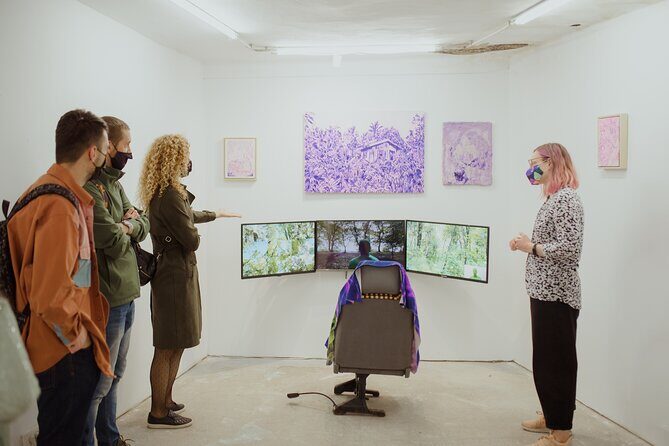
At $41.70 per person, this isn’t a budget gimmick. You’re paying for a guided art walk with entry included at all three stops, plus a few extras that make it easier to stay engaged. You’re also getting a format that’s designed for clarity: short visits with an art guide leading the conversation.
Here’s the value equation in plain terms:
- Included entry: each stop lists admission ticket as free, so you’re not paying separate gallery fees.
- A local art guide: you’re not just walking into rooms. You’re hearing how the local scene fits together.
- An art newspaper: it’s a practical add-on. Even if you only skim, it can help you remember what you saw and point you to what to look for afterward.
What’s not included is also important. There’s no private transportation, and you’ll need to reach the meeting point on your own and be prepared to end in a different spot (based on the tour). That doesn’t make it bad value—it just means the price is for the experience itself, not for door-to-door logistics.
If you’re comparing this to “pay for a guide” experiences that still charge for entry, this one often makes more sense because the admission is listed as free at the venues. The best fit is someone who wants modern art context without spending extra time and money sorting out tickets.
Timing, meeting points, and what to expect when you arrive
The tour runs with listed opening hours on Tuesday from 5:00 PM to 8:00 PM. The experience is marked as needing good weather, so don’t ignore that small line—on a rainy day, plans can shift.
You’ll start at Strada Sextil Pușcariu 1A, Cluj-Napoca 400111, Romania. The end point is listed as Calea Turzii, Cluj-Napoca, but there’s a catch: the end point can differ for each tour since it’s personalized. In practice, that means you should plan your next step with a little flexibility. A nearby café works as a safe backup, or just give yourself time to regroup.
You also get a mobile ticket, which is great if you’re trying to keep your day low-friction. You won’t need to hunt for paper tickets at the last minute. Confirmation is received at booking time, so you should have what you need before you head out.
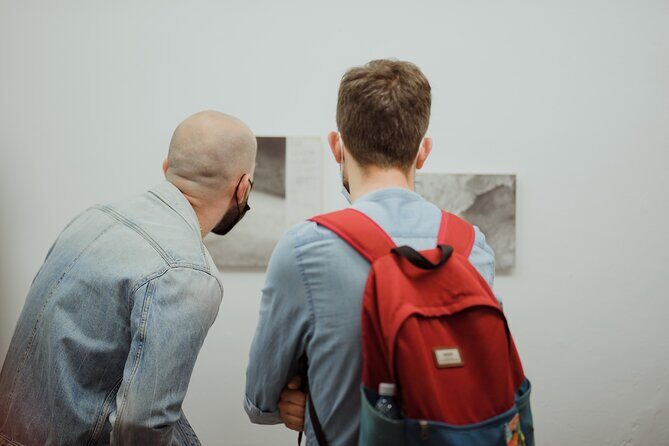
Group size is capped at 12 travelers, which is the sweet spot for a gallery-style walk. You’ll hear the guide without shouting over everyone, and you can ask a question without feeling like your moment gets lost.
Finally, you don’t have to worry about the tour being locked to one type of visitor. It lists “most travelers can participate,” and service animals are allowed. It also says it’s near public transportation, so you’re not stranded at the edge of town.
Stop 1: White Cuib and the charm of small contemporary galleries
Stop 1 is White Cuib, listed as a small contemporary art gallery with about 20 minutes. Small spaces are where contemporary art often makes its best argument. There’s no distance to hide behind. You can see the scale of objects and the physical intent—how something sits in relation to the walls and light.
In a short visit like this, the guide’s job is especially important. Instead of trying to cover everything, you’ll likely focus on what’s most relevant in that moment: what the artist seems to be testing, what materials are doing, and how the placement changes your perception. This is the kind of stop where you can go in thinking you’ll only “look,” then leave with a couple of clear ideas.
A practical drawback of small galleries is that they can feel crowded depending on how many works are installed and how people move. With a small group, that’s usually manageable, but it still helps to be ready to shift your position if someone needs to get past.
The big advantage is that free entry at this venue means you can treat it as an actual discovery stop, not a “pay-to-proceed” situation. You’re not rationing your curiosity based on ticket costs. You’re free to spend attention where it matters.
Stop 2: Galeria Quadro and how to compare styles fast
Next up is Galeria Quadro, a contemporary art gallery with about 30 minutes. This longer time than the first stop matters. It usually gives you space to compare works, notice themes, and ask more direct questions.
When you’re bouncing between contemporary venues, you want the tour to help you “read the room.” Galeria Quadro is a perfect second stop because it’s a point where you start building a map in your head. You’ve already tasted one space’s approach at White Cuib, so now you can ask: how is this place different? What does it emphasize? What kinds of work do you see more of here?
If you’re someone who loves art theory but hates long explanations, a stop like this can be just right. You can listen for key interpretive hints, then go right back to looking. The guide can help you avoid the most common trap: overthinking everything at once. Instead, you learn to focus on a few details and let your questions guide what you notice.
Another value point: admission is listed as free, so you’re not mentally switching into “museum budgeting mode.” That keeps your attention on the art.
The only caution I’d give here is simple: 30 minutes disappears fast in galleries. If you have a particular interest—paint, photography, sculpture, installations—plan to spend a few extra seconds per work early on so you don’t feel rushed at the end.

Stop 3: MATCA artspace for a real sense of the current scene
Final stop is MATCA artspace, another contemporary space, with about 30 minutes. Artspace visits tend to feel different from galleries, because the environment can be more active—depending on what’s on view. Even without guessing at details, the point is that this stop is designed to wrap the tour with a stronger sense of how contemporary art operates day-to-day, not just how it’s displayed.
This is the stop where I’d expect the tour to help you make connections. After seeing multiple venues, you can start noticing what kind of conversation each space invites. Maybe one venue feels more experimental, while another feels more structured. Even if the works vary a lot, patterns show up when you’ve visited three different places close together.
It’s also a good time to ask yourself what you want to follow later. The tour includes an art newspaper, and that’s where it can start working. You can use it to remember names and leads you might otherwise forget. Think of it as a lightweight souvenir that actually helps you keep exploring.
One more practical note: since the end point can vary and the tour ends at/near Calea Turzii, it’s helpful to have a plan for your next hour—dinner, a café, or just a walk back toward where you’re staying. That keeps the experience from feeling like it stops abruptly.
What I’d watch for during the walk (so you get more than photos)
This is the part that often separates a “nice tour” from a tour you’ll feel later. The route is short, so you need a focus. I recommend you give yourself a tiny mission at each stop, even if you don’t say it out loud.
Try this approach:
- Pick one question at each venue. For example: what seems intentional about the placement? What medium feels most important here? What’s the mood of the room doing to the work?
- Take one detail seriously. One artwork detail you can describe in a sentence is better than 20 blurry photos.
- Use the guide’s cues. When Helga points you toward something, don’t just nod—look for it first, then decide if you agree.
Because the tour is in English and keeps a small group, you’ll likely get a conversation rhythm rather than a lecture. That’s ideal for contemporary art, where disagreement is normal. You don’t need to “get it” on the spot. You just need to learn how to look.
Also, the tour lists that most travelers can participate, which suggests it isn’t designed as a test of art vocabulary. It’s more about getting your bearings in Cluj’s contemporary scene, and then letting that familiarity help you explore on your own after the tour ends.
Who should book ArtCrawl (and who might prefer something else)
This tour is a strong fit if you want:
- A guided way to understand contemporary art without spending hours in one museum
- A small-group experience where you can ask questions and not get lost in the crowd
- Free entry at multiple venues, plus an art newspaper for follow-up
It’s also a good choice if you’re visiting Cluj-Napoca for a short time and you want your evenings to feel meaningful. Two to three hours is a manageable block, especially if you’re already planning dinner and a late stroll.
Who might choose differently? If you hate timed formats and prefer slow wandering with zero structure, you might find the short stop lengths a little pushy. Also, because there’s no private transportation and the end point can vary, it’s less ideal if you need fully predictable door-to-door routing.
But if you can handle public transport, flexible finishing points, and you’re curious about modern art, this tour hits a sweet spot.
Should you book ArtCrawl? My take
I’d book it if you want guided contemporary art in Cluj-Napoca that feels practical, not precious. The biggest reasons are simple: free admission at three contemporary venues, a small group that supports real conversation, and the added help of an art guide named Helga who can point you to what matters.
The main reason to think twice is also straightforward: no private transportation and variable tour finishing location means you need to be comfortable handling your own logistics. Add the weather requirement, and you have the two constraints that actually affect your experience.
If those aren’t dealbreakers, ArtCrawl is a smart use of a Tuesday evening. You’ll leave with clearer context, not just new places on your map.
FAQ
How long is the ArtCrawl tour in Cluj-Napoca?
The tour lasts about 2 to 3 hours.
What does the tour cost?
The price is $41.70 per person.
Is the tour offered in English?
Yes, it’s offered in English.
Do I need to pay for admission to the galleries?
No. Admission tickets are listed as free for all three stops.
What’s included in the tour?
An art newspaper is included.
Where does the tour start?
The start meeting point is Strada Sextil Pușcariu 1A, Cluj-Napoca 400111, Romania.
How many people are in the group?
The tour has a maximum of 12 travelers.
What happens if the weather is poor?
The experience requires good weather. If it’s canceled due to poor weather, you’ll be offered a different date or a full refund.
Is confirmation sent after I book?
Yes. You’ll receive confirmation at the time of booking.