REVIEW · BUCHAREST
Bucharest: Walking tour with Italian guide for small groups
Book on GetYourGuide →Operated by S.C. VIAGGIARE BUCAREST S.R.L. · Bookable on GetYourGuide
Bucharest changes mood every few steps. This 3-hour small-group walk ties together Lipscani’s energy, grand avenues, and Romania’s turning points, with an Italian guide who explains how the city’s layers fit. The route is efficient, not rushed, and heavy on the kind of details you miss when you wander alone.
What I like most is the small-group feel and how the guide keeps the pace friendly. I also love the focus on architecture and “what this building is really about,” not just a list of famous spots.
One drawback to plan for: it’s a walking tour, so you’ll want comfortable shoes and a decent tolerance for cobblestones and short city crossings. Also, it isn’t aimed at very young kids or people with hearing impairments.
In This Review
- Key highlights that make this walk worth your time
- Starting at Caru’ cu Bere: a classic meet-up with real local character
- Stavropoleos Monastery and Manuc’s Inn: where quiet details do the talking
- The Old Town and Lipscani area: nightlife street energy, historical bones
- Calea Victoriei in the mix: Bucharest’s elegant “main stage”
- Cărturești Carusel, Pasajul Villacrosse, and Umbrellas Street: the fun photo triad
- National Bank of Romania to Revolution Square: money and a turning point
- Romanian Athenaeum: closing with a landmark that feels like culture
- Guide style matters here: friendly, prepared, and quick to answer questions
- Value check: $36 for 3 hours of focused city context
- Who should book this Bucharest walking tour
- Should you book this walking tour?
- FAQ
- How long is the Bucharest walking tour?
- Where do I meet the guide?
- What language is the guide speaking?
- Is the tour wheelchair accessible?
- Is this tour suitable for small children?
- Can I record audio during the tour?
- What’s included in the price?
- Can I get a full refund if I cancel?
Key highlights that make this walk worth your time
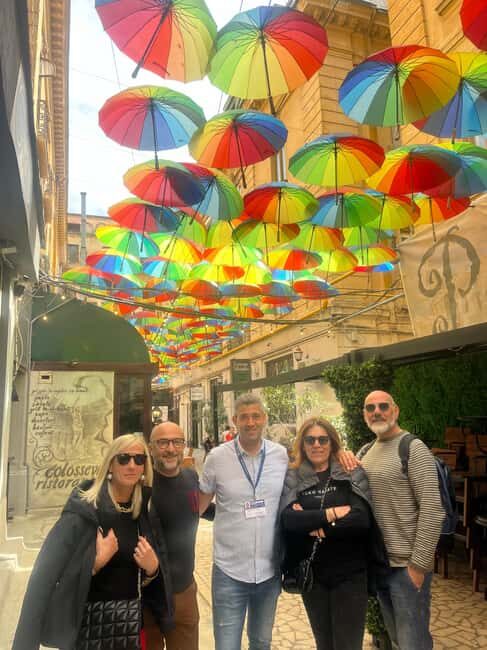
- Italian-led storytelling that connects streets, buildings, and political eras in plain language
- Caru’ cu Bere as a fun starting point and a familiar finish
- Revolution Square and the Romanian Athenaeum for a strong emotional arc without extra ticket hassle
- Photo-friendly stops like Umbrellas Street and Pasajul Villacrosse
- Short, focused segments (about 10–25 minutes) so you’re not stuck listening too long at once
Starting at Caru’ cu Bere: a classic meet-up with real local character
The tour meets in front of Caru’ cu Bere, right at Strada Stavropoleos 5. It’s an easy landmark, and it sets the tone: Bucharest isn’t shy about style, food, and showmanship.
I like that you start at a place people recognize, then shift quickly into the old-center maze. In a short walk, you get the feeling of a city that’s always been both formal and a bit chaotic in the best way.
This matters because Bucharest is visually dramatic. Once you know what you’re looking at, the rest of the city clicks—street by street.
You can also read our reviews of more walking tours in Bucharest


Stavropoleos Monastery and Manuc’s Inn: where quiet details do the talking
Right after meeting, you head to Stavropoleos Monastery. Even if you’re not a church person, monasteries like this one are a time machine: you can’t help but slow down. The guide’s job here is to explain why this kind of place mattered in daily life and power structures, not just how it looks.
Then you move to Manuc’s Inn, a building that reminds you Bucharest has long been a crossroads for traders and travelers. It’s one of those sites where the architecture hints at what the city used to do for money and connection.
What I appreciate is the pacing: short stops, then moving again. You don’t get stuck waiting, and you keep your momentum through the historic center.
The Old Town and Lipscani area: nightlife street energy, historical bones
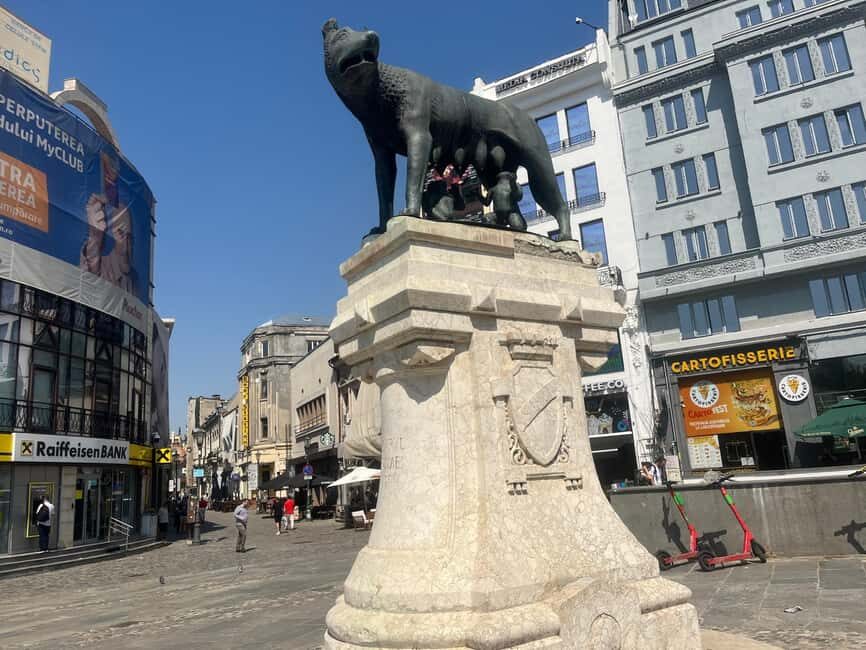
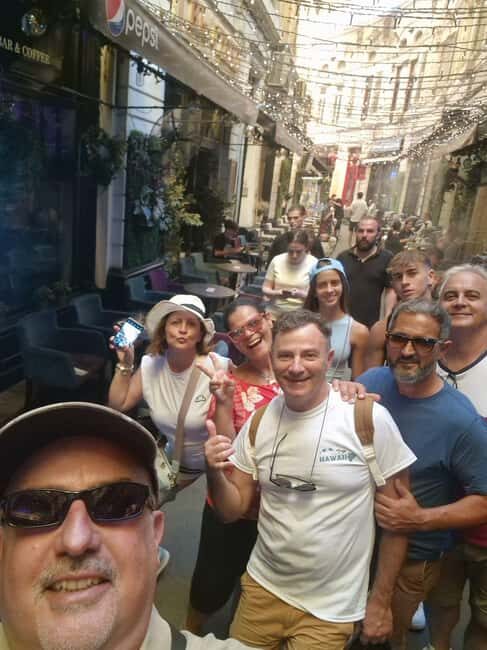
As you work through the historic center, you get a mix of postcard-worthy scenery and streets tied to modern nightlife. Lipscani Street is famous for its evenings, but it’s also surrounded by older structures that make the contrast more interesting.
This is where the guide earns their keep. You’ll hear stories about what’s behind the façades—why certain buildings are where they are, and how Bucharest’s “main character” changed over time.
I find tours like this especially helpful for first-timers. You’re not just seeing old streets; you’re learning how they got that way.
Calea Victoriei in the mix: Bucharest’s elegant “main stage”
One of the best parts of the route is that it doesn’t stay only in the tight old lanes. Calea Victoriei shows a different side of Bucharest: more symmetry, more grandeur, and a boulevard vibe.
The avenue is known for historic buildings and a more refined feel, with fashion shops and bistros along the way. You don’t need to shop to enjoy it—just watching the buildings and street rhythm helps you understand how Bucharest separates (and blends) social worlds.
If you like cities that show contrast on foot, this is a highlight. It keeps the tour from becoming only “churches and alleys.”
Cărturești Carusel, Pasajul Villacrosse, and Umbrellas Street: the fun photo triad
This walk includes several quick photo stops, and they’re picked with taste.
First up is Cărturești Carusel, a spot you’ll recognize for its distinctive presence. It’s a good break from pure sightseeing because it adds atmosphere—less lecture, more visual curiosity.
Then comes Pasajul Villacrosse, a covered passage that feels like a small world inside the city. These types of spots matter because they show how Bucharest used to move people through “hidden” spaces—commerce, shortcuts, and character all in one.
Finally, there’s Umbrellas Street, with a brief stop timed for photos. It’s playful, but it also works as a reset before you hit the heavier sites later on.
If you bring a camera, you’ll use it. If you don’t, you’ll still enjoy the change of pace.
You can also read our reviews of more guided tours in Bucharest




National Bank of Romania to Revolution Square: money and a turning point
The National Bank of Romania is a standout stop on the way, because it connects architecture to power. Even without going inside, the exterior sets the tone: this was a city where finance and authority were meant to look permanent.
Then you move toward Revolution Square, the symbol of the end of Nicolae Ceaușescu’s dictatorship in December 1989. This is where the tour’s mood shifts. The guide uses the surrounding buildings to show Romania’s different historical periods, so the square doesn’t feel like just a monument—it feels like a timeline.
The area around the square includes major landmarks such as the Romanian Athenaeum and the Royal Palace, plus the National Library. You’ll walk in the same space where history is still “present,” even if you’re just passing through.
I like that the tour doesn’t get gloomy. It frames the events in a way that helps you understand what changed, not just when.
Romanian Athenaeum: closing with a landmark that feels like culture
Your final major guided stop is the Romanian Athenaeum. This is one of those places where stopping for a short time pays off because it’s designed for attention.
The guided explanation helps you connect the building to the broader story of Bucharest—culture as a form of identity, and identity as a response to political change.
Even if you don’t attend a performance, you’ll leave with a clearer sense of why this building gets treated as more than just architecture. It’s a focal point for the city’s cultural pride.
From there, you head back to Caru’ cu Bere, which is a smart finish. You end where you started, and you can decompress without hunting for a landmark.
Guide style matters here: friendly, prepared, and quick to answer questions
A big part of why this tour scores high is the guide experience. In the Italian-led sessions, guides such as Filippo Dicataldo, Giuseppe, Peppe, and Dana are praised for being prepared while still sounding natural, not like they’re reading from a script.
You’ll likely get anecdotes that explain Romanian culture and the “why” behind what you see. That approach matters on a 3-hour tour—because you can’t afford a long lecture, and you don’t want random facts.
The guide’s job is to keep it moving and keep it understandable. The best moments are when you realize a street or façade is part of a larger story, and the guide points that out before you miss it.
Value check: $36 for 3 hours of focused city context
At $36 per person for about 3 hours, you’re paying for three things: a small-group pace, an Italian-speaking guide, and a tight route that hits multiple major areas.
If you were to plan this on your own, you’d still need to choose between old lanes, big squares, and key landmarks—and you’d need context for what you’re looking at. Here, you get the context bundled into short, manageable segments.
Is it a bargain compared to a museum ticket? Maybe not. But it’s a strong deal for first-time orientation in Bucharest, especially when you want a guided structure without spending your whole day commuting between sites.
Who should book this Bucharest walking tour
This is a great match if you:
- Want an Italian guide and a small-group experience
- Enjoy architecture, squares, and street-level storytelling
- Are visiting Bucharest for the first time and want clear direction fast
It’s less ideal if you need a fully “seated” tour, since it’s built around walking and several exterior stops. It also isn’t listed as suitable for young children (under 1 year, 2 years, or 3 years), and it’s not aimed at hearing-impaired guests.
Should you book this walking tour?
Book it if you want Bucharest in one coherent arc: old-center charm, elegant boulevard vibes, and then Revolution Square and the Athenaeum to land the emotional context. The small-group size and guide style are the difference between seeing buildings and actually understanding them.
Skip it if you already know the city well and only want ticketed indoor attractions. This tour is about the streets and the explanations around them, not about long museum time.
If you’re comfortable walking for a few hours and want a guide who keeps things friendly and on-point, this is an easy yes.
FAQ
How long is the Bucharest walking tour?
The tour lasts 3 hours.
Where do I meet the guide?
Meet your guide in front of Caru’ cu Bere (Strada Stavropoleos 5, 030081, Bucharest). Your guide will be wearing a professional identification card.
What language is the guide speaking?
The tour is guided in Italian.
Is the tour wheelchair accessible?
Yes, the tour is wheelchair accessible.
Is this tour suitable for small children?
It is not suitable for children under 1 year, under 2 years, or under 3 years.
Can I record audio during the tour?
No. Audio recording is not allowed.
What’s included in the price?
The price includes an Italian-speaking tour guide and a walking tour for small groups. Food, drinks, and personal expenses are not included.
Can I get a full refund if I cancel?
Yes, you can cancel up to 24 hours in advance for a full refund.