REVIEW · BUCHAREST
Bucharest: Old Town & Calea Victoriei Walking TOUR (Max 12)
Book on GetYourGuide →Operated by Unbound Traveler · Bookable on GetYourGuide
Bucharest feels like two cities in one walk. In this Old Town to Calea Victoriei route, you get the why behind the buildings, from medieval trading lanes to grand boulevards. I especially liked the story-first guidance and how the hidden courtyards made the center feel lived-in, not just photographed.
I loved how the licensed local guide, Naomi, kept the pace easy to follow while answering questions with patience and real clarity. I also liked the mix of places: famous sights plus quieter corners where you can slow down and actually notice details.
One thing to consider: it is mostly walking (2.5 hours), so you’ll want comfortable shoes, especially if weather is cold or rainy. Also, meals are not included, so plan a snack stop on your own if you need one.
In This Review
- Key highlights worth showing up for
- Old Town to Calea Victoriei: a smart 2.5-hour route
- Meet up by Hanu lui Manuc and start with the right vibe
- Piața Sfântul Anton and Biserica Sfantul Anton: start in the living old core
- Voivodal Palace area: power, old courts, and political architecture
- Hanul inns and the trade-street story: Hanu lui Manuc and Hanul Gabroveni
- Strada Lipscani: the Old Town lane you’ll want to return to
- Cărturești Carusel: a modern pause in an old setting
- National Bank of Romania and Strada Smârdan: scale, money, and quieter streets
- Stavropoleos Monastery: the stop that feels tucked away
- Caru’ cu bere: a famous endpoint for lingering
- Calea Victoriei: the boulevard that explains Bucharest’s big-city manners
- National Museum of Romanian History and civic buildings that shape the skyline
- Macca – Vilacrosse Passage and Pasajul Victoria: covered passages for a breather
- Grand hotels, theaters, and the Palace of Telephones
- Royal presence and academic Bucharest: Kretzulescu, Royal Palace, and the library
- Finish at the Romanian Athenaeum: the grand close
- Pace, group size, and what to wear (especially in winter)
- Price and value: is $30 worth it?
- Should you book this Bucharest Old Town & Calea Victoriei walking tour?
- FAQ
- How long is the Bucharest Old Town & Calea Victoriei walking tour?
- What does the tour cost?
- Where does the tour start?
- Is the tour guided in English?
- How big is the group?
- Does the tour include transportation from your hotel?
- Are meals or drinks included?
- What is the cancellation policy?
Key highlights worth showing up for
- Small-group feel (max 12) so you can ask questions without shouting over the crowd
- Old Town stories with context, not just names and dates
- Hidden courtyards and lesser-known corners that break the usual tourist loop
- A true transition to Calea Victoriei, where Bucharest’s elegant side shows up
- English live licensed guide with interactive, clear explanations (Naomi is a standout)
Old Town to Calea Victoriei: a smart 2.5-hour route
This tour is built for first-time visitors who want to understand Bucharest fast. In just 2.5 hours, you cover the historic center and then shift to Calea Victoriei, the boulevard that helps explain why the city has long compared itself to places like Little Paris.
What makes this route practical is the shape of it. You start in the Old Town core, where the city’s medieval trading energy shows up in streets, courtyards, and inns. Then you walk into a more formal, grander Bucharest where architecture and civic buildings do the talking.
You can also read our reviews of more walking tours in Bucharest


Meet up by Hanu lui Manuc and start with the right vibe
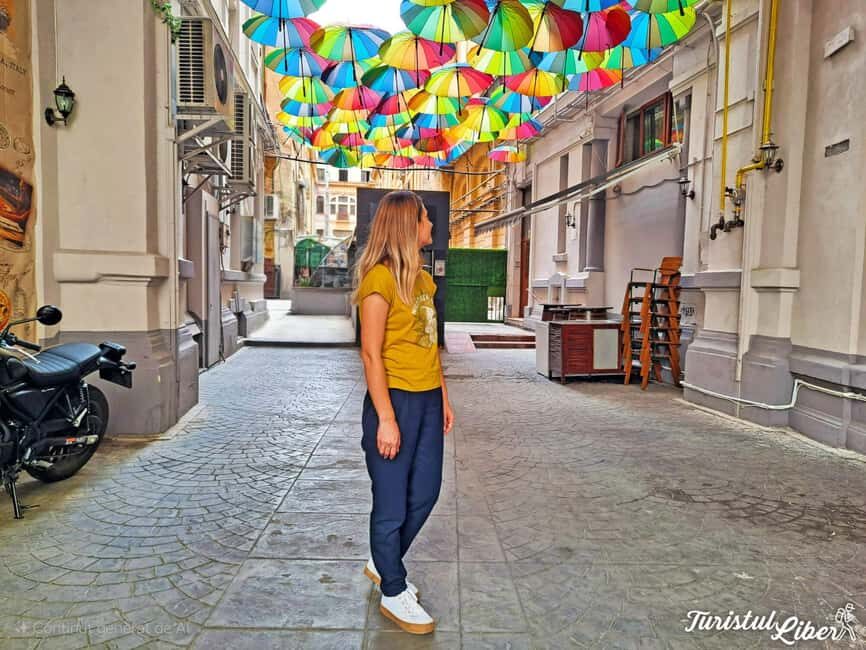
You meet in front of Hanu lui Manuc. It’s an easy landmark to find, and it sets the tone immediately: this is Bucharest at human scale—markets, travelers, gatherings, and stories that have stuck around.
From there, the guide helps you orient quickly. You’re not just handed directions. You’re given the context to understand what you’re looking at: which buildings were built for travelers, where power sat, and how the city grew from a trading town into a place with big-city ambitions.
Piața Sfântul Anton and Biserica Sfantul Anton: start in the living old core
The walking route begins at Piața Sfântul Anton, which makes sense because the Old Town isn’t a theme park. It’s a working neighborhood with churches, street life, and layers of time.
You also visit Biserica Sfantul Anton. Even if you don’t go inside, you’ll get a sense of why churches matter in cities like this. They weren’t only spiritual landmarks; they were points where communities formed habits, celebrated, and remembered.
Voivodal Palace area: power, old courts, and political architecture
One of the strongest anchors on the route is the Old Court / Voivodal Palace area. This stop helps you connect architecture to authority—how buildings projected power and how the city’s political role shaped its layout.
I like that this portion is guided, because it’s easy to walk past palace-like spaces and only see stone. With a local guide, you start noticing details that hint at the function: the kind of space a ruler needed, the meaning of formal courtyards, and why certain parts of town became the center of gravity.
Hanul inns and the trade-street story: Hanu lui Manuc and Hanul Gabroveni
You’ll visit both Hanu’ lui Manuc and Hanul Gabroveni—two historic inns that help explain Bucharest’s past as a crossroads. These buildings tell a story about movement: merchants, travelers, and business networks.
The value here is how the guide frames them. Inns like these weren’t just lodging. They were places where deals happened, news traveled, and different communities overlapped. When you see them up close, the Old Town stops feeling like a pretty backdrop and starts feeling like an engine.




Strada Lipscani: the Old Town lane you’ll want to return to
Then you get to Strada Lipscani, one of the Old Town’s best-known streets. Even if you’ve seen photos, the guided walk helps you read the street differently—less like a strip and more like a route the city used to run on.
This is also where the tour’s small size helps. When you’re not stuck behind a big bus group, you can pause to look at facades and side entrances without losing the group.
Cărturești Carusel: a modern pause in an old setting
You stop at Cărturești Carusel, which is a nice change of pace from purely historic buildings. This kind of stop matters because it shows continuity: Old Town isn’t frozen. People still live, read, shop, and meet here.
I find these pauses make the tour feel more believable. It’s one thing to learn history. It’s another to experience how the city’s culture carries on in everyday places.
National Bank of Romania and Strada Smârdan: scale, money, and quieter streets
Next up is the National Bank of Romania, which brings a different architectural mood into the mix. It helps you see how Bucharest adapted as it gained financial and institutional strength—how the city added new kinds of power beside older ones.
You also walk Strada Smârdan, which tends to feel more local and less performative than the main lanes. That matters because the Old Town isn’t only the most famous street views. It’s the small connector streets where you notice everyday texture: quieter entrances, side courtyards, and the way buildings line up along the street.
Stavropoleos Monastery: the stop that feels tucked away
The route includes Stavropoleos Monastery, and this is the kind of stop that makes people remember a walking tour. Monasteries often function like a pause button—small spaces where you can reset your attention.
This stop works well on a guided walk because the guide can explain what you’re looking for: not just how it looks, but why it has a distinct presence inside a city neighborhood.
Caru’ cu bere: a famous endpoint for lingering
You end the Old Town portion at Caru’ cu bere. Even though meals aren’t included, it’s still a smart place to pause. It’s the kind of landmark where you naturally understand you’ve reached an important cultural and social point in the city.
If you want to keep exploring after the tour, this is a good area to do it from. You’ve already learned the story of the streets around you, so you won’t feel lost when you wander a bit.
Calea Victoriei: the boulevard that explains Bucharest’s big-city manners
Now comes the shift: Calea Victoriei. This is where the city’s identity turns more formal, more elegant, and more outward-facing. If the Old Town is where you learn how Bucharest grew, Calea Victoriei is where you understand how Bucharest wanted to be seen.
It’s not just a straight walk. The guide points out how different building styles reflect different eras and ambitions, so the boulevard feels like a timeline you can walk through.
National Museum of Romanian History and civic buildings that shape the skyline
On Calea Victoriei you visit key landmarks, including the National Museum of Romanian History. Even if you don’t go inside during the walking tour, the stop is useful: museums like this act as cultural anchors, and their position on the boulevard explains what Bucharest decided was worth highlighting.
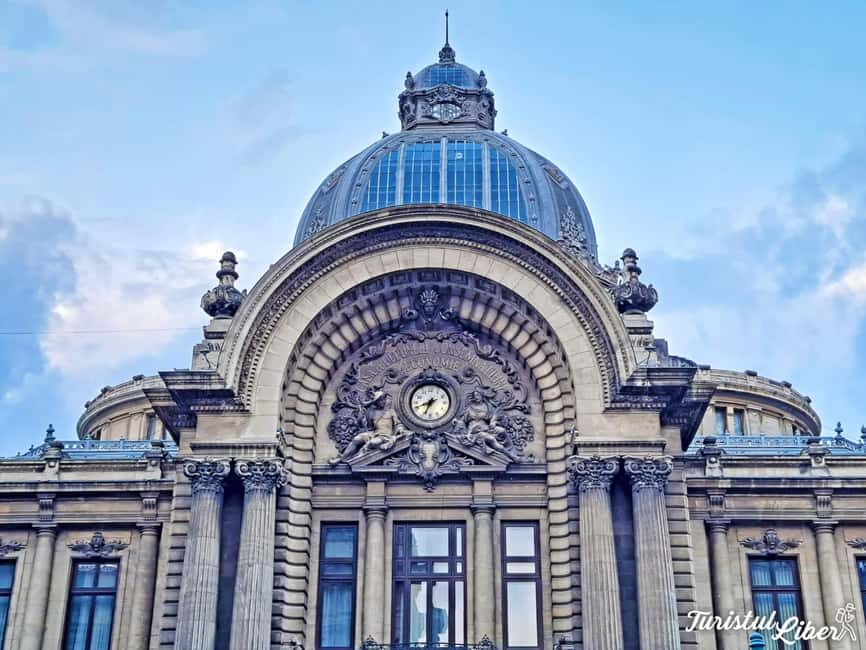
You also pass the CEC Palace (another institutional landmark) and other major buildings that read like a civic brochure in stone. The guide’s commentary is what turns these into something you can remember.
Macca – Vilacrosse Passage and Pasajul Victoria: covered passages for a breather
Two passageways are included: Macca – Vilacrosse Passage and Pasajul Victoria. These spots are more than photo stops. Covered passages are where Bucharest’s street culture gets compressed—less open wind, more built-in shelter, and often a different kind of street noise.
I like these because they give you a natural break while staying in the flow of the walk. If the weather turns, these are the spots that help you keep the experience comfortable.
Grand hotels, theaters, and the Palace of Telephones
The tour continues past major landmarks like Corinthia Grand Hotel du Boulevard Bucharest, the Odeon Theatre, and the Palace of Telephones.
This is where Bucharest’s “new versus old” balance really shows. You’re looking at buildings designed for modern functions—hospitality, performance, communication—so you can contrast them with the trade-and-inn culture you saw earlier.
A standout moment here is how the guide keeps linking function to form. You start to notice why certain corners feel formal, why some entrances look designed for arrivals, and why the city laid out these landmarks where it did.
Royal presence and academic Bucharest: Kretzulescu, Royal Palace, and the library
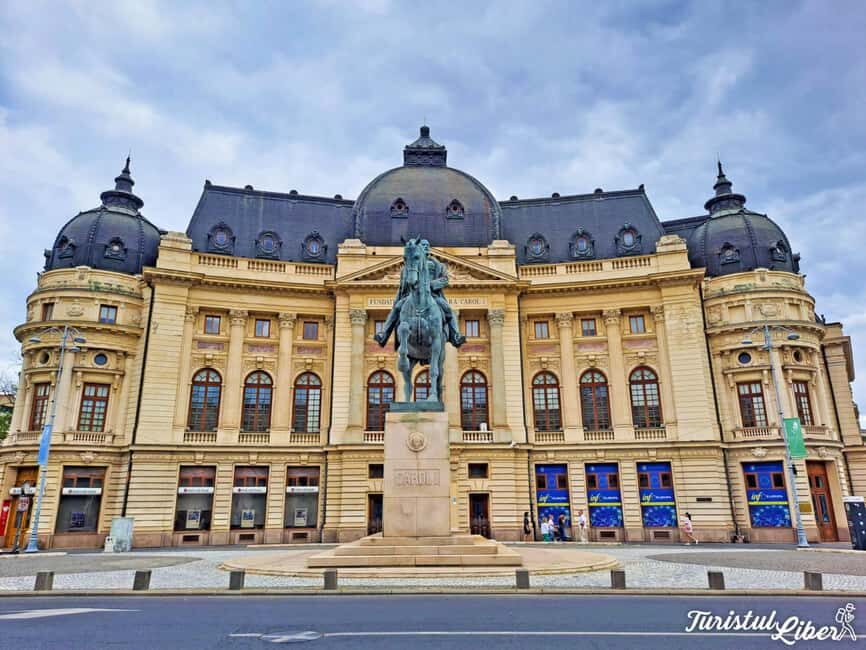
The route includes Kretzulescu Church, the Royal Palace of Bucharest, and the Central University Library of Bucharest. This trio works because it moves you from spiritual life to monarchy and then to education.
It’s a practical way to understand what a city values. Churches, royal seats, and libraries signal different kinds of stability—community worship, state authority, and long-term learning. Seeing them in sequence helps the tour feel like a guided story, not a string of buildings.
Finish at the Romanian Athenaeum: the grand close
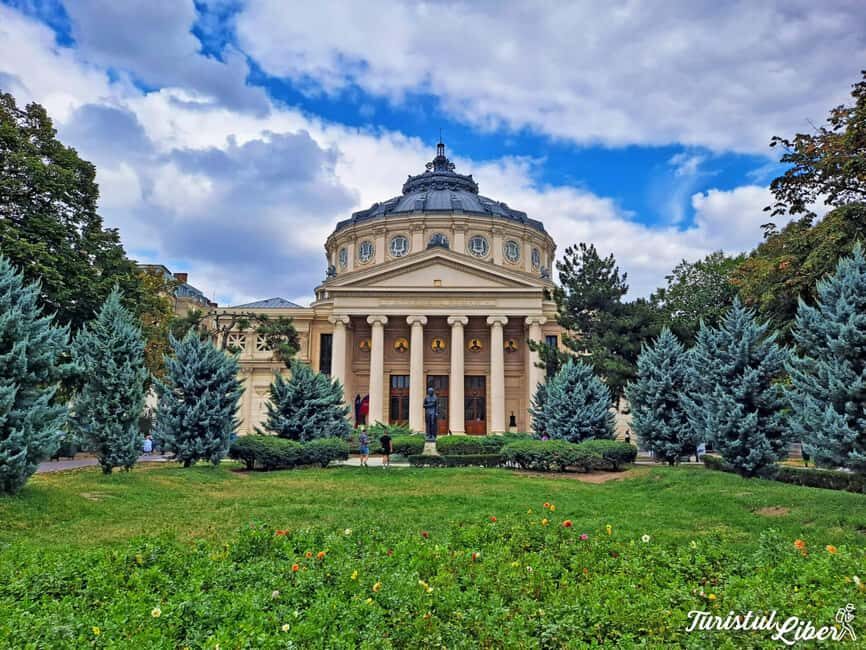
The tour ends at the Romanian Athenaeum. It’s a fitting final note because it ties together all the themes you’ve been walking through: civic pride, cultural identity, and a city that wants to project permanence.
By the time you reach the Athenaeum, you’re not just looking at a famous building. You’re standing at the end of a route that taught you how Bucharest became the place it is today.
Pace, group size, and what to wear (especially in winter)
This is a small-group tour with a maximum of 12 people, which keeps things calmer and more conversational. It also helps the guide manage questions. Based on what I’ve seen from the guide’s approach—especially in colder weather—Naomi takes comfort seriously. On chilly days, it’s clear she pays attention to the practical stuff, not just the script.
Wear comfortable shoes. You’ll be on your feet for most of the 2.5 hours, moving through areas with old paving and changing surfaces. If it rains, you’ll want gear that handles slick sidewalks.
Also, know that you’ll see a mix of old and new cityscapes. That isn’t a drawback—it’s the point. The value comes from seeing the layers without rushing.
Price and value: is $30 worth it?
At $30 per person for a 2.5-hour guided walk, this is good value if you care about context. You’re paying for a licensed local guide, English explanations, and a route that covers two major areas—Old Town and Calea Victoriei—in one go.
If you’re only in Bucharest for a short stay, this kind of route helps you avoid the common mistake: wandering for hours without understanding what you’re seeing. The guide’s focus on stories and urban development is exactly what makes the price feel fair.
If you’re the type who hates walking tours, or you want a long museum visit instead, then this may feel like a lot of moving. But if you like to learn while walking, it’s a strong match.
Should you book this Bucharest Old Town & Calea Victoriei walking tour?
Yes—if your goal is to get oriented and learn the city’s logic quickly. This tour is especially worth booking if you’re coming for your first taste of Bucharest and you want to leave with a mental map of how the city evolved.
I’d book it if you like:
- guided stories that explain what buildings did and represent
- small-group pacing with real room for questions
- a route that balances famous landmarks with lesser-known corners and courtyards
You might skip it if you want lots of downtime, or if you’re hoping for meals included. Also, since it’s a walking-focused experience, you’ll get the most out of it with good shoes and a willingness to move.
FAQ
How long is the Bucharest Old Town & Calea Victoriei walking tour?
It lasts about 2.5 hours.
What does the tour cost?
The price is $30 per person.
Where does the tour start?
The meeting point is in front of Hanu lui Manuc Restaurant.
Is the tour guided in English?
Yes, the live tour guide speaks English.
How big is the group?
The tour is a small-group experience with a maximum of 12 people.
Does the tour include transportation from your hotel?
No. Transportation to and from the meeting point is not included.
Are meals or drinks included?
No. Meals and drinks are not included.
What is the cancellation policy?
You can cancel up to 24 hours in advance for a full refund.