REVIEW · BUCHAREST
Best Walking Tour of Bucharest’s City Center – 2.5 hours
Book on Viator →Operated by Soca Tour · Bookable on Viator
You can learn Bucharest in a single, great walk. This small-group city-center route is designed to give you a deeper feel than a bus tour, with an English accredited guide and church/monastery entries built into the experience. I especially like how the stops connect big political moments to the exact streets and buildings you see on the ground.
One possible drawback: there are a few reports of no-shows or last-minute cancellations, so I’d plan a little extra time on your first day in town and keep an eye on updates.
In This Review
- Key highlights at a glance
- Why This 2–3 Hour Walk Beats a Quick Bus Tour
- Start at Hanul lui Manuc, Then Trace Bucharest’s Power Centers
- Romanian Athaeneum: Modern Romania’s Royal-Style Symbol (If It’s Open)
- Biblioteca Centrala Universitara and University Square: Carol I to the City’s Civic Heart
- Memorialul Renașterii in Revolution Square: The Potato Obelisk and December 1989
- Stavropoleos Monastery and Old-Town Churches: Byzantine Architecture in Everyday Life
- Curtea Veche Museum Area and Manuc’s Inn: Princes’ Court to a Smart Lunch Break
- Optional Unirii Square Views and the Patriarchal Cathedral
- Price and What You Really Get for $54.77
- Guide Quality, Pacing, and Reliability: What to Watch For
- Should You Book This Bucharest City-Center Walk?
- FAQ
- How long is the walking tour in Bucharest?
- What is the price per person?
- Is the tour offered in English?
- Where does the tour start and where does it end?
- Are entrance tickets included?
- Is there a group limit?
Key highlights at a glance
- Monarchy to revolution in one route: you’ll move from the royal-era story to what happened in December 1989
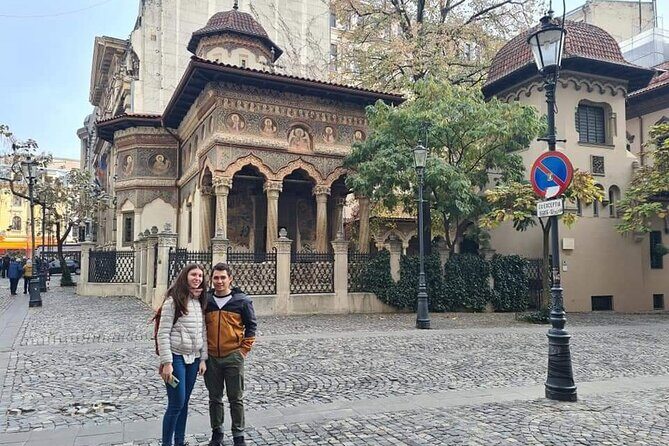
- Byzantine-flavored Old Town stops: monasteries and churches that match the city’s Orthodox spirituality
- Revolution Square and Memorialul Renașterii: the obelisk known as The potato marks a key place in Romania’s break with communism
- Curtea Veche area focus: you get the princes’ court setting without needing separate tickets for every stop
- Manuc’s Inn as a real lunch option: the oldest inn in town sets you up for a local meal
- Small groups (up to 14): easier pace, more question time, and a more personal feel
Why This 2–3 Hour Walk Beats a Quick Bus Tour
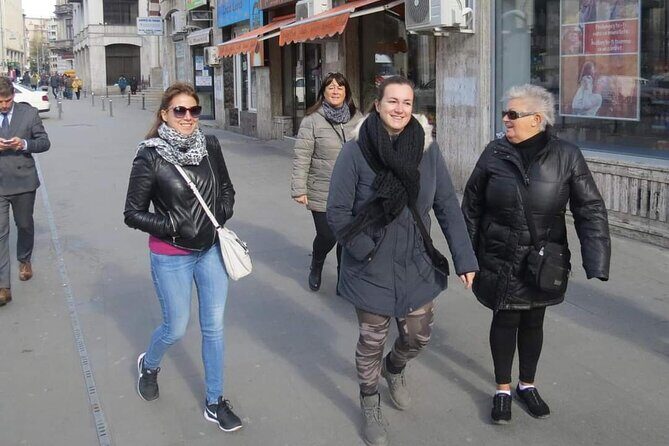
A city-center bus tour is good for speed. A walking tour is better for understanding. Here, you cover a compact loop, and the guide uses the actual landmarks—palaces, libraries, churches, and square-monuments—to explain how Bucharest changed over time.
I like that the route lasts about 2 to 3 hours, so it works even if you’re still adjusting to jet lag. You’re not stuck standing still for hours either; it’s a steady walk with short stops that keep your attention on what you’re seeing.
This is also the kind of tour that gives you bearings fast. You’ll start to recognize the city’s power centers: where the monarchy left its mark, where education and civic life sit today, and where the revolution left a visible memory in public space.
The biggest thing to know is that this experience is designed for interpretation. If you want a simple checklist of sights, you might get restless. If you like stories tied to streets, it’s a strong fit.
You can also read our reviews of more walking tours in Bucharest


Start at Hanul lui Manuc, Then Trace Bucharest’s Power Centers
You begin at Manuc’s Inn (Hanul lui Manuc) on Strada Franceză, right in the Old Town area. The endpoint is the Romanian Athenaeum on Strada Benjamin Franklin—so you finish near one of Bucharest’s most recognizable cultural landmarks.
From the first minutes, the guide’s job is to make the city readable. You’re not just looking at buildings; you’re learning why those places mattered to Romanian kings, to revolutionary memory, and to the Orthodox church tradition that shapes so much of everyday culture here.
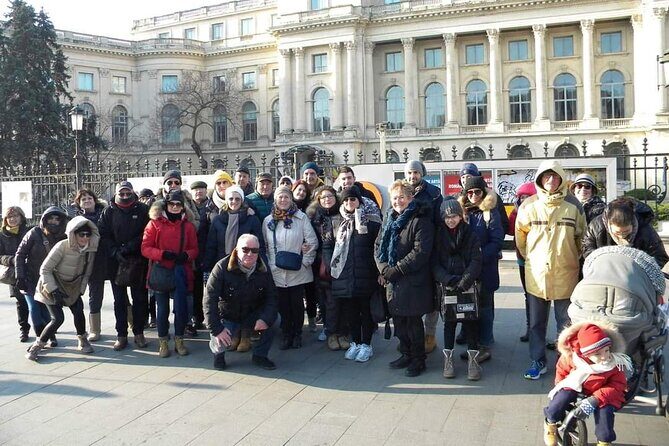
Also, the group size matters. With a maximum of 14 people, you’re less likely to lose the guide in the crowd. That usually translates into better pacing—more time to ask a question, and fewer moments where you’re rushing because the line is long.
If you’re doing Bucharest as part of a longer Romania trip, I like using a walking tour like this as the first day in the city. It turns later museum visits into a lot more sense-making.
Romanian Athaeneum: Modern Romania’s Royal-Style Symbol (If It’s Open)
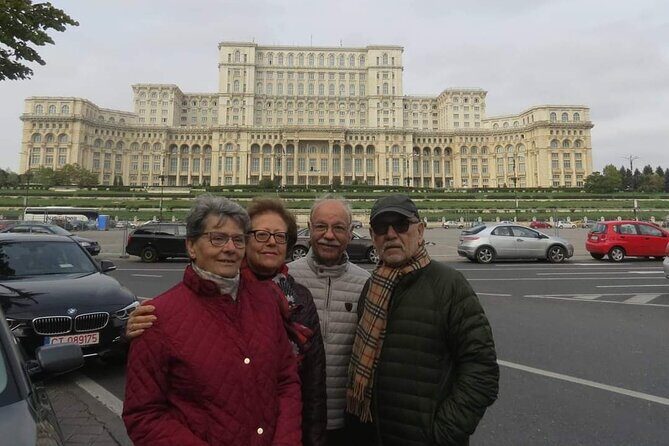
The walk kicks off with the Romanian Athaeneum, described as a symbol of modern Romania with architecture that remembers a French style. Even if you don’t know Romanian cultural history yet, you can feel why a grand concert hall like this becomes a reference point for a city.
The timing here is short—about 20 minutes—and you focus on the building’s exterior and the story behind it. The tour includes a visit if the Athaeneum is open, but the itinerary also notes that the admission ticket for this stop isn’t included. In practice, that means you should be ready for possible ticket-on-your-own costs depending on what’s happening that day.
This is one of the best stops for first-day context. The guide links it to the monarchy and the kings of Romania—Carol I, Ferdinand I, Carol II, and Michael I. That chain of rulers shows up again and again in Bucharest’s architecture, so even a brief start here pays off.
Practical tip: bring a light layer if you’re walking in cooler months. This is a stop where you’ll likely pause for photos and for the explanation.
Biblioteca Centrala Universitara and University Square: Carol I to the City’s Civic Heart
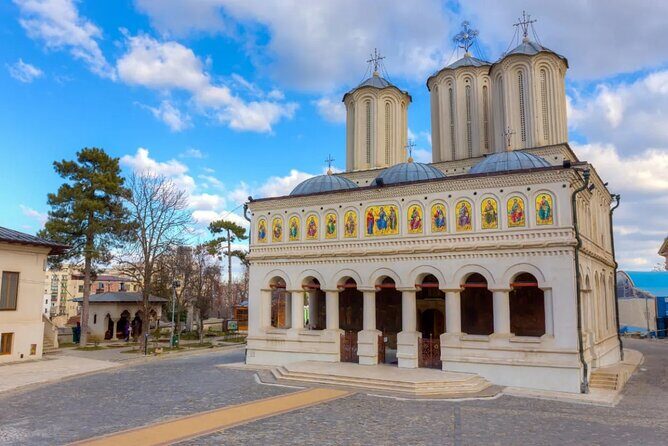
Next you’ll see the Central University Library building, erected by Carol I. In front of it sits a well-known equestrian statue associated with Carol’s legacy. This stop is short—around 5 minutes—but it’s a clear example of how education and power were linked in royal-era Bucharest.
After that, you move toward University Square. This is a civic hub, and the guide points out the headquarters of prominent Romanian universities. You also get a symbol tied to the revolution: Kilometer 0 of democracy, a reference point for the events of 1989.
Then you transition into the Old Town stroll. This part of the route matters because it changes your pace and your mental model. You start noticing smaller streets, older church settings, and the way the city’s layers sit on top of each other instead of feeling like one single planned capital.
If you enjoy cities where street corners feel like chapters in a book, this is the middle stretch that makes the rest of the walk land.
Memorialul Renașterii in Revolution Square: The Potato Obelisk and December 1989
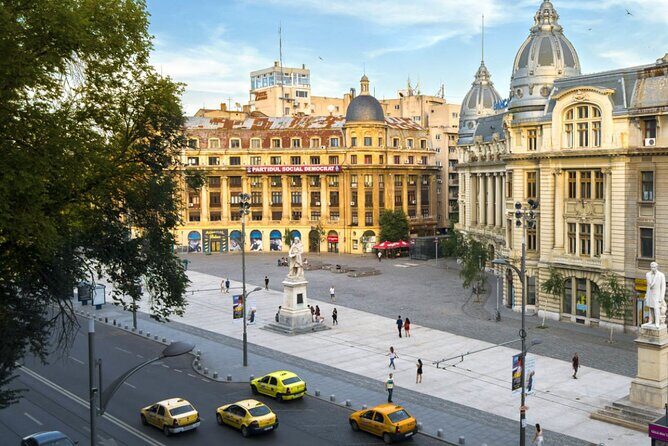
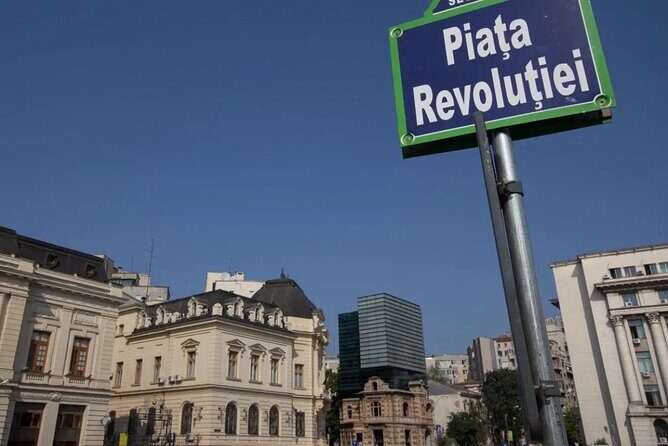
One of the most memorable stops is Memorialul Renașterii, an obelisk also called The potato. You’ll be positioned at Revolution Square, where the story of communism’s final days in Romania is explained.
This stop is about 20 minutes. It includes the kind of on-the-ground context you can’t get from a museum plaque. The guide frames what happened in December 1989—where young people fought against the regime—and why the square became part of the national memory.
The itinerary also mentions that two key personalities captured and tortured by communists remain remembered in the public imagination through their statues in that large square. Whether you already know the names or not, the key value here is location-based storytelling. You’re looking at the same civic space where people gathered, where speeches and chaos happened, and where memory stayed visible after the regime fell.
If you’re sensitive to heavy political stories, this is the section that will feel the most serious. It’s also the section that makes the whole tour feel more than “nice buildings.”
You can also read our reviews of more city tours in Bucharest


Stavropoleos Monastery and Old-Town Churches: Byzantine Architecture in Everyday Life
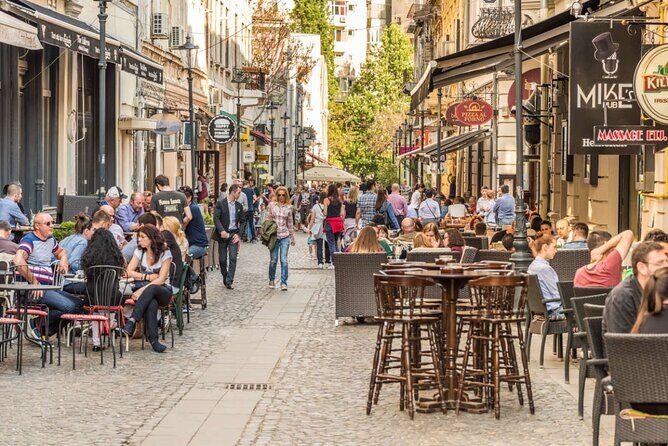
As you head deeper into the Old Town, the tour leans into Byzantine architecture and the Orthodox spiritual atmosphere that shapes Bucharest. You’ll see places described as “small and coquet,” but the point is bigger than aesthetics: these churches help you understand how religion and identity show up in urban design.
Stavropoleos Monastery is a short stop (about 5 minutes), but it sets the tone. The guide explains why the monastery is considered a sign of Byzantine architecture and spirituality in a city where most people are Christian Orthodox and live with Eastern spirituality.
Then you visit Biserica Sf. Dumitru Posta, nicknamed the White Princess of the Old Town. The itinerary highlights that it has an interesting history, and the guide’s role is to connect that history to the streets around it.
You also include Biserica Sfantul Anton – Curtea Veche, another short church visit focused on the importance of the church in Romanian history and the atmosphere inside. The tour description emphasizes that you’ll be amazed by the beauty inside, so expect a quick but meaningful interior moment.
What I like about this church cluster: you’re not just collecting photos. You’re seeing how the Orthodox world expresses itself in painted interiors, architecture, and daily spiritual life. That’s the kind of context that makes Bucharest feel distinct rather than interchangeable.
Curtea Veche Museum Area and Manuc’s Inn: Princes’ Court to a Smart Lunch Break

Then comes the Old Princely Court Museum (Curtea Veche) area, which the itinerary places as a core historical setting. It’s described as holding the oldest historical testimonies of Bucharest dating back to the 13th century, with Wallachian rulers residing here from the 14th century. The guide also brings up that Vlad the Impaler ruled Wallachia from here for a period.
This stop is brief (about 5 minutes), but it gives you the “why” behind the Old Town’s intensity. Curtea Veche is the kind of place where legends and real rulership overlap, and a guided explanation helps you separate what matters historically from what just becomes popular storytelling.
Right after that, you end up near food—Manuc’s Inn (Hanul lui Manuc) again. The itinerary describes it as the oldest inn and restaurant in town and includes a story about a wealthy boyar who shocked major empires—Russian and Ottoman.
This is where I think the tour is practical, not just scenic. The inn is recommended as a place to book lunch. If you’re hungry, plan your next move right here instead of wandering while you’re starving. Since your walk ends near the Romanian Athenaeum, a lunch in the Old Town keeps the rest of your day easy.
Optional Unirii Square Views and the Patriarchal Cathedral
Depending on your time and desire to continue, you have optional add-ons.
One option is a view from distance from Unirii Square. The itinerary notes it as optional, so don’t assume you’ll get close access there. Still, it can be a useful “big picture” moment if you want to see how different parts of Bucharest connect.
The other optional stop is the Patriarchal Cathedral, on a hill next to Unirii Square. The tour description says you can enter a sacred place filled with paintings and decorations, which suggests you’ll get another interior moment beyond the Old Town churches.
If you like structure, this optional cathedral stop can add a strong final emotional beat. If you’re tired, it’s also an easy choice to skip—especially if you’ve already collected enough churches for one day.
Price and What You Really Get for $54.77
At $54.77 per person, this tour is priced as a mid-range guided experience for a compact route. The value comes from a mix of guide time, short walking segments, and at least some included access.
The included items list mentions:
- a souvenir
- visit of the Romanian Atheneum if open
- entrances in churches/monasteries including Stavropoleos Monastery, St. Anthony, and St. Demeter Church (as stated in the included list)
Meanwhile, the itinerary also specifically notes that admission for the Athaeneum stop isn’t included. That small conflict is exactly why I recommend treating your day like this: expect church/monastery entry to be handled, and be prepared that the Athaeneum ticket situation could depend on what’s open and what’s permitted.
Group size is capped at 14 travelers, and the tour is offered in English with a mobile ticket. Those details matter more than they sound: smaller groups usually mean a better pace, and mobile tickets cut down friction at meeting points.
Then there’s the human factor. With a score of 4.3 from 29 reviews, you can see it’s often a strong introduction to Bucharest. But because there are credible reports of no-shows and last-minute cancellations, I treat booking this tour like booking an early-day activity with a backup plan.
Guide Quality, Pacing, and Reliability: What to Watch For
This is where your experience can swing. Many positive comments focus on guide storytelling and the way history becomes clear when it’s tied to street-level details.
In the feedback you can see names like Cristina, Maria, and Nicolae associated with strong performance—prepared, professional, and good at sharing anecdotes that make monuments feel alive in the moment. That’s the best-case scenario, and it fits the tour’s format: short stops, lots of context, and a guide who knows how to connect the city’s political timeline to what you’re standing in front of.
The downside is real too. Some experiences report a guide who didn’t show up and wasn’t reachable, or a cancellation sent close to departure time. That doesn’t mean it’s common, but it’s enough that I would not treat this as your only planned activity that day.
What I’d do:
- arrive a bit early at Hanul lui Manuc
- check messages close to departure
- keep your next plans flexible
If you’re traveling with limited time, you’ll feel the impact of any disruption more strongly than someone with a full extra day.
Should You Book This Bucharest City-Center Walk?
If you want a first-day orientation to Bucharest’s most important themes—monarchy, education, Orthodox spirituality, and the 1989 revolution—this walk makes sense. It’s also a strong fit if you like guides who explain rather than recite, and who can turn “pretty buildings” into a sense of cause and effect.
I’d recommend it to:
- couples and solo travelers who want an organized way to explore the Old Town
- people who want context before diving into museums
- visitors who enjoy short, story-driven stops (not long museum marathons)
I’d think twice if:
- you’re tight on time and can’t tolerate the risk of a disruption
- you want a purely sightseeing tour with minimal political content
Overall, when it runs smoothly, this is the kind of Bucharest introduction that leaves you looking at the city differently—less like a postcard set, more like a living timeline.
FAQ
How long is the walking tour in Bucharest?
The tour runs about 2 to 3 hours.
What is the price per person?
The price is listed as $54.77 per person.
Is the tour offered in English?
Yes, the tour is offered in English.
Where does the tour start and where does it end?
It starts at Manuc’s Inn (Hanul lui Manuc), Str. Franceză 62, București 030167 and ends at the Romanian Athenaeum, Strada Benjamin Franklin 1-3, București 010287.
Are entrance tickets included?
Entrances are included for churches/monasteries such as Stavropoleos Monastery, St. Anthony, and St. Demeter Church. The tour also says it includes a visit to the Romanian Athenaeum if it’s open, but the itinerary notes that the Athaeneum admission ticket is not included.
Is there a group limit?
Yes. The tour has a maximum of 14 travelers.