Bucharest is easier when someone else drives. This 2-hour tuk tuk tour strings together the city’s biggest landmarks with smart stops you can actually enjoy in a short visit, and you’ll get pickup from central hotels and locations so you don’t waste time figuring out routes.
I especially like the photo-friendly pacing: you’re close enough to monuments for quick exterior shots without the stress of parking or squeezing into crowded streets. I also like the human part—guides like Alin and Claudio are praised for being engaging, warm, and great at answering questions on the fly. One thing to plan for: Bucharest traffic can be busy, and the open air tuk tuk can feel chilly or windy depending on the weather.
If you want a quick sense of direction and a clear list of what to come back for, this tour does that job well. It’s also a nice way to sample Bucharest’s mood swings—from grand royal buildings to the hard edge of communist history—without spending the whole day moving between sites.
In This Review
- Key points to know before you ride
- The 2-hour route that gives you bearings fast
- Pickup that actually saves time (and what happens if the tuk tuk can’t reach you)
- Stop-by-stop: what you’ll see and why each place matters
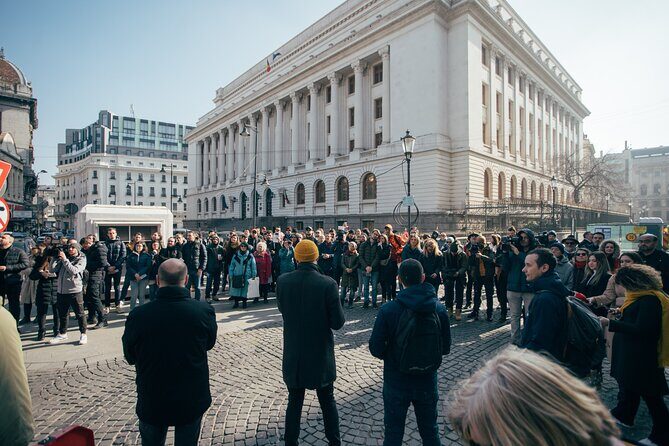
- University Square: theatre glamour and an early skyline lesson
- Ceausescu Mansion (Spring Palace): from VIP hosting to museum visits
- Arcul de Triumf: a Romanian “Little Paris” moment
- The House of the Free Press: communist power in plain sight
- Calea Victoriei: aristocratic boulevard energy and an easy walking option later
- Romanian Athenaeum: the domed concert hall you’ll remember
- Revolution Square: the last speech context in 1989
- Royal Palace of Bucharest: royal ambition with Queen Maria at the helm
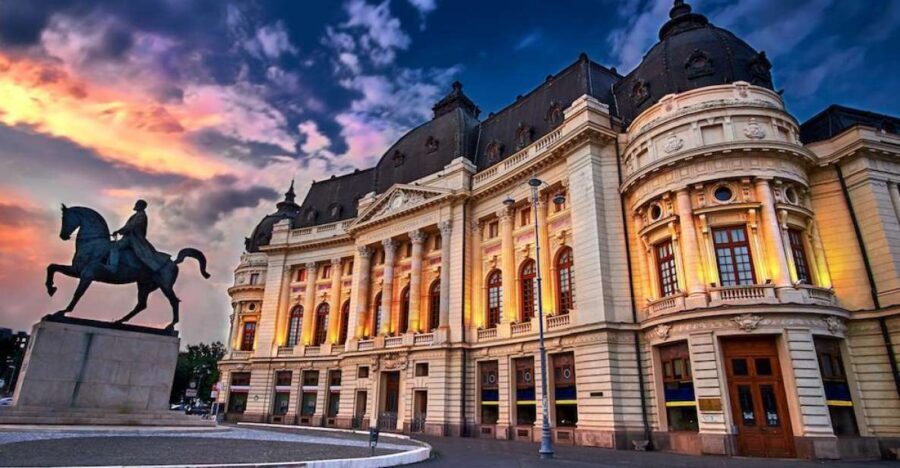
- Palatul CEC and the National History Museum area: big institutions at the edge of Old Town
- Palace of Parliament and Unirii Square fountains: scale and spectacle
- Price and value: what the $54.44 really covers
- Weather, comfort, and safety: the parts you’ll actually feel
- Who this tour is best for
- Should you book this Bucharest tuk tuk tour?
- FAQ
- How long is the Bucharest tuk tuk city tour?
- How much does the tour cost?
- Does the tour include pickup?
- Is the tour private or shared?
- What language is the tour offered in?
- What’s included in the ticket price?
- Are admission tickets included for all stops?
- What is the cancellation policy?
Key points to know before you ride
- Hotel pickup from downtown keeps the tour stress low from minute one.
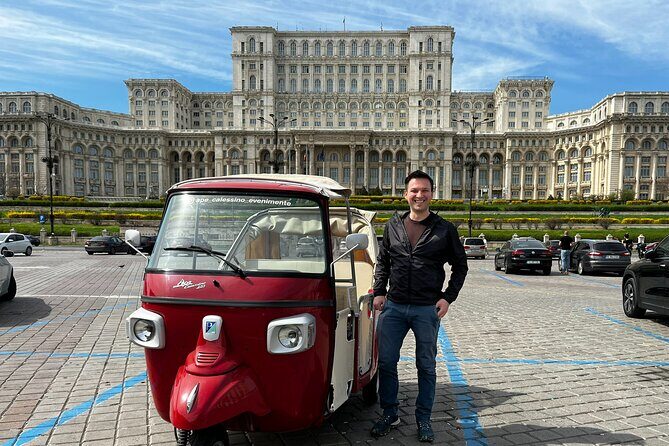
- Small vehicle, better photo angles at key stops, especially for quick exterior views.
- Communist-era sights in the route help you connect names, places, and events.
- Fountains at Unirii Square are included as a synchronized spectacle viewpoint.
- Cold or rainy weather support shows up in the real-world handling of blankets and ponchos.
- Admissions are separate, so budget extra if you want to go inside several buildings.
The 2-hour route that gives you bearings fast
This is built as a quick-hit overview of Bucharest, the kind of tour that helps you map the city in your head. In about two hours, you’ll see a sweep of famous sights without treating the day like a nonstop walking test.
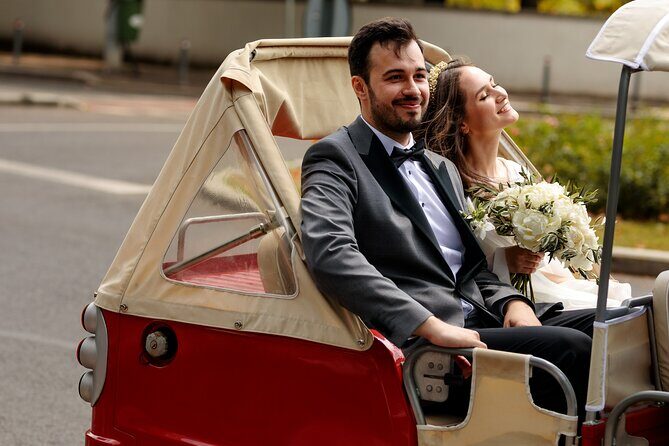
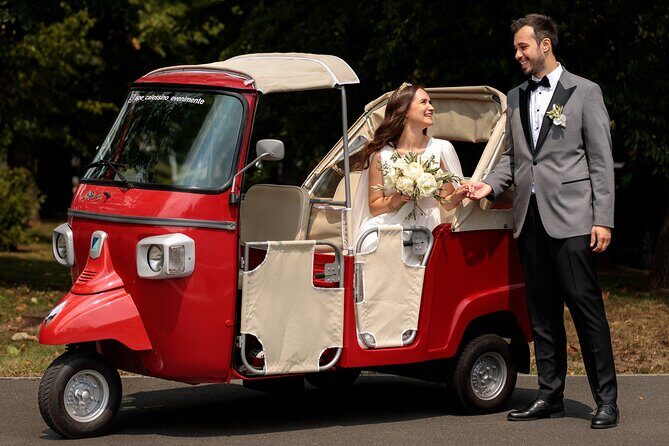
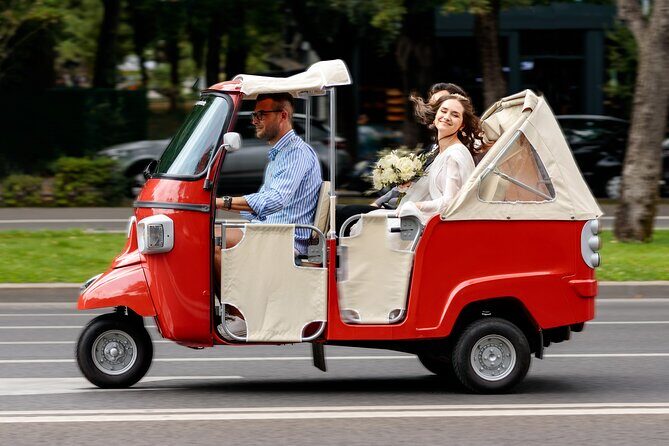
The tuk tuk format matters. Bucharest has wide streets, big intersections, and some areas that are simply annoying to reach quickly on foot. A small vehicle makes it easier for your guide to pull into better sightlines and pause in practical spots for exterior photos.
You can also read our reviews of more city tours in Bucharest


Pickup that actually saves time (and what happens if the tuk tuk can’t reach you)

Pickup is offered from downtown hotels and central locations, with the guide waiting in front of your hotel. If the exact spot can’t be reached by car, the guide will stop as close as possible and send you the location via WhatsApp, which is a simple, traveler-friendly solution.
This matters because Bucharest’s sights aren’t all grouped in one tight historic zone. Starting right where you’re staying cuts down on the “dead time” that can eat up half a day.
Stop-by-stop: what you’ll see and why each place matters
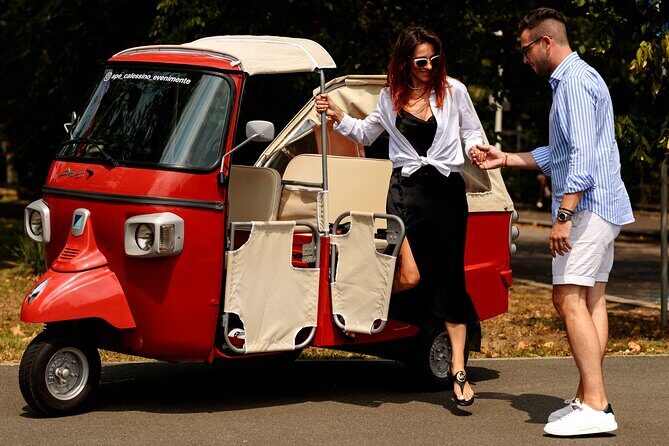
The tour’s power is that it links landmarks to stories, not just snapshots.
University Square: theatre glamour and an early skyline lesson
You start at University Square, where you’ll get views of the National Theatre and the Grand Hotel Continental. The Continental is described as the city’s highest hotel, which gives you a good visual reference point early in the ride.
Why it’s worth a stop: this is a classic Bucharest look at scale—grand buildings, major streets, and the city’s tendency to mix culture with politics and power.
Ceausescu Mansion (Spring Palace): from VIP hosting to museum visits
Next is Ceausescu Mansion, also known as the Spring Palace after a transformation into a museum in 2016. The history lesson here is specific: foreign leaders were invited in the late 1960s and early 1970s, including Charles de Gaulle (1968), Richard Nixon (1969), and Fidel Castro (1972).
This is one of the most important stops if you want to understand how the communist leadership projected status to the world. It’s also one of the main places where you may want to pay the extra admission if you care about going inside (listed as 12 EUR).


Arcul de Triumf: a Romanian “Little Paris” moment
You then reach Arcul de Triumf, set in one of Bucharest’s busiest intersections. The arch commemorates the Romanian Army’s victory in World War I and the Great Union of 1918, and it’s built after the French model—often referenced as part of Bucharest’s “Little Paris” nickname.
The practical value: it’s an easy outdoor landmark that helps you orient yourself. Even if you don’t go inside anything (triumphal arch admission is listed as free), the exterior stop is still useful for bearings and photos.
The House of the Free Press: communist power in plain sight
The tour includes a major landmark tied directly to communist-era media control: a building built between 1952 and 1957 that served as headquarters for the Communist Party’s official publication, Scânteia (The Spark). After the Romanian Revolution in 1989, the building’s name changed to the House of the Free Press.
This stop hits differently when you learn the timeline. The building isn’t just “old architecture,” it’s a physical reminder of how information was managed—and how that control changed.
Calea Victoriei: aristocratic boulevard energy and an easy walking option later
Then you’ll pass through Calea Victoriei, known as Bucharest’s aristocratic street and its most famous thoroughfare. It’s described as the oldest artery and the most touristic one, lined with fashion shops, art boutiques, coffee shops, restaurants, and historical buildings.
I like this as a pivot point in the tour. After you’ve seen the heavyweight political history, this street gives you the “today” version of Bucharest—an area you can return to for a slower meal or a casual browse on your own.
Romanian Athenaeum: the domed concert hall you’ll remember
You also visit The Romanian Athenaeum, a landmark concert hall opened in 1888. It’s ornate, domed, and circular in form, and it houses the George Enescu Philharmonic plus the George Enescu Festival.
If you’re the type who likes architecture with function, this is your stop. The tour lists admission as 3 EUR if you want to go in. Even without entry, the exterior is a strong “wow” and a great anchor for planning a future concert or cultural visit if your schedule fits.
Revolution Square: the last speech context in 1989
At Revolution Square, the tour focuses on a single, heavy historical moment: this is where Nicolae Ceaușescu had his last speech in 1989. Admission is free, and the value here is understanding the place in the story of modern Romania.
It’s the kind of stop that makes the earlier palace and media-control scenes feel connected, instead of random facts.
Royal Palace of Bucharest: royal ambition with Queen Maria at the helm
You’ll see the Royal Palace of Bucharest, the winter residence of Romanian kings, dated 1937. The tour notes direct supervision by beloved Queen Maria and her son, King Carol II.
This is a nice contrast stop after the Revolution Square moment. You get a sense of different power structures in the same city—royal legitimacy versus communist control—without needing a full museum day.
Palatul CEC and the National History Museum area: big institutions at the edge of Old Town
The route includes Palatul CEC, described as one of Bucharest’s iconic buildings and home to Romania’s oldest bank. Across the street is the National History Museum of Romania, noted as the biggest of its kind in the country, with the museum located near the entrance to Bucharest’s Old Town.
Even if you don’t step inside, the geography helps. It clarifies where Old Town begins and which museum zone is central if you want a deeper day later.
Palace of Parliament and Unirii Square fountains: scale and spectacle
Finally, the tour turns to some of Bucharest’s most extreme “wow” sights.
You’ll see the Palace of Parliament, described as the second largest administrative building in the world after the Pentagon and noted as even heavier than it. The tour also includes a bold comparison: it exceeds the volume of the Great Pyramid of Giza by 2%, which is why it gets called pharaonic.
Then comes Unirii Square, where 44 synchronized fountains create a choreographed show. The tour notes this as the longest synchronized choreographic fountains system in the world. You get a viewpoint without needing tickets or a long walk.
Price and value: what the $54.44 really covers
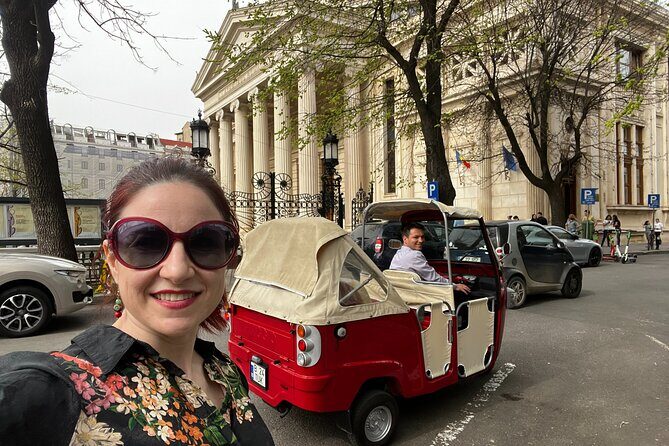
The listed price is $54.44 per person for about two hours, in English, with pickup and a private setup (just your group). That part matters: in many cities, a private “highlights” tour quickly becomes expensive if you’re using taxis or paying parking by the hour. Here, the tuk tuk format keeps costs anchored while still giving you access to multiple zones.
What’s included is also practical: bottled water, Romanian sweets, blankets, a selfie stick, and parking fees. That sounds small until you’re actually in the cold or wind—blankets and a warm guide setup can make the difference between enjoying the ride and wishing you’d taken a different plan.
The main extra cost is admissions. Several stops are listed as ticketed, including:
- Ceausescu Mansion (12 EUR)
- Royal Palace of Bucharest (6 EUR)
- Triumphal Arch (5 EUR)
- Romanian Athenaeum (3 EUR)
- National History Museum (5 EUR)
- Plus additional museum admission options listed for Dimitrie Gusti Village Museum (4 EUR)
So your real “all-in” cost depends on your interests. If you just want exterior photos and stories, you’ll likely spend much less than if you go inside multiple places. If you do plan to enter several buildings, pencil that in before you book so you don’t feel surprised.
Weather, comfort, and safety: the parts you’ll actually feel
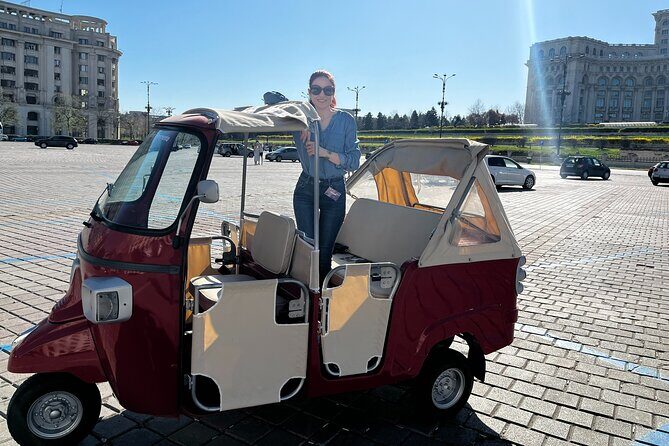
The tuk tuk is fun, but it’s not a closed car. That means you should dress for wind and temperature. The tour includes blankets, and real-world handling includes switching to a warmer car when it gets cold, plus rain ponchos in wet conditions.
One more practical note: Bucharest traffic can be crazy at certain times. The ride depends on driver skill and timing, and the best guides handle that confidently while still keeping photo stops on track. Even with traffic, the value is that you’re seeing places without negotiating every turn yourself.
Who this tour is best for
This is a strong match if:
- you’re in Bucharest for a short time and want the big landmarks in one go
- you want history context without committing to a full-day walking route
- you prefer photo stops where you can step out briefly and take the shot
It may be less ideal if:
- you’re hoping for long interior museum time at every stop (this is more about stops and stories than extended visits)
- you strongly dislike open-air vehicles in cold or windy weather
Should you book this Bucharest tuk tuk tour?
If you’re trying to get oriented and decide what to do next, I’d book it. The mix of royal-era architecture, communist-era anchors, and quick photo opportunities gives you a usable mental map fast. The best part is that you’re not just collecting sights—you’re collecting the meaning behind them, which makes your later self-guided visits easier.
If you’re traveling in colder months, pack layers and plan to lean on the provided blankets. If you love museums, check which stops you’ll want to enter and budget the listed admissions ahead of time.
When your goal is a smart highlights overview without overthinking logistics, this is one of the easiest ways to start your Bucharest trip.
FAQ
How long is the Bucharest tuk tuk city tour?
The tour lasts about 2 hours.
How much does the tour cost?
The price is $54.44 per person.
Does the tour include pickup?
Yes. Pickup is offered from downtown hotels and central locations, and the guide waits in front of your hotel when possible.
Is the tour private or shared?
This is a private tour/activity. Only your group participates.
What language is the tour offered in?
The tour is offered in English.
What’s included in the ticket price?
Included items are bottled water, Romanian sweets, blankets, a selfie stick, and parking fees.
Are admission tickets included for all stops?
No. Several entrances are listed as additional costs, such as Ceausescu Mansion, the Royal Palace, the Triumphal Arch, and the Romanian Athenaeum, along with other museum options.
What is the cancellation policy?
You can cancel for a full refund if you cancel up to 24 hours in advance of the experience start time.