REVIEW · BUCHAREST
Communism Walking Tour from Lenin to Ceausescu in Bucharest
Book on Viator →Operated by Bike the City · Bookable on Viator
Bucharest politics can be read in stone. This 2.5-hour communism walking tour strings together the city’s biggest statements of power, from the Palace of Parliament down to Revolution Square. I especially like how the guide explains what you’re looking at in everyday terms, and how the route includes both the grand projects and the places tied to the revolution’s violence. One thing to watch: the tour is offered in English, and if your comfort level is low, you may struggle even with phone translation.
It’s also a good-value way to get oriented fast. For $24, you’re not just doing sightseeing—you’re connecting the dots between architecture, ideology, and what daily life under communism meant for Romania. Still, this is a walking tour with stops spread across central Bucharest, so you’ll want decent walking shoes and a little patience for street crossings and crowds around major landmarks.
In This Review
- Key things to know before you go
- Why This Bucharest Communism Walk Feels Different
- Price and Timing: What $24 Buys You in Real Value
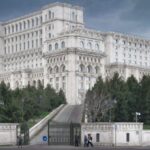
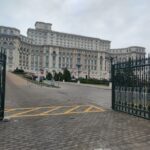
- Stop 1: Palace of Parliament and the Scale of Socialist Power
- Stop 2: Manastirea Antim and the Cost of a New Boulevard
- Stop 3: Palatul Patriarhiei and the Twist Between Democracy and Communism
- Stop 4: Piaka Unirii, the 1980s Victory Boulevard, and Dancing Fountains
- Stop 5: The Old Town’s Empty Significance
- Stop 6: University’s Square and Romania’s Bloody Breaking Point
- Stop 7: The Royal Palace Turned Palace of the Republic
- Stop 8: Ateneul Roman and a Building Printed on the 5 Lei
- Stop 9: Revolution Square, the Party Center, and Ceaușescu’s Last Speech
- What Guides Do That Changes the Walk
- Practical Advice: How to Get the Most Out of Each Block
- Who This Tour Is For (and Who Might Want a Different Fit)
- Should You Book This Communism Walking Tour in Bucharest?
- FAQ
- How long is the communism walking tour?
- What does the tour cost?
- Where do you meet, and where does the tour end?
- What time does the tour start?
- Is the tour in English?
- Are admission tickets included for the stops?
Key things to know before you go

- A tight, 2.5-hour storyline that links early communist influence to Ceaușescu’s final moments
- Small-group feel with a maximum of 25 people, so questions stay possible
- Free admission stops listed for each site, so the cost stays predictable
- Concrete landmarks: Parliament, Unirii, University Square, the Royal Palace, and Ateneul Român
- Two-great-guide styles possible: guides like Alex and Lucia are known for clear storytelling in English
- Near public transport for an easier start from Bulevardul Unirii 5 and a finish at Revolution Square
Why This Bucharest Communism Walk Feels Different
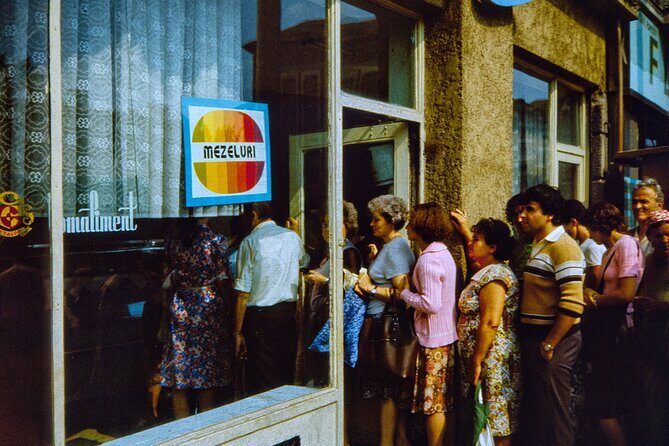
Bucharest has a way of turning history into architecture. One block can show royal-era grandeur; the next can show how a communist government tried to outsize reality. On this tour, you’re walking through that contrast with a guide who focuses on meaning, not just dates.
The big win is the balance: you get the big megalomaniac build-outs, but you also see how old neighborhoods and symbols were treated. You’ll walk through the parts of central Bucharest that embody power, propaganda, and the end of the system—without needing a museum ticket marathon.
The tour is designed for people who want an organized overview. If you’re the kind of traveler who likes to know what a building is really saying, you’ll enjoy the way the route builds from one idea to the next.
You can also read our reviews of more walking tours in Bucharest

Price and Timing: What $24 Buys You in Real Value
At $24 per person for about 2 hours 30 minutes, the pricing feels fair—especially because each stop is listed as free admission for the tour. You’re paying mostly for the guide’s time and the way they connect the landmarks into a coherent narrative.
Timing matters here. The 10:30 am start is a solid choice because you’ll still have daylight for the biggest outside-facing sights. It also reduces the chance that you’re walking these central streets late when energy and visibility drop.
One more practical note: it’s often booked in advance (around 50 days). If you want your preferred day, don’t wait until the last minute.
Stop 1: Palace of Parliament and the Scale of Socialist Power
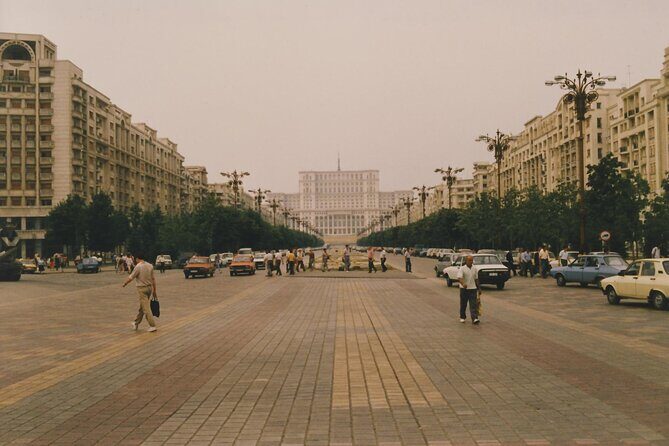
You start in front of the Palace of Parliament, described as the second biggest administrative building in the world. It’s tied to what the tour frames as the last megalomaniac communist project, so the building isn’t just a background—it’s the thesis statement.
From the street, you’ll understand why it became such a symbol. The scale is the point: in a system that demanded obedience, this kind of architecture makes authority feel permanent. The guide’s job is to help you read that message without needing insider knowledge.
Drawback to consider: this is one of the heaviest stops emotionally and conceptually. If you prefer lighter, purely scenic walks, you might feel the weight early on. Still, it sets up everything that comes after.
Stop 2: Manastirea Antim and the Cost of a New Boulevard
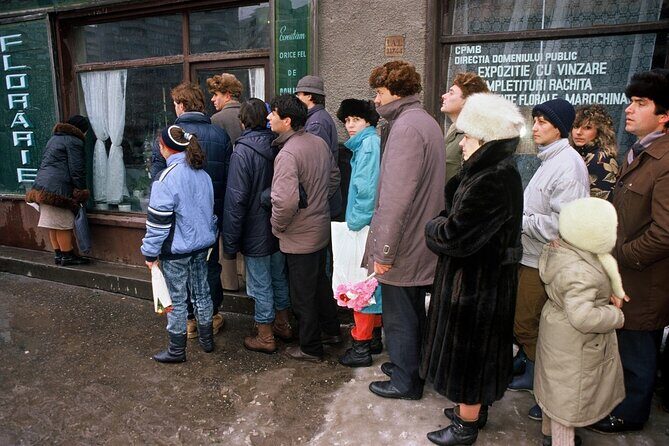
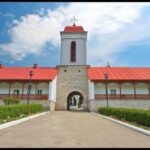
Next is Manastirea Antim, part of the old city. The story here is about what got squeezed when communist planners pushed through the Socialist Victory Boulevard. The tour notes the monastery was almost demolished to make space for that grand plan.
This stop is important because it’s where you see the system’s impact beyond politics. It’s not only about speeches and party buildings—it’s also about physical displacement, demolition pressure, and what gets preserved versus erased.
A practical tip: expect a shorter visit here. The point isn’t to stare at details forever; it’s to register the contrast between a historic religious site and the expansion plans that treated older Bucharest as expendable.
Stop 3: Palatul Patriarhiei and the Twist Between Democracy and Communism
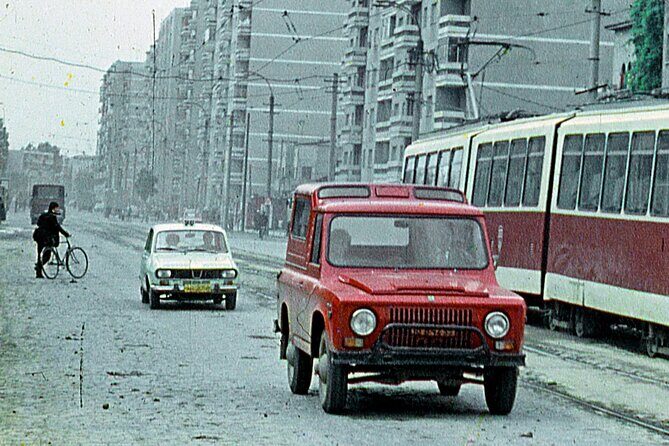
Palatul Patriarhiei is tied to a fascinating architectural connection: it’s inspired by Garnier Opera from Paris. That detail alone gives you something visual to hold onto during the explanation.
But the stop is more than style. The tour frames the building as connected to the start of democracy in Romania, while also tied to the start of the communist movement. That “two stories in one place” feeling can be confusing if you don’t have guidance, so the guide’s commentary really matters here.
What you’ll likely take away: regimes don’t always replace the past with clean breaks. Sometimes political shifts reuse buildings, reinterpret symbols, and fold new power into existing frameworks.
Stop 4: Piaka Unirii, the 1980s Victory Boulevard, and Dancing Fountains
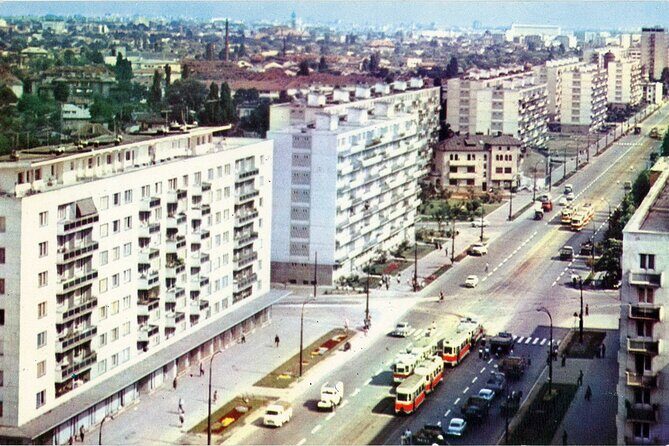
Piaka Unirii (built during the 1980s) is described as part of the Socialist Victory boulevard. The standout feature is the Dancing Fountains—one of those moments where the city’s design choices become easy to notice.
This stop is where the tour helps you see how communist planning used public space as performance. It wasn’t only about function. It was about staging the future, presenting the state as modern, and turning city life into something that looked choreographed.
One consideration: if it’s a cold or windy day, you might not want to hang around too long, even though the stop is listed for about 20 minutes. Dress for outdoor time.
Stop 5: The Old Town’s Empty Significance

The tour then moves to the Old Town, described as a symbol of the old regime. The key idea is that it became abandoned during the communist era.
That’s a powerful contrast to the fountain-and-boulevard section. Instead of a city showing off its future, you get a place treated as a leftover from a system the new rulers didn’t want to celebrate. The guide’s context is what turns “old buildings” into “what happened to people and neighborhoods.”
This is also a reminder that communism in architecture wasn’t only about building new. It could be about neglecting the old.
Stop 6: University’s Square and Romania’s Bloody Breaking Point
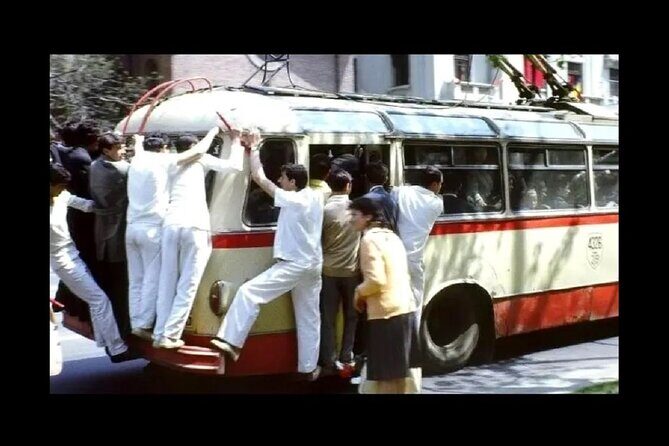
University’s Square is one of the tour’s most serious stops. The tour notes that Romania was the only country from the communist block that ended in a bloody revolution, and that most victims were shot in this square.
So what do you do with that information while you’re standing in a public plaza? You slow down. The guide helps you connect the square’s role to the revolution’s climax, not just the idea of protest.
This stop is short (about 15 minutes), which is good for pacing but also means you should be ready to absorb a lot quickly. If you want time for reflection, plan to linger a little after the group moves on.
Stop 7: The Royal Palace Turned Palace of the Republic
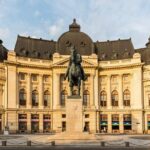
Next is Palatul Regal / the Royal Palace, which is now the National Art Museum. The tour frames its life in two eras: it was the winter residence of Romania’s Royal family, and during the first years of communism it became the Palace of the Republic and a protocol building.
That’s one of the best “read the regime through the building” examples on the whole walk. You’re not just seeing a palace—you’re seeing how power rewrites identity. The state kept the bones and changed the story.
If you like history you can point to, this is the stop. The guide helps you recognize why the transformation mattered symbolically, even after the function changed.
Stop 8: Ateneul Roman and a Building Printed on the 5 Lei
Ateneul Roman is one of Bucharest’s most representative buildings, and it’s also printed on the 5 lei bill. That money connection is a neat shortcut to importance: this isn’t some obscure monument. It’s a national image that shows up every day.
The tour gives this stop only about five minutes, but the goal is practical. You get a quick, memorable landmark moment to anchor the rest of the political architecture.
If you’re thinking about photos, this is the stop where you’ll want to adjust quickly. Five minutes can disappear fast in a group setting.
Stop 9: Revolution Square, the Party Center, and Ceaușescu’s Last Speech
You end at Revolution Square (Piața Revoluției), one of Bucharest’s most loaded spaces. The tour describes the main building as the Central Committee of the Communist Party, and it notes that Nicolae Ceaușescu held his last speech in front of the Romanian people there.
This is the emotional endpoint for the whole route. Earlier stops explain how power tried to shape the city’s look and feel; here, you see the power system losing control in the most public way possible.
The location matters, too: ending here lets you keep the story going on your own. After the tour finishes, you can use what you learned to recognize the city’s layout and understand why crowds and movement feel different around political sites.
What Guides Do That Changes the Walk
Two names come up in the tour’s history of experiences: Alex and Lucia. The common theme is storytelling clarity—guides connect the dots between what you see and what it meant.
One guide-style detail you might notice: some narration leans into humor and adjusts to the group’s pace. That matters because communist-era topics can feel heavy. A guide who knows when to lighten the mood can keep you listening without turning the topic into a comedy routine.
Language note: the tour runs in English. If your English is solid, you’ll follow most of it comfortably. If it’s not, plan on using your own notes and don’t assume automatic translation will catch everything.
Practical Advice: How to Get the Most Out of Each Block
This isn’t a museum tour where you stand in front of one display. You’ll be moving across central Bucharest with multiple exterior-facing stops, so focus on what you can observe on the street: scale, placement, and the way different time periods occupy the same city.
For each stop, I suggest you ask yourself one simple question while the guide talks:
- What does this building or square try to prove?
- Who benefits from that message?
- What gets ignored or pushed aside?
If you carry that mindset, you’ll find the route starts clicking into place—especially around the Palace of Parliament, the Victory Boulevard sections near Unirii, and the revolution sites around University’s Square and Revolution Square.
Also plan for weather. With an outdoor-heavy format, the day matters.
Who This Tour Is For (and Who Might Want a Different Fit)
This communism walk is ideal for you if you want:
- A structured overview of Romania’s communist period through major Bucharest landmarks
- A guide who explains the meaning of architecture and public space
- A route that covers both propaganda-scale projects and revolution-era violence
It may not be the best fit if you want:
- A mostly light sightseeing day with little political weight
- Plenty of time inside buildings (the tour focuses on stops and street-level context)
- A slow pace with long pauses for independent exploration
If you’re traveling with a mixed-age group or people who don’t want too much reading, this kind of guided format tends to work well because the story stays organized.
Should You Book This Communism Walking Tour in Bucharest?
I think you should book if you like your sightseeing with context. For $24, you get a tight 2.5-hour route with free-admission stops and a small group size, and you walk through the key places that explain how power shaped Bucharest—and how it ended.
If your English is comfortable, you’ll likely feel the tour’s flow. If English is a struggle, do yourself a favor and plan for extra attention, because the narration is the product here.
My final take: this is a smart-value way to understand Bucharest beyond photos. When you leave, you’ll be able to look at the city and see the political story the buildings are still telling.
FAQ
How long is the communism walking tour?
The tour lasts about 2 hours 30 minutes.
What does the tour cost?
It costs $24.00 per person.
Where do you meet, and where does the tour end?
You start at Bulevardul Unirii 5, București 040101, Romania, and you end at Revolution Square (Piața Revoluției), București, Romania.
What time does the tour start?
The start time is 10:30 am.
Is the tour in English?
Yes, it is offered in English.
Are admission tickets included for the stops?
The stops listed on the tour are marked as admission ticket free, and the included item is the local guide. Food and drinks are not included.