REVIEW · CLUJ NAPOCA
Clasic Tour of Cluj Napoca
Book on Viator →Operated by CURLY GUIDE TOURS · Bookable on Viator
Cluj-Napoca can feel like a timeline you can walk through. This tour strings together major churches and historic sites with clear stories, so you understand what you’re seeing instead of just snapping photos.
I love how many stops you get in just 2 hours 30 minutes, without it feeling rushed. I also like that the key places are set up so you can actually go inside or look closely at standout details—especially when the architecture changes style every few blocks.
One thing to watch: the Reformed Church on Wolf Street has a time cut-off (starting Nov 1, Mon–Fri visits end at 2 PM), so later bookings may have to skip that entrance. Plan your timing if that stop matters most.
In This Review
- Key Points You’ll Appreciate on This Tour
- Price and Logistics for a 2.5-Hour City Walk
- Where You Start: Piața Unirii and Getting Your Bearings Fast
- St. Michael’s Cathedral: Gothic Craft in the Main Square
- Piarist Church: Baroque Style and a Famous Icon
- Babeș-Bolyai University: Architecture Meets Everyday Academic Life
- Wolf Street Reformed Church and the Coats of Arms Rule
- Turnul Croitorilor: The Preserved Corner Tower Story
- Muzeul Trovanților: Trovants That Sound Like Science Fiction
- Lucian Blaga National Theatre: Fellner’s Opera-Era Impact
- Metropolitan Cathedral: Byzantine Style With a Construction Story
- Iuliu Maniu Street: Mirror Street and Haussmann Logic
- Bánffy Palace: Baroque Grandeur and the Art Museum Connection
- Should You Book This Cluj-Napoca Classic Tour?
- FAQ
- How long is the Cluj-Napoca Classic Tour?
- Where does the tour start and end?
- What language is the tour offered in?
- Is bottled water included?
- Are entrance tickets included for the stops?
- Will I be able to visit the Reformed Church on Wolf Street on any day?
- Do I get a mobile ticket?
- Is the tour private?
- Is free cancellation available?
Key Points You’ll Appreciate on This Tour
- Free admissions at each listed stop (with the tower at St. Michael’s being optional)
- English-guided narration with a licensed guide, and strong local storytelling (including guides like Manuela who speak French well)
- A tight route that hits churches, a tower, a geology museum, an opera/theatre, and palace culture
- Real architectural variety: Gothic, Baroque, Byzantine, and Haussmann-style street planning in one afternoon
- Wolf Street church timing rule starting Nov 1, Mon–Fri (important for afternoon bookings)
Price and Logistics for a 2.5-Hour City Walk
At $48.16 per person, this feels like a fair deal for what you get: a licensed guide, bottled water, and access to the included sites listed on the route. What makes it good value isn’t just the price tag—it’s the structure. In a short time, you cover a lot of visual ground and you’ll know why the buildings look the way they do.
The tour runs about 2 hours 30 minutes and meets at Piața Unirii. That’s helpful because you’re starting from a central, easy-to-find spot, and the tour ends back where it started. You also get a mobile ticket, which cuts down on any hassle. If you’re trying to squeeze culture into a busy travel day, this format is practical.
It’s offered in English, and it’s a private tour/activity where only your group participates. That matters. You can ask questions without feeling like you’re being steamrolled by a large crowd. Also, service animals are allowed, and the tour is described as suitable for most travelers.
You can also read our reviews of more tours and experiences in Cluj Napoca.
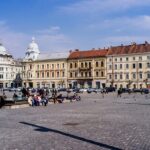
Where You Start: Piața Unirii and Getting Your Bearings Fast
Meeting at Piața Unirii is smart because it’s the kind of place where Cluj-Napoca’s past and present overlap. Even before the first stop, you’ll likely feel how walkable the center is—this route is built for walking, with short time windows at each location.
A guided start from the main square area also helps you avoid the common problem in European cities: seeing a beautiful church, but not knowing why it matters. The guide keeps you oriented with short stories that connect the dots, from city development to architectural shifts.
Bring your usual walking basics: comfortable shoes and a phone battery if you’re using the mobile ticket. And since this experience requires good weather, check forecasts. If the day is rainy, you may be offered a different date or a full refund.
St. Michael’s Cathedral: Gothic Craft in the Main Square
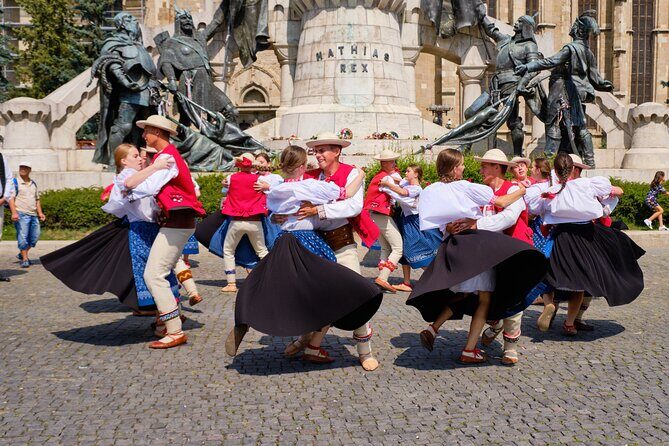
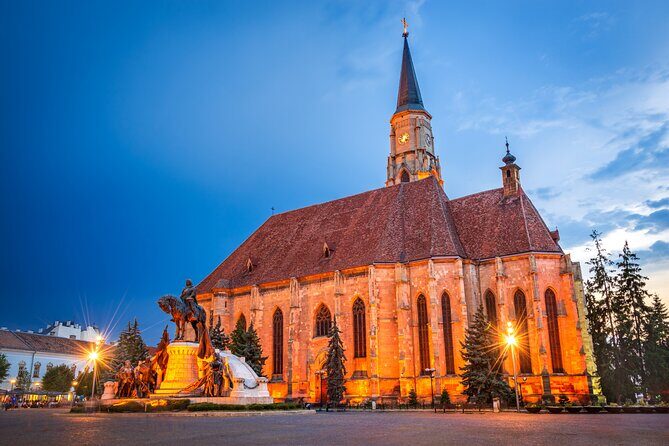
The tour begins at Catedrala Sfantul Mihail, and it’s a strong way to start. This Gothic jewel isn’t presented as just a pretty building. You’ll hear how it grew from a small chapel outside the city walls to a major church in the main square.
That origin story gives the cathedral extra meaning. You’re not only looking at stonework—you’re seeing how Cluj-Napoca’s importance changed over time. The cathedral is described as the second largest church in the geographical region of Transylvania, and that scale makes the interior visit feel worth the stop.
You’ll go inside, and you’ll have about 25 minutes here. That’s enough time to look around without feeling like you’re doing a speed-run. One detail: access to the church tower is not mandatory. So if you like climbing, you might still find a way depending on local access, but the main tour focus is the church interior.
Piarist Church: Baroque Style and a Famous Icon
Next is the Piarist Church, dedicated to the Holy Trinity. This is where the tour shifts style again—Baroque in Transylvania has a different personality than Gothic. The highlight here is the icon of the Virgin Mary with the Infant, described as a main religious artifact.
You may or may not be able to visit the interior depending on whether it’s open at the time of your stop, but the tour keeps it flexible. Either way, the point is to show you the kind of religious art and architectural drama that Baroque churches are known for—bold presence, strong visual focus, and details meant to pull your attention inward.
The time is about 15 minutes. That’s ideal for a church stop like this: enough to appreciate what’s happening, not so long that it gets repetitive.
Babeș-Bolyai University: Architecture Meets Everyday Academic Life
The next stop is Universitatea Babeș-Bolyai din Cluj-Napoca. The tour frames it as the “heart” of academic life in the city. Even if you’re not there to study, this makes sense as a tour stop because universities shape cities. They affect how neighborhoods work, what streets feel like, and where energy gathers.
You’ll have around 15 minutes. That means the visit is more about context—seeing the campus presence and getting a feel for the scale of the institution—than about a deep campus tour.
This stop also helps you break the pattern of only religious architecture. Cluj-Napoca isn’t only churches and palaces. It has modern public life too, and the university grounds you in that.
Wolf Street Reformed Church and the Coats of Arms Rule
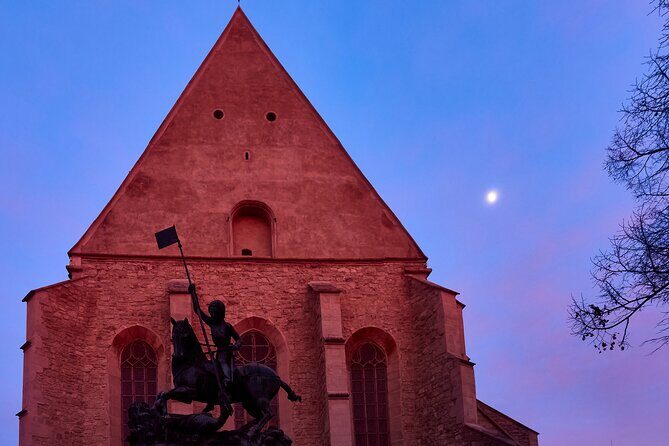
The Reformed Church on Wolf Street is one of those places that rewards close looking. It’s a medieval church built in the late 15th century, and the tour’s key hook here is the largest collection of coats of arms from this part of Europe.
That’s the kind of detail that can be hard to appreciate on your own. With a guide, you’re more likely to notice the patterns and understand what the arms represent and why they were brought together there.
However, this is also the stop with the biggest practical catch. Starting November 1st, visiting time ends at 2 PM from Monday to Friday. Tours booked later than 1 PM will have to skip this entrance. If you care about seeing that church interior, treat that as a deal-breaker for afternoon plans during the winter schedule.
Plan to arrive with enough buffer so you don’t feel rushed. You’ll have about 20 minutes for this stop when the entrance is included.
Turnul Croitorilor: The Preserved Corner Tower Story
Then you’ll step into the older skyline feeling with Turnul Croitorilor. The tour describes it as the best preserved corner tower of the medieval city. That phrase matters. “Preserved” means you’re looking at something that has survived the long wear-and-tear of city life—fire, rebuilding, and time.
You get about 10 minutes here, with a story attached. Short tower stops like this are great because they act like visual anchors. Once you’ve seen a tower like this, you start noticing the medieval footprint everywhere else.
If you like photos, bring a minute of extra patience. Towers can be easy to photograph from the right angle, but you often need to shift positions to catch the full corner view.
Muzeul Trovanților: Trovants That Sound Like Science Fiction
This stop turns the tour from architecture to geology at Muzeul Trovanților, focused on trovanti—living and moving geological formations. Yes, the name alone makes you think of myths. But the description gives you the science behind the drama.
Trovants are sedimentary rock formations with hard stone cores and sand exteriors that can seemingly “grow” when exposed to water. Whether you’re fully a science person or more of a story person, this is a fun break because it changes the pace and adds something you can’t easily see at most European city walks.
You’ll have about 10 minutes here. That’s not long, so think of it as a taste. The value is in the explanation so you leave with a clear mental picture of what trovants are and why people find them weirdly fascinating.
Lucian Blaga National Theatre: Fellner’s Opera-Era Impact
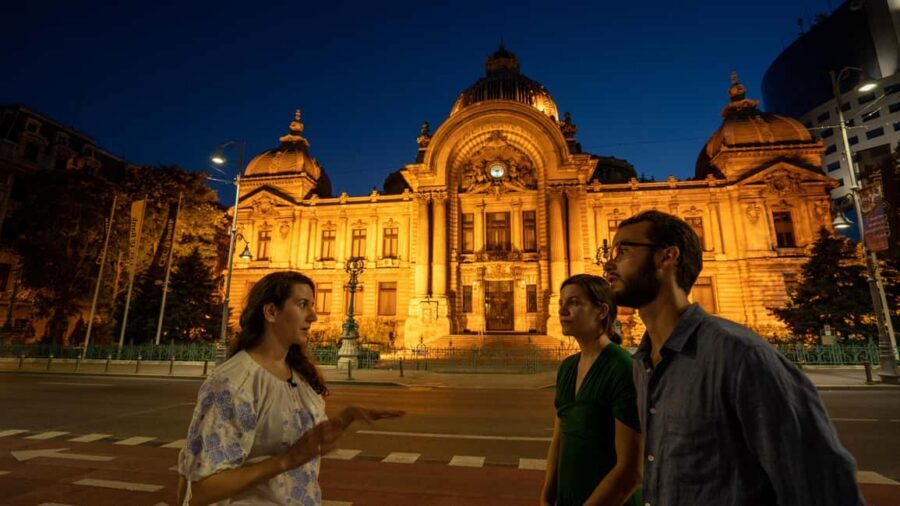
Next up: Teatrul Național Lucian Blaga. The tour notes the opera house was built between 1904 and 1906 by the Austrian architects Ferdinand Fellner. You’ll also learn that the opera shares the same building with the National Theatre in Cluj-Napoca.
This is one of the stops that can feel like a reward for paying attention earlier. You’ve seen styles from Gothic to Baroque, and now you’re in the early 20th-century era of performance architecture. Even if you don’t spend a ton of time inside, you can still appreciate what this building represents: the city’s cultural ambition in a specific time period.
The stop lasts about 10 minutes. It’s short, but it works because you’re getting key facts and pointing you toward what to look for.
Metropolitan Cathedral: Byzantine Style With a Construction Story
Then comes Catedrala Mitropolitana Adormirea Maicii Domnului. The tour calls it a marvelous piece of Byzantine architecture, and it adds a human element: it comes with a funny story during its construction.
Byzantine buildings can be visually intense, and “funny story” is exactly the kind of contrast that keeps a guided tour from feeling like only a lecture. The humor doesn’t replace the architecture—it makes you remember it.
You’ll have about 15 minutes here, likely focused on the main features and the story hook. It’s a good stop for photographers too, because the style tends to create strong lines and surfaces.
Iuliu Maniu Street: Mirror Street and Haussmann Logic
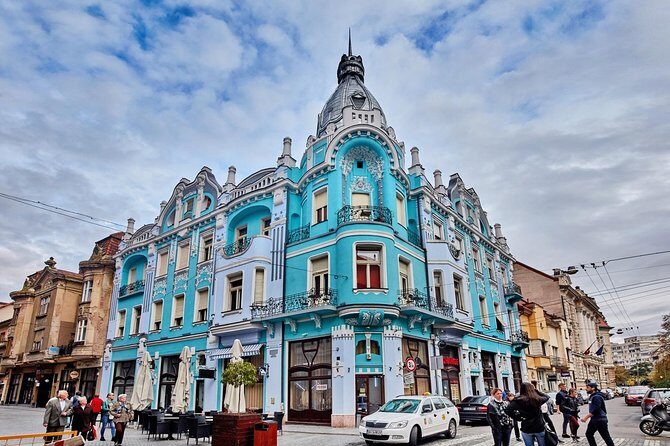
The tour continues to Iuliu Maniu Street, built in the 19th century in a symmetrical manner and described as featuring the eclectic architectural style tied to the Haussmann urbanistic trend. It’s commonly called strada oglindă, or mirror street.
This stop is brief—about 20 minutes—but it helps you understand how city planning influences how a place feels. Symmetry isn’t just decoration. It shapes movement, sight lines, and how buildings present themselves to the street.
Even if you only walk a section of it, you’ll come away with an appreciation for why someone would nickname it mirror street. The whole point is the relationship between architecture and how you see it.
Bánffy Palace: Baroque Grandeur and the Art Museum Connection
The final “wow” stop is Banffy Palace. The tour describes it as a splendid Baroque masterpiece built in the 18th century. It was once the residence of the Bánffy family, and today it houses the National Museum of Art.
You’ll have about 10 minutes here, so the palace is not a long museum session. Think of it as a curated taste: the exterior impact and the core story of the building’s life, plus the handoff into what the palace is used for now.
This is also a good closing stop because it ties together the theme of the tour: power, patronage, and what different eras chose to build and preserve.
If you want more, you’ll have a clear direction for later. Museum time can’t fit into a 2.5-hour route, but a palace stop like this helps you decide if you want to come back on your own.
Should You Book This Cluj-Napoca Classic Tour?
I think this is a smart booking if you want a high-value, guided walk that hits the city’s key visual themes fast: church architecture, historic towers, cultural buildings, and a palace. The free admissions listed across the stops make it easier to compare against other tours where you often pay extra just to enter.
Book it especially if:
- You like architecture stories and want context, not just sightseeing
- You prefer a private group experience where you can ask questions
- You’re in Cluj-Napoca for a short stay and want to see multiple highlights in one go
Skip or adjust if:
- You’re booking after 1 PM on weekdays for the period starting Nov 1, and you really want the Wolf Street Reformed Church entrance.
- You’re the type who needs long museum time. This tour keeps stops short, so it’s more about orientation and standout sights than deep study.
If the weather is good, this is the kind of tour that helps you get your bearings fast—and makes Cluj-Napoca feel like it has a story you can actually follow.
FAQ
How long is the Cluj-Napoca Classic Tour?
It runs for approximately 2 hours 30 minutes.
Where does the tour start and end?
The tour starts at Piața Unirii, Cluj-Napoca, Romania and ends back at the meeting point.
What language is the tour offered in?
The tour is offered in English.
Is bottled water included?
Yes, bottled water is included.
Are entrance tickets included for the stops?
The listed admission for each stop is free, and St. Michael’s Church tower access is noted as not mandatory.
Will I be able to visit the Reformed Church on Wolf Street on any day?
Starting Nov 1, visiting time ends at 2 PM from Monday to Friday. Tours booked later than 1 PM may have to skip that entrance.
Do I get a mobile ticket?
Yes, the tour includes a mobile ticket.
Is the tour private?
It’s described as a private tour/activity, meaning only your group will participate.
Is free cancellation available?
Yes. You can cancel up to 24 hours in advance for a full refund, and poor weather may lead to a different date or a full refund.