REVIEW · BUCHAREST
Bucharest Palace of Parliament, Ceausescu Mansion, Village Museum
Book on Viator →Operated by Tour & Trips · Bookable on Viator
A day that packs power, paranoia, and village life. This tour hits Palace of Parliament and the Ceaușescu Mansion with guided context that turns famous rooms into something you can actually understand. I especially like the way the sights connect to each other: communist-era scale at Parliament, personal excess at the mansion, then traditional Romania at the Village Museum. One watch-out: a few stops depend on interior audio and timing, so you may need to manage sound and pace to get the most out of the narration.
What I like next is the practical setup: private minivan pickup with air conditioning, English commentary, and enough guided time at each location to feel like more than a checklist. The only drawback I’d flag is that entrance tickets are not included, and the tour can move fast between highlights—so budget for sites separately and wear shoes you can stand in for a while.
In This Review
- Key highlights you’ll actually feel on the day
- Bucharest in One Shot: How the 6-Hour Route Flows
- Palace of Parliament: From Project Bucharest to the Union Hall
- Ceaușescu Mansion: Gold Baths, Private Cinema, and Secret Rooms
- Village Museum (Dimitrie Gusti): 120+ Buildings and 50,000+ Objects
- Guide Quality, Sound, and Pacing: What to Watch for
- Price and Value: Is $48.37 Worth It?
- Should You Book This Bucharest Parliament–Mansion–Village Day?
- FAQ
- How long is the tour?
- What does the price include?
- Are entrance tickets included?
- Do I get pickup from my hotel?
- Where does the tour start?
- What are the tour hours?
- Is the tour private?
- What happens if the weather is bad?
- What’s the cancellation rule?
Key highlights you’ll actually feel on the day
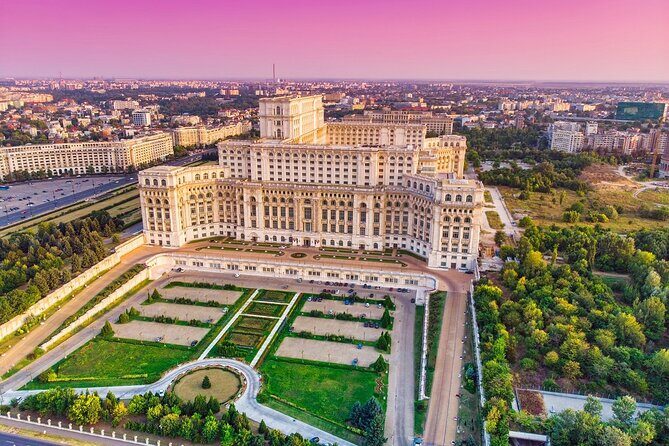
- Palace of Parliament’s scale: a guided look at major chambers and the iconic Union Hall, plus panoramic terrace views
- Ceaușescu Mansion’s preserved excess: gold-plated bathrooms, private cinema, spa, indoor pool, and a couture wardrobe
- Secret rooms and control: design details that hint at surveillance and paranoia in the communist era
- Village Museum (Dimitrie Gusti): 120+ relocated rural buildings showing regional architecture and old trades
- Guide quality matters: if you get Gabriel, expect sharp, human explanations, not dry facts
- Tickets are separate: admission isn’t included, but your guide can help you buy them so you can skip the line
Bucharest in One Shot: How the 6-Hour Route Flows
This is a full, busy day built around three very different Bucharest stories. You’ll start and end at Bulevardul Regina Maria 7, Bucharest, and you can usually get picked up from a central spot or directly from your hotel. The tour runs Monday through Sunday, 9:00 AM to 3:00 PM during the listed operating window (June 6, 2025 through Jan 18, 2027).
The timing is about staying efficient without turning it into a sprint. You’re looking at roughly six hours total, with about 1 hour 30 minutes at each stop. That’s a real amount of time for these places because they’re not just rooms—you’re walking, looking up, and absorbing history as you go.
One practical detail that affects your day: entrance fees are not included. Your guide can help you purchase tickets and skip the line, but you should still plan for that cost. Also, coffee and food aren’t included, so I suggest bringing water and grabbing a snack before you start. Bucharest walking time adds up faster than you think, especially with indoor-to-outdoor transitions.
You can also read our reviews of more museum experiences in Bucharest


Palace of Parliament: From Project Bucharest to the Union Hall
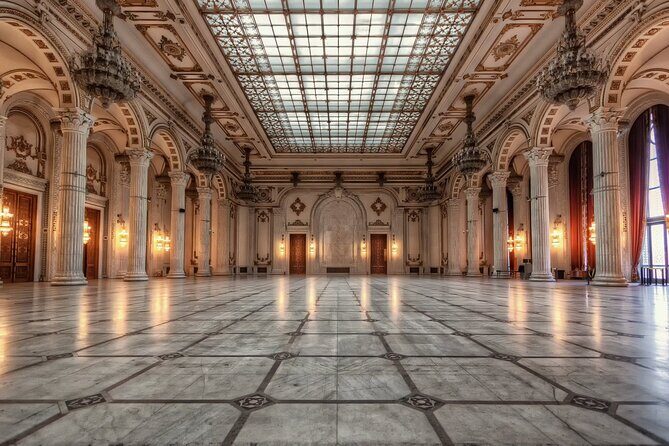
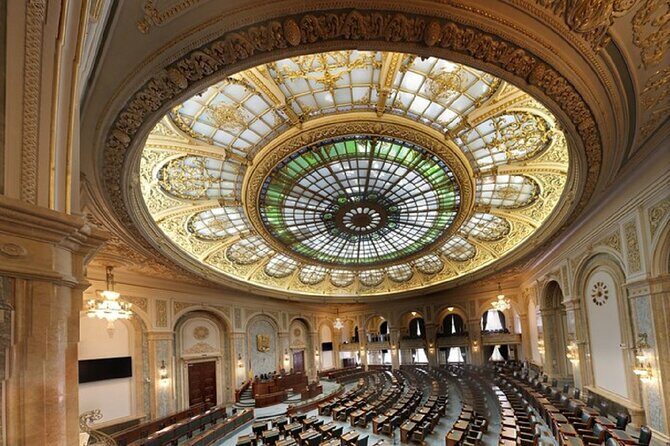
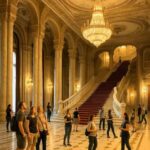
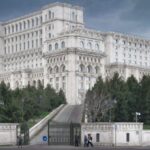
The Palace of Parliament is one of those places where your brain keeps trying to make it smaller—and fails. Construction began in 1984 under Nicolae Ceaușescu, as part of a huge redesign effort often described as Project Bucharest. The idea was socialist realist grandeur on an almost impossible scale, with political power written into the building itself. It’s also described as the second-largest administrative building in the world, after the Pentagon—so yes, it’s that kind of stop.
You’ll tour the interior with a guide. The highlights include:
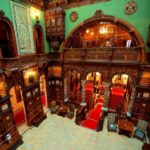
- Lavish halls and galleries finished with Romanian materials like marble staircases, crystal chandeliers, mosaics, oak paneling, and tapestries
- The Union Hall, one of the most iconic rooms in the building
- The Hall of Human Rights and the Senate Chamber
- Panoramic terraces with views over Bulevardul Unirii and the city
There’s also a Contemporary Art Museum component during the Palace time window (listed as 1 hour 30 minutes there), but again, tickets for that are not included in the tour price. I’d treat it as a bonus if time allows rather than something to count on seeing in full.
For me, the value of this stop is the guided interpretation. Alone, you might just clock the size and move on. With a good guide, you start noticing how the building’s layout and decoration push one message: power made physical. That’s why the Union Hall matters. It’s not just pretty. It’s designed to feel like authority.
Ceaușescu Mansion: Gold Baths, Private Cinema, and Secret Rooms
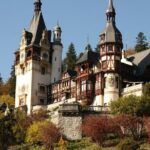
If the Palace is public power at maximum volume, the Ceaușescu Mansion is the private version—beautifully preserved, and frankly unsettling once you know what you’re looking at. This home was built in the 1960s and stayed hidden from public view until after the 1989 revolution.
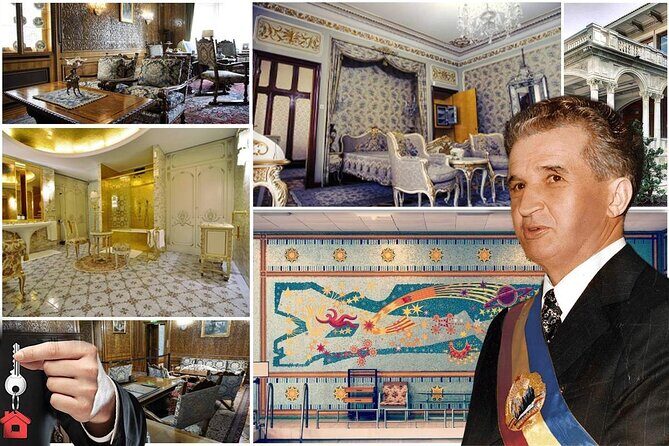
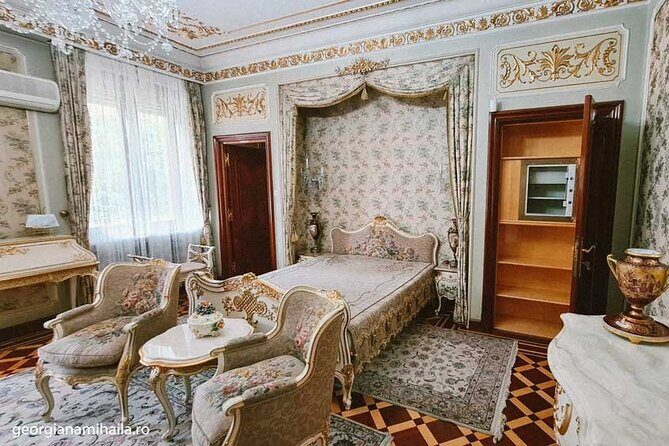
Inside, expect a level of opulence that feels almost unreal for a house that was meant to be lived in. The tour includes more than 80 rooms with details like:
- Gold-plated bathrooms
- Grand chandeliers
- Silk wallpaper, Venetian mirrors, and hand-carved wooden furniture
- Murano glass and massive chandeliers
And then you get the parts that explain the mindset behind the decor:
- Ceaușescu’s private wardrobe, with preserved high-fashion pieces
- A private cinema
- A spa area and even an indoor swimming pool
- Secret rooms that reflect the fear-and-control atmosphere of the era
One of the best practical lessons I take from this kind of stop: go in expecting contradictions. It’s lavish, but it’s also a story of control. The preserved details help you see how luxury can exist next to intimidation. That contrast is what makes the mansion more than a photo stop.
You also get beautiful gardens in the property grounds, including peacocks and exotic plants. This is a nice break after the interiors—especially if you want a calmer moment to reset your brain before the Village Museum.
Village Museum (Dimitrie Gusti): 120+ Buildings and 50,000+ Objects
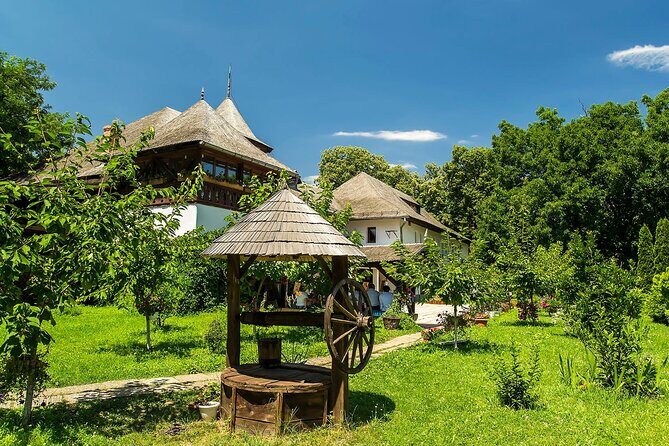
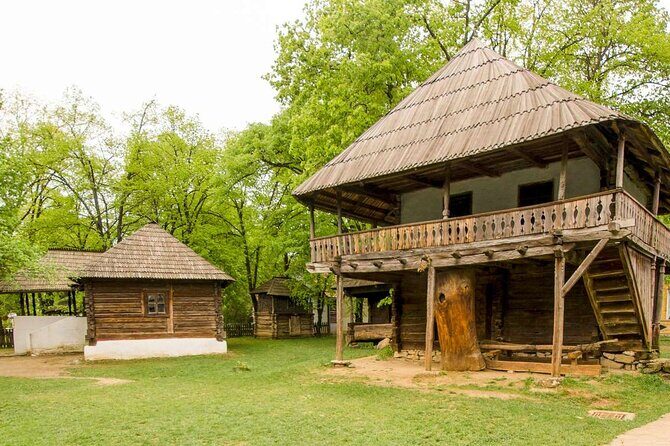
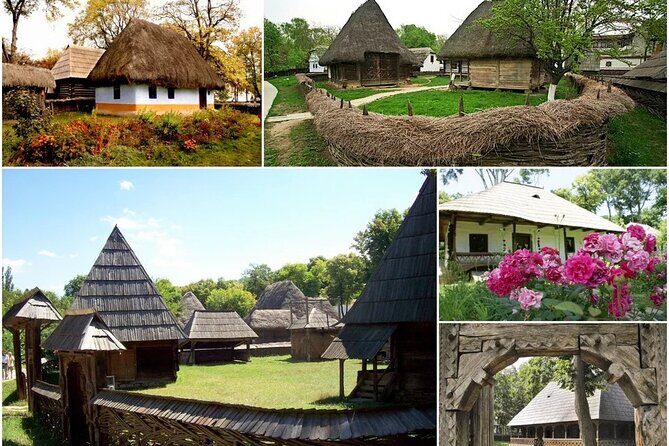
After two heavy-hitting sites of state power, the Muzeul National al Satului Dimitrie Gusti feels like relief. It’s an open-air museum built to show traditional Romanian village life through actual structures moved from different regions. If you like architecture, crafts, or cultural history, this stop gives you something more human-scale.
The museum spans over 120 authentic rural dwellings, relocated from multiple parts of Romania. You can see:
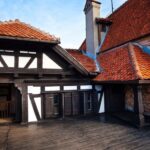
- Traditional wooden houses
- Windmills and churches brought from various regions
- Mills, barns, and workshops showing daily jobs like weaving and blacksmithing
This is where the guide can make the buildings click into place. Instead of random houses, you learn how regional styles differ—shaped by climate, materials, and local tradition. That’s what helps you understand why Romanian identity isn’t one uniform look.
There’s also a deep collection inside: the museum holds over 50,000 objects, including traditional costumes, household items, and tools. You don’t experience all of that in one visit, but knowing it exists helps you understand the museum’s seriousness. It’s not just a cute collection of buildings. It’s a huge archive of folk culture, stored in the open and in objects.
If you want a clear takeaway, it’s this: the Palace and mansion show how power and image were engineered. The Village Museum shows how daily life shaped identity across generations.
Guide Quality, Sound, and Pacing: What to Watch for
Most of the day is guided, so your comfort level depends on how well you can hear and how the timing works. Your itinerary is designed with about 1.5 hours per stop, but places can have natural bottlenecks—especially at restrooms and entry points inside large buildings.
A key tip: ask whether the guide uses microphones. In some situations, audio can be tough in interior spaces, and you’ll feel it more in the Palace and mansion because the details are dense. I like to bring a small pair of earplugs just in case the sound system doesn’t travel well.
If you’re lucky enough to get Gabriel, you can expect sharp, human storytelling. He’s described as intelligent and cultured, and able to explain the history with irony, anecdotes, and sympathy—exactly the kind of delivery that keeps the communist-era content from turning into pure doom-and-gloom.
Also, keep your expectations realistic. This isn’t designed to linger forever. It’s designed to cover three major sites with guided context, and if a moment runs long, you might have to prioritize. I’d rather you plan for that and enjoy the highlights than assume you’ll see everything at a perfect pace.

Price and Value: Is $48.37 Worth It?
At $48.37 per person, the headline price looks friendly—especially for a private minivan with air conditioning and guided tours. The math changes a bit because entrance tickets aren’t included. Still, when you factor in transportation and a guide who helps you move efficiently, it can be a solid value.
Here’s how I’d judge it for yourself:
- If you want an organized day with transport and explanations, the guided format makes the day easier to navigate.
- If you’re the kind of person who enjoys figuring things out solo, you might save money by buying tickets yourself and going on your own schedule.
The big decision is whether you’ll appreciate interpretation. The Palace and mansion can become overwhelming without context. A strong guide turns walls, symbols, and room names into a story you can follow. That’s the part you can’t download later from photos.
One more value note: the tour is available in English, and it’s a private tour/activity where only your group participates. Private-format guidance can feel more personal than large group tours, even though timing still depends on how sites run.
Should You Book This Bucharest Parliament–Mansion–Village Day?
Book it if you want a day that connects three different layers of Bucharest: engineered state power, preserved personal luxury, and the working Romania of village traditions. It’s especially good for first-time visitors who want structure, plus people who like guided context more than just walking through big rooms.
Skip or reconsider if you prefer slow sightseeing, you hate the idea of paying separate entrance fees, or you’re very sensitive to audio issues in enclosed spaces. In that case, you might do better with a smaller-group option that clearly states how hearing is handled—or plan to visit one or two sites instead of all three.
My practical final advice: bring comfortable shoes, water, and a flexible mindset. You’re going to move through three worlds in one day. If you stay focused on the “why” behind each place, this tour delivers real meaning—not just a list of famous buildings.
FAQ
How long is the tour?
The tour runs for about 6 hours. Each of the three main stops is scheduled for roughly 1 hour 30 minutes.
What does the price include?
The price includes private transportation in an air-conditioned minivan and a guided tour in English.
Are entrance tickets included?
No. Entrance fees are not included in the tour price. The operator can help you purchase tickets so you can skip the line.
Do I get pickup from my hotel?
Pickup is offered. You can be picked up from a central Bucharest location or directly from your hotel.
Where does the tour start?
The meeting point is Bulevardul Regina Maria 7, București, Romania. The tour ends back at the same meeting point.
What are the tour hours?
The listed hours are 9:00 AM to 3:00 PM, Monday through Sunday, during the operating window shown for 2025–2027.
Is the tour private?
Yes. It’s listed as a private tour/activity, meaning only your group participates.
What happens if the weather is bad?
The experience requires good weather. If it’s canceled due to poor weather, you’ll be offered a different date or a full refund.
What’s the cancellation rule?
Free cancellation is allowed. You can cancel up to 24 hours in advance for a full refund, with the cutoff based on local time.