REVIEW · BUCHAREST
Bucharest in a nutshell – Half Day Private Walking Tour
Book on Viator →Operated by Razvan Trancu tour designer · Bookable on Viator
Bucharest looks simple until someone tells the story. On this private half-day walking tour, I like the way Razvan Trancu turns landmarks into scenes with cause-and-effect, not just dates and photos. I’m also big on the excellent English and the tailoring, including extra context such as Jewish history when it fits what you want to understand.
You’ll spend about 3 to 4 hours moving through central Bucharest, from the Old Town core into the squares tied to anti-communist change. One consideration: it’s a walking-focused route with only short stops, so if you want lots of indoor time or long museum-style pacing, you may feel a bit rushed.
Still, this is a smart way to get your bearings fast. You’ll end at the Romanian Athenaeum area, which makes it easy to keep exploring on your own after the tour finishes.
In This Review
- Best parts to know before you go
- Entering Bucharest’s Old Town from Hanul lui Manuc
- Lipscani and the central Old Center: where the tour really earns its keep
- University Square: history through education and revolution
- Outside Ion Luca Caragiale National Theatre: resistance stories in plain sight
- Cercul Militar National (CCA): an eclectic building with a story
- Calea Victoriei: Bucharest’s main street for 300 years
- Piaka Revolukiei (Revolution Square): the city’s heavy turning point
- National Art Museum of Romania (ex Royal Palace): understanding the building’s role
- The Romanian Athenaeum: finishing with a music and arts landmark
- Price and value for a private group
- Pickup, route flow, and what to plan for during 3–4 hours
- Who should book this Bucharest private walking tour
- Should you book it?
- FAQ
- FAQ
- How long is the Bucharest in a nutshell half-day private walking tour?
- What does the tour cost?
- Is this tour private?
- Is pickup available?
- Where does the tour start and end?
- What language is the tour offered in?
- Do I need to buy admission tickets for the stops?
- Does the tour include snacks or coffee?
- Can I cancel for a refund?
- Are service animals allowed?
Best parts to know before you go
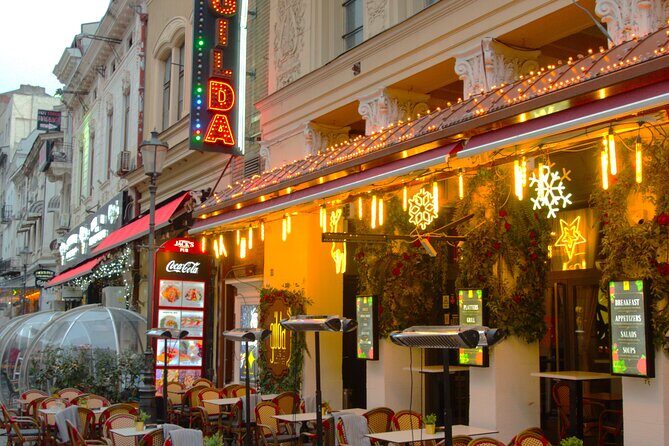
- Story-first guiding from Razvan Trancu: clear, emotionally aware context with room for your questions
- Old Town plus Revolution Square in one half day: you see how Bucharest’s past reshapes the present
- Designed for free entry stops: many stops are listed as admission ticket free
- A route that adapts: the walk can shift based on your interests and pace
- Pickup can start downtown: helpful if you’re not near the meeting point
- English-led with real language flexibility: the tour is offered in English, and communication can extend beyond that in some cases
Entering Bucharest’s Old Town from Hanul lui Manuc
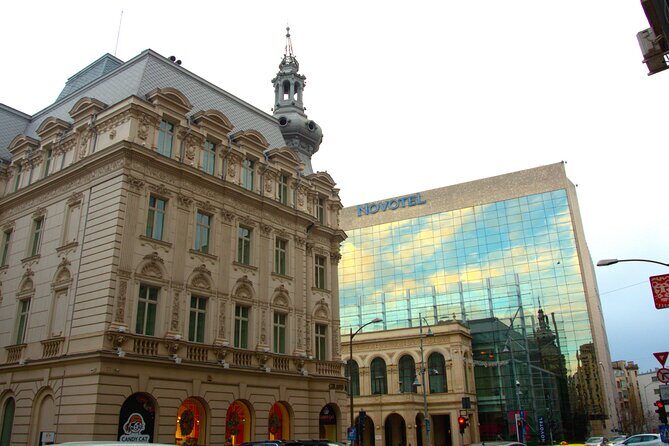
The tour starts at Hanul lui Manuc (Manuc’s Inn), right by the Old Town area of central Bucharest. This is a good launch point because it’s tied to the idea that Bucharest grew into something bigger than one neighborhood—more like a city layered over time.
From there, you move into the Old Town / Lipscani core with a guide who explains how Bucharest was rebuilt and also how parts were damaged during communist rule. I love this part because you don’t just see pretty streets; you learn to read the scars—what was changed, what was erased, and why the city looks the way it does today.
A helpful detail is that you’re given an honest sense of “two cities in one.” That theme shows up as you walk through the center and compare old foundations with modern recreations. Even if your feet get tired, your brain stays busy.
You can also read our reviews of more walking tours in Bucharest


Lipscani and the central Old Center: where the tour really earns its keep
The big block of time—about one hour—covers Old Town highlights and the surrounding historic core. Expect to cover key landmarks in the Old Center and Lipscani area, then start stretching toward the wider center.
What makes this segment valuable is the balance between cultural attractions and political context. You’ll hear how Bucharest’s identity changed across eras, including why the city was modernized in some ways while communist planning destroyed other pieces of it.
Practical note: this is not a “stop-and-photos-every-10-seconds” kind of walk. The route is built to cover ground efficiently, so you’ll want comfortable shoes and a phone battery that can survive a few hours of GPS and pictures.
University Square: history through education and revolution
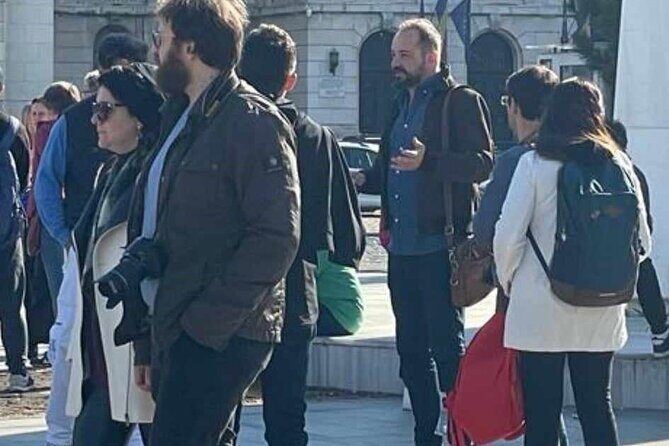
Next you head to University Square for about 30 minutes. This is the kind of stop where the guide’s job is turning architecture and street corners into explanations of real events and real systems.
You’ll connect the anti-communist revolution with a second theme: the history of Romanian education and how the education system shaped—or reflected—society. It’s a strong shift from street-level storytelling into something broader, without becoming vague.
If you like your city stories tied to institutions (schools, universities, civic life), this stop lands well. If you’d rather stick strictly to buildings, you can still keep things grounded because the guide points out what to look for while explaining.
Outside Ion Luca Caragiale National Theatre: resistance stories in plain sight
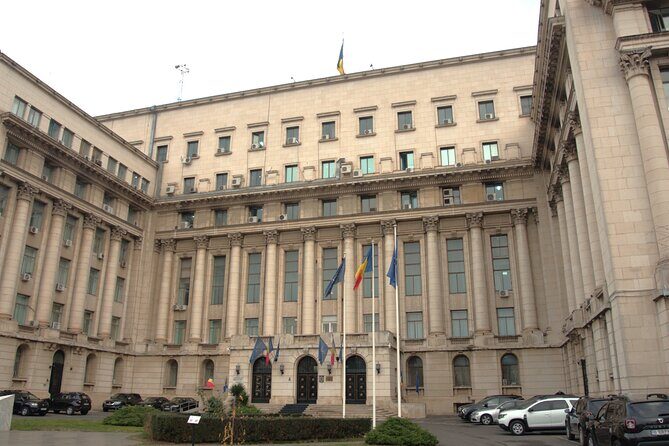
At Ion Luca Caragiale National Theatre, the tour keeps it to about 20 minutes and focuses on the outside view. That matters because you’re not stuck waiting for entrances or ticket lines—your guide uses the exterior as a springboard for anti-communist resistance context.
Even when you’re only seeing the building from the street, you get a better sense of why cultural venues mattered. In Bucharest, culture and politics have always had overlap, and this stop makes that connection feel practical instead of academic.
A quick heads-up: because this is an exterior-focused moment, you should show up ready to look carefully—facades, positioning, and surrounding streets are where the meaning lives here.
Cercul Militar National (CCA): an eclectic building with a story
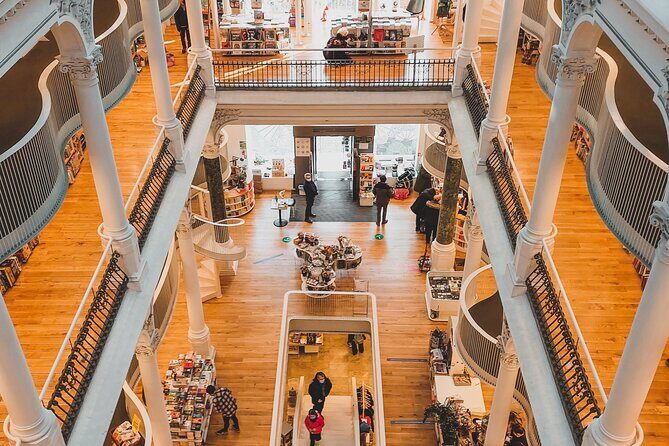
Then it’s a short 10-minute stop at Cercul Militar National (CCA). This is one of those places where the architecture is visually interesting enough to earn attention on its own, but the guide also gives you the backstory.
I like micro-stops like this because they reset your focus. You get a quick win: see something beautiful, then learn why it became part of Bucharest’s “signature” look.
If you’re the type who enjoys architecture details, keep your eyes up as you pass. The guide’s explanation helps you spot the features you might otherwise ignore.
You can also read our reviews of more private tours in Bucharest



Calea Victoriei: Bucharest’s main street for 300 years
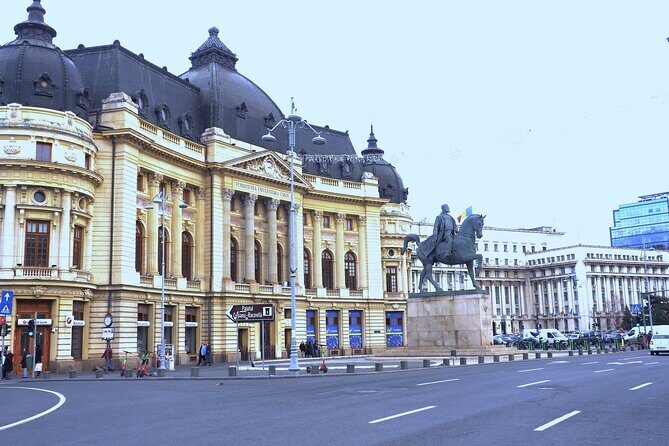
After that, you walk down Calea Victoriei—the main street of Bucharest for about 300 years. The time here is brief (about 10 minutes), but it’s a useful “connective tissue” stop that ties the center together.
This is the street where you start noticing patterns: how the city widened, how power and culture expressed themselves along major corridors, and how the city’s changing priorities shaped what you see today.
A practical way to enjoy it: try to mentally break the street into sections. Your guide helps you do that, so the walk doesn’t feel like one long corridor with no meaning.
Piaka Revolukiei (Revolution Square): the city’s heavy turning point
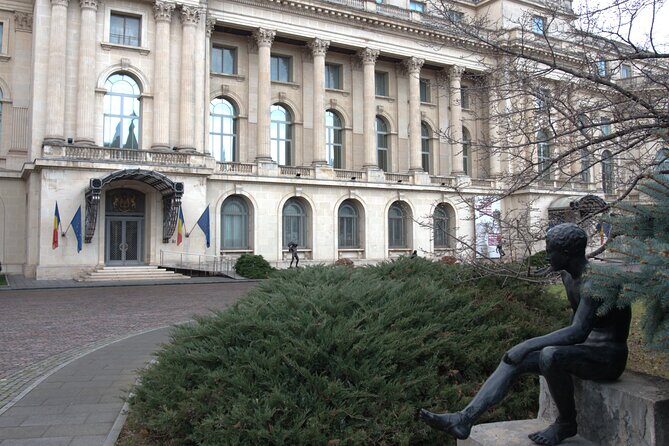
One of the most time-meaningful stops is Piaka Revolukiei (Revolution Square), with about 40 minutes. This is where the tour gets serious in a way that still feels readable on foot.
You’ll hear about the Central Committee of the Communist Party headquarters, the secret services, and the Revolution Memorial—all tied to the perspective of one of the most gruesome social experiments in modern European history. The guide doesn’t treat it like a distant event; you get a sense of how this area functioned and why it became the symbol it is now.
This stop is powerful, but it’s also practical. You’ll walk away knowing what you’re actually looking at. That changes the way you experience the square later, even if you return on your own.
National Art Museum of Romania (ex Royal Palace): understanding the building’s role
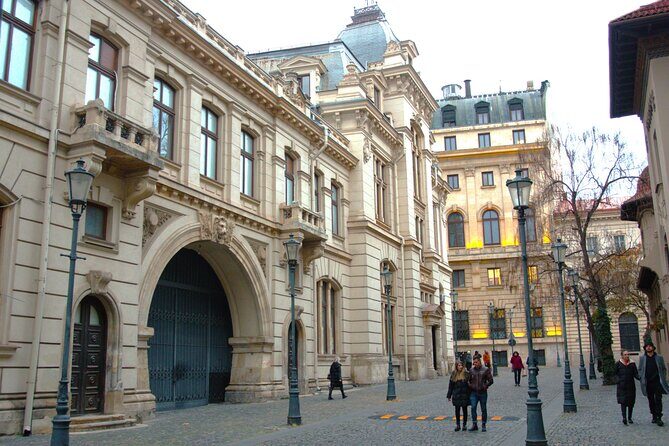
Next is about 20 minutes at the Muzeul Național de Artă al României—the National Art Museum of Romania. The tour frames it as the ex Royal Palace, so you get a sense of how Bucharest’s power structures shifted over time.
Even if you spend most of your time outside or at the threshold areas, this stop gives you context for what the building represents. It helps you connect the “royal” layer to what came later, without acting like the city’s story is one straight line.
If you enjoy seeing how power changes form—royalty to politics to culture—this is one of the more satisfying transitions on the route.
The Romanian Athenaeum: finishing with a music and arts landmark
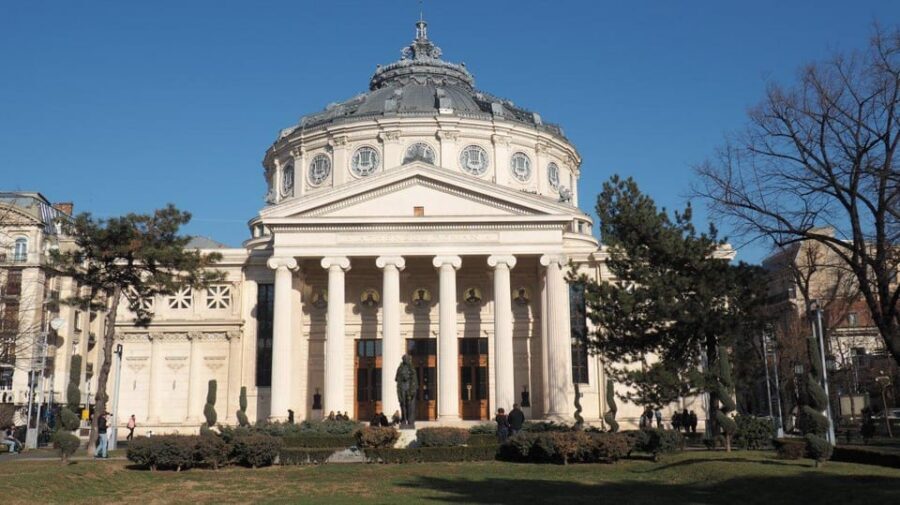
Finally, you end at the Romanian Athenaeum, with about 20 minutes to close out the walk. This place is framed as a temple dedicated to music and arts, and the guide treats it as symbolic—something you feel in the center of the city, not just something you pass by.
I like that the tour finishes here because it’s an easy launch pad for the rest of your evening. After 3 to 4 hours of walking and context, you still need a “lighter” anchor, and the Athenaeum area delivers that without ignoring the deeper story you just learned.
Price and value for a private group
The price is $216.74 per group, up to 10 people, for about 3 to 4 hours. The big value story here is that you’re paying for private time with a guide who adjusts to your interests, not for a fixed, crowded bus schedule.
If you’re booking with multiple people, the math gets very reasonable. With a full group of 10, it’s roughly $21.70 per person. Even with fewer people, you’re still buying something flexible: a route that can shift and questions that can go beyond the usual highlights.
One more value angle: several listed stops are admission ticket free, which helps keep the total day cost under control. You’re not stacking unknown entrance fees onto your budget.
Pickup, route flow, and what to plan for during 3–4 hours
You meet at Hanul lui Manuc, Str. Franceză 62 and you finish at the Romanian Athenaeum area on Strada Benjamin Franklin 1-3, near the National Art Gallery and by the InterContinental Athenee Palace Hotel. If you’re already downtown, pickup is optional and flexible—so you might be able to start closer to your hotel.
Because the tour uses short time blocks for many stops, you should plan for a steady pace rather than long lingering. Bring water if you need it (snacks and coffee/tea aren’t included), and keep a little patience for the street pace of central Bucharest.
Also note: the tour uses a mobile ticket, and you’ll get confirmation when you book. It’s offered in English, and it’s a private group experience—only your party participates.
Who should book this Bucharest private walking tour
This tour fits best if you want:
- A half-day plan that gives you both the “pretty streets” and the political meaning underneath
- A private guide who can tailor the walk, including topics like Jewish history
- A route that connects Old Town (Lipscani) to Revolution Square without you having to plan transport or stitch together multiple tours
It might be less ideal if you want hours inside museums or a very slow pace. The tour is built for movement, not for sitting.
Should you book it?
Yes—if your goal is to understand Bucharest as a living, layered city, this is a strong use of time. The guide’s storytelling approach (and the way he adjusts to what you care about) turns a standard central-walking day into something you’ll remember when you see the same streets again later.
I’d book it especially if you’re the type who likes your travel with context—how people lived, what changed, and why the city looks the way it does now.
FAQ
FAQ
How long is the Bucharest in a nutshell half-day private walking tour?
It runs about 3 to 4 hours.
What does the tour cost?
It costs $216.74 per group, up to 10 people.
Is this tour private?
Yes. It’s private, so only your group participates.
Is pickup available?
Pickup is flexible and optional. If you’re based downtown, you can start from there.
Where does the tour start and end?
It starts at Hanul lui Manuc, Str. Franceză 62, Bucharest and ends at the Romanian Athenaeum area on Strada Benjamin Franklin 1-3.
What language is the tour offered in?
The tour is offered in English.
Do I need to buy admission tickets for the stops?
The stops are listed as admission ticket free, so you typically won’t need to buy tickets for the scheduled places.
Does the tour include snacks or coffee?
No. Snacks and coffee/tea are not included.
Can I cancel for a refund?
Yes. Free cancellation is available if you cancel up to 24 hours in advance for a full refund.
Are service animals allowed?
Yes, service animals are allowed.