Bucharest changes fast, block by block. This private city tour by car strings together big architecture, old neighborhoods, and the story of the city through communism and monarchy, with stops you can actually process without rushing. I really liked having Toni as the guide, plus the comfort of getting between sights in a sedan or minivan.
Two things I’d put at the top: the Palace-of-Parliament-scale photo stop (it’s a wow moment even before the details) and the way the walk through central streets connects cafés and 19th-century buildings to the larger political story. One possible drawback: it’s a short, action-filled loop, so you’ll want to pick your questions carefully if you like linger-and-stare sightseeing.
In This Review
- What You’ll Like Most (Key Highlights)
- Getting Oriented in Bucharest in a Compact, Private Way
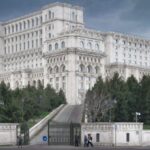
- Palace of Parliament Photo Stop: The Second-Largest Building Moment
- Learning to Read the City: Landmark Stops and the 1989 Final Speech Site
- Strolling Central Bucharest: Cafés, Pubs, and 19th-Century Streets
- One of Bucharest’s Oldest Boulevards: The Street That Ties It Together
- Composer House and Filarmonica: Culture Stops That Add Texture
- Little Paris and the Belle-Époque Feel You’ll Notice Immediately
- Royal Residences, Palaces, and Major Squares: The 1836 Thread Through Bucharest
- How the Private Car Setup Changes Your Experience
- Price and Value: Is $65.06 Worth It for 2 Hours?
- What to Bring and What to Expect During the Tour
- Should You Book Bucharest Express: Private City Tour by Car?
- FAQ
- How long is the Bucharest Express private city tour?
- Is the tour private?
- What languages is the tour offered in?
- Do you pick up from hotels?
- What vehicle will I ride in?
- What sights are included?
- What’s included in the price?
- Is there walking during the tour?
- What if the weather is bad?
What You’ll Like Most (Key Highlights)
- Toni-led private guiding that makes quick stops feel like a clear story, not random photos
- World-scale architecture photo stop tied to Bucharest’s most famous massive building
- Central walking segment through a café-and-19th-century street area, plus an old boulevard stop
- 1989 history stop connected to the former communist president’s last speech
- 19th-century “Royal” sights: palaces, residences dated 1836, and major city squares
Getting Oriented in Bucharest in a Compact, Private Way
Bucharest can feel like several cities stacked on top of each other. You get wide boulevards with serious civic buildings, then suddenly a street full of cafés, pubs, and older architecture. This tour works because it doesn’t just throw you at landmarks. It gives you a flow—by car for the big jump points, then on foot where the city texture matters.
You’ll ride in a private sedan (for 1–4 people) or a minivan (for 5–8 people). That detail matters more than it sounds. A smaller car usually feels easier for conversation and quick photo stops; a minivan keeps the group comfortable if you’re traveling with friends or family.
The tour is led by a certified guide and it runs about 2 hours. In practice, you may end up with a little extra time depending on questions and pacing—one guest even mentioned a longer car tour of around 3 hours when they were chatting and learning a lot. Either way, you get a structured overview without the stress of planning your own route across the city.
You can also read our reviews of more city tours in Bucharest


Palace of Parliament Photo Stop: The Second-Largest Building Moment
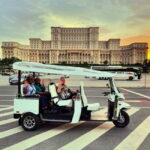
The most dramatic early moment is the photos stop of the second largest building in the world. Even if you’ve read facts before, seeing the scale is different in person. This is the kind of place that forces you to slow down for a second and look up.
What I like about starting here is that it sets the theme. Bucharest’s communist-era ambitions weren’t subtle, and this building is the loudest example. Your guide should help you connect the size to the purpose: power displayed through stone, not through whispers.
A practical note: because it’s a photo stop, you’ll likely do more looking from the outside than walking around inside. If you want to go inside specific buildings, this tour is best as a fast orientation and story-builder, not as a replacement for deep architecture tours.
Learning to Read the City: Landmark Stops and the 1989 Final Speech Site
After the big-scale photo moment, the tour keeps moving through landmark buildings—the kind you’d normally spot on a skyline photo or a map marker. The value here is not that you see more stops. It’s that you learn how to interpret them in relation to each other. Bucharest’s layout can feel confusing until you understand what was built to impress, what was built to govern, and what was built to host the everyday life of the city.
Then comes a stop tied directly to 1989: the place where the former communist president had the last speech. This is one of those moments where a guide makes the difference. Without context, it can feel like just another official-looking corner. With context, you start seeing why the location matters—how political drama played out in public space and how the city holds onto those memories in stone and street lines.
Even if you don’t love heavy history, this part is handled in a way that helps you connect the timeline to what you’re currently looking at—so the city doesn’t become a museum. It stays a living place.
Strolling Central Bucharest: Cafés, Pubs, and 19th-Century Streets
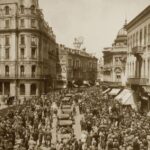
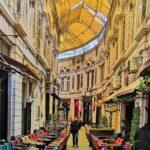
A nice shift happens when the tour moves from car to a walking tour of the central area. This is where Bucharest stops feeling like an assignment and starts feeling like a city. You’ll be in a lively zone with cafés, pubs, restaurants, and a strong layer of 19th-century architecture.
I like these walking segments because you’re learning at walking speed. Cars compress distances; walking gives you time to notice details like building proportions, street rhythms, and the way the neighborhood supports daily life. It’s also a good moment to ask your guide follow-up questions, since you’re not scanning the road for traffic or thinking about where to park.
If you’re someone who likes a photo stop to come with a little street-level reality, this is the portion that delivers. For me, it’s the closest thing on the tour to experiencing Bucharest as you’d actually meet it on your own.
One of Bucharest’s Oldest Boulevards: The Street That Ties It Together
Next you’ll stop on one of the oldest boulevards in Bucharest. Boulevards are where the city’s “big plan” shows up. When you’re standing on a long thoroughfare, you can often see how older decision-making shaped everything that came later.
This stop works as a bridge between eras:
- The grand buildings and political story on one side
- The human-scale street life nearby
- The 19th-century style you’ll see repeatedly across central districts
I’d treat this as a moment to orient your mental map. After this, the remaining sights land more clearly, because you’ve already learned the city’s main lines and how they connect.
You can also read our reviews of more private tours in Bucharest


Composer House and Filarmonica: Culture Stops That Add Texture
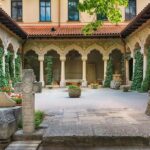
The tour includes the memorial house of the Romanian composer, which is a strong change of pace from civic and royal landmarks. A memorial house is usually smaller than the big public buildings, but it can make the whole city feel more personal. You start to see Bucharest not only as a stage for power, but as a place where culture lived and developed.
Then you’ll reach Filarmonica, another cultural anchor. Even if you don’t attend a performance, seeing where major music happens helps you understand what locals value. It’s also a reminder that 19th-century Bucharest wasn’t only about governance—it was about public life and institutions.
If you’re building a trip around theme—history, architecture, or culture—these two stops help balance the schedule so it’s not all heavy political markers back to back.
Little Paris and the Belle-Époque Feel You’ll Notice Immediately
One landmark is labeled Little Paris, and that nickname is exactly the point. Bucharest has pockets where the architectural tone shifts toward a more French-influenced look. When you reach this stop, you should notice the style cues: the overall elegance, the way buildings line up, and the “period look” that feels out of step with the city’s later modern layers.
This is another stop where a guide can be useful. If you’re just passing by, you might file it as pretty. With context, you start understanding why certain streets and buildings got these comparisons in the first place, and how Bucharest built an identity that wasn’t only political.
This is also a good section for photos, since the “Parisian” styling typically photographs well from the right angle. If weather is clear, you’ll likely enjoy this stop more than the purely monumental ones, because it feels closer to street-level travel.
Royal Residences, Palaces, and Major Squares: The 1836 Thread Through Bucharest
The later portion of the tour leans into royal-era Bucharest. You’ll see:
- The Royal residence dated 1836
- An iconic 19th-century architecture palace
- The former Royal Palace
- Stops at one of the main squares in the city, then another main square
This part is valuable because it turns the city’s history into something you can physically track. When the guide points out how power was displayed—through residences, palace scale, and public squares—you start seeing a pattern.
Main squares are particularly important in a city like Bucharest. Squares aren’t just places for photos. They’re where public life concentrates: ceremonies, gatherings, major civic moments. So when the tour stops at multiple squares, it’s doing more than ticking boxes. It helps you understand how Bucharest organizes public space.
And because these are 19th-century landmarks, they also add variety. After the communist-era story, you get another architectural language—one that feels more about courtly presence and state image than ideology-on-a-grand-scale.
How the Private Car Setup Changes Your Experience
A lot of “city tours” are really just bus routes with a stop list. This one feels different because it’s private, and it’s built around getting you to the right areas without turning your day into a commute.
You’re picked up from your central hotel in Bucharest (selected hotels). You’ll also get hotel pickup and drop-off, which is a big deal in Bucharest if you don’t want to spend your energy on street navigation, taxis, and figuring out where to meet. One guest said their guide, Toni, helped arrange pickup even when their hotel wasn’t on the standard pickup list. That’s not something I’d assume for every situation, but it does show the tour provider cares about making the start smooth.
Transportation is by a sedan or minivan, and the group size stays private—only your group participates. That matters because you can ask small, specific questions without feeling like you’re slowing down a crowd. It also makes the pace feel fair. You don’t get stuck at a stop while a bunch of people catch up or rush ahead.
You’ll also receive printed or video materials during the tour presentation. That’s practical in a short tour. It helps you remember what you just saw while you’re still in the story.
Price and Value: Is $65.06 Worth It for 2 Hours?
At about $65.06 per person for roughly 2 hours, you’re paying for three things:
1) a private car with a certified guide
2) direct pickup and drop-off from a central hotel area
3) a structured route that hits high-impact places without you doing the planning
For a city like Bucharest, where the landmarks can be spread across districts and the political/architectural story can be hard to stitch together alone, this price can feel reasonable—especially if you’re traveling as a small group and want convenience.
The “private” part is where the value is easiest to see. If you and your travel partner (or small group) would otherwise spend time mapping routes and reading up beforehand, paying for a guide who can connect the dots saves energy. And you still get free time afterward with a clearer mental map.
It also helps that the tour holds a 4.8 out of 5 rating based on 5 reviews, and the feedback repeatedly credits Toni for answering questions and keeping things comfortable—even in freezing weather for one guest.
What to Bring and What to Expect During the Tour
This is a car-and-stops style experience with at least one walking tour segment. That means you should plan for a bit of outdoor time.
Bring:
- Comfortable shoes for the walking portion
- A camera for photo stops (the scale at the second-largest-building stop is a major photo target)
- Layers, since conditions can turn cold quickly in shoulder seasons
- Your best questions, because a private guide makes Q&A the easiest part of the day
Good weather is required for the tour to run. If it’s canceled due to poor weather, you’ll be offered another date or a full refund. That’s a fair trade-off for a sightseeing route that depends on being able to move around and walk.
Should You Book Bucharest Express: Private City Tour by Car?
Book it if you want a guided, private overview that connects Bucharest’s architecture to its history—especially if you’re not sure how to line up communist-era and royal-era sights on your own. The Toni-led approach, the mix of car stops plus a central walk, and the clear “story path” through major buildings and squares make it a strong first or second day activity.
Skip it only if your style is slow and deep. This tour is built for clarity in a short window. If you want to spend hours inside museums or linger at one building for ages, you’ll probably feel the time pressure.
If your goal is to get your bearings fast, understand what you’re looking at, and still get street-level Bucharest energy, this one is a solid choice.
FAQ
How long is the Bucharest Express private city tour?
It runs for about 2 hours.
Is the tour private?
Yes. It’s a private tour/activity, so only your group participates.
What languages is the tour offered in?
The tour is offered in English.
Do you pick up from hotels?
Yes. Hotel pickup and drop-off are included for selected hotels, and you are picked up from your central hotel in Bucharest.
What vehicle will I ride in?
You’ll travel by sedan car for 1–4 people or by minivan for 5–8 people.
What sights are included?
The route includes major Bucharest landmark photo stops, a place linked to the former communist president’s last speech in 1989, a walking tour in central Bucharest, an old boulevard, a memorial house of a Romanian composer, a Filarmonica stop, royal residences and palaces, and main city squares.
What’s included in the price?
Hotel pickup/drop-off (selected hotels), a private car tour led by a certified guide, transportation by sedan or minivan, and printed or video materials for the tour presentation.
Is there walking during the tour?
Yes. There is a walking tour segment in the center of Bucharest.
What if the weather is bad?
The experience requires good weather. If it’s canceled due to poor weather, you’ll be offered a different date or a full refund.