REVIEW · BRASOV
Brasov City Guided Walking Tour for Small Group
Book on Viator →Operated by Brasov Day Tours - Active Holidays · Bookable on Viator
Old streets teach fast.
This 2.5-hour walk is a smart way to get oriented in Brasov’s pedestrian-focused old center while an English-speaking guide points out what matters. I love that you move on foot through the car-free lanes and squares, and I love the guided stop sequence that hits Brasov’s standout landmarks without dragging.
One thing to watch: key sights like Black Church and the First Romanian School museum require tickets you pay for separately.
In This Review
- Key highlights worth your time
- Meeting at Piața Sfatului: Why This Start Works
- Black Church (Biserica Neagră): Gothic, the Big Mechanical Organ, and Carpet Finds
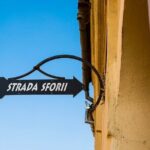
- Rope Street (Strada Sforii): One Narrow Street, Several Good Photos
- First Romanian School Museum: Romanian-Language Roots in a Real Timeline
- Small Group, Real Q&A: What Personal Service Means on a 2.5-Hour Walk
- Price and Entrance Fees: Getting Value From the $60 Tour
- Practical Tips for Shoes, Rain, and Pacing
- Should You Book This Brasov Walking Tour?
- FAQ
- How long is the Brasov city guided walking tour?
- Where does the tour start and end?
- Is the tour offered in English?
- How large is the group?
- What is included in the tour price?
- Are entrance tickets included?
- Which stops are part of the itinerary?
- Is Rope Street free?
- What happens if I cancel?
Key highlights worth your time
- Car-free old center on foot so you actually experience Brasov’s walking vibe
- Black Church big-ticket details like Romania’s largest mechanical organ and Oriental carpets
- Strada Sforii quick hit at one of the world’s narrowest streets
- First Romanian School museum tied to the country’s earliest Romanian-language instruction
- Small group size (max 15) for questions, clarifications, and real conversation
- English guide with history talk plus practical recommendations for what to do next
Meeting at Piața Sfatului: Why This Start Works
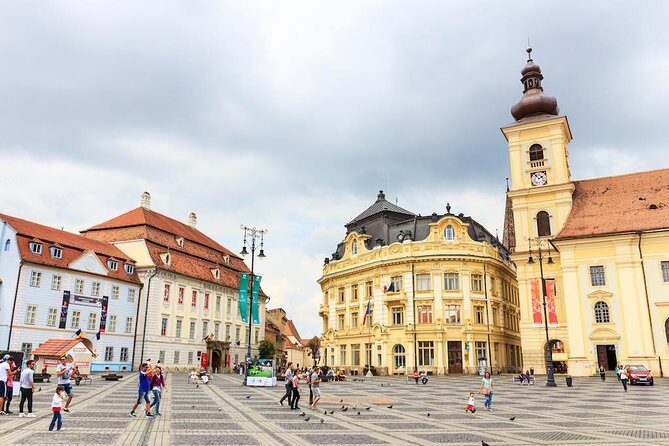
You start at Piața Sfatului (Council Square), and that’s a gift. It’s central, easy to reach, and it puts you in the heart of the old town right away. The tour also ends back at the same meeting point, so you don’t end up hunting for a new bus stop or walking the whole circuit again.
The route is designed as a walking loop through Brasov’s pedestrian areas, which means you’ll spend your time looking at buildings and street details instead of fighting traffic. With the tour lasting about 2 hours 30 minutes, it’s long enough to learn the city’s story, but short enough to fit into a first or second day without exhausting you.
This is also the kind of group that works well if you like questions. The group size caps at 15 travelers, and that small scale is part of why the guide can pause for clarifications and keep the pace friendly. In past groups, guides such as Razvan, Radu, Mariana, and Bogdan have been singled out for making the tour feel like a real conversation, not a lecture.
If you’re traveling solo, this is still a comfortable format. If you’re with friends, it can be a nice way to agree on what to see next. And if your day includes museum hopping, this walking start helps everything click into place later.
You can also read our reviews of more walking tours in Brasov
Black Church (Biserica Neagră): Gothic, the Big Mechanical Organ, and Carpet Finds
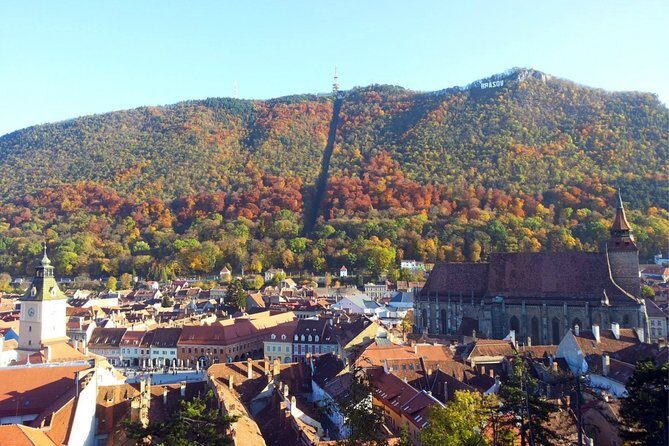
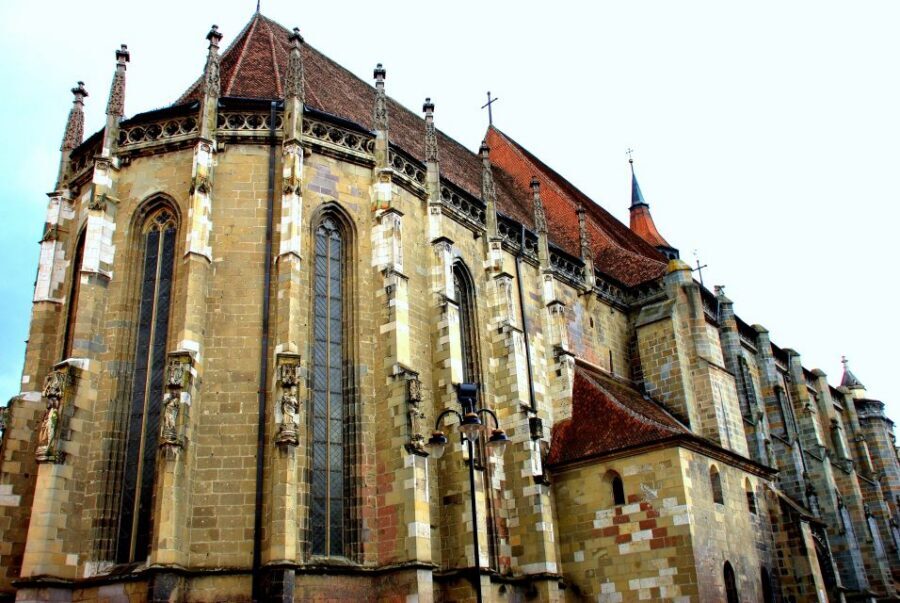
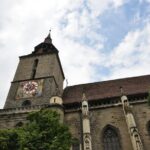
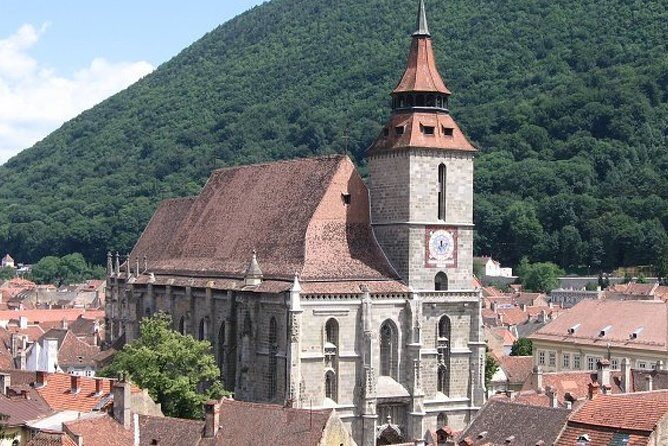
Stop one is Biserica Neagră (the Black Church), one of Brasov’s most striking Gothic monuments. Even if you’ve seen cathedrals in other countries, this one pulls you in with unusual features and Romanian-specific significance. The architecture is a big draw, but what you’ll remember are the standout details.
Here are three reasons this stop is worth budgeting for:
First, it has the biggest mechanical organ in Romania. That’s not a generic brag. It’s the kind of detail that makes a place feel specific and memorable.
Second, it includes the largest collection of Oriental carpets outside Turkey, which gives the church a wider cultural story than you’d expect from a purely religious site.
Third, it’s simply a landmark people come to Brasov for, so you’ll get the historical context that makes it land.
Timing is about 30 minutes, and admission is not included in the tour price. That’s important. This stop can become as satisfying as you want, depending on whether you’re okay paying the entry fee and spending a focused half hour inside. If you’re the type who likes to stand still and absorb, plan to use your time well once you’re in.
What I like about this structure is that the guide sets you up before you go in. You’re not just wandering and hoping you understand what you’re looking at. You get a framework for the buildings and objects, and that makes every glance more purposeful.
A possible consideration: if you’re traveling on a tight schedule, the tour’s 30-minute window means you won’t have hours. You’ll see the highlights with guidance, then you can decide whether you want to come back later for a slower look.
Rope Street (Strada Sforii): One Narrow Street, Several Good Photos
Next up is Rope Street, or Strada Sforii. This is a quick stop, about 15 minutes, but it’s one of those places that hits instantly. It’s famous for being one of the narrowest streets in the world, and that narrowness changes how you experience the city. Your perspective gets tight. The buildings feel close. The street becomes a tunnel.
What makes this stop more than a photo moment is how it breaks the day into variety. After the Black Church’s interior emphasis, you shift to street-level Brasov—something lighter, visual, and easy to enjoy even if the weather turns.
If you’re traveling with kids or anyone who gets restless, this is a good pacing anchor. It’s short, simple, and you can decide how long to linger once you’re there. If you’re in a group that enjoys playful moments, Strada Sforii often becomes the spot where people slow down for a quick look at angles and scale.
There’s no admission fee here, so you don’t need to worry about extra ticket planning for this one. The main “cost” is attention. Take a minute to notice how streets were shaped for life in the old town, not modern cars and delivery routes.
One practical tip: keep your phone ready but also look around. The narrow street effect is easy to capture, but the charm is in the surrounding facades and street texture too.
First Romanian School Museum: Romanian-Language Roots in a Real Timeline
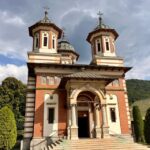
Your final major stop is the First Romanian School museum. This is where the tour gets personal in a different way—through the story of education and language.
The First Romanian School is significant because it was the first school in Romania to teach in Romanian. That matters, not as a trivia fact, but as a marker of cultural identity and change over time. Inside the museum, you’ll find old books and historic documents, which ground the story in real objects rather than just dates.
The stop runs about 30 minutes, and like the Black Church, admission is not included. If you’re comfortable paying entrance fees for context-rich sites, this museum can be a strong final anchor to the tour. If you’d rather keep your spend low, it’s still a valuable stop because the guide can explain what you’re seeing so the museum feels less like a room of text.
This stop also tends to work well for travelers who want more than sightseeing. The museum format gives you something quieter after the street portion. It’s a chance to understand why Brasov and Transylvania shaped Romanian history in the way they did.
The guide-style matters here too. In past tours, guides like Mariana have been praised for being relaxed and conversational—exactly the kind of approach that helps when you’re dealing with documents and historical themes. If your guide talks through the background before you enter the museum space, you’ll likely get more from your 30 minutes inside.
If you want to go deeper after the tour, you’ll know what to look for. You’ll leave with a clearer sense of what pieces mattered and why.
Small Group, Real Q&A: What Personal Service Means on a 2.5-Hour Walk
This tour’s biggest practical advantage is the small-group limit of 15. That size changes the experience. In a larger group, you often spend the whole time walking and waiting. Here, the guide can actually turn the tour into a two-way exchange.
In reviews from English-speaking groups, guides including Razvan and Radu have been credited for being especially helpful with questions and for making the history easy to follow. Another guide, Bogdan, has been highlighted for giving a strong first-day orientation, which is exactly what you want from a city walk early in your trip.
You should also expect the guide to offer practical next steps. Meal recommendations came up in past groups, and that’s a real value-add. A walking tour is not just about what you see today. It’s how you decide what you do tomorrow.
The tour also moves at a pace that works for most people, and service animals are allowed. Since it’s walking focused, wear shoes you’re comfortable in for an old-town loop.
And yes, weather can happen. Brasov can throw heavy rain at you at random moments. What matters is how the tour handles it. In at least one past group, Mariana kept things calm during hard rain, using the situation to keep the conversation and history moving while finding ways to stay comfortable. So if you show up with a light layer or a rain shell, you’ll be set.
You can also read our reviews of more guided tours in Brasov



Price and Entrance Fees: Getting Value From the $60 Tour
The tour costs $60.08 per person, lasts about 2 hours 30 minutes, and includes an English-speaking guide. That price is basically paying for the guide’s time, a structured walking route, and the value of having context for each stop.
But entrance fees are not included. That means your all-in cost depends on the ticket prices for Black Church and the First Romanian School museum. Rope Street is free, so at least part of the day stays low-cost.
Here’s how to judge value for yourself:
- If you plan to visit Black Church and the museum anyway, the guided format is likely worth it. You’ll spend less time figuring out what you’re looking at and more time actually understanding it.
- If you only want a quick taste of the old town and you’re skipping paid sites, the base price can feel steep for a short list of stops.
- If this is your first day in Brasov, it can be a high-value purchase because it gives you a mental map and helps you prioritize the rest of your trip.
One more detail that affects value: the tour often gets booked around 19 days in advance on average. If your travel dates are fixed and you’re traveling during peak times, don’t wait until the last minute. With a max group size of 15, popular slots can fill.
If you like tours that are walk-and-talk, this one fits the bill. If you prefer doing everything on your own with zero ticket math, you might want to compare it with a free self-guided route plus museum-only visits.
Practical Tips for Shoes, Rain, and Pacing
Because this is a walking tour, your comfort matters more than you might think. Bring shoes with solid grip for uneven old-town surfaces. Brasov’s old streets can be charming and also a little slippery after rain.
Layering helps too. You might start in open air around the square, then move toward a church and museum spaces. Even if the day seems mild, temperature swings inside stone buildings can surprise you.
For weather, pack like you’re dealing with changeable conditions. Past groups have faced heavy rain, and a good guide will adjust the flow, keep things understandable, and use the time to keep you learning even when conditions aren’t perfect. A compact umbrella or light rain jacket gives you freedom.
Also, expect the tour to be efficient. Stop durations are relatively tight: about 30 minutes at Black Church, 15 minutes at Strada Sforii, and 30 minutes at the museum. That’s plenty for highlights if you focus, but it’s not designed for slow wandering.
If you like taking notes or going back to take a second look, you may want to schedule extra time later in your day for whichever interior site you like most. Start with this tour to get oriented, then return under your own pace.
Finally, since this is offered in English with a mobile ticket, you can keep things simple. Have your phone ready for the mobile ticket, and keep any questions written down if you’re the type who forgets them mid-walk.
Should You Book This Brasov Walking Tour?
I think this is a good booking if you want a guided first look at Brasov and you’re comfortable paying for entrance tickets at the major stops. For $60.08, you’re buying a planned route, a small group experience, and an English guide who helps you make sense of what you’re seeing.
Book it if:
- You’re in Brasov for a short time and want the highlights with context
- You like Q&A and conversation, not just standing in a line
- You’re interested in specific features like the Black Church organ and the story of Romanian-language schooling
Skip it or adjust expectations if:
- You’re trying to avoid paid admissions and only want free sights
- You prefer long unhurried museum time during a single visit
- Your schedule can’t handle a structured 2.5-hour walk
If this is your first day in town, this tour gives you a practical foundation. You’ll finish back at the same central square feeling like Brasov makes sense.
FAQ
How long is the Brasov city guided walking tour?
It runs about 2 hours 30 minutes.
Where does the tour start and end?
It starts at Piața Sfatului, Brașov, Romania and ends back at the same meeting point.
Is the tour offered in English?
Yes, the tour guide speaks English.
How large is the group?
The tour has a maximum of 15 travelers.
What is included in the tour price?
The tour includes an English-speaking tour guide.
Are entrance tickets included?
No. Entrance fees are not included for the stops that charge admission.
Which stops are part of the itinerary?
The tour includes Black Church (Biserica Neagra), Rope Street (Strada Sforii), and The First Romanian School museum.
Is Rope Street free?
Yes. The Rope Street stop is listed as free.
What happens if I cancel?
You can cancel for a full refund up to 24 hours before the experience’s start time.