REVIEW · BUCHAREST
Private Bucharest city tour visit the Palace of the Parliament & Village Museum
Book on Viator →Operated by Rolandia · Bookable on Viator
Big sights, tight timing, real context.
This private full-day plan pairs the Palace of the Parliament with the Dimitrie Gusti Village Museum, plus city squares and a guided Old Town walk—so you don’t just see Bucharest, you understand how it got that way. I really like the way the day is set up for efficiency, with a private guide who can shape the order and pacing around you, like Florin did for one group and Alex did when managing heat and traffic.
Two specific things I love: first, having entrance fees included for the big hitters, so you can spend your energy on the sites instead of budgeting mid-day. Second, the private attention makes a difference—Alex answered questions all day and even suggested dinner, while Florin explained the history in a way that invited back-and-forth. That personal touch is why this works so well as a first Bucharest day.
One possible drawback to consider: the schedule is structured (around 6 to 8 hours, with set stop times), so if you want slow wandering or extra time in one museum, you’ll need to plan for trade-offs—or be ready to adjust once you’re on the ground.
In This Review
- Key Things Worth Noticing
- Why This Private Bucharest Day Works So Well
- Palace of the Parliament: Scale You Can’t Fake
- What you’ll like here
- The trade-off
- Calea Victoriei and the Main Squares: How Bucharest Changed
- What you’ll like here
- The trade-off
- Old Town Bucharest: The Friendly Chaos Between Monuments
- What you’ll like here
- The trade-off
- Dimitrie Gusti National Village Museum: Romanian Life, Not a Reenactment
- What you’ll like here
- The trade-off
- Logistics and Value: What the $235.25 Per Person Really Buys
- Lunch: plan ahead
- One practical hint
- Who This Tour Suits Best (And Who Might Prefer Something Else)
- A Quick Reality Check: When Schedules Matter
- Should You Book It?
- FAQ
- How long is the private Bucharest city tour?
- What time does the tour start?
- Is lunch included in the price?
- Are entrance fees included?
- What language is the guide?
- What ages can participate?
Key Things Worth Noticing
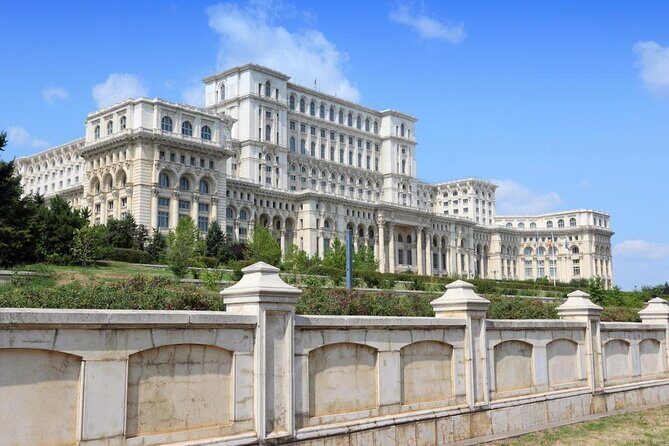
- Palace of the Parliament includes your entry and gives you the scale and the political story behind it
- A private English-speaking guide can tailor the day, not just read off a script
- Revolution-era squares connect Bucharest’s communist period to the 1989 turning point
- Calea Victoriei and Old Town add a pre-communist city feel before you hit the countryside museum
- Village Museum is an open-air time machine, with reconstructed buildings and craft details
- Lunch is on your own, so you’ll want a plan for where to eat (your guide can help)
Why This Private Bucharest Day Works So Well
This tour is built for people who want a strong Bucharest hit in one go—without doing the “why am I zig-zagging across town?” thing. You start at 10:00, ride in a private sedan or minivan (depending on group size), then spend the day moving between major historical anchors and walkable neighborhoods.
What makes it feel worthwhile is the balance: you get the political weight of the communist era, then you get the human scale of the Romanian countryside in the Village Museum. The Old Town stop also matters, because it’s where Bucharest starts to look lived-in and real, not just monumental.
You’ll also feel the value in the format. It’s private, so you’re not trapped in a large-group pace. And because entrance fees are included, you’re not constantly checking what costs extra while you’re trying to enjoy the day.
You can also read our reviews of more city tours in Bucharest


Palace of the Parliament: Scale You Can’t Fake
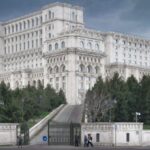
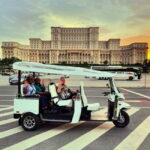
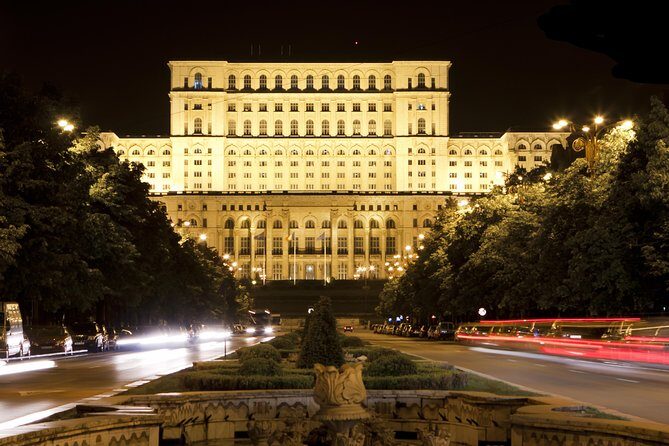
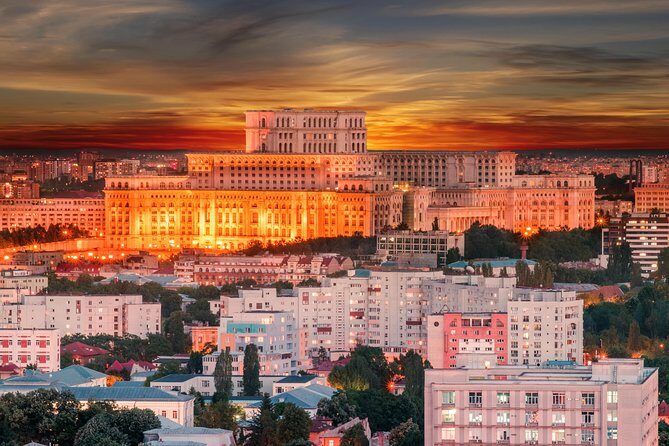
Your day starts at Unirii Square and then moves into the Palace of the Parliament, the largest building in Europe and one of the most extreme pieces of communist-era architecture in the world. The building is described as 12 stories tall with 8 underground levels, and one of those levels is an anti-atomic bunker. The site also references 20 km of catacombs linking key institutions beneath the city.
Even if you’re not a building-nerd, you’ll feel the “this can’t be real” scale in your legs and your eyes. The fact that it holds a Guinness World Record for being the heaviest building adds a fun, odd data point—but the bigger point is what the palace represents. It’s framed as a homage to the dictatorial regime, built as Nicolae Ceaușescu’s vision of reinventing Bucharest.
What you’ll like here
- You get a guided walkthrough of the political and architectural story, not only facts and numbers
- The stop is timed at about 1 hour, which is usually enough to understand the building’s size and message
The trade-off
If you’re hoping for lots of free time inside the palace to wander at your own pace, the visit is structured. That’s not a problem if you want clarity fast, but it can feel limiting if you’re the type who reads every label and then reads the next one.
Calea Victoriei and the Main Squares: How Bucharest Changed
After the palace, the tour shifts from “monument” to “street.” Calea Victoriei (Victoriei Avenue) is one of Bucharest’s key pathways, stretching almost 3 km. The street originally had a different name—Podul Mogosoaiei—and it gained its actual name after Romania’s War of Independence victory in 1878.
This is the part where Bucharest starts showing you its older face. The avenue is described as among the oldest in the city, and the vibe is connected to the idea of Bucharest as the Little Paris, especially when you look back to how the city looked around a century ago, before communist urban changes.
Then you move into the square stops: Piata Universitatii and Piata Revolutiei. Piata Revolutiei is the emotional center of the day. It’s presented as the place where democracy won over socialism in 1989, and where Ceaușescu spent his last moments. Seeing a modern public square with that kind of weight in the background makes the history feel less like a chapter and more like a place you can picture.
You can also read our reviews of more private tours in Bucharest


What you’ll like here
- The route gives you context, because the tour connects streets and squares to political change
- The “free admission” stops still matter, since they’re guided moments, not dead time
The trade-off
These are shorter segments (about 20 minutes each). If you prefer to linger, use this as a fast orientation. You can always come back later for photos or a longer self-guided walk.
Old Town Bucharest: The Friendly Chaos Between Monuments
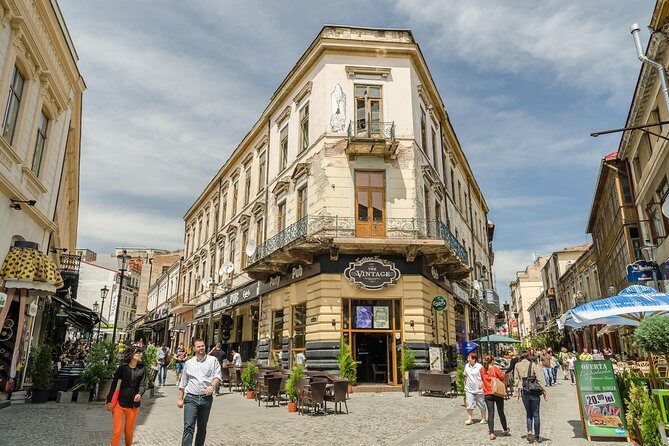
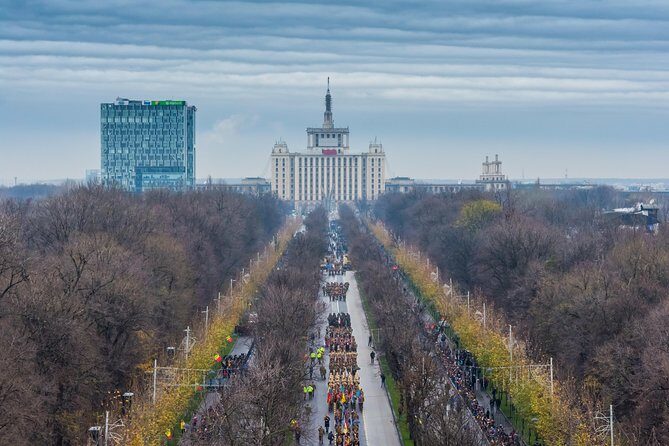
Old Town Bucharest is where the day gets more everyday. You’ll see the Arch of Triumph built between 1922 and 1936, commemorating Romania’s participation in World War I. It’s declared a historical monument in 2004 and sits in the middle of one of the city’s busiest intersections.
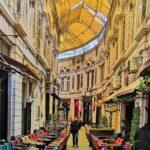
This is also a neighborhood with contrasts—historical façades, lively cafés, and street food energy. The area is described as one of the liveliest zones in Eastern Europe, and it feels that way in the way the streets operate: pedestrians, traffic, and people who seem to use the square-side space like a living room.
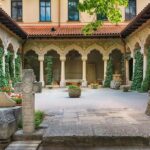
You’ll also pass by other major landmarks nearby, including CEC Palace and Stavropoleos Monastery. Even when you’re not going inside, the location helps you understand how Bucharest stacks eras next to each other.
What you’ll like here
- A guided Old Town walk is a good way to get your bearings for the rest of your trip
- You get the contrast: heavy history earlier, then street-level Bucharest here
The trade-off
The Old Town stop is about 1 hour. If you’re the kind of traveler who wants to sit down for a long meal, do it after the tour. Use the hour for orientation and “first contact,” not for a full day of wandering.
Dimitrie Gusti National Village Museum: Romanian Life, Not a Reenactment
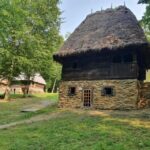
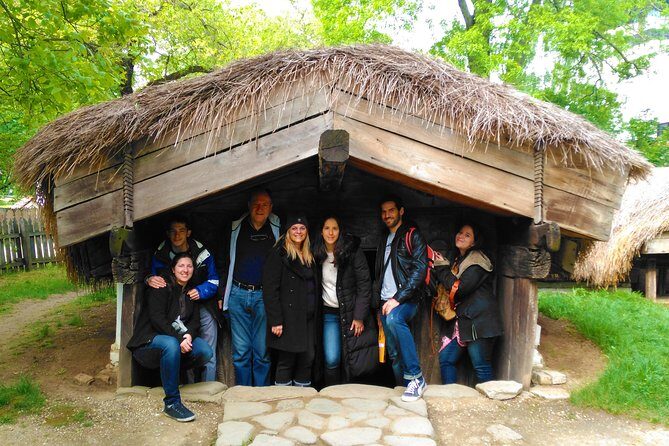
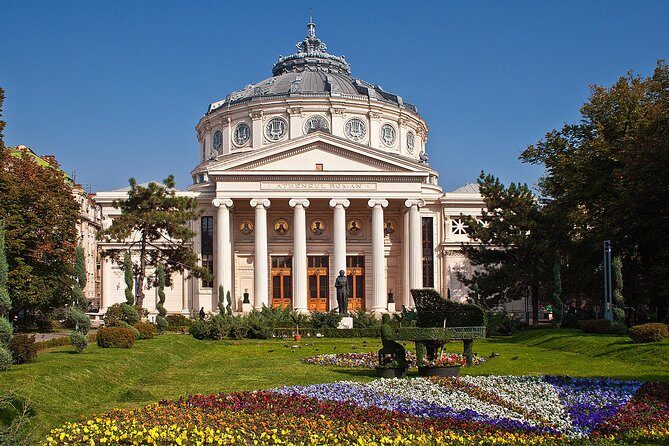
The final stop is the Dimitrie Gusti National Village Museum, presented as an open-air ethnographic museum and an actual time portal into traditional Romanian village life. It opened in 1936 and is described as one of the first open-air ethnographic museums in the world.
What I like about this stop is how specific it is. This isn’t just “pretty huts and vibes.” The museum is laid out as a reconstructed traditional village, with key buildings and craft elements like a church, a windmill, and a watermill. You can also see folk arts and hand-crafted decorations, which is where the museum becomes more than architecture.
The numbers help you understand the scale: it contains 360 monuments and about 60,000 objects in its collections. That’s the kind of detail count that makes a visit feel substantial, even with a guided stop time of about 1 hour.
You’re also in a smart location. The Village Museum is near Herăstrau Park, so the museum feels like a breath of fresh air compared with the intensity of the city center.
What you’ll like here
- You get a clear sense of traditional Romanian village life in a single, well-organized walk
- The open-air format is usually easier on the mood than another indoor museum
The trade-off
Because you’re scheduled for about 1 hour, you may not be able to slow-read every detail. If you’re really into ethnography or rural architecture, you might want to extend your visit after the guided portion ends.
Logistics and Value: What the $235.25 Per Person Really Buys
The price is listed as $235.25 per person for a private full-day experience. For a private tour, the value often hinges on two things: whether entrance fees are included and whether you’re saving time versus booking separately.
Here, the major advantages are clear. Entrance fees are included, and you have professional English-speaking guidance plus private transportation. You also get a walking tour of the Old Town and a panoramic city tour with stops in the main squares. That combo usually costs more if you try to DIY it while also trying to coordinate entry times and transit.
Pickup is offered, and the meeting start time is 10:00. The day runs about 6 to 8 hours, which is long enough to cover multiple zones without feeling like you’re rushing every 20 minutes. You’ll also get a mobile ticket, which helps on arrival day.
Lunch: plan ahead
Lunch is not included, and the suggested expectation is around 12 euros per person. I like that the tour tells you this plainly. It means you can choose a place that fits your preferences, and then you can trust your guide to point you toward something local once you’re in the flow.
One practical hint
Bucharest traffic can be a real energy drain. One of the standout comments from guides was that they know how to handle traffic efficiently, which can make the difference between a pleasant day and a “why are we stuck again?” day. If heat is a factor for you, a good guide’s pacing matters even more.
Who This Tour Suits Best (And Who Might Prefer Something Else)
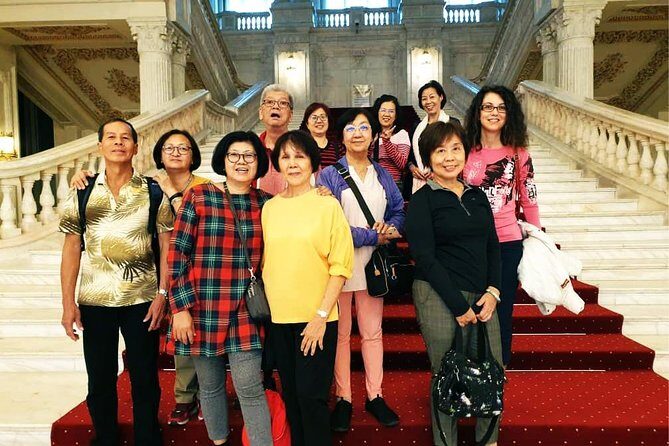
This is a great match if you:
- Want a first-time Bucharest overview with real political context
- Like guided explanations that connect buildings and streets to history
- Prefer private pacing instead of large-group logistics
- Plan to cover both the city center landmarks and a countryside-style museum in one day
It might not be ideal if you:
- Want lots of free wandering inside the palace or museum without time structure
- Are traveling with very young kids who need frequent breaks, since the minimum age listed is 12
- Expect the tour to include lunch plans with zero effort on your side (it doesn’t)
Also, this tour can be flexible in how you spend your time. In one example, the itinerary was adjusted so the group spent more focus after lunch and skipped the Old Town portion. If you have strong priorities (for instance, more time at the communist sites), tell your guide early.
A Quick Reality Check: When Schedules Matter
I did see one issue come up in guide experience: in one case, the guide was not aware that museums were closed when expected, which led to wasted driving time until later corrections were made. That’s not the norm implied by the overall quality, but it is a reason to stay practical.
My advice: before your day starts, double-check that you know the exact visit times for your travel date and be mentally ready for minor schedule tweaks. A private guide can often adjust on the fly, but you’ll have a better day if you assume nothing is 100% guaranteed.
Should You Book It?
If you want the biggest Bucharest stories in one day—communist-era architecture, the squares tied to 1989, and a countryside museum that feels like stepping out of the city—this tour is an easy yes.
Book it if you value:
- Entrance fees included for the major sites
- A private guide who can answer questions and tailor the pacing
- A day that balances “hard history” with a softer, human-scale finale at the Village Museum
Skip or consider alternatives if you:
- Already know you’ll want a long, self-paced museum day and don’t like structured time blocks
- Prefer to build your own route so you can linger longer in one neighborhood
For most people, though, this is the kind of tour that gets you oriented fast and leaves you with enough context to enjoy the rest of Bucharest on your own.
FAQ
How long is the private Bucharest city tour?
It’s approximately 6 to 8 hours.
What time does the tour start?
The start time is 10:00 am.
Is lunch included in the price?
No. Lunch is not included, and it’s expected to cost about 12 euros per person.
Are entrance fees included?
Yes. Entrance fees are included for the stops on the tour.
What language is the guide?
The tour includes a professional English-speaking guide, and it may be operated by a multi-lingual guide.
What ages can participate?
The minimum age is 12, and children must be accompanied by an adult.