REVIEW · BUCHAREST
MINA Museum of Immersive New Art, Bucharest
Book on GetYourGuide →Operated by MINA Museum · Bookable on GetYourGuide
A room-sized digital art show is the real draw here. MINA, Romania’s first space built for full-room projection, blends tech and art into a sensory visit made for a wide range of ages.
I especially like the former computer factory setting and how the building’s industrial shell makes the visuals feel more grounded. I also love the 360° projections that flip the walls and floor into the artwork.
One consideration: the displays can be intense, with rapidly changing images, loud sounds, and bright lighting, so MINA is not for people with epilepsy or vertigo.
In This Review
- Key Things You’ll Notice at MINA
- A Former Computer Factory Turned Into Digital Art Space
- Your Time Slot: How the 360° Shows Work
- Inside the Two Projection Halls (Walls, Floor, and Full-Body Attention)
- MINA Kids Play Area: Light, Sound, and Motion for Families
- Time-Slot Rules You Should Plan Around (Especially for Families)
- Who Should Go (and Who Should Skip It)
- It’s a good fit if you:
- You should think twice if you:
- Getting There and Finding MINA Fast
- Audio Guide: When You Want Context Without Slowing Down
- Price and Value: What You’re Paying For
- Quick Itinerary for Your One-Day Plan at MINA
- Should You Book MINA in Bucharest?
- FAQ
- Where is MINA Museum of Immersive New Art located?
- How long is the MINA visit?
- What can I expect inside the main halls?
- Are there age restrictions for certain time slots?
- Is there anything for children?
- Do I need an audio guide?
- Is MINA wheelchair accessible?
- Is MINA suitable for people with epilepsy or vertigo?
Key Things You’ll Notice at MINA
- Two large projection halls where walls and floors become part of the show via 360° visuals
- Former computer factory vibe, which gives the place a real sense of reinvention
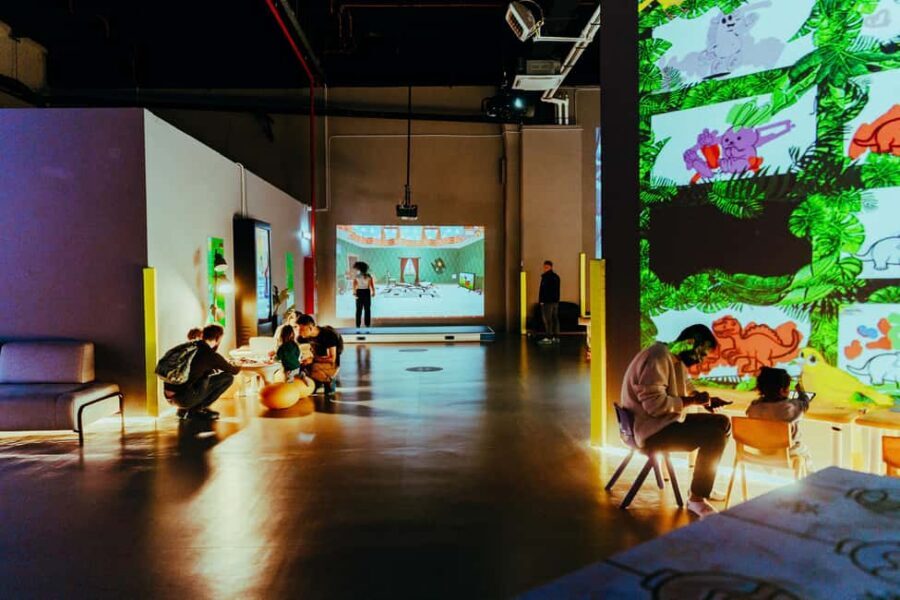
- A separate kids play area with light, sound, and motion-based interactive installations
- Time-slot rules: the last two slots of the day are reserved for adults and children aged 10+
- Optional audio guide in Romanian and English, if you want a calmer layer of context
A Former Computer Factory Turned Into Digital Art Space
MINA Museum of Immersive New Art is located in Bucharest in a former computer factory, and you can feel that history in the architecture. The point is not nostalgia. It’s contrast. You step into a building shaped by technology and then watch that same language of machines become something playful and artful.
The museum spans about 2,500 m², which matters because it lets you experience the big projection areas without feeling like you’re crammed into a corridor. It also makes the museum feel like a destination, not just a quick stop between other sights.
From the start, you’re choosing between two different “modes” of the museum: the main projection halls, and the kids play zone. That split is a big part of why MINA works for families and mixed-age groups.
You can also read our reviews of more museum experiences in Bucharest



Your Time Slot: How the 360° Shows Work
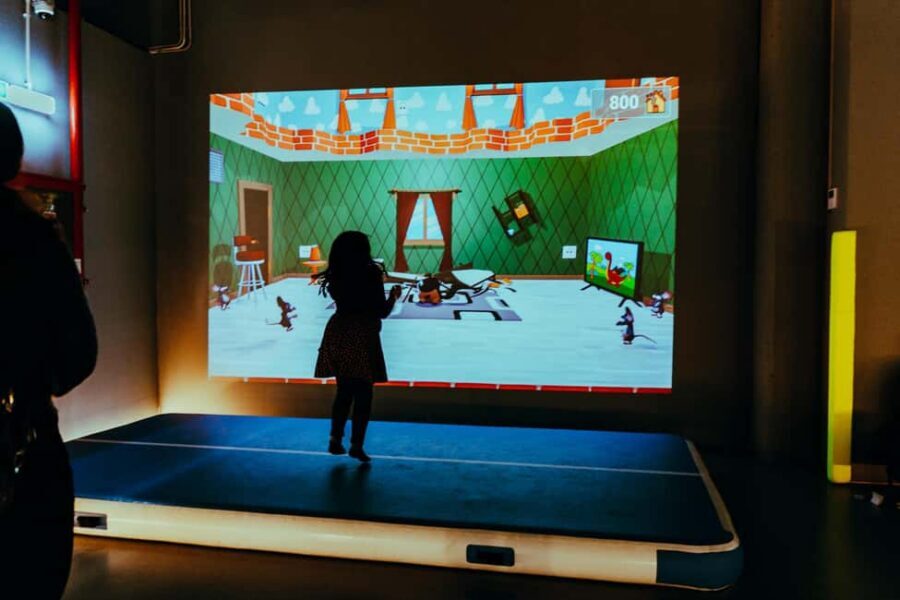
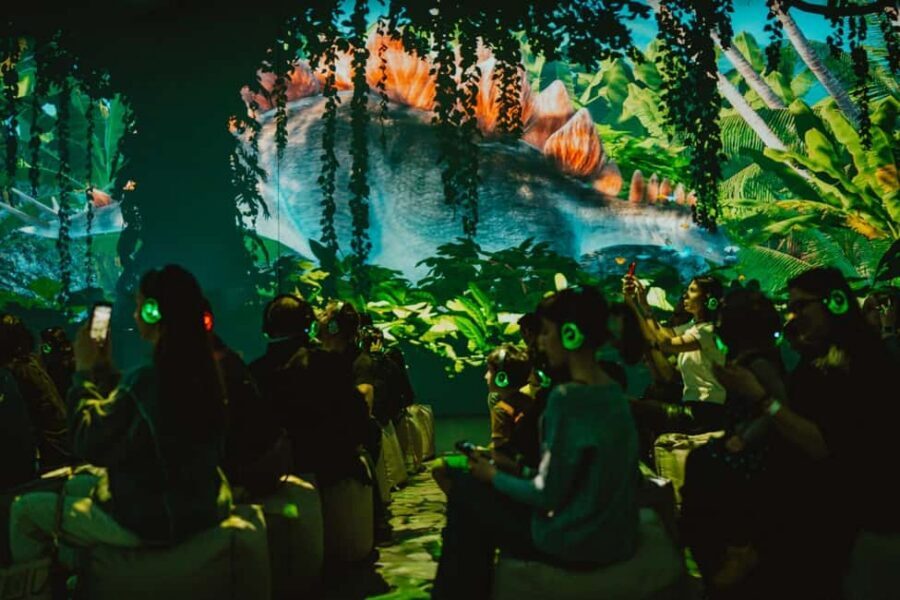
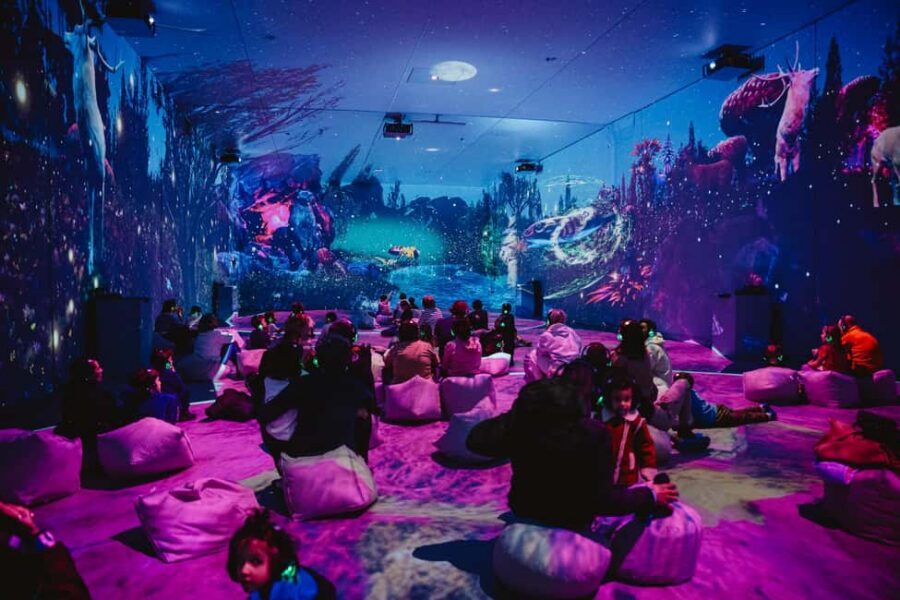
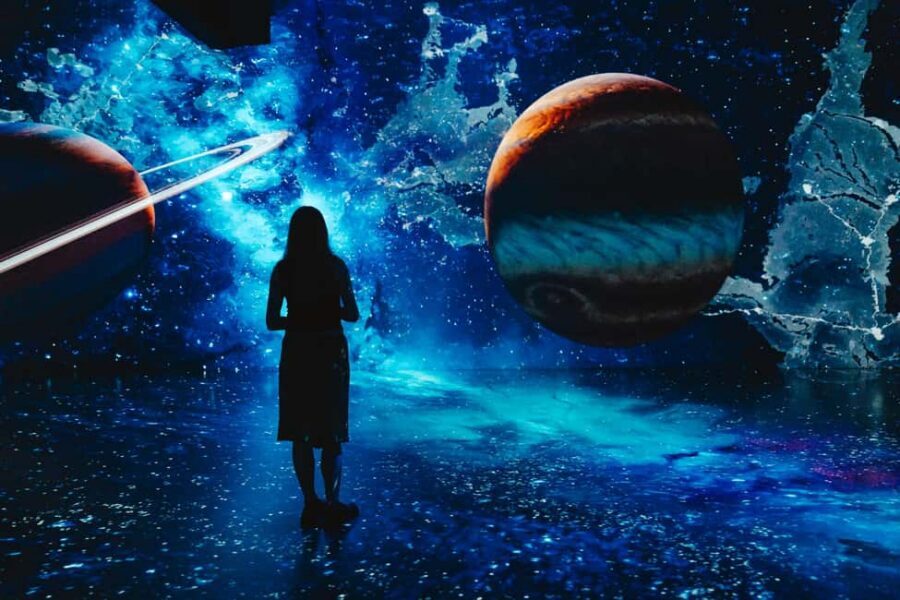
MINA is built around two major immersive halls with 360° projections. In plain terms, you’re not watching art on a screen. You’re inside the artwork. The visuals move across the walls and across the floor, so your body is always in the “scene,” not standing outside it.
I like how this approach changes your attention. Traditional museums ask you to slow down and look at one object. Here, your focus shifts to how movement, light, and sound combine. You’re reacting in real time to what’s happening around you.
If you choose a time slot early in the day, you’ll have your best shot at a calmer first viewing. If you go later, be aware of the age rule: the last two time slots are reserved for adults and children aged 10+. That can make those later slots feel more like an adult-focused show (while still welcoming kids 10 and up).
Inside the Two Projection Halls (Walls, Floor, and Full-Body Attention)
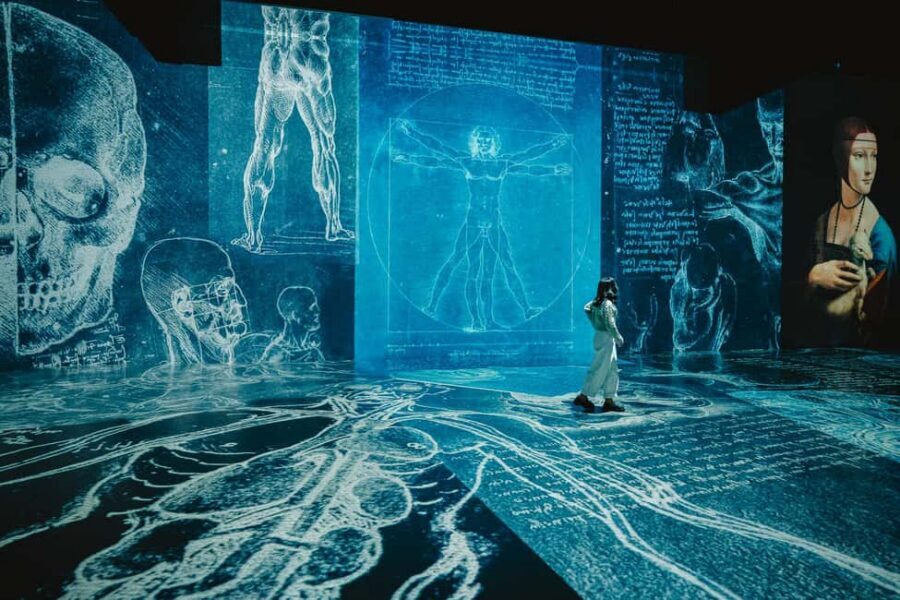
The museum’s main draw is its pair of large halls, each designed to turn the space into a 360° digital environment. The standout element is the way the projection covers more than just one surface. When the floor is part of the visual system, your brain reads depth and motion differently, even if the visuals are purely digital.
This is where MINA’s scale becomes practical. You’re not trying to “find a good angle” in a tiny room. The halls are large enough that you can stand, adjust, and watch from different parts of the space without everything feeling blocked.
If you’re sensitive to bright light and fast changes, this is also where you need to take the warnings seriously. The show can include rapidly changing images, intense lighting, and loud sounds. That’s not a minor detail. It’s part of the design.
MINA Kids Play Area: Light, Sound, and Motion for Families
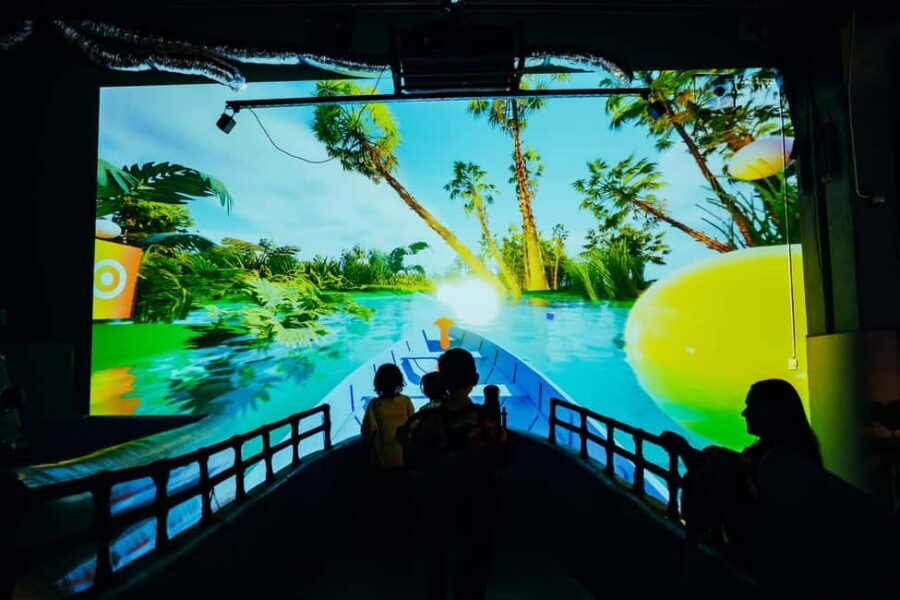
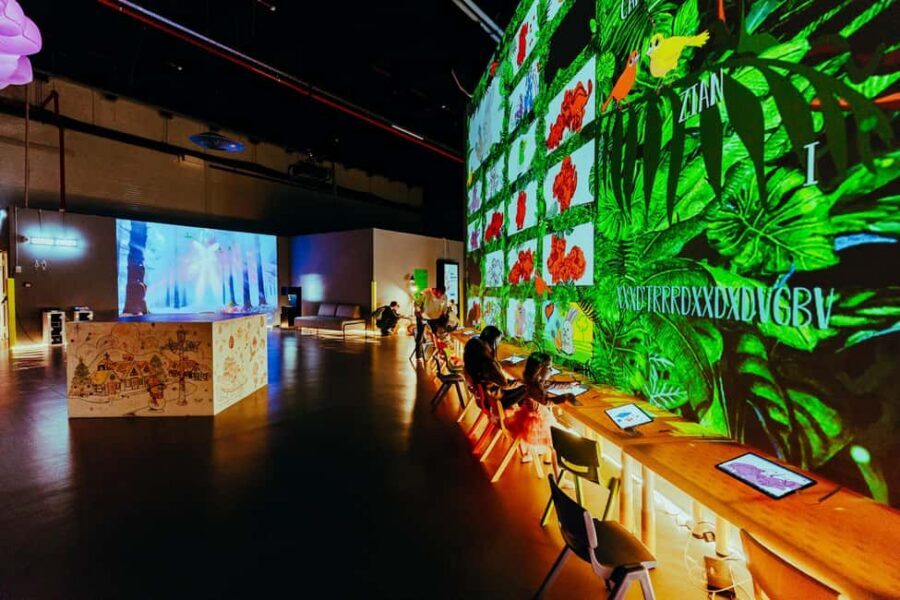
MINA also has a dedicated kids play area, and that’s one of its strongest family-friendly points. Instead of only being a spectator place, it gives children interactive installations that use light, sound, and motion.
I like the idea behind this section: it’s designed so younger visitors aren’t stuck waiting for an adult-focused projection experience. The museum effectively gives parents a “different track” so the whole day doesn’t revolve around sitting through big halls alone.
Practical note: kids must be supervised by an accompanying adult at all times in the MINA Kids area. So while there’s play, it isn’t a drop-off space. If you’re traveling with small children, plan for active monitoring.
Time-Slot Rules You Should Plan Around (Especially for Families)
MINA uses date- and time-slot tickets, and that matters for planning. Your ticket is valid only for the selected date and time slot, so you’ll want to align it with the rest of your Bucharest day.
The most important rule: the last two time slots of the day are reserved for adults and children aged 10+. If you’re visiting with younger kids, you’ll need to book earlier slots so the kids can access the full experience.
This kind of age-based scheduling often improves the overall experience. Big projection halls can be intense, and adult-focused time can make it easier to manage the sound and light intensity. It’s also a reminder that MINA is not just a casual playground, even though it has a kids area.






Who Should Go (and Who Should Skip It)
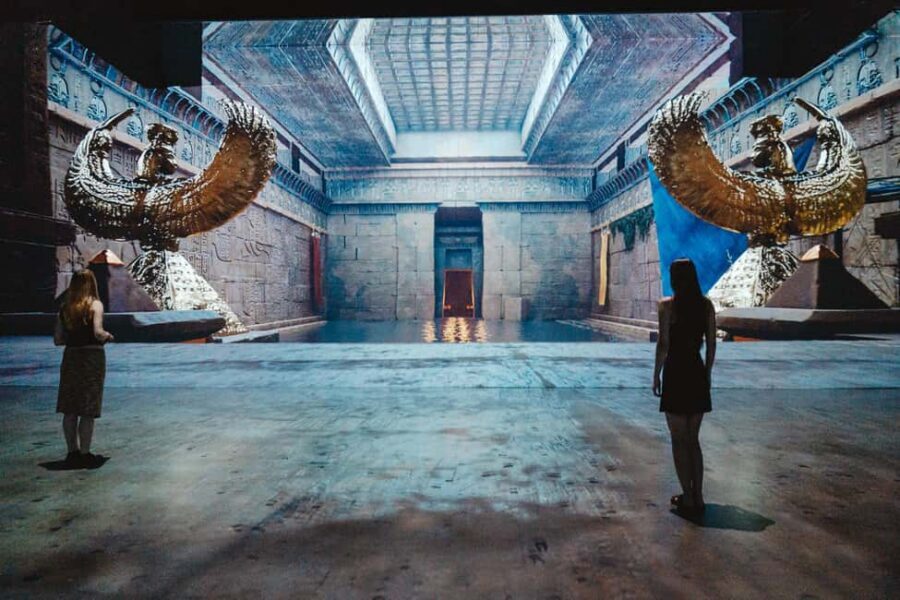
This museum is best for people who enjoy sensory, tech-forward art and don’t mind loud moments and bright lighting.
It’s a good fit if you:
- Want a visual experience that feels like being inside the art
- Are traveling as a family and like having both big halls and a kids-focused area
- Enjoy contemporary digital art and the relationship between light, sound, and motion
You should think twice if you:
- Have epilepsy or conditions made worse by rapidly changing images and intense lighting
- Have vertigo, since the experience includes strong visual stimulation
The museum’s warning isn’t subtle. MINA explicitly says the experience contains rapidly changing images plus moments of intense lighting and loud sounds that may be harmful for people with certain medical contraindications. If that’s you, it’s safer to skip the projection halls altogether.
Getting There and Finding MINA Fast
MINA’s location is in Bucharest (Bucharest-Ilfov, Romania). Your meeting point can vary depending on what you book, so watch for the exact pickup/check-in info tied to your reservation.
If you prefer a map-based approach, the coordinates are:
44.478843688964844, 26.117155075073242
Parking is available in a private area in front of the museum, but it’s not managed by MINA, so you can’t reserve or count on spaces being available. If you’re driving, plan for the possibility that you’ll need to park elsewhere nearby.
Also, it’s wheelchair accessible, which is a meaningful practical detail for planning your route and timing inside the halls and play area.
Audio Guide: When You Want Context Without Slowing Down
MINA offers an optional audio guide in Romanian and English. I like having this option when I’m in a space where visuals move quickly. The audio layer can give you something steadier to hold onto while the projections do their thing.
That said, you don’t need the audio guide to enjoy the main experience. If you prefer to experience it purely through sound and visuals, you can treat the audio as optional background.
Price and Value: What You’re Paying For
I can’t quote a ticket price here because none is provided in the details you shared, but I can still help you judge value.
You’re essentially buying access to:
- Two big halls built around 360° digital projection
- A museum-sized space of about 2,500 m²
- A kids play area with interactive installations (when visiting with children)
For many people, the value comes from the design choice: it’s built for a set time slot, which helps keep the halls functioning as intended rather than turning into a slow, wandering exhibit. It also means you’re not spending your time in a queue for a one-off photo moment. You’re there for a show-like experience.
If you’re the type who prefers quiet galleries and minimal sound, MINA may feel like “too much.” If you want modern art that uses technology as a language, it’s a strong match.
Quick Itinerary for Your One-Day Plan at MINA
Because MINA is ticketed by time slot, you should treat your visit like a scheduled experience, not a free museum stroll.
A simple flow that works well:
- Start with the main projection halls so you catch the big 360° visuals while your attention is fresh
- Shift to the kids play area if you’re bringing children, so they can burn energy in the interactive section
- If you’re using the audio guide, keep it flexible and turn it on when the sound context feels like it would help you follow what’s happening
Plan around the sensory intensity too. The museum warns about rapidly changing images, loud sounds, and intense lighting. If you know you’re sensitive, keep your total schedule light so you’re not rushing to your next stop right after.
Should You Book MINA in Bucharest?
Book MINA if you want a modern, tech-based art experience that feels bigger than a typical museum stop. The 360° projections, the size of the venue, and the split between big halls and a kids play area make it easy to build a satisfying visit in one day.
Skip or reconsider if you or anyone in your group has epilepsy or vertigo. The museum clearly flags those risks, and the projection design includes intense light and loud sound.
If you’re traveling with kids, pay close attention to the last two time-slot rule (adults and children aged 10+). Choosing the right slot is the difference between a fun day together and an experience that doesn’t fully fit your family’s ages.
FAQ
Where is MINA Museum of Immersive New Art located?
MINA is in Bucharest-Ilfov, Romania. The provided coordinates are 44.478843688964844, 26.117155075073242. The exact meeting point can vary depending on what option you booked.
How long is the MINA visit?
The activity is listed as valid for 1 day, with entry tied to a specific date and time slot.
What can I expect inside the main halls?
MINA has two large halls with 360° projections that turn walls and floors into digital art environments.
Are there age restrictions for certain time slots?
Yes. The last two time slots of the day are reserved for adults and children aged 10+.
Is there anything for children?
There is a dedicated kids play area with interactive installations using light, sound, and motion. Children must be supervised by an accompanying adult at all times.
Do I need an audio guide?
An optional audio guide is available in Romanian and English. It’s not required, but it can add context if you want it.
Is MINA wheelchair accessible?
Yes, the museum is wheelchair accessible.
Is MINA suitable for people with epilepsy or vertigo?
No. The experience is not suitable for people with vertigo or epilepsy, due to rapidly changing images, intense lighting, and loud sounds.