REVIEW · CLUJ NAPOCA
CJ04 -Maramureș Adventure:Tradition, Folk Art &Scenic Beauty
Book on GetYourGuide →Operated by Carpathian Travel Center · Bookable on GetYourGuide
Maramureș hits hard in one day. This trip strings together woodworking culture and hard-earned history with stops that feel made for real conversation, not postcard glances. I love how the itinerary mixes UNESCO-level craft with a memorial that actually explains what happened in the 20th century. I also love the small-group pace—limited to 9 people—so you can ask questions and move efficiently. The main thing to consider: you’ll spend a fair amount of time in the car, and the tour balances driving with shorter visits at each stop.
The best part is that it doesn’t just point at famous sights. You get context for why Maramureș woodcarving matters, how religious buildings were built by hand, and why local traditions can be both playful and serious. You’ll appreciate the guide’s storytelling style, and it helps that the tour often runs with experienced English-speaking guides (I’ve seen names like Andrei and Attila mentioned in past departures). One possible drawback: the day can feel tight if you want long, slow wandering in every town.
If you’re the type who likes seeing a region’s identity in a single push—then resting afterward—you’re in the right place. Just plan your day around walking on uneven outdoor paths, and bring what you need for weather and sun.
In This Review
- Key highlights you’ll notice fast
- A one-day Maramureș route that starts strong in Cluj
- Baia Mare: mining-era city center and the museum pair
- Wooden Church of Șurdești (UNESCO): the tower you remember
- Gutin Pass and the drive into Sighetu Marmației
- Săpânța’s Merry Cemetery: folk art where epitaphs are funny
- The return to Cluj—and an optional extra church if time allows
- Price and logistics: what $182 buys you in real terms
- What to pack (and why it matters for this exact route)
- Who this trip suits best (and who should skip it)
- Should you book CJ04 Maramureș Adventure?
- FAQ
- What is the duration of the CJ04 Maramureș Adventure?
- How much does the tour cost?
- Where does the trip start in Cluj-Napoca?
- Is the tour in English?
- How big is the group?
- What should I bring?
- Who is this tour not suitable for?
- Are there any rules about alcohol?
Key highlights you’ll notice fast
- Șurdești’s wooden tower and interior frescoes make the UNESCO stop feel alive, not staged
- Baia Mare Old Town plus museum time gives you a baseline for Maramureș folk culture
- Sighet Prison Memorial brings Romania’s communist-era story into sharp focus
- Gutin Pass crossing adds a scenic Carpathian road moment between stops
- Săpânța’s Merry Cemetery uses humor and painted crosses to turn grief into folk art
- Small group up to 9 keeps the day practical and discussion-friendly
A one-day Maramureș route that starts strong in Cluj
This day trip runs every day, and it kicks off early—08:00 from KFC, Piata Unirii in Cluj-Napoca. The morning start matters because your route quickly leaves the comfort of city time and heads into Maramureș, where tradition and crafts shape what you see.
You’re traveling in a modern, air-conditioned car or van with an English-speaking, specialized guide. That’s a big deal for this kind of route. You’re not just looking at buildings and cemeteries—you’re meant to understand them. With parking and road taxes handled, the trip feels smoother than piecing it together yourself.
Value-wise, the price ($182 per person) is easier to justify when you add up transport, guide time, and the extra costs that pop up when you’re trying to get from place to place on your own. It’s not a budget picnic day, but it’s a concentrated day of major stops with professional context.
You can also read our reviews of more tours and experiences in Cluj Napoca.


Baia Mare: mining-era city center and the museum pair
Your first meaningful stop is Baia Mare, often described as the capital of Maramureș, and it’s a good place to begin because it sets the cultural tone. Baia Mare blends its industrial roots—especially mining history—with local museum work that frames folk life and craftsmanship.
You’ll have time for the Old Town (Centru Vechi), plus two museum stops: the Baia Mare Art Museum and the Maramureș Village Museum. That combination is smart. The art museum gives you a broader cultural lens, while the village museum helps you see how everyday life and traditional building methods connect to the bigger wooden-architecture story you’ll keep seeing later.
Practical note: museum time is where you’ll feel the “one day” limitation most. You’ll get enough to orient yourself, but you won’t have days to wander slowly through every room. If you like museums, you’ll still come away satisfied—just don’t expect to read every detail at an unhurried tempo.
Wooden Church of Șurdești (UNESCO): the tower you remember
The highlight for many people is the Wooden Church of Șurdești, a UNESCO World Heritage Site. This is where Maramureș wood architecture stops being an idea and becomes a physical thing you can study—up close.
A standout is the tower, which reaches 54 meters (177 feet). That detail isn’t just bragging. A tall wooden spire is a powerful statement about what communities could build with timber, joinery, and craft knowledge passed down over generations. When you see it, you understand why wooden churches matter beyond religion.
Inside, you’re also looking at well-preserved 18th-century frescoes with biblical scenes in vibrant colors (and yes, you’ll likely notice how carefully those paintings were maintained). What I find most useful is that a good guide ties the art to the setting: the church isn’t a museum object. It’s part of local worship and community life.
Drawback to plan around: this is a wooden site. You’ll want comfortable shoes and steady footing, especially if you run into uneven ground around the church area. Also, photos are one thing, but give yourself time to actually look at carved details—because that’s where the craftsmanship becomes obvious.
Gutin Pass and the drive into Sighetu Marmației
After Șurdești, the route crosses the Gutin Pass and brings you to Sighetu Marmației. The road segment isn’t an add-on. In places like this, the drive helps connect the dots between regions and makes the day feel like a journey through the Carpathians, not just a list of stops.
Sighetu Marmației is your history anchor. The town’s main draw here is the Memorial to the Victims of Communism and to the Resistance, including the Sighet Prison Memorial. This is housed in a former prison used to detain political prisoners during the communist regime.
Expect the tone to shift. You’re moving from wooden craft and cultural expression into a space built for reflection. A guide’s context matters a lot here because it’s easy to get lost in dates and labels if you’re not hearing a clear thread.
Even if you usually skip memorial sites, this one works because it frames resistance and victimhood in a concrete place, not an abstract lecture. Plan a little mental space for it—this part of the day is more “absorb and respect” than “shop and snack.”
Săpânța’s Merry Cemetery: folk art where epitaphs are funny
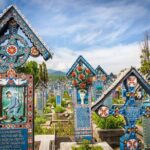
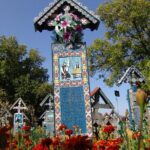
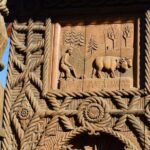
Then comes the stop that makes the whole day feel surprising in the best way: the Merry Cemetery of Săpânța. It’s famous because the graves aren’t solemn, gray, and uniform. Instead, each grave features a colorful painted wooden cross—often with a mix of blues, reds, greens, and yellows—and with humorous or poetic epitaphs.
That’s why this cemetery hits both emotionally and culturally. You’re seeing how a community processes death through folk art traditions. The cross paintings often include scenes from the person’s life, which makes the cemetery feel personal rather than generic.
One detail worth noting: there’s a famous example visitors often reference—the founder’s grave of Stan Ioan Pătraș. Learning that name helps you understand how this cemetery became a cultural project instead of just a burial ground.
Yes, it can be lighthearted at first glance. But the deeper value is the creative way tradition gives people a voice. It’s not ignoring loss—it’s expressing it through stories, color, and local style.
Practical tip: because the cemetery is outdoors, bring water, sun protection, and plan for walking. This is also where comfort matters: if your feet are tired from earlier stops, your experience will change. Comfortable shoes aren’t optional.



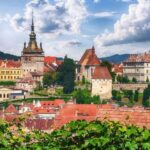
The return to Cluj—and an optional extra church if time allows
After Săpânța, you drive back to Cluj-Napoca. There’s also an optional add-on if your schedule has room: the Wooden Church of Bogdan Vodă.
That optional stop can be a nice way to cap the day, especially if you’re still craving more wooden-architecture details after Șurdești. If you’re the kind of traveler who likes themes—wood, craft, tradition—you’ll likely enjoy the extra angle.
But it’s still an “if time permits” situation. So don’t build your expectations around it. Keep your energy for the main stops and treat the extra church as a bonus, not the core plan.
Price and logistics: what $182 buys you in real terms
This trip costs $182 per person for a full day, including:
- transport in a modern air-conditioned vehicle
- an English-speaking specialized guide
- parking and road taxes
- a Romania map
For a one-day schedule that covers multiple towns, the logistics cost is the hidden factor. When you try to DIY this kind of route, you’re often paying for more than just fuel: you’re spending time on planning, managing timings, and figuring out entry logistics. Here, the guide keeps the day moving and the context flowing.
Group size matters, too. With small groups limited to 9 participants, you won’t feel swallowed by the crowd. This tends to lead to more useful conversations, and it’s consistent with the style praised in past guides. I’ve seen feedback about guides like Andrei being kind and a good driver, and Attila being strong on history, ethnography, and religion.
Possible drawback, again, is the travel-to-visit rhythm. One past comment pointed out the imbalance between driving hours and time on site. That’s a fair consideration. If you love deep, slow museum time at every stop, this day trip might feel compressed.
What to pack (and why it matters for this exact route)
You’ll be outdoors at least part of the time, and the day includes walking around historic sites and the cemetery. Bring:
- comfortable shoes (seriously—this is uneven outdoor territory at points)
- sun hat and sunscreen
- water
- cash and a credit card
- weather-appropriate clothing
Also keep in mind the trip rules: no alcohol and no drugs are allowed. It’s a straightforward cultural-and-history day, so the focus stays where it should.
If you’re sensitive to long road segments, pack for comfort. Think layers, and plan to sit back and enjoy the transfer moments rather than fighting them.
Who this trip suits best (and who should skip it)
This is a strong match if you:
- want a compact introduction to Maramureș traditions in one day
- enjoy guided context (especially for religious architecture and communist-era history)
- like mixing “serious” history with local folk art
It may be less suitable if you:
- need long periods at each stop to fully unpack everything
- have mobility constraints that make uneven outdoor sites difficult
The tour isn’t suitable for wheelchair users and people over 95 years, based on the provided guidance. If you’re on the edge, I’d treat those limits as firm and choose a different format.
Should you book CJ04 Maramureș Adventure?
Book it if you want a guided, high-impact day where wooden culture, UNESCO architecture, and Romania’s 20th-century story are all part of the same route. The biggest “yes” for me is how the guide role elevates the stops—you’re not just touring, you’re learning what these places mean.
I’d think twice if you dislike tight schedules or you prefer slow travel with lots of on-site time. The itinerary is efficient, and that’s exactly why it works for many people. Just go in knowing the car time is part of the deal.
If your ideal day includes a UNESCO wooden church tower moment, a sobering memorial stop that’s explained clearly, and a cemetery where humor shows up on painted crosses, this one-day Maramureș adventure is a good fit.
FAQ
What is the duration of the CJ04 Maramureș Adventure?
It lasts 1 day.
How much does the tour cost?
The price is $182 per person.
Where does the trip start in Cluj-Napoca?
It departs at 08:00 from KFC, Piata Unirii.
Is the tour in English?
Yes. The tour includes an English-speaking live guide.
How big is the group?
It’s a small group, limited to 9 participants.
What should I bring?
Bring comfortable shoes, a sun hat, sunscreen, water, and you should also have cash and a credit card.
Who is this tour not suitable for?
It isn’t suitable for wheelchair users and for people over 95 years.
Are there any rules about alcohol?
Yes. Alcohol and drugs are not allowed.