REVIEW · BUCHAREST
Spanish & Italian guided tour – Palace of Parliament
Book on GetYourGuide →Operated by Transylvanian Wonders SRL · Bookable on GetYourGuide
Big rooms hit you fast, and then you’re done. What makes this tour interesting is how it compresses the Palace of Parliament’s communist-era power into a tight loop: you’ll get the Honor Hallway torsos and explanations that make the symbolism click, especially when your guide is someone like Carmen, praised for explaining each corner clearly. The main drawback is simple—this visit is short—so you only see a small slice of the building.
You’ll start at Bulevardul Națiunile Unite 4, go through security with your original ID, and follow a guided route inside Romania’s working parliamentary complex. I love that the stops feel like themed chapters (royal figures, writers’ names, international-room branding), but you should expect that security and building schedules can change what’s available that day.
In This Review
- Key highlights to look for
- Getting Through the Metal Detectors in Bucharest
- Inside the Palace: Honor Hallway and the Torsos of Power
- The Long Corridors: Rooms Named After Romanian Writers and Artists
- Pink Room for ONU Meetings: When Diplomacy Gets a Color Theme
- Music Hall: Big Performances Inside Parliament Territory
- The Ballroom Finale: When Scale Becomes the Main Character
- Price and Value: Does $43 Make Sense for a 1-Hour Tour?
- Italian or Spanish Tour: Getting the Most From Your Guide
- Who This Palace Tour Fits Best (and Who Should Skip)
- Should You Book This Palace of Parliament Tour?
- FAQ
- How long is the Palace of Parliament guided tour?
- What languages are the guided tours offered in?
- Where do I meet for the tour?
- What time should I arrive before the tour starts?
- What ID do I need to enter?
- Are driver’s licenses or photocopies accepted?
- Is this tour suitable for people using wheelchairs?
- Can the itinerary or admission change once you arrive?
- Is free cancellation available?
Key highlights to look for
- Honor Hallway torsos of major Romanian figures, from Vlad Dracula to Stefan cel Mare and Alexandru Ioan Cuza
- Pink Room linked to ONU meetings, a standout visual stop in the Palace
- Music Hall tied to major performances by world-famous artists
- Rooms named for Romanian writers and intellectuals, including N. Balcescu and M. Kogalniceanu
- A final ballroom finale described as Europe’s biggest ballroom, roughly the size of four football fields together
- A very time-limited route, so you’ll focus on key rooms rather than exploring the whole complex
Getting Through the Metal Detectors in Bucharest
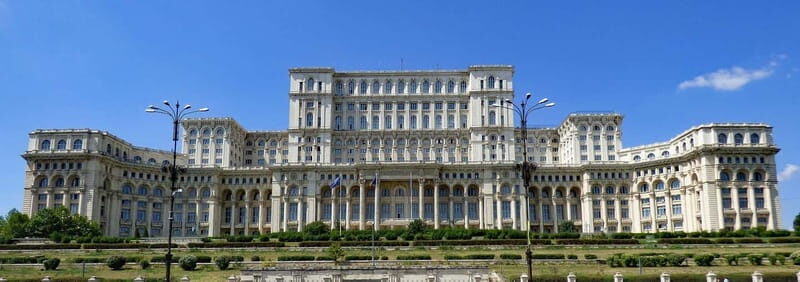
This is not a slow, wander-anywhere kind of visit. You’re entering a functioning political building, so the tone is controlled from minute one: arrive at the meeting spot, check in, and then pass through security screening.
Plan to be there early. Meeting time is 30 minutes before the tour starts, and that buffer matters because you’ll need to organize your documents before you’re allowed in. The tour is also explicit about what you must bring: for EU members it’s an original passport or ID card; for non-EU members it’s the original passport.
One practical thing I appreciate: they’re clear about what not to bring. A driver’s license won’t work, and photocopies won’t be accepted. If you forget the right document, you can end up losing time or being unable to enter, and that’s the worst moment to discover an ID problem.
Finally, expect the building to behave like a live site, not a museum fantasy. Admission arrangements can shift, security checks can adjust, and assemblies inside can change the route.
You can also read our reviews of more guided tours in Bucharest


Inside the Palace: Honor Hallway and the Torsos of Power
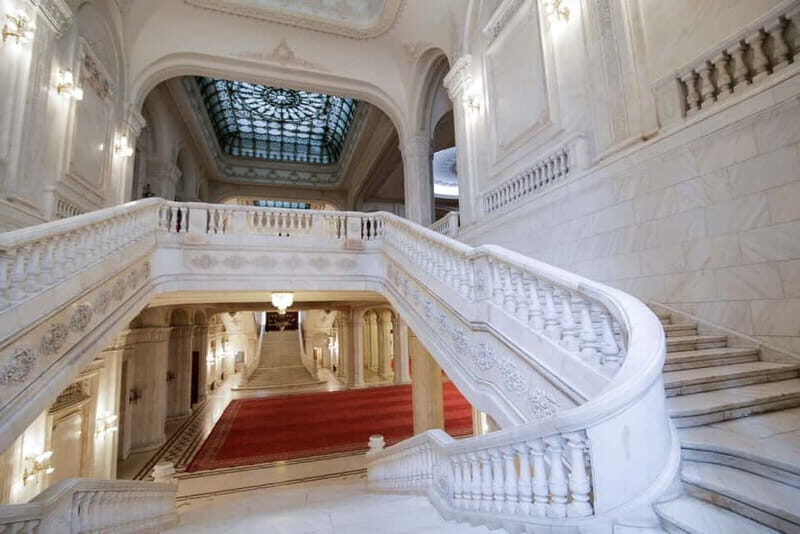
Your first big visual moment is the Honor Hallway. This is where the Palace starts doing what it does best: turning politics and identity into something physical. The space is lined with torsos representing major Romanian kings and historical figures spanning from the Middle Ages into modern times.
You’ll hear names tied to the story of Romanian power and nationhood. In the tour route description, standout figures include Vlad Dracula, Stefan cel Mare, and Alexandru Ioan Cuza. Even if you know only a little Romanian history, you’ll leave with a clearer mental map of why these figures were chosen and how the building frames them.
Why this stop is valuable for you: the Palace can feel overwhelming in scale. But the Honor Hallway gives you a narrative hook early. Instead of only looking at marble and size, you start reading the building like a message. The guide helps connect the symbolic “who” to the “why,” so the corridor doesn’t feel like decoration—it feels like storytelling.
Also, this is a “get your bearings fast” moment. If the Palace is your first stop in Bucharest’s historic-political world, the Honor Hallway helps you calibrate what you’re looking at.
The Long Corridors: Rooms Named After Romanian Writers and Artists
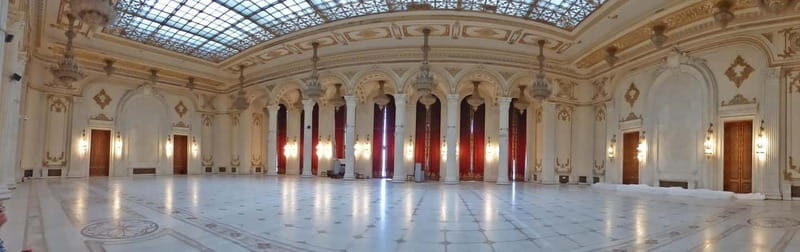
After the Honor Hallway, the tour moves into enormous corridors and into rooms that carry the names of Romanian cultural figures. This is where the Palace shifts from royal portrait energy to intellectual identity.
Among the names you’ll encounter are N. Balcescu and M. Kogalniceanu. Expect to see large, formal spaces tied to artists, poets, and writers—people whose work shaped national thought.
For me, what makes this part worth the hour is that it gives you an additional angle. The Palace gets branded as a communist-era monument, and yes, that matters. But these named rooms remind you that regimes also used culture as a tool—by placing writers and thinkers into official, ceremonial rooms.
A drawback to keep in mind: because the tour is only about 1 hour, you won’t linger long in each chamber. You’ll move through enough to understand the purpose of each space, but you won’t get the kind of slow, deep exploration you’d want if you came for architecture alone.
Still, if your goal is to understand the building’s “logic” and see a handful of the most striking rooms, this corridor-and-rooms section does the job.
Pink Room for ONU Meetings: When Diplomacy Gets a Color Theme
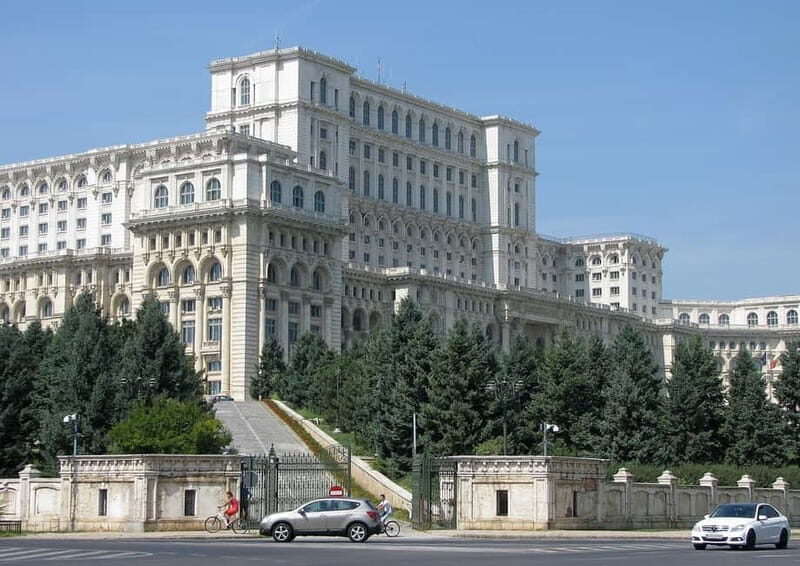
One of the most eye-catching parts of this tour is the Pink Room. It’s dedicated to ONU meetings, and that detail is more interesting than it sounds.
Why? Color here isn’t just design. It’s branding. A room labeled for international diplomacy signals how the Palace presents itself: not only as a national power center, but as a stage for global conversations.
In a building like this, it’s easy to get stuck on the big stereotypes: grim, heavy, oppressive. The Pink Room offers a different kind of message—international legitimacy wrapped in theatrical visuals. Even in a short tour, this stop helps you understand how the Palace was built to project authority and relevance at multiple levels.
If photography is part of your travel routine, this is often the kind of room that rewards it—bright, iconic, and easy to recognize in your memories later. Even without long explanations, the room’s identity stands out.
Music Hall: Big Performances Inside Parliament Territory
Next comes the Music Hall. This is the surprising contrast stop—because a building known for legislation and security also contains a venue associated with major performances by world-famous artists.
The route description specifically notes that big-name acts performed here. Even if you don’t recognize every historical reference, the concept itself lands: the Palace didn’t just function as a government machine. It also hosted spectacle—sound and stage energy inside an official setting.
This is one of those areas that makes you think. If you’ve ever wondered how authoritarian architecture coexisted with entertainment, this kind of stop offers a real clue. The Palace wasn’t designed only for meetings; it was designed to impress.
The practical downside, again, is time. You’ll get the highlight version. You might not see all the background you’d get in a longer visit, but you’ll still leave with a clear picture of the Palace’s range of uses.
The Ballroom Finale: When Scale Becomes the Main Character
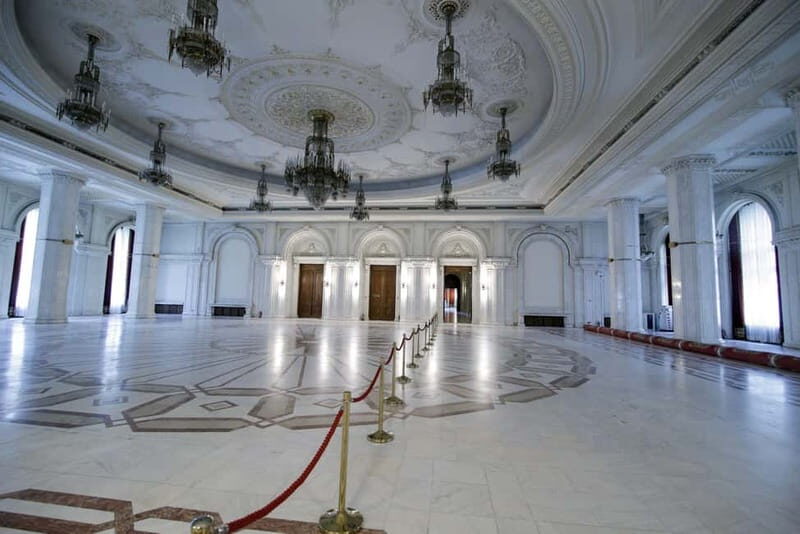
Your tour ends in a final room described as Europe’s biggest ballroom, with a size comparable to four football fields attached together. Whether you measure by feet, meters, or just by the emotional impact, the point is the same: the scale is meant to hit hard.
This is where you’ll likely feel the most physical “wow” for the least time. In a Palace built for grand gestures, the ballroom is the place where those gestures would play out best—where crowds, speeches, and ceremony could all feel monumental.
I like this ending because it’s memorable. Even if you forget some interior names later, you’ll remember how the room made you feel: the sense of space as a tool.
Just set expectations. A 1-hour guided route ends when it ends. You’re not getting a full building marathon here. You’re getting the best-selected beats, and the ballroom is chosen as a strong last note.
Price and Value: Does $43 Make Sense for a 1-Hour Tour?
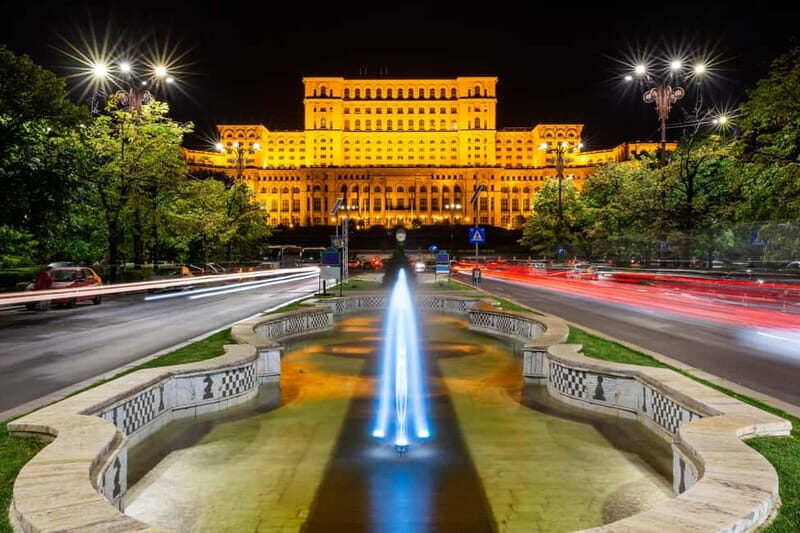
The price is $43 per person for a 1-hour guided visit that includes entry tickets and a live guide. For Bucharest, that’s a reasonable package price for a building where security rules are strict and access isn’t casual.
Here’s how I’d judge value for you:
- If you want an efficient, guided “highlights circuit” with key rooms and context, this format fits.
- If you want to see the whole Palace or spend a lot of time in fewer rooms, you might feel rushed.
There’s also the reality check: you don’t see much of the building in an hour. The tour is designed around the most important areas, and you may only get a small fraction of the overall complex. That’s not a deal-breaker, but it helps you choose wisely.
If you’re on a tight schedule, you’ll like this. If you’re building a deep architecture day, you might pair it with something else in Bucharest rather than treating it like your only Palace stop.
Italian or Spanish Tour: Getting the Most From Your Guide
This tour runs with live guides in Italian and Spanish. That’s a big deal because inside the Palace, meaning matters. The guide’s job is to connect what you’re seeing—torsos, room names, themed spaces—to why the Palace used those choices.
In the feedback tied to this experience, Carmen is singled out as a standout guide for being friendly and explaining well. Another guide is described as having Spanish that’s very good, which makes the route easier to follow. There’s also at least one note that a guide’s Spanish could be stronger, though the overall route stayed easy to follow.
So here’s my practical advice: pick the language you’re most comfortable listening to for full meaning. If you’re fluent enough to catch details, the tour becomes more than sightseeing—it becomes a guided interpretation of symbolism.
And if you’re less confident in the language option, focus harder on the big visual anchors. The Honor Hallway figures, the Pink Room, and the ballroom finale are built to be memorable even if a detail or two is lost in translation.
Who This Palace Tour Fits Best (and Who Should Skip)
This tour is best for people who want a short, structured visit with clear highlights. If you like guided context—especially about political symbolism and cultural naming—this format will feel efficient rather than limiting.
It’s also a strong fit if:
- you only have about an hour to spare in Bucharest,
- you want to see multiple signature rooms rather than one deep stop,
- you prefer having someone else manage the route and security flow.
It is not suitable for people with mobility impairments or for wheelchair users. The route involves going through parts of a large complex, so your options may be limited.
One more point: because the building can change what it allows you to see due to security or assemblies, you should be flexible. If you’re arriving with a strict checklist of rooms, you might feel frustrated. If you’re arriving with curiosity and an open mind, the tour will feel smoother.
Should You Book This Palace of Parliament Tour?
I’d book this tour if you want a guided, high-impact taste of the Palace in about an hour—especially if the Honor Hallway torsos, the Pink Room, and the ballroom scale are on your must-see list. The included entry ticket and live guide make the price feel fair for the access you’re getting, and the route is designed around the Palace’s most recognizable interior beats.
I’d skip or reconsider if you:
- need a wheelchair-accessible route,
- want to explore slowly without time pressure,
- are hoping to cover a large portion of the complex in one go.
If you’re choosing between doing nothing or doing the highlights with a guide, this is the highlights with a guide.
FAQ
How long is the Palace of Parliament guided tour?
The tour lasts 1 hour.
What languages are the guided tours offered in?
The live tour guides speak Italian and Spanish.
Where do I meet for the tour?
The meeting point is at Bulevardul Națiunile Unite 4. Meeting time and exact meeting spot can vary by option.
What time should I arrive before the tour starts?
You should arrive 30 minutes before the starting time.
What ID do I need to enter?
EU members need an original passport or original ID. Non-EU passports must be presented in original form for the security check.
Are driver’s licenses or photocopies accepted?
No. A driver’s license or photocopies of the ID/passport are not accepted for security.
Is this tour suitable for people using wheelchairs?
No. It is not suitable for mobility impairments or wheelchair users.
Can the itinerary or admission change once you arrive?
Yes. Since this is the House of Romanian Parliament, security checks, admission arrangements, assemblies inside, and slide changes can alter the itinerary.
Is free cancellation available?
Yes. You can cancel up to 24 hours in advance for a full refund. Reserve now & pay later is also offered.