REVIEW · CLUJ NAPOCA
Local Tour of Cluj by Electric Bike
Book on Viator →Operated by Bike Addict · Bookable on Viator
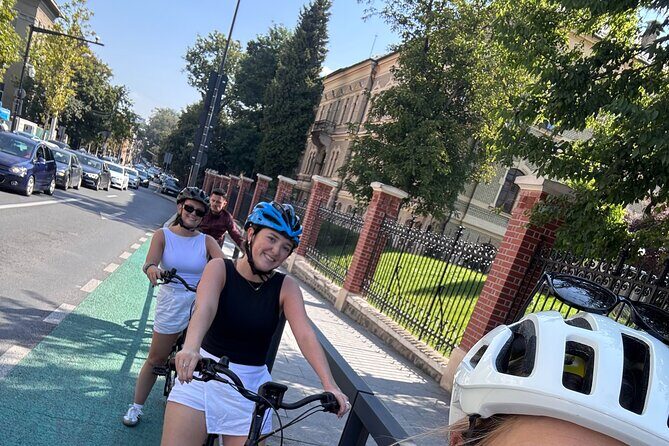
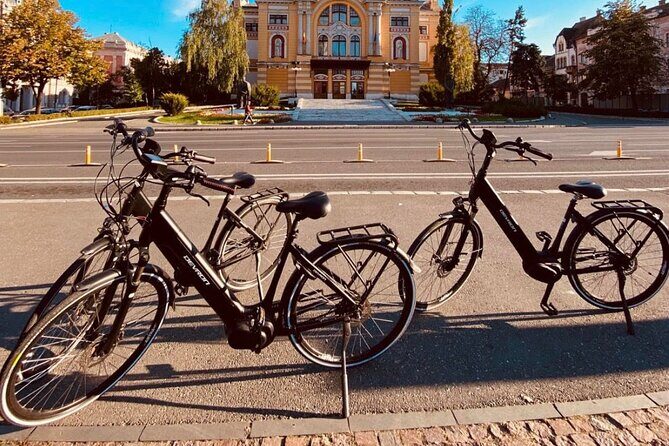
Cluj by electric bike feels like cheating. In about two hours, you glide between top sights with an English-speaking guide and a small group (up to 5), so the day never drags.
I like two things a lot: the ride keeps the pace brisk while still letting you linger at major stops, and every listed attraction has free admission. One thing to watch: the meeting point is easy to miss at first, especially if maps drop you a few steps off.
In This Review
- Key highlights worth showing up for
- Why this electric bike tour is a smart way to see Cluj
- Getting started at Strada Almașului 9 (and actually finding the group)
- Stop 1: Cluj-Napoca City Hall, Library, and the student zone
- Stop 2: The City Walls of Cluj and the Firemen Tower
- Stop 3: St. Michael’s Church and the heart of Unirii Square
- Stop 4: Avram Iancu Monument and the Apuseni Mountains symbolism
- Stop 5: Lucian Blaga National Theatre and the Romanian Opera connection
- Stop 6: Mărăști neighborhood and Cluj’s 1980s rebuild
- Stop 7: The House of Matthias Corvinus, from guesthouse to jail to museum
- Stop 8: Cetățuia Park and the Habsburg fortress hill
- Stop 9: Central Park Simion Bărnuțiu for a real reset
- Stop 10: Cluj Arena and the city’s modern pulse
- The value of $53.61 for two hours of electric bike time
- The guide experience: why Cosmin makes a difference
- What you should expect from the pace and timing
- Who should book this Cluj electric bike tour
- Should you book the Local Tour of Cluj by Electric Bike?
- FAQ
- How long is the Local Tour of Cluj by Electric Bike?
- What does the tour cost?
- What language is the tour offered in?
- Where do I meet for the tour?
- What time does the tour start?
- How big are the groups?
- Are there admission fees for the listed stops?
- What happens if the weather is poor?
- What is the cancellation policy?
Key highlights worth showing up for
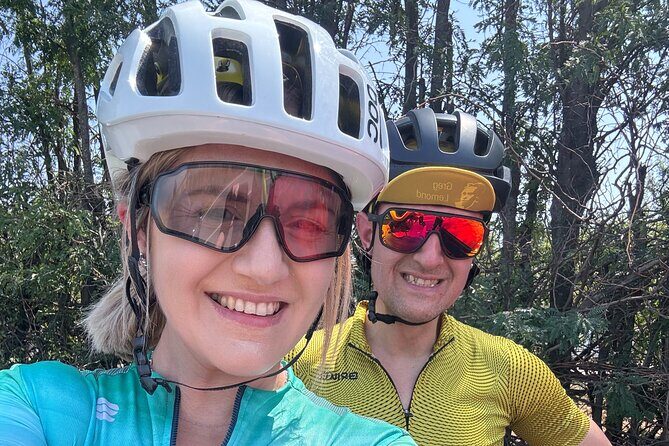
- Cosmin runs the show with clear explanations and a friendly, patient style
- You cover big ground fast without turning every stop into a leg workout
- Free entry at every stop makes the $53.61 price feel easier to swallow
- Cetățuia Hill brings the payoff with a fortress backdrop and a real break from street level
- Cluj Arena ties the old city to today (Liga I and the Untold Festival)
- Max 5 riders means you can get more personal attention than big-bus tours
Why this electric bike tour is a smart way to see Cluj
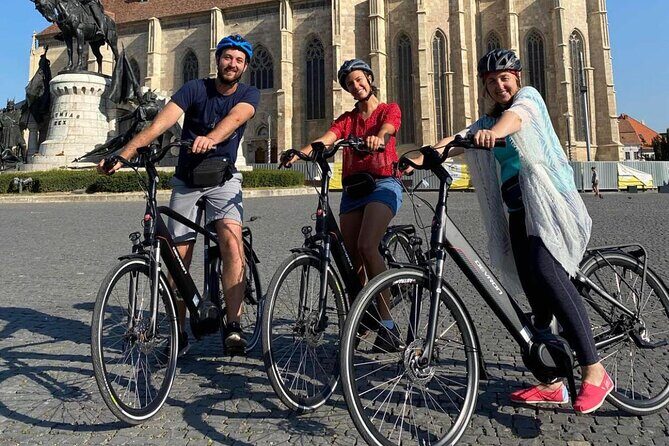
Cluj-Napoca rewards you for moving with purpose. On foot, you can end up doing a lot of back-and-forth and skipping the spots that require a bit of extra effort. On electric bike, you keep your energy for the views and the stories.
I like that this tour is built around an easy rhythm: ride, pause, look, then ride again. You get a mix of power points (like the City Hall and the church in the center) and the quieter corners (like Cetățuia Park). It’s the kind of route that helps you get your bearings fast.
The group size is small, too. With a maximum of 5, it stays flexible, and you’re not stuck listening over five different conversations. That matters when the guide is pointing out details you’d miss if you were scanning from the sidewalk.
You can also read our reviews of more tours and experiences in Cluj Napoca.
Getting started at Strada Almașului 9 (and actually finding the group)
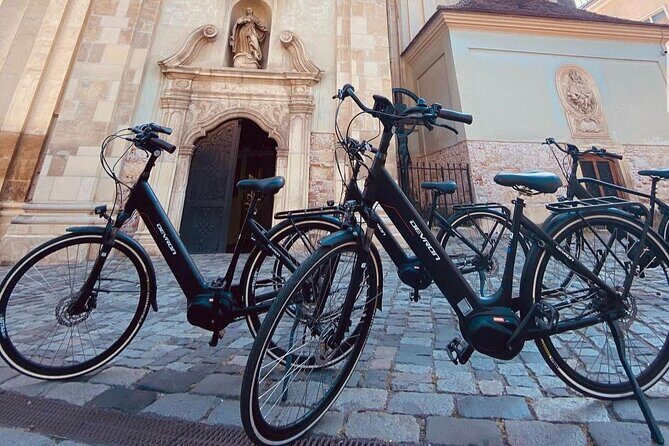
You meet at Strada Almașului 9, Cluj-Napoca, with the tour starting at 1:00 pm. The ride ends back at the same meeting point, so there’s no puzzle about how to get home afterward.
Here’s the practical bit: plan to arrive a few minutes early and take a careful look around the building area. The directions can be a little vague at first if your phone sends you to a near-by spot. Once you message the operator, it’s fixable, but it’s better to avoid the scramble.
If you’re coming by public transport, this is helpful. The meeting point is described as near transit, so you’re not forced into a long taxi detour just to start the day.
Stop 1: Cluj-Napoca City Hall, Library, and the student zone
The first stop is right at Cluj-Napoca City Hall, where you also spot the Universitary Library, the academic area, and the Cultural House of Students. Even in a short time window, this area gives you a sense of how Cluj organizes itself around education and civic life.
You’re not going in for a ticketed visit here—entry is listed as free for the stops. That’s a good setup for the first part of the tour because you can focus on what you’re seeing rather than lining up.
A small tip: take a moment to look up from the street. City buildings like this often reward you for noticing the details above eye level, especially in a place where architecture leans Gothic and institutional.
Stop 2: The City Walls of Cluj and the Firemen Tower
Next up is the City Walls of Cluj, with origins in the 13th century and defensive towers along the line. What’s cool is that some fragments are preserved in specific towers you can actually reference later.
The tour points you toward the Firemen Tower, also known as the old Locksmiths’ Tower, and the Tailors’ Tower. That naming helps you connect neighborhoods and trades to the shape of the city’s defenses.
This stop is short on paper, but it’s the kind of place where even a ten-minute glance can reframe the whole walk you’re about to do. Once you understand these walls once mattered for protection, the rest of the center feels less random.
Stop 3: St. Michael’s Church and the heart of Unirii Square
At Catedrala Sfantul Mihail (St. Michael’s Church), you’re looking at a Gothic-style Roman Catholic church. The tour notes it’s the second largest church in the Transylvania region after Biserica Neagră in Brașov.
You also get the positional context: together with Unirii Square, it’s described as the heart of the city. That’s useful because it tells you why this spot works as the emotional center of Cluj—not just an impressive building.
If you’re the type who rushes, slow down for this one. Even if you don’t go inside (no specific entry is mentioned beyond free admission for the stop), the exterior and square setting are where the city’s “main character” energy lives.
Stop 4: Avram Iancu Monument and the Apuseni Mountains symbolism
Then you reach the Avram Iancu Monument, built on stone blocks meant to symbolize the Apuseni Mountains. A fountain surrounds the statue, which gives the stop a calmer feel than you might expect from a political figure.
Avram Iancu is described as a Transylvanian lawyer and a leader during the 1848–1849 revolt. The guide’s framing here is practical: he’s not treated like a distant name on a plaque, but tied to decisions about defense and alliances, including collaboration with Austrian military authorities.
You’ll also hear that he resisted attacks by Hungarian revolutionary groups. That adds weight to what can look like a quick photo moment. It’s a reminder that the city center holds political memory, not just pretty architecture.
Stop 5: Lucian Blaga National Theatre and the Romanian Opera connection
The next viewpoint is the Lucian Blaga National Theatre. The tour notes it’s one of Romania’s most prestigious theatrical institutions, and that it shares the same building with the Romanian Opera.
This is a great stop if you want a break from churches and statues. Performing arts buildings bring a different kind of grandeur, and the shared theatre/opera arrangement is a neat detail to keep in your pocket while you’re in the downtown core.
Because the stop is short and listed as free, your best move is to take in the façade from a couple of angles. Stand where you can see how it fits into the surrounding street layout, not just the building itself.
Stop 6: Mărăști neighborhood and Cluj’s 1980s rebuild
Now you pivot from major monuments to neighborhood texture at Mărăști. The tour describes it as the second largest neighborhood in Cluj-Napoca, built in the 1980s after houses in the area were smashed down.
That sentence matters because it explains why the streets may feel more uniform or planned than older quarters. When you visit a place like this on a bike, you can sense the scale more easily than from a quick stroll.
This stop is brief, so don’t expect a deep dive. Instead, use it as a “read the city” moment: look at the building rhythm, how the blocks are laid out, and how the neighborhood sits relative to the older center you saw earlier.
Stop 7: The House of Matthias Corvinus, from guesthouse to jail to museum
Then you arrive at the House of Matthias Corvinus, one of the oldest buildings in Cluj-Napoca. The tour says it was built in the 15th century in Gothic style as a small guesthouse.
What makes this stop memorable is the layered past: it served as a jail, a hospital, and a museum, and today it’s home to a visual arts institute. That mix of functions tells you the building kept getting reused as Cluj’s needs changed.
This is a good place to ask yourself what kind of stories buildings hold. A church can tell you about faith. A fortress can tell you about conflict. A house that changes roles tells you about survival and adaptation.
Stop 8: Cetățuia Park and the Habsburg fortress hill
Now comes the payoff stop: Cetățuia Park on Cetățuia Hill. The tour frames the hill as more than a viewpoint, saying a fortress was built here by the Habsburgs, and the park gives you a chance to relax and escape busy street life.
Even if you’re not a big “fortress person,” this is valuable because you get a breather between city-center stops and a different perspective on where Cluj sits. A hill view also helps you connect the route you’ve already covered.
The electric bike matters here for most people. You get the hill experience without exhausting yourself early, which means you still have energy to enjoy the park rather than just endure the ride.
Stop 9: Central Park Simion Bărnuțiu for a real reset
You’ll then roll into Central Park Simion Bărnuțiu, described as about 900 meters long and one of the main downtown recreation areas. Since it’s in the center, it’s easy to reach and acts like a pressure release valve after the earlier stops.
I like parks on bike tours because they break the “constant looking” problem. You get a chance to stand, breathe, and reset your eyes before the final big landmark.
This stop is listed for about 20 minutes, which is enough time to slow your pace and avoid turning the park into a quick photo line.
Stop 10: Cluj Arena and the city’s modern pulse
The final stop is Cluj Arena, a multi-purpose stadium completed on 1 October 2011. It’s the home of Universitatea Cluj in Romania’s Liga I, and it also hosts the Untold Festival.
If you’ve mostly been thinking about medieval walls and Gothic churches, this ending is a smart shift. It shows you Cluj isn’t just a museum-city—it has a current identity that draws crowds and attention.
Even with only around ten minutes here, it’s a strong closing image. You’ll finish the tour with the sense that the city has seasons, not just centuries.
The value of $53.61 for two hours of electric bike time
At $53.61 per person for an approximately two-hour tour, the value depends on how you like to travel. If you enjoy getting an orientation tour and seeing a lot of major sites in one go, this price can feel very reasonable.
Two reasons it works:
First, the stops listed are associated with free admission for what the tour includes. Second, the electric bike reduces wasted time. You’re not spending your energy on long distances between points, which lets the guide’s explanations land better.
It’s also not a huge group. With a max of 5, you avoid the “watch and hope you hear something” feeling. And based on the ride style described by the guide experience, the tour can feel longer on the day when the group stays engaged.
The guide experience: why Cosmin makes a difference
A bike tour can be “see the sights” or it can be “understand the sights.” This one leans toward the second, thanks to the guide.
Cosmin is specifically mentioned as excellent—friendly and full of useful city context. The result is that the tour doesn’t feel like a checklist. It feels like someone is helping you connect the dots between civic buildings, religious landmarks, monuments, and neighborhoods.
That friendly approach matters even more if you’re traveling solo. Small group tours can be quiet, but Cosmin’s style keeps the momentum and helps you feel comfortable asking questions.
What you should expect from the pace and timing
The route is designed as a string of short stops, with a few longer pauses at the parks. Most stops are around ten minutes, while Cetățuia Park and Central Park Simion Bărnuțiu get about 20 minutes each.
So you won’t get a museum deep dive. Instead, you’ll get a fast, high-signal overview that tells you what each place is and why it matters. Then, if you want more, you’ll know exactly where to return on your own.
The tour requires good weather, and that’s worth respecting. If rain or poor conditions roll in, the operator will offer a different date or a full refund. That helps you plan without feeling trapped.
Who should book this Cluj electric bike tour
This is a strong pick if you want a city overview without doing heavy walking. It’s also ideal if you like history that’s tied to streets and buildings, not just dates in a guidebook.
You’ll likely enjoy it if you’re:
- short on time but want the main sights and a couple of parks
- comfortable riding an electric bike for about two hours
- interested in both the older core and the modern side of Cluj
If you prefer to linger for long periods inside churches or museums, you might add extra solo time afterward. The tour is built for orientation and connection, not slow browsing.
Should you book the Local Tour of Cluj by Electric Bike?
I’d book it if you want an efficient, friendly introduction to Cluj with minimal stress. The combination of electric bike ease, free admission at the listed stops, and a small group size makes the $53.61 price feel fair.
Book it especially if you’re curious about how Cluj grew—from medieval walls and Gothic landmarks to 1980s neighborhoods and a stadium that hosts major events. Just do yourself a favor: arrive early at Strada Almașului 9, double-check the exact meeting spot, and keep a message ready if you get turned around.
If that sounds like your style, this tour is an easy win.
FAQ
How long is the Local Tour of Cluj by Electric Bike?
It runs for about 2 hours.
What does the tour cost?
The price is $53.61 per person.
What language is the tour offered in?
The tour is offered in English.
Where do I meet for the tour?
You meet at Strada Almașului 9, Cluj-Napoca 400536, Romania.
What time does the tour start?
The start time is 1:00 pm.
How big are the groups?
This activity has a maximum of 5 travelers.
Are there admission fees for the listed stops?
The stops listed in the itinerary show free admission tickets.
What happens if the weather is poor?
The tour requires good weather. If it’s canceled due to poor weather, you’ll be offered a different date or a full refund.
What is the cancellation policy?
You can cancel up to 24 hours in advance for a full refund.