REVIEW · BUCHAREST
Explore Bucharest Step by Step With A Local Guide
Book on Viator →Operated by Guide&Travel Adventures · Bookable on Viator
Revolution Square can change how you see a city. This 3-hour Bucharest stroll links key landmarks with clear, human stories, from the 1989 uprising to the Old Town’s hidden passageways. I like that it’s a small group (max 10), so you actually get answers, and I also like the practical way the guide helps you move through streets without feeling lost. One thing to consider: it’s dependent on good weather, and several stops are outdoors, so plan for walking.
A name you may hear on this tour is Doina, and others have also had Dorin leading. What makes the experience work is the mix: political turning points, everyday Bucharest lanes, and places like Stavropoleos Monastery and historic inns that slow your pace down. The only real drawback is that this route is tight enough that you’ll want to be on time—if you miss the start, you’ll feel it quickly.
In This Review
- Key Stops You’ll Hit on a Step-by-Step Bucharest Walk
- Why This Bucharest Tour Works So Well for First-Timers
- Revolution Square: The 1989 Moment That Still Shapes the City
- Calea Victoriei: Walking a Street That Got Candlelight in 1814
- University of Bucharest: A Quick Stop With Big Visual Payoff
- Macca Villacrosse Passage: A Tiny Gallery-Style Detour
- Stavropoleos Monastery: An 18th-Century Church Built by a Greek Monk
- Hanul cu Tei: Bucharest’s Historic Inn That Kept Its Shape
- Manuc’s Inn: Oldest Operating Hotel Building and a 19th-Century Commercial Hub
- Piața Constituției: Ending Right in Front of the Palace of Parliament
- Price and Value: Why $16.87 Can Be a Smart Deal Here
- How to Make the Most of the Walk
- Who This Tour Fits Best (and Who Might Want Another Option)
- Should You Book This Step-by-Step Bucharest Tour?
- FAQ
- FAQ
- How much does the Bucharest Step by Step tour cost?
- How long is the tour?
- Where does the tour start and end?
- What time does the tour begin?
- Is the tour offered in English?
- How big are the groups?
- Do I need to pay admission fees at the stops?
- What ticket format do I get?
- Do I need good weather?
- Is there free cancellation?
Key Stops You’ll Hit on a Step-by-Step Bucharest Walk
- Revolution Square (Piața Revoluției): the stage for the last speech of 21 December 1989
- Calea Victoriei (Victoria Avenue): an old spine of the city, first illuminated with candles in July 1814
- Stavropoleos Monastery: an 18th-century Eastern Orthodox site built by a Greek monk
- Old Town passageways and inns: Macca Villacrosse Passage, Hanul cu Tei, and Manuc’s Inn
- Piața Constituției: looking right toward the Palace of Parliament
Why This Bucharest Tour Works So Well for First-Timers
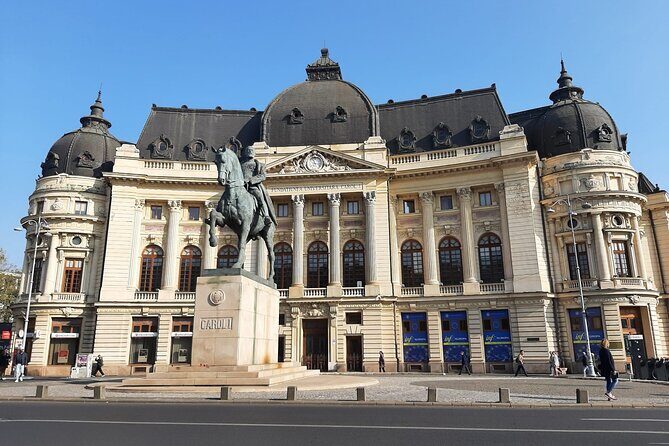
Bucharest can feel like two cities at once: big, heavy landmarks on one side, and narrow Old Town lanes on the other. This tour helps you stitch those pieces together in a logical line. You start at the place where the communist regime fractured, then you move toward the avenues, churches, and historic hotels where ordinary life kept going.
I love that the stops aren’t random. They’re connected by themes: power and revolution at the start, then the city’s long memory in architecture and street culture. And because it’s designed around guided walking, you get context fast—exactly what you want when you’re trying to understand a place without reading a textbook.
The guides on this route are often praised for being friendly and for going beyond the script when people have questions. That matters more than you’d think. If you’re curious about Romanian history, church architecture, or what a street name actually tells you, you’ll get room to ask.
You can also read our reviews of more guided tours in Bucharest



Revolution Square: The 1989 Moment That Still Shapes the City
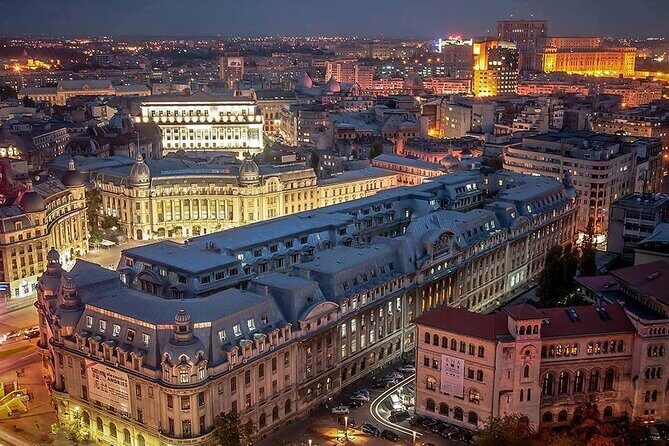
You begin at Revolution Square (Piața Revoluției), right at the start of the story. This is the square where Ceaușescu’s last speech took place on 21 December 1989, and where the popular revolt erupted that helped end the communist regime.
That’s not just a trivia stop. It’s a perspective stop. Standing here, you’ll understand why Bucharest feels both symbolic and practical at the same time. The square is a reminder that political change can land in ordinary street space—and that people moved from speeches to action very quickly.
What to watch for: look at the scale around you and how the square opens up. It helps you picture how crowds gathered and how events unfolded in a public space like this.
Potential consideration: if you’re expecting something very museum-like, this is more about the atmosphere and the surrounding streets than ticketed interiors. You’ll get the meaning through the guide’s narration and your own visual scan.
Calea Victoriei: Walking a Street That Got Candlelight in 1814
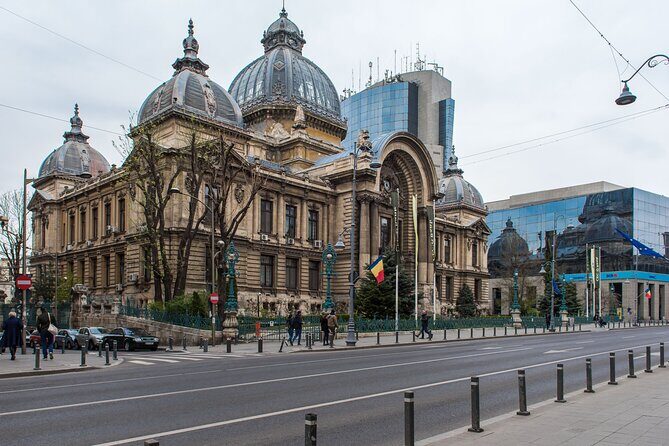
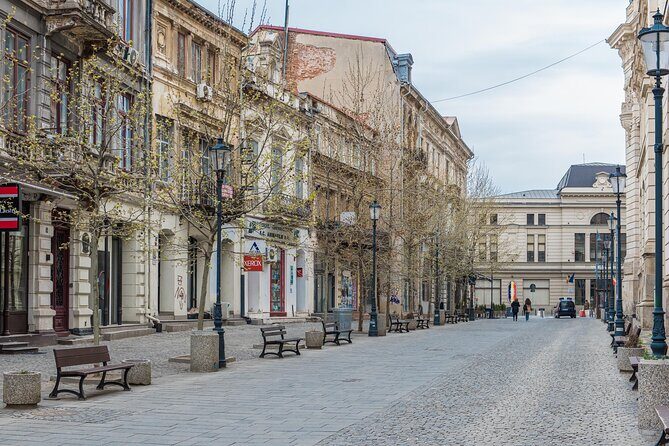
Next comes Calea Victoriei (Victoria Avenue), one of Bucharest’s oldest main roads. It’s also the first street in the city illuminated with candles during the night, starting in July 1814. That small detail gives you a surprising view of “modern” change—Bucharest was experimenting with night lighting early, long before people today talk about it.
Right now, this avenue functions like a spine for the city: important, busy, and built on layers. When you walk it with context, you stop seeing it as just a roadway and start seeing it as a long-running stage for wealth, politics, and culture.
What I like about this segment: it breaks the tour up. After the intensity of Revolution Square, you get a calmer, more measured walk down an avenue that helps you reset.
What to watch for: depending on the day, this can be more active. Wear comfortable shoes and keep an eye on the crossing rhythm so you don’t feel rushed.
University of Bucharest: A Quick Stop With Big Visual Payoff
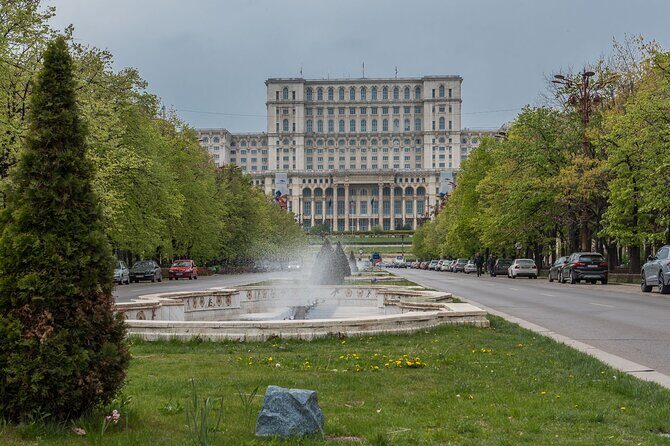
At the University of Bucharest, you get a short pause at one of the city’s emblematic buildings. This isn’t a long visit, but it’s a useful one because it shows another thread of Bucharest identity: education and civic institutions.
Even in a quick stop, the guide’s explanation can help you see why buildings like this matter. In many European cities, universities helped shape the look and self-image of the capital. Bucharest is no different, just less discussed in guidebooks.
Value here: it’s a breath between heavier sites—history without the same emotional weight as the revolution story.
Potential consideration: you’ll only have a short window. If you love architecture, you may want to circle back later on your own for longer photos.
Macca Villacrosse Passage: A Tiny Gallery-Style Detour
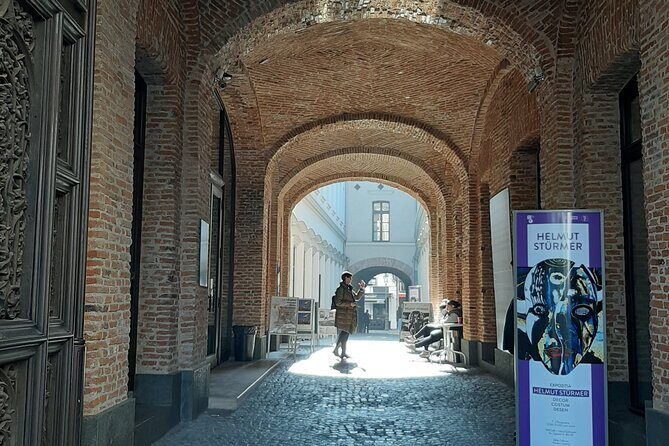
Then you’ll reach Macca Villacrosse Passage, a mini Vittorio-Emanuele–style gallery feel in the Old Town. These kinds of passages are special because they show a different rhythm than open squares or grand avenues. They’re tucked, shaded, and built for wandering rather than rushing.
This is the kind of stop that’s easy to miss on your own. With a guide, you’ll notice details faster—how the passage connects streets, how it frames storefront life, and why it exists as a social space.
What to watch for: slow down for a minute. Passage spaces reward a slower pace and a quick scan up and along the sides.
Potential consideration: photos are great, but if it’s crowded, you’ll want to give space to others since the passage is narrow.

Stavropoleos Monastery: An 18th-Century Church Built by a Greek Monk
Stavropoleos Monastery (Stavropoleos Church) is next, and this one is a real mood change. It’s an Eastern Orthodox monastery built in the 18th century by a Greek monk, and it carries the kind of calm that contrasts with the broader city.
This stop works because it’s not just about religion. It’s about how faith, craft, and community architecture stayed rooted in Bucharest through changing eras.
What you’ll get from the guide here: not just dates, but a sense of what you’re looking at—why monasteries sit the way they do, and how the space is meant to feel.
Potential consideration: because it’s an active religious site, keep your voice low and move respectfully. You’ll want to pay attention to any on-site rules.
Hanul cu Tei: Bucharest’s Historic Inn That Kept Its Shape
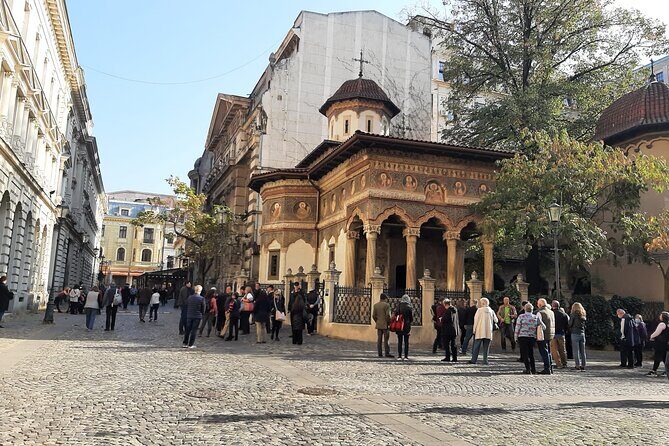
Then you step into Hanul cu Tei, a historic inn that has preserved its shape exactly as it was at its origins. That’s a rare kind of survival story. Many historic inns change with time—renovations, conversions, and expansions can erase the original layout. Here, the claim is that the structure stayed true.
In practical terms, this stop helps you understand how Bucharest functioned as a trading and lodging hub. Inns were built for movement: travelers arriving, goods passing through, and the city connecting itself to the wider region.
Why I think this matters for you: if you only see palaces and boulevards, you miss the daily logistics of city life. Inns bring you back to the functional side of the capital.
Potential consideration: it’s short in the itinerary, so use the time to look closely rather than trying to take in everything at once.
Manuc’s Inn: Oldest Operating Hotel Building and a 19th-Century Commercial Hub
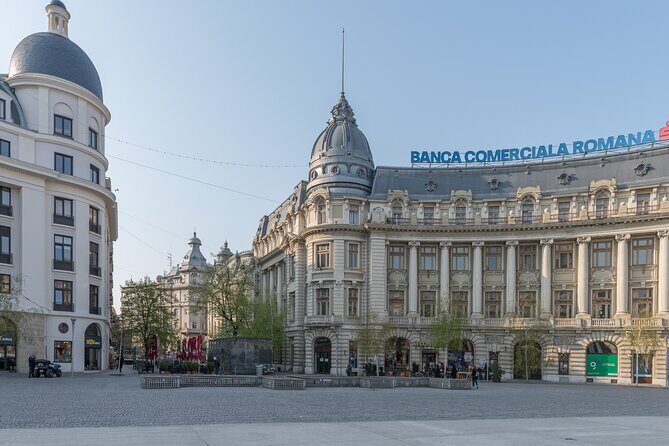
Next is Manuc’s Inn (Hanul lui Manuc), described as the oldest operating hotel building and one of the most important commercial complexes in the middle of the 19th century. That combination—hospitality plus commerce—helps you picture Bucharest as a meeting place, not just a place to pass through.
Even if you’re not planning to stay in a hotel, this stop is valuable. It shows you how architecture can serve as a business engine. And because it’s still operating as a hotel building, you get a sense of continuity that’s hard to find in many cities.
What to watch for: keep an eye on the flow—how these complexes are designed to handle arrivals and movement inside.
Potential consideration: like Hanul cu Tei, it’s a stop that rewards close attention, not quick glances.
Piața Constituției: Ending Right in Front of the Palace of Parliament
The tour finishes at Piața Constituției, right facing the Palace of Parliament, described here as the second biggest administrative building in the world. This is the kind of finish that locks the whole day together.
You started with a revolution story. You end with the scale of state power. Even if you don’t go inside, the relationship is clear. This area makes it obvious how governments and architecture can dominate a city’s visual map.
What to watch for: take a moment to stand back and look at the building’s mass relative to the square. That helps you understand why Bucharest’s “big” landmarks feel so heavy and so real.
Potential consideration: the ending point is a big destination area, and it can be crowded. If you need a break or a bathroom, plan to do it before you reach the final minutes so you’re not rushing.
Price and Value: Why $16.87 Can Be a Smart Deal Here
At $16.87 per person for a roughly 3-hour guided walk, this is priced like a budget-friendly introduction to a lot of Bucharest. The real value isn’t just the cost—it’s the way the tour stacks multiple stops that would be harder to connect on your own.
You’ll also notice that each listed stop shows admission as free. That matters for cost control. You’re paying for the guide’s interpretation and walking route more than paying for museum tickets.
And the group size (max 10) is part of the value. In a big crowd, history becomes a lecture. In a smaller group, you can ask follow-up questions, and the guide can respond with specifics. Guides like Doina and Dorin have been credited for being friendly, enthusiastic, and for answering questions well—plus, they’ve been known to spend a bit extra when the group wants more context.
How to Make the Most of the Walk
To enjoy this tour fully, treat it like a guided orientation rather than a checklist. Wear shoes that handle cobblestones and short bursts of walking. Bring a layer—Bucharest weather can shift quickly, and the tour explicitly relies on good weather.
Also, arrive with curiosity. The guide’s style is where the tour really clicks: you’ll get clearer explanations when you ask practical questions, from how to think about the revolution story to what the street names and buildings are trying to say.
One more practical tip: if you have a stroller or small child, it’s been manageable for at least one family, and the guide’s helpful connections can matter if you need quick solutions like finding a restroom. That’s not “tour extras”—it’s how you keep your day smooth.
Who This Tour Fits Best (and Who Might Want Another Option)
This is ideal if you’re visiting Bucharest for the first time and you want a clear path through big landmarks and Old Town details without feeling overwhelmed. It also suits history-minded travelers who like explanations tied to places, not just dates.
If you’re very picky about slow, long museum-style visits, you might feel the tour is too short per stop. But if you’d rather see more context in fewer minutes and then go back later on your own, it’s a good match.
It’s also a solid choice for couples and small groups who want a calmer pace than city-wide bus tours. The small size keeps things conversational.
Should You Book This Step-by-Step Bucharest Tour?
Yes—if you want a guided route that connects Revolution Square, Calea Victoriei, monasteries, historic inns, and the Palace of Parliament area into one understandable storyline, this is a strong value at $16.87.
Book it when you have good weather and when you like walking with a guide who’s ready to answer questions and help with practical moments. If you’re the type who hates schedules and prefers drifting without any structure, you may feel a guided plan limits your freedom.
FAQ
FAQ
How much does the Bucharest Step by Step tour cost?
It costs $16.87 per person.
How long is the tour?
The tour is listed as about 3 hours.
Where does the tour start and end?
It starts at Revolution Square (Piața Revoluției) and ends at Constitution Square (Piața Constituției).
What time does the tour begin?
The start time is 10:00 am.
Is the tour offered in English?
Yes, it is offered in English.
How big are the groups?
The tour has a maximum of 10 travelers.
Do I need to pay admission fees at the stops?
The stops listed are shown as free admission.
What ticket format do I get?
You receive a mobile ticket.
Do I need good weather?
Yes. The experience requires good weather, and if it’s canceled due to poor weather you’ll be offered a different date or a full refund.
Is there free cancellation?
You can cancel for a full refund up to 24 hours before the experience starts.