Ceaușescu to Dracula in one walk. This self-guided route strings together big political drama, Latin-root symbols, and scary stories, all with a downloadable audio guide and an in-app interactive map. I also like that it gives you both audio and written context, so you can follow the story even when you’re just crossing a square. One catch: it’s self-paced, so you’ll be doing all the timing and navigation yourself, and you’ll need your own phone and sound setup since headphones and devices aren’t included.
You start at the Romanian Athenaeum and end at the Palace of Parliament, aiming for about 3 hours total. Along the way, the stops are built around unforgettable themes: the money behind a famed concert hall, the fear of Ceaușescu’s secret police, the myth-making around Vlad the Impaler, and the legends behind crowns and churches. If you like stories that connect landmarks to real lives, this works well—just don’t expect a human guide standing beside you.
In This Review
- Key Highlights You’ll Notice Right Away
- Starting At the Romanian Athenaeum: Where Ordinary People Funded Great Acoustics
- Ceaușescu’s Secret Police HQ: Fear Turned Into a System
- From Poverty to Power: The Stops That Explain How the Regime Took Hold
- A Caravan Palace in the City Center: Ottoman Trade Lines in Bucharest
- Bucharest’s Oldest Restaurant Since 1879: Food That Keeps Memories Alive
- The Roman She-Wolf Statue: Why Bucharest’s Symbols Point Back to Latin Roots
- Bucharest’s Little Paris: French-Inspired Architecture in Plain Sight
- The Oldest Standing Church from the 1500s: Survival Through Communist Rule
- A Monastery Built by a Wealthy Greek Monk: Quiet Beauty With a Clear Origin Story
- The Royal Crown Forged from Ottoman Cannons: Independence, Turned Into an Object
- Vlad the Impaler to Dracula Legends: Ruins Linked to Bucharest’s Symbolic Birthplace
- Ceaușescu’s Big Dream and the Palace of Parliament: Who Actually Made It Happen?
- A Plague-Memorial Church: When a Dictator’s Wife Helped Save It
- Price and Value: What $6.69 Buys You in Real Terms
- How to Use It Comfortably: Headphones, Timing, and Staying on Track
- Should You Book This Bucharest Dictator to Dracula Self-Guided Tour?
- FAQ
- Where does the tour start and where does it end?
- How long is the Bucharest Dictator to Dracula self-guided tour?
- What language is the audio guide offered in?
- Is this tour self-guided or do I meet a human guide?
- How do I get access to the tour?
- Can I listen to the tour without internet?
- Is there a written guide too, or only audio?
- Do I need to bring headphones?
- Is the tour private?
- What is the cancellation window?
Key Highlights You’ll Notice Right Away
- Offline-ready audio you can download for no-internet wandering
- Two ways to follow: audio plus written guide, with stop photos to confirm you’re in the right place
- A Ceaușescu-to-Dracula theme that turns Bucharest landmarks into a timeline
- Romania’s Latin roots in a statue tied to the country’s broader identity story
- Stop-by-stop variety from old churches and monasteries to a caravan palace and an 1879 restaurant
- Ends at the Palace of Parliament with the story of Ceaușescu’s ambitious dream brought to a close
Starting At the Romanian Athenaeum: Where Ordinary People Funded Great Acoustics
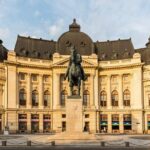
Your route kicks off at the Romanian Athenaeum, a legendary concert hall tied to one simple idea: ordinary Romanians helped pay for it. The story isn’t just about architecture. It’s about collective effort, which makes the building feel less like a monument and more like a community project.
From the first minutes, I like the way the tour frames what you’re seeing. It nudges you to look past the grand exterior and think about the human side—who paid, why it mattered, and what a space for music can symbolize in a country.
Practical note: give yourself a few minutes at the start to get your bearings in the app and match the stop images to what’s in front of you. That keeps the whole walk smooth.
You can also read our reviews of more guided tours in Bucharest
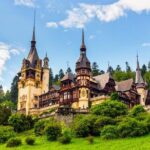

Ceaușescu’s Secret Police HQ: Fear Turned Into a System
Next, you’ll head into the era of surveillance, intimidation, and controlled fear by way of the headquarters of Ceaușescu’s secret police. This stop works best if you’re willing to slow down and read the story context while you stand in place. The chilling part isn’t only what happened. It’s how the methods were designed to shape daily life.
Bucharest can feel big and open in places, but this topic shrinks the city mentally. The tour pushes you to understand how power doesn’t just rule from palaces. It operates through people, paperwork, and constant monitoring.
If you’re sensitive to harsh history, plan how you’ll pace yourself. You’re learning in public spaces, not from a museum wall, so having a comfortable pace matters.
From Poverty to Power: The Stops That Explain How the Regime Took Hold
The tour then zooms in on the origins of Romania’s infamous leader—moving from early hardship to absolute power. You also stand in the place where he lost control amid chaos and hear how the moments of collapse changed Romanian history.
This segment is valuable because it avoids reducing a complex period to one villain-shaped headline. The tour connects personal ambition to national consequences. You start seeing how a system of rule becomes self-feeding, and why the fall felt sudden and dramatic.
Here’s what I’d do: take your time at the key moment stop and don’t rush the story. Even if you think you know Ceaușescu already, the framing helps you connect the dots between cause and effect.
A Caravan Palace in the City Center: Ottoman Trade Lines in Bucharest
Then the mood lightens in a very smart way. You’ll step into a caravan palace tied to Ottoman merchants, a historic trading space right in Bucharest’s heart.
This is one of the tour’s best “change of pace” moments. It pulls you out of the 20th-century shadow and reminds you that Bucharest has always been a crossroads—where commerce shaped buildings, not only politics.
If you want the most from this stop, treat it like a time machine. Look for traces of how trade worked: movement, storage, and the idea of a stopover building that served a bigger network. The story context helps you see the layout as something practical, not just decorative.
Bucharest’s Oldest Restaurant Since 1879: Food That Keeps Memories Alive
Next comes a more everyday kind of history: Bucharest’s oldest restaurant, famous since 1879. This stop is built around what locals kept eating and loving over generations.
Even if you don’t sit for a full meal, the tour’s goal is to get you thinking like a local. In places shaped by war and regime change, food continuity can feel like cultural resistance. You’re not only looking at a restaurant sign. You’re stepping into a long-running routine.
If you want to turn this into a win for your day, consider planning a simple bite here. You’ll get the story of Romania’s food culture in a place that’s been serving people for a very long time.
A few more Bucharest tours and experiences worth a look
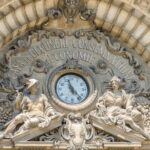
The Roman She-Wolf Statue: Why Bucharest’s Symbols Point Back to Latin Roots
A famous Roman she-wolf statue brings identity into view. The tour explains why it stands proudly in Bucharest and how it symbolizes Romania’s Latin roots.
This stop matters because it’s not only about a pretty sculpture. It’s about how a country chooses to narrate itself. In a city shaped by empires, political shifts, and borders, symbols help people argue for where they belong.
I like that the tour gives you a reason to look closely. When you understand what the statue represents, you stop seeing it as a random landmark and start seeing it as part of the national storytelling.
Bucharest’s Little Paris: French-Inspired Architecture in Plain Sight
Then you’ll learn why Bucharest earned the nickname Little Paris, thanks to elegant architecture inspired by the romantic French capital.
This is a great stop when the city starts to feel more modern and you want to locate the “why” behind the style. The tour nudges you to read façades like clues: balconies, proportions, and design choices that echo French taste.
If you’re walking in daylight, this is where photos tend to pay off. Slow down, look up, and let the building details do the talking.
The Oldest Standing Church from the 1500s: Survival Through Communist Rule
Bucharest’s oldest standing church, dating from the 1500s, is next. The tour shares how it was miraculously preserved during communist rule.
This is one of those stops that can hit emotionally even if you don’t consider yourself a history nerd. The idea of continuity—an old sacred place surviving a period that reshaped so much else—gives you a different kind of perspective.
When you stand here, don’t treat it like a checkbox. Let the age sink in. Then compare it mentally to what you’ve heard about the 20th century. The contrast is the point.
A Monastery Built by a Wealthy Greek Monk: Quiet Beauty With a Clear Origin Story
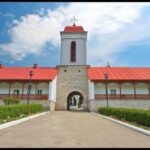
After the intensity of the dictator chapters, a peaceful monastery built by a wealthy Greek monk brings relief. The tour highlights it as one of the city’s most beautiful examples of Romanian architecture.
This stop is valuable because it’s specific about origins: who built it, what the backstory meant, and why the architecture matters. It gives the monastery more weight than just scenic calm.
If you want a smoother emotional arc for the day, this is the moment to pause. Take a slow look around, then continue only when you feel ready for the next dramatic story beat.
The Royal Crown Forged from Ottoman Cannons: Independence, Turned Into an Object
Now the tour switches from sacred spaces to a national symbol you can picture in your mind even if you’re not reading it off a museum label. You’ll hear the tale behind Romania’s royal crown, forged from Ottoman cannons, and why it’s a symbol of independence.
This is the kind of story that makes landmarks feel like documents. The crown becomes evidence that political outcomes can turn into physical artifacts with symbolism baked in.
I like this stop because it encourages you to think in cause-and-effect. Material came from conflict, then got repurposed into national identity. That’s a pattern you’ll hear hinted at throughout the tour’s dictator-to-dracula storyline.
Vlad the Impaler to Dracula Legends: Ruins Linked to Bucharest’s Symbolic Birthplace
Then you’ll tackle Vlad the Impaler and the Dracula legend here in Bucharest. The tour points you to ruins marking Bucharest’s symbolic birthplace.
Even if Dracula is more myth than biography, Vlad’s story still matters because it shows how violence becomes legend. You’re learning how a figure can be transformed over time—used to sell fear, tell cautionary tales, and build cultural identity.
Keep your expectations realistic: you’re visiting ruins and symbolic sites, not a full-blown horror theme park. If you want the full effect, take the audio’s lead and let it connect the dots between the person, the myth, and the landscape.
Ceaușescu’s Big Dream and the Palace of Parliament: Who Actually Made It Happen?
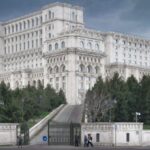
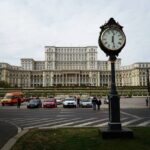
As you move toward the end point, the tour tackles a dictator’s ambitious dream turned into reality, including who actually fulfilled Ceaușescu’s ultimate wish.
This is one of the most important “value” parts of the route. You’re not just looking at a massive building. You’re learning how grand projects get forced into existence, and how the people behind the scenes can be different from the person with the fantasy.
Ending at the Palace of Parliament makes sense. It’s the place where ambition and power, money and labor, story and stone all meet. If you’re tired by the final stretch, this stop is still worth focusing on. Let the audio bring you back to the human stakes.
A Plague-Memorial Church: When a Dictator’s Wife Helped Save It
The tour also includes a church built in memory of loved ones lost to plague. It explains why a dictator’s wife stepped in to save it from destruction.
This is a clever contrast stop. In a day full of fear and power, you get a human-scale reason for protection: grief, memory, and the urge to keep something from being erased.
I found it particularly grounding because it reminds you that even within grim historical systems, decisions could still be shaped by personal loss. That’s what makes Bucharest history feel real instead of like a textbook.
Price and Value: What $6.69 Buys You in Real Terms
At $6.69 per person for about three hours, this is very low-priced for what you get. You’re paying for a self-guided plan that includes both audio and written guidance, plus images for stop recognition and an interactive map for navigation.
The “value” piece isn’t only the cost. It’s the structure: you’re buying an organized story route through major themes, not a random set of landmarks. And with 1-year access on iOS and Android, you can reuse the same content on a second pass (or while friends catch up during a later walk).
The main cost in time is your own effort: download and listen at your pace, and handle navigation without a live guide. If you’re comfortable with that, it’s a bargain.
How to Use It Comfortably: Headphones, Timing, and Staying on Track
This tour is designed for a phone in your hand. Headphones aren’t included, so plan on your own earbuds or a small speaker setup you can use quietly outdoors.
The best way to keep it enjoyable is simple: download the tour before you leave (offline access is available after downloading). Then open the app at the start point, check the stop image, and follow the route through each theme change.
Because the tour is private, you’ll only have your group—no need to squeeze around other people trying to hear the audio. Still, self-guided means you’re responsible for your pace, bathroom breaks, and photo stops.
If you’re doing this in hot weather, treat it like an all-day museum playlist: pause for water, keep the phone ready, and don’t feel you need to “finish fast.”
Should You Book This Bucharest Dictator to Dracula Self-Guided Tour?
Yes—if you want a story-driven walk through Bucharest that connects Ceaușescu-era fear to Dracula-era myth, with detours into churches, monasteries, architecture, and food.
Book it if:
- You like learning through on-the-ground stops, not just big museum rooms
- You want offline audio you can replay over a year
- You’re okay navigating yourself without a human guide
Skip it if:
- You need a live guide to answer questions on the spot
- You hate self-paced logistics and prefer organized group control
- You don’t want to use your phone for navigation and audio
If your ideal day is curious, dramatic, and walkable, this tour is a smart way to get Bucharest to tell its full story.
FAQ
Where does the tour start and where does it end?
It starts at the Romanian Athenaeum on Strada Benjamin Franklin 1-3, București 010287, Romania. It ends in front of the Palace of Parliament on Strada Izvor 2-4, București, Romania.
How long is the Bucharest Dictator to Dracula self-guided tour?
The duration is about 3 hours.
What language is the audio guide offered in?
The tour is offered in English.
Is this tour self-guided or do I meet a human guide?
It is self-guided. A human tour guide at location is not included.
How do I get access to the tour?
You should check your inbox for an email from Tourific with tour access instructions. The tour also uses a mobile ticket.
Can I listen to the tour without internet?
Yes. There is offline access once the tour is downloaded.
Is there a written guide too, or only audio?
Both audio and a written guide are included.
Do I need to bring headphones?
Headphones are not included, so you’ll need your own sound setup.
Is the tour private?
Yes. Only your group will participate.
What is the cancellation window?
Free cancellation is available. You can cancel up to 24 hours in advance for a full refund.