REVIEW · BUCHAREST
Bucharest: Parliament Senate Entry Tickets and Guided Tour
Book on GetYourGuide →Operated by CT&T, Romania · Bookable on GetYourGuide
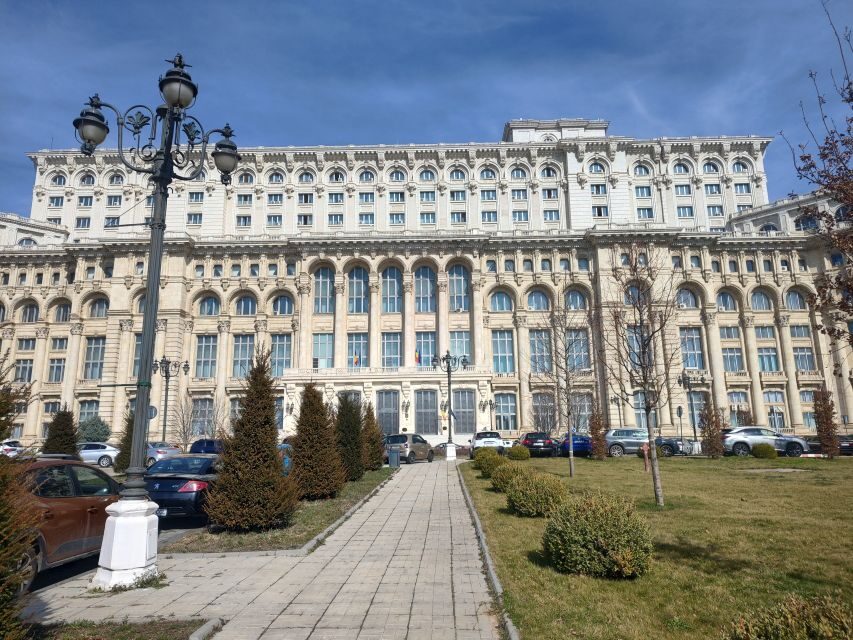
This building is politics turned into architecture. The Romanian Senate tour inside Bucharest’s Palace of Parliament is one of those rare chances to walk through a famous public space, not just look at it from outside.
Two things I especially like: you get up close with the Plenary Hall (the main meeting room), and you also see the surrounding Senate areas—hallways, meeting rooms, and conference rooms across multiple floors. One real consideration: the experience depends heavily on the guide, and you’ll want someone who can explain the building clearly and factually.
The Palace itself is huge, so it helps to arrive ready for security checks and a bit of walking on stairs. And if you’re sensitive to weather or timing, there can be waiting around ticketing and security before you even start.
In This Review
- Key highlights to look for
- Entering the Romanian Senate: Security and the Palace of Parliament vibe
- What you’ll see: Staircases, hallways, and Senate rooms across floors
- The Plenary Hall stop: the main room you came for
- Communist architecture in Bucharest: what the Palace represents
- Price and time: is $28 for a 1-hour tour worth it?
- Guide quality and languages: what to watch for
- Practical expectations: what to bring, what to leave behind
- Should you book this Bucharest Senate tour?
- FAQ
- How long is the Romanian Senate at the Palace of Parliament tour?
- How much does it cost?
- What’s included in the ticket?
- What language is the guide available in?
- What should I bring for entry?
- Do I need to pass through security?
- What items are not allowed inside?
- Is photography or video included?
- Is this tour suitable for wheelchair users or mobility impairments?
- Can I cancel or pay later?
Key highlights to look for
- Plenary Hall access: The main Senate meeting room is the centerpiece stop.
- Main staircases and corridors: You’ll move between floors to see how the building works.
- Meeting and conference rooms: Smaller spaces give scale and detail beyond the big rooms.
- Communist-era architectural symbols: The Palace is an urban icon of Romania’s communist period.
- Guided explanation in multiple languages: Romanian, English, and Italian options.
- Short added perk if time allows: You might have a coffee break at a local shop.
Entering the Romanian Senate: Security and the Palace of Parliament vibe
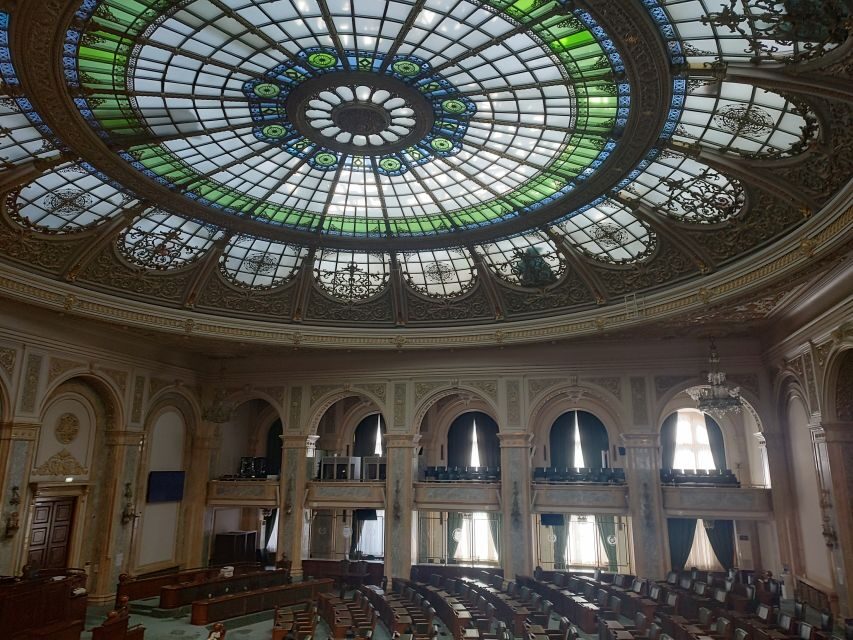
Your tour begins at the courtyard area of the Romanian Senate inside the Palace of Parliament complex. You come in from the exterior wall entrance on Calea 13 Septembrie, then you meet your guide at the main entrance and pass through an airport-style security setup.
This is important because it sets the tone for the whole visit: you’re not strolling in like a museum guest. You’re entering an active official-style site. The “skip the ticket line” part helps, but you still need to plan for security time once you’re there.
Also note what the building allows (and doesn’t). You’ll need your passport or ID card—copies of official documents or a driving licence aren’t accepted for entry. There’s no storage or wardrobe on-site, so if you’re carrying bags, you’ll want to travel light.
If you’re visiting in cold or wet weather, give yourself a cushion. In practice, the biggest slowdowns tend to happen right before the tour begins: ticket handling and security, plus the time it takes to find the correct entrance and meet your guide.
A few more Bucharest tours and experiences worth a look

What you’ll see: Staircases, hallways, and Senate rooms across floors
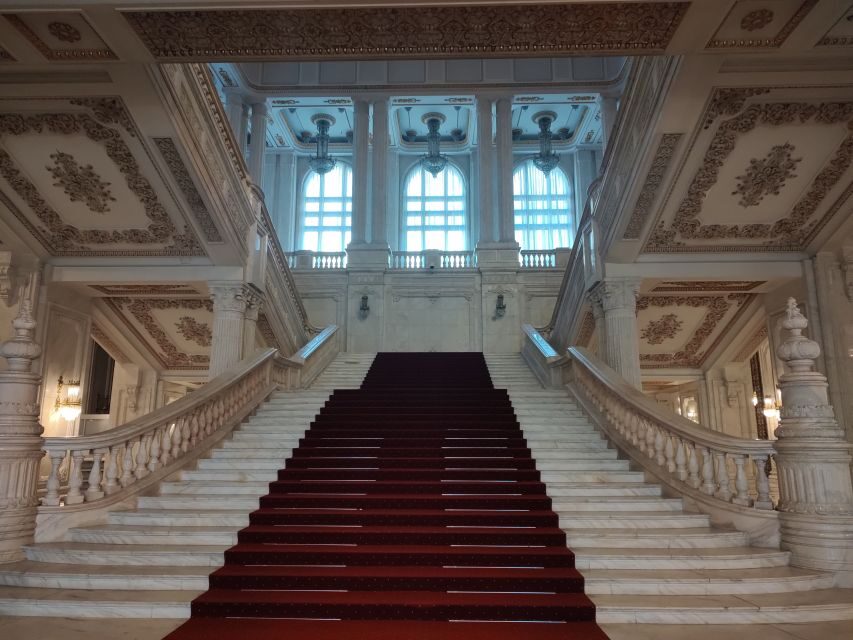
Once inside, the best part is how the tour uses movement. You walk up and down the main staircases, then continue through impressive hallways and public-style corridors that connect different levels of the building.
The Palace of Parliament is massive, and the walking route is a smart way to feel that size. Even if you love architecture photos, you’ll still get more out of this if you keep your attention on details you can only notice in person: the scale of the corridors, how rooms open off the main routes, and how decorative elements create a formal, ceremonial feel.
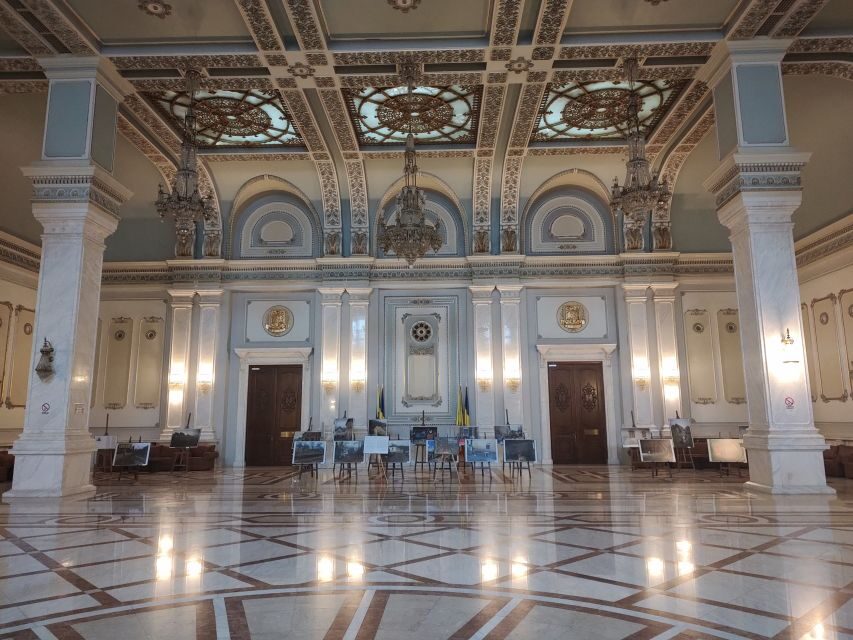
Along the way, you’ll visit meeting and conference rooms located on different floors. These stops matter because they show you the Senate’s functional spaces—not just the headline room. You’ll get a sense of where discussions happen, where people would gather for meetings, and how the building is designed to host official activity.
A small drawback: since this is a 1-hour tour, the route is efficient, not slow. That means you should be ready to absorb a lot quickly. If you like to linger, you may find yourself wishing for a longer version.
The Plenary Hall stop: the main room you came for
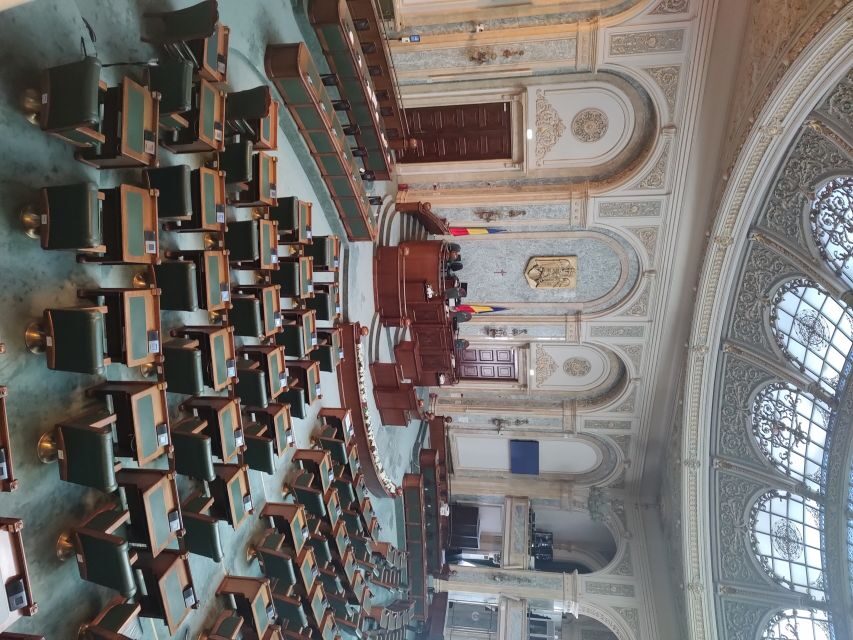
The highlight stop is the Senate’s main meeting space: the Plenary Hall. This is the room where the most important sessions happen, so it’s where your attention should land.
What makes it special isn’t just that it’s large—it’s that it’s the emotional center of the tour. The hall is where the building’s political symbolism becomes real in your line of sight. From a visitor perspective, this is the moment when it stops being “an impressive interior” and starts being “this is what governance in that era wanted to look like.”
It also helps that the tour is structured to bring you to this room at a key point. You’ve already seen staircases and corridors, so when the Plenary Hall appears, it feels like the building’s purpose is finally revealed.
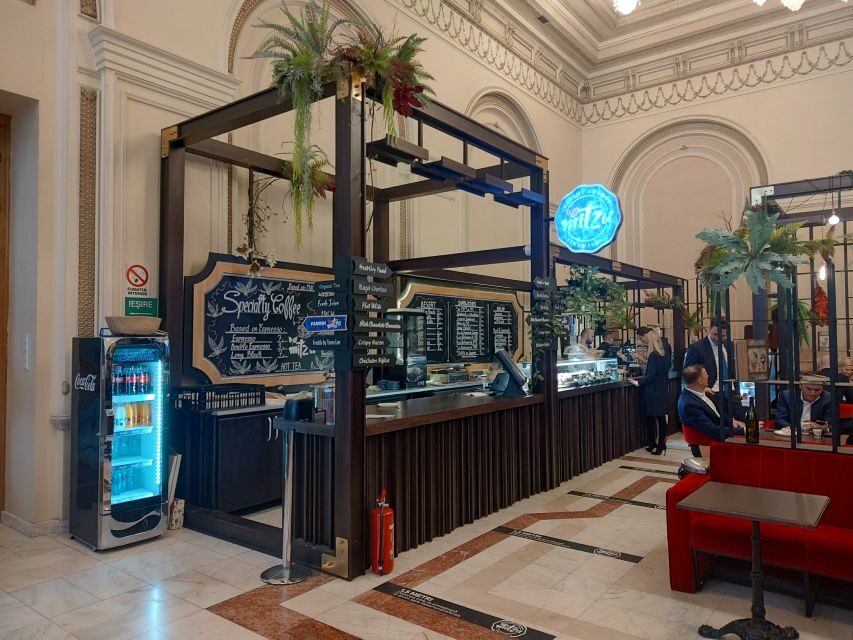
If time allows, you may get a short coffee break at a local shop. It’s a nice reset before you continue absorbing details and finishing the tour.
Communist architecture in Bucharest: what the Palace represents
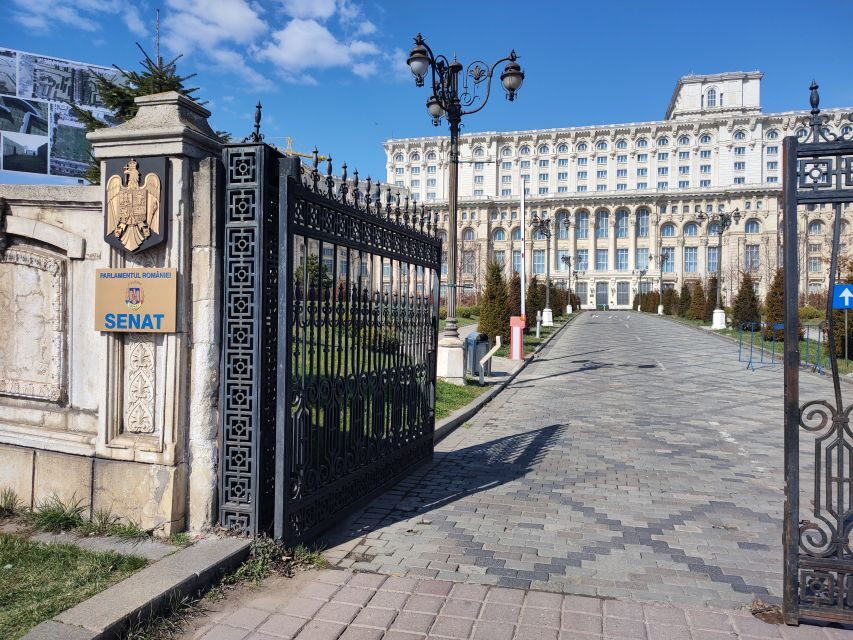
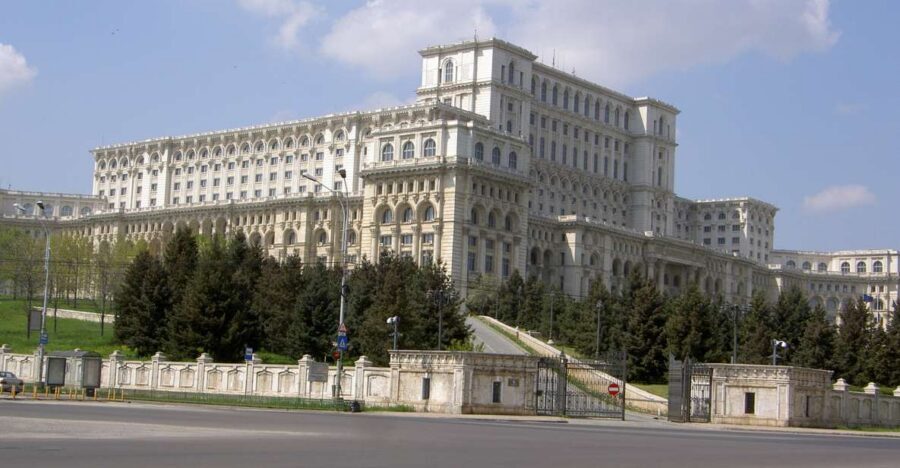
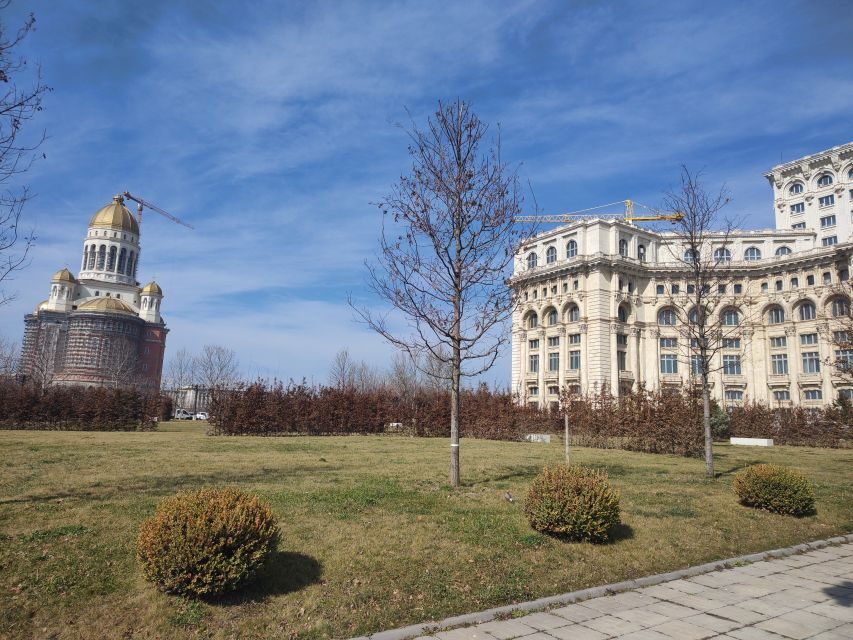
It’s hard to explain the Palace of Parliament without referencing its political design language. In Bucharest, this building is one of the most important symbols of Communist architecture, and the Senate visit makes that symbolism tangible.
Here’s what I think works well for most people: you don’t just hear about a period—you see the design choices. The Palace uses mass, symmetry, and formal interior decoration to project power and permanence. Even if you don’t care about political history, you can still “read” the building: it’s built for authority, ceremony, and scale.
You’ll also notice how the interior feels designed for official gatherings. The meeting rooms and conference spaces around the Plenary Hall reinforce that idea. They feel like extensions of one central concept, not scattered office space.
One practical note: some guides are better at giving context than others. I’ve seen examples of guides who were enthusiastic but not equally strong on historical accuracy. If you want the tour to be balanced, the guide’s ability matters as much as the building.
Price and time: is $28 for a 1-hour tour worth it?
At $28 per person for about 1 hour, the price sits in the “short and focused” category. For this kind of access, you’re paying for two things: entry to a high-security, high-profile building area, and a guided route that gets you to the key rooms without figuring out the inside yourself.
I think it’s good value if you:
- want the Plenary Hall as a structured highlight,
- like architecture and interior design,
- don’t want to spend more time booking and coordinating on-site.
I also think it can feel expensive if you’re hoping for a long, slow, deep explanation. Because the tour is time-limited, you don’t get the luxury of wandering. You should expect a fast pace and a tight itinerary.
Given that, I’d treat this as a “must-do snapshot” of the Palace’s Senate side. If you want broader coverage of the Palace complex, you may pair it with other self-paced sights elsewhere in the building area.
You can also read our reviews of more guided tours in Bucharest

Guide quality and languages: what to watch for
The tour is hosted by CT&T (Romania), and guides can speak Romanian, English, or Italian. This matters because language clarity affects how quickly you can follow the story and how much you absorb during the short visit.
In particular, I’d pay attention to how the guide handles history and tone. I’ve seen positive examples where the guide was described as fluent in Italian and able to explain the Parliament enthusiastically and clearly. Names like Andrea come up with strong competence and friendliness.
On the other hand, I’ve also seen complaints about a guide who seemed to provide inaccurate information or a version of events that felt like propaganda. That doesn’t mean every tour is like that, but it does mean you should view guide quality as a real variable, not a footnote.
If you care about getting accurate context, don’t be shy about asking a question if something feels off. In a guided format, your best leverage is early: ask early, listen closely, and decide if you’re getting what you hoped for.
Practical expectations: what to bring, what to leave behind
This is where you can save yourself stress. Bring your passport or ID card. Plan to dress and travel in a way that keeps your bags to a minimum.
Not allowed:
- pets
- weapons or sharp objects
- luggage or large bags
And because there’s no storage space or wardrobe, you can’t rely on leaving items with staff. If you arrive with a big bag, your day gets complicated fast.
Photo and video rules can vary by site setup, and any photo/video fees are not included. If photography matters to you, go in ready for the possibility of extra charges.
Finally, there’s a note on mobility: this tour is not suitable for people with mobility impairments and wheelchair users. The visit includes walking up and down main staircases, so you’ll want to plan accordingly.
Should you book this Bucharest Senate tour?
I’d book it if you want a short, high-impact way to experience the Romanian Senate spaces inside the Palace of Parliament—especially if the Plenary Hall is on your list. For $28 and about an hour, you’re buying access plus structure, and you’ll leave with a strong sense of how the building communicates power through design.
I’d think twice if you’re:
- hoping for a very long or slow visit,
- sensitive to weather and timing around security,
- relying on a guide for detailed, balanced political context and explanations.
If you do book, show up ready for security, keep your luggage minimal, and pick the language you’ll enjoy most while listening. With the right guide, this becomes one of the most memorable interior architecture stops in Bucharest.
FAQ
How long is the Romanian Senate at the Palace of Parliament tour?
The duration is 1 hour.
How much does it cost?
It’s $28 per person.
What’s included in the ticket?
You get entrance tickets and a guided tour.
What language is the guide available in?
The guide can be Romanian, English, or Italian.
What should I bring for entry?
Bring a passport or an ID card.
Do I need to pass through security?
Yes. All visitors must pass through airport-style security.
What items are not allowed inside?
Pets, weapons or sharp objects, and luggage or large bags are not allowed.
Is photography or video included?
Photo and video fees, if any, are not included.
Is this tour suitable for wheelchair users or mobility impairments?
No. It’s not suitable for people with mobility impairments or wheelchair users.
Can I cancel or pay later?
You can cancel up to 24 hours in advance for a full refund, and you can reserve now and pay later.