REVIEW · BUCHAREST
Bucharest: Communism, Revolution & City Highlights Tour
Book on Viator →Operated by Unveil Romania · Bookable on Viator
Bucharest has two faces, right on the street. This private, English-language tour ties together the city’s pre- and post-communist eras with a slow, story-driven walk that keeps you focused on cause and effect. I especially like the hotel pickup convenience, and I also like how the guide turns big political events into something you can read on the buildings as you pass them.
You’ll start at the Romanian Athenaeum and work toward key 1989 revolution locations, then finish in the Old Town area near Palatul CEC. One thing to consider: you’re looking at history in an urban walking format, so if you’re expecting a lot of museum-style interior time, you may find the pacing more street-level than exhibition-heavy.
In This Review
- Key things to know before you go
- Bucharest’s two eras in one 4-hour walk
- Romanian Athenaeum: what communism broke right after WWII
- Revolution Square and Ceaușescu’s final speech
- University Square: the revolution turns violent
- Old Town: seeing what survived and what had to be rebuilt
- Constitution Square and the Palace of Parliament’s underground secrets
- Private guide with pickup: what makes it worth doing
- How much you’ll walk, and what to bring on a slow-paced history day
- Value check: is $93.46 per person fair for a 4-hour private tour?
- Should you book this Bucharest communism and revolution tour?
- FAQ
- How long is the Bucharest communism and revolution tour?
- Is this tour private?
- Do you offer hotel pickup?
- Where does the tour start?
- Where does the tour end?
- What sights are included?
- How much walking is involved?
- Is the tour offered in English, and is the guide licensed?
- Are admissions included, and are refreshments included?
- Can I cancel for a full refund?
Key things to know before you go
- Hotel pickup included: your guide meets you at your accommodation, so you don’t waste time figuring out meeting points.
- Private and small: it’s just your group, which makes it easier to ask questions and keep the pace comfortable.
- 45 years of communism, explained in order: the story moves chronologically, so the city doesn’t feel like random stops.
- Photo-friendly walking route: the tour is slow paced with time for photos and short breaks.
- Revolution sites you can feel: Revolution Square and University Square are treated as dramatic turning points, not just locations on a map.
Bucharest’s two eras in one 4-hour walk
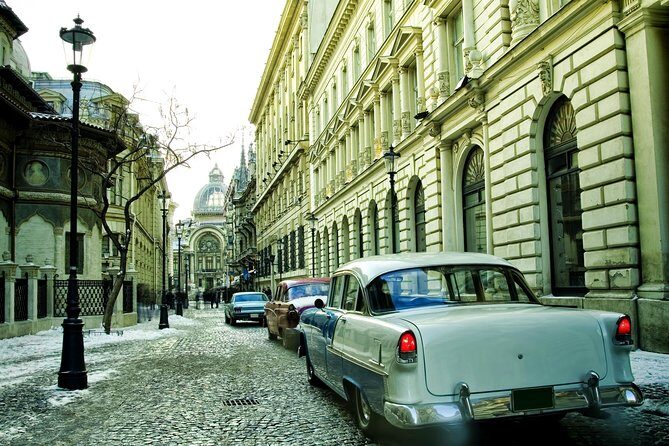
Bucharest is famous for elegance that looks almost impossible beside so much “hard” history. This tour works because it shows those contrasts in real time: you walk from symbols of cultural prestige to the places tied to propaganda, repression, and regime collapse. And because it’s private, the guide can slow down when something on the street needs a clearer explanation.
The route is compact. You cover about 3 km (under 2 miles) total with a moderate walking pace, plus built-in stops for photos and rest. That makes it a strong first-or-second day activity when you want orientation fast, especially if Bucharest is new to you.
I also like the way the tour treats context as part of the sightseeing. You’re not just seeing landmarks; you’re learning what changed in Bucharest when communist rule took hold after WWII, and what people faced during the final, tense years leading up to 1989.
You can also read our reviews of more city tours in Bucharest

Romanian Athenaeum: what communism broke right after WWII
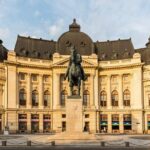
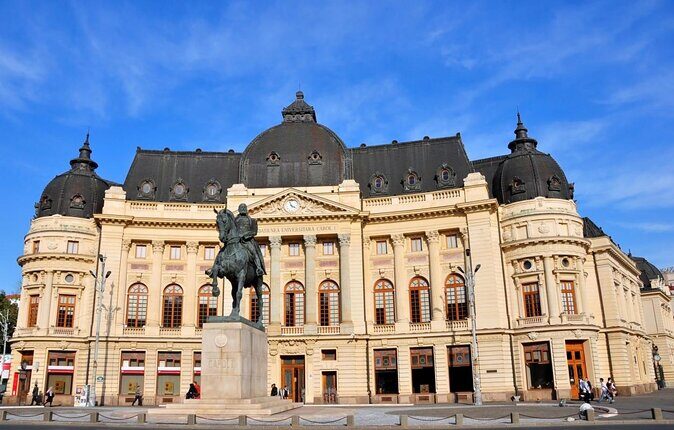
You begin in front of the Romanian Athenaeum, a pre-communist symbol of Bucharest’s older identity—grace, culture, and the kind of civic pride associated with the city’s earlier “Little Paris” reputation. The tour immediately frames the question that runs through the whole experience: what did the city lose when communism was imposed?
Your guide sets the stage with the end of WWII and the Soviet shadow that followed. Expect a clear explanation of how Stalin’s influence tightened into control across Eastern Europe, with the KGB’s secret-police terror and the broader campaign of punishment. The story also ties repression to everyday life: pressure on the free press, destruction or control of private property, and systematic damage to cultural independence.
Even if you’re not the type who loves politics, this opening works because it’s anchored to a visible landmark and a simple visual contrast: old Bucharest’s confidence vs. the later “weight” of authoritarian architecture and authority. It’s a strong way to get your bearings fast.
Revolution Square and Ceaușescu’s final speech
Next comes Revolution Square, tied to the last public moments of Nicolae Ceaușescu, Europe’s final dictator. This stop is about propaganda and power—how control shows up in public space, speeches, and the theater of authority. The square becomes a turning point in the story rather than a photo op.
From here, the guide connects the Soviet-era reshaping of Romania to the rise of communism and then to Ceaușescu’s tightening grip. You’ll hear how early promise can turn into hard control, and how the regime’s paranoia and oppression helped create the conditions for 1989’s eruption.
One reason I like this stop: it gives you a vocabulary for what you’ll see later. By the time you reach the revolution-focused square of University Square, you won’t feel like you’re jumping around—you’ll understand why these places mattered and what each moment was trying to accomplish.
Practical tip: if you like taking photos, this is one of the stops where you’ll want a little extra time to frame the square from a couple angles. Your guide will typically keep the pace slow enough for that.
University Square: the revolution turns violent

At University Square, the story shifts from oppressive control to direct confrontation. This is described as the heart of the 1989 Revolution, where protests risked everything and where violence broke into public life. The guide frames it with the brutality of bullets tearing through crowds—again, not as a generic tragedy, but as the moment when the regime’s collapse became unstoppable.
You’ll also hear about the final years of Ceaușescu’s rule: paranoia, risky policies, and hardship across the country. The tour then adds a careful layer of uncertainty—not a spoiler for you, but a question worth sitting with: was it simply a popular uprising, or were hidden forces also in play?
That question is part of what makes the walking style effective. When you’re outside, you can look up at the facades and think about who had the visibility, who controlled the narrative, and how a city can become a stage.
Also, this is where many guides reportedly bring an especially compelling presentation. For example, names like Michael, Bogdan, and Tudor show up in guides’ write-ups for exactly this kind of storytelling: clear, engaging explanations that make complex events easier to follow.
Old Town: seeing what survived and what had to be rebuilt
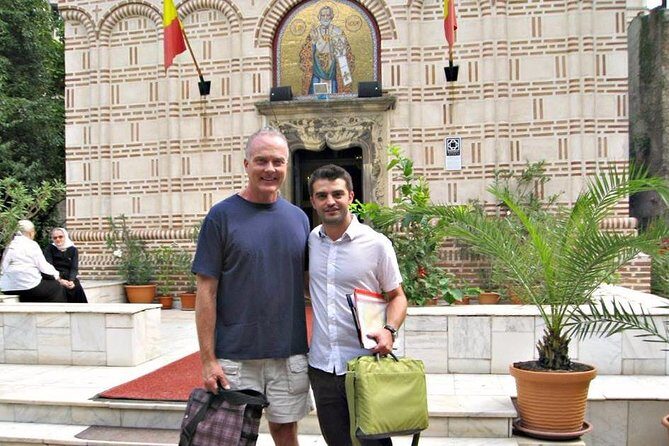
After the revolution intensity, the tour eases you into Old Town, which is where Bucharest shows its recovery. This area is restored, but it’s not pretending the past didn’t leave scars. You’ll see how much smaller Old Town is compared to pre-communist size, and you’ll notice that architecture carries the memory of violence and rebuilding.
The guide points out elegant 19th-century palaces, Byzantine churches, and the café-and-street feel that makes the neighborhood livable today. The key idea is that many of these buildings were rebuilt or restored—sometimes to repair visible damage and sometimes to heal the social wounds left behind after decades of occupation and control.
This stop is also practical for your day. After hours of heavy context, Old Town gives you a human reset. It’s a good place to grab water, a coffee, or a snack even though refreshments aren’t included on the tour.
If you’re the kind of traveler who likes to connect history to current life, this is where you’ll feel it most. The past isn’t just behind you; it’s part of what you can still walk through.

Constitution Square and the Palace of Parliament’s underground secrets
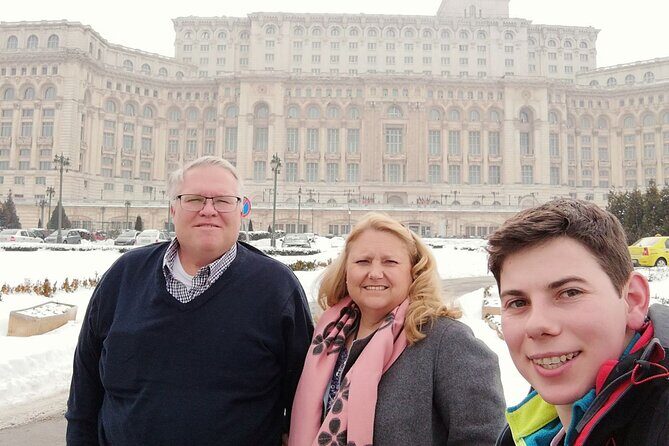
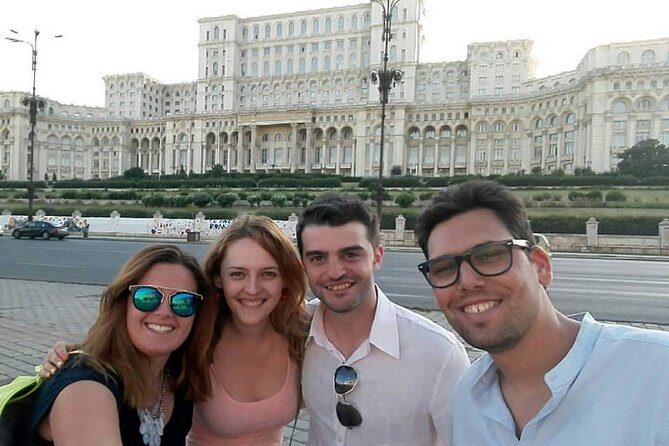
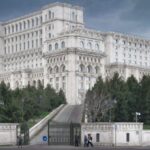
Finally, you reach Constitution Square, the former Communist Civic Center area—home to the Palace of Parliament, famously described as the world’s second-largest building after the Pentagon. Even from outside, the scale hits you. That’s the point: the regime didn’t just control people; it built permanent reminders of power.
Your guide focuses first on the imposing exterior, then explains what makes this place even more unnerving: it hides seven underground floors, atomic bunkers, and a secret network of tunnels. The tour keeps it grounded—big claims, but tied to a single theme: authoritarian thinking plans for control in both visible and invisible ways.
The “no spoilers” approach matters here because the exterior-only treatment is realistic based on what the tour description emphasizes. You get the intimidation factor and the historical meaning without turning the experience into a complicated ticket hunt.
After Constitution Square, your guide walks you back toward Old Town where the tour ends. The ending point is right in the city center area known for restaurants and shops, near Palatul CEC on Calea Victoriei.
Private guide with pickup: what makes it worth doing
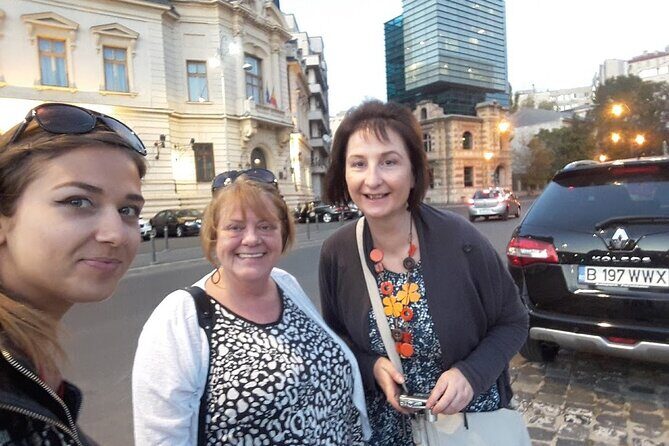
The strongest reason this tour earns high marks is the guide-to-you feel. It’s private, so you’re not stuck listening through headsets while strangers ask unrelated questions. You can ask things in your own words, pause for photos without rushing, and get explanations tuned to what you actually want to understand.
The guides mentioned in past experiences highlight that personal touch. Andra is noted for meeting people at the hotel lobby and sharing first-hand personal family experiences from her own life, which makes the story feel less like textbook history and more like lived reality. Bogdan is praised for being on time and helpful. Michael, Emma, Mircea, Tudor, and Mihai Vataselu show up repeatedly as guides who make complex events understandable and, at times, emotionally vivid.
One practical benefit: pickup means you’re not managing transit from a meeting point while you’re still orienting to Bucharest. Your guide meets you in the hotel lobby next to reception. If you’re in an Airbnb or rental, you still get pickup anywhere in Bucharest.
How much you’ll walk, and what to bring on a slow-paced history day
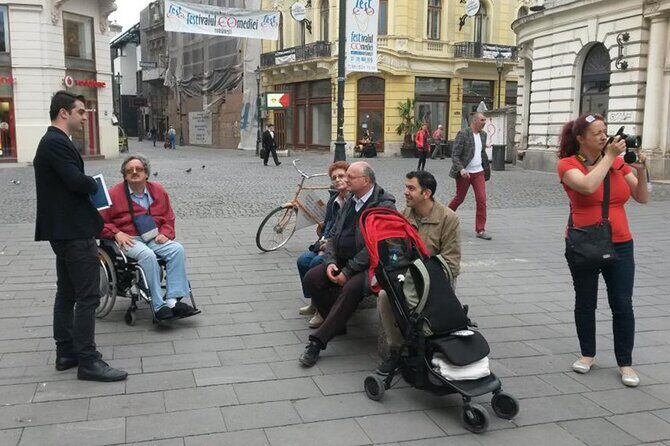
The tour stays reasonable. You’ll walk up to 3 km total, which is under 2 miles. There are several stops, and the walking is described as slow paced with time for photos and rest.
That said, you’re still outside for a good part of the day’s context-heavy story. I’d plan for comfort first:
- Wear shoes you trust for uneven sidewalks.
- Bring a small bottle of water, even though refreshments aren’t included.
- If you’re visiting in winter, pack for cold and traction. One guide’s experience in snow and ice showed that the route can still work, but conditions matter and the guide may need to adjust on the fly.
If something major changes (like visitor access closures), the guide may improvise to keep the narrative coherent. That happened during big February demonstrations, when the People’s Palace was closed for visitors, and the guide added other elements to keep the historical arc moving.
Value check: is $93.46 per person fair for a 4-hour private tour?
At $93.46 per person for about 4 hours, this isn’t a bargain-basement deal, but it also isn’t priced like a luxury car-and-driver situation. The value is in the combination:
- Private walking format instead of a big bus group
- Licensed English-speaking guide
- Free hotel pickup and drop-off
- Multiple major sites connected by one clear story
If you’re traveling as a couple or small group, private usually starts to feel more “fair” quickly because you’re paying for access to a guide that can tailor the pace and answers. And because the tour uses outside spaces tied to history, it’s not dependent on a long series of paid attractions. The tour description states admission tickets are free at each stop, which helps keep costs predictable.
One more value point: the guide’s job here is interpretation. You’re paying for explanation, context, and the ability to connect political events to what you see in Bucharest today.
Should you book this Bucharest communism and revolution tour?
I’d book it if you want a focused, guided way to understand Bucharest beyond postcards. This is ideal when you like your history in a story order—how things built up, what changed, and where the revolution happened in public space. The private format and hotel pickup make it easy to fit into a real itinerary without stress.
Skip it only if you’re mainly after high-speed entertainment or you want heavy interior museum time. The tour is designed for walking and interpretation, with the emotional weight coming from the locations and what your guide connects to them.
If you want a memorable first taste of Romania’s 20th-century turning points—without chaos—this one is a strong choice.
FAQ
How long is the Bucharest communism and revolution tour?
The tour runs about 4 hours.
Is this tour private?
Yes. It’s a private tour, and only your group participates.
Do you offer hotel pickup?
Yes. Free hotel pickup is included. Your guide meets you in the lobby next to reception.
Where does the tour start?
The start point is Strada Benjamin Franklin 1, București 030167, Romania.
Where does the tour end?
It ends in the Old Town area in front of Palatul CEC (Palace of the Deposits and Consignments) on 13 Calea Victoriei.
What sights are included?
You visit the Romanian Athenaeum, Revolution Square, University Square, Old Town, and Constitution Square (with the Palace of Parliament area).
How much walking is involved?
There is a moderate amount of walking, up to about 3 km total (less than 2 miles).
Is the tour offered in English, and is the guide licensed?
Yes. It’s offered in English with a licensed English-speaking tour guide.
Are admissions included, and are refreshments included?
Admission tickets are listed as free for the stops. Refreshments are not included.
Can I cancel for a full refund?
Yes. You can cancel up to 24 hours in advance for a full refund.