REVIEW · BUCHAREST
Footprints of Bucharest: History, Communism & Urban Tales
Book on Viator →Operated by Crafted Tours Romania · Bookable on Viator
Bucharest at night turns history into street-level stories. This small-group tour threads communism, royal power, and the city’s grand boulevards into one easy 2–3 hour walk, with landmarks lit up and explanations you can actually use.
I especially love the small group size (max 8), which means more time for questions, plus the way guides bring in personal, human details. If you get a guide like Toni or Manuela, you’ll notice how they connect big events to everyday life, including practical food-and-drink tips.
One thing to plan for: it runs at night and depends on good weather, so wear comfortable shoes and be ready for a bit of outdoor walking.
In This Review
- Key things to know before you go
- Night Bucharest in 2–3 Hours: how the route helps you get your bearings fast
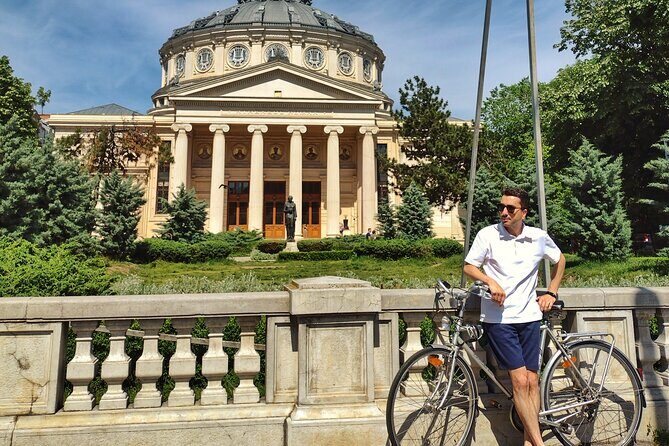
- Ateneul Român: starting with a Greek-temple look and an easy photo moment
- Piata Revolutiei: the 1989 speeches come to life with pictures and video
- The elegant boulevard stretch: where big buildings and street scale matter
- Biblioteca Centrala Universitara and Carol I: French design with royal symbolism
- Palatul Regal: winter royal residence and Queen Maria’s direct influence
- Old Town on foot: Lipscani, Stavropoleos Monastery, and the city’s everyday face
- Cărturești Carusel and Palatul CEC: shopping stops that teach you how locals browse
- The Palace of the Parliament exterior: mega-scale that reframes everything you’ve heard
- Museums and libraries: free stops first, then optional-pay entrances at the end
- Price and logistics: why $72.25 feels reasonable for what you see
- Who should book Footprints of Bucharest at night
- Should you book this Bucharest night tour?
- FAQ
- How long is the Footprints of Bucharest: History, Communism & Urban Tales tour?
- What language is the tour offered in?
- What sights have admission fees, and what is free?
- Where does the tour start and end?
- How big is the group?
- What if the weather is bad or I need to cancel?
Key things to know before you go
- Max 8 people keeps the pace relaxed and the guide’s attention on you
- Many stops are free (including Ateneul Român and Revolution Square), which makes the price feel fair
- Piata Revolutiei gets special treatment with photos and video-style storytelling from 1989
- Old Town time is real: Lipscani, Stavropoleos Monastery, and the passages around it
- Car-scale history: you’ll admire the Palace of the Parliament exterior and hear the dramatic comparisons
- Optional-pay stops exist (some museum/library entrances are not included), so you can choose what to add
Night Bucharest in 2–3 Hours: how the route helps you get your bearings fast
This is one of those tours that helps you understand Bucharest quickly, without feeling like you’re cramming a textbook into your brain. You’ll start in the city center area at Strada Benjamin Franklin 2 and end at Piața Unirii, close to the Old Town cluster. The whole arc of the evening is designed to move you from famous civic buildings, to revolution-era memories, to royal streets, and finally into the older lanes where you can keep exploring afterward.
The timing works well if you want a first-night plan. You get the sense of how the city was shaped by different eras—Greek-style grandeur, communist-era politics, and the later layers of Romanian urban life—without needing a car or a full day of sightseeing.
Also, the tour format matters. With a group capped at 8, you’re less likely to feel like you’re being dragged from one corner to another. You can ask questions, pause for photos, and actually hear the points the guide is making rather than catching them secondhand through other people’s conversations.
You can also read our reviews of more historical tours in Bucharest


Ateneul Român: starting with a Greek-temple look and an easy photo moment
You begin at Ateneul Roman (Romanian Athenaeum), one of Bucharest’s most recognizable buildings. It’s known for its ancient Greek temple feel, and the guide uses it as a starting point for understanding why the city adopted such styles—especially when you’re trying to read Bucharest quickly.
You’ll spend about 15 minutes there, and admission is listed as free. That’s a nice setup for the evening: you start with a landmark that’s easy to spot, easy to photograph, and simple to understand.
If you like architecture, you’ll also appreciate how the guide sets up the contrast that comes later—because Bucharest keeps flipping the script. After the Athenaeum’s classical vibe, the tour shifts into places tied to power, ideology, and ordinary life.
Piata Revolutiei: the 1989 speeches come to life with pictures and video
Next is Piata Revolukiei (Revolution Square). This is the point where Nicolae Ceaușescu made his last speech in 1989. The tour’s approach here is more than a quick stop-and-point. You’ll see pictures and video presentations from the Revolution days, which helps you “place” the story instead of just hearing dates and names.
You’ll have about 45 minutes at this stop, and that extra time is valuable. It turns the square into a timeline you can follow—how the city and the political story collided right there in public view.
One practical note: this is a heavier stop emotionally than most walking tours, so keep your expectations realistic. It’s not a casual photo-op; it’s a memory-focused moment where the guide is doing the work of making history understandable without turning it into a lecture.
The elegant boulevard stretch: where big buildings and street scale matter
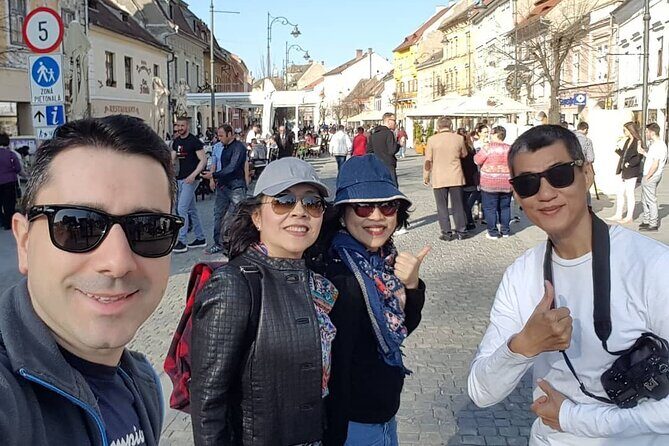
Between major highlights, you’ll walk along an elegant avenue with major buildings and monuments along the boulevard. The key thing here isn’t any one address—it’s scale and placement. Bucharest’s architecture often becomes clearer when you see it from farther down the street, not just up close on a side walk.
This stretch is also useful for a practical reason. You’re in a rhythm now: a landmark, a story, a short movement, and then the next landmark. That keeps the tour from feeling like a long museum line.
If you’re the kind of person who gets lost in city maps, this is where you start building a mental map: classical-looking buildings in a grand corridor, then the Old Town textures coming later.
Biblioteca Centrala Universitara and Carol I: French design with royal symbolism
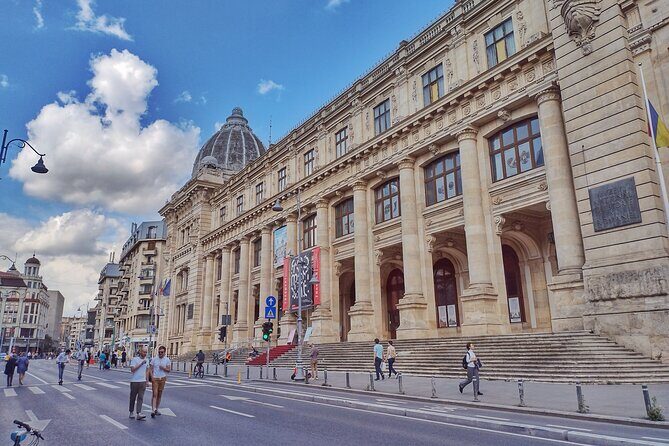
You’ll then reach Biblioteca Centrala Universitara, tied to an eclectic architectural look and designed by French architect Paul Gottereau. The sponsorship is credited to King Carol I, and there’s an equestrian statue of Carol I in front of the library area that you’ll see.
You’ll spend about 10 minutes, with admission listed as free. This is a quick stop, but it’s one of the most “Bucharest” stops because it connects foreign influence, Romanian monarchy, and public-facing institutions in one place.
I like these short, focused stops because you leave with something concrete. You can later remember “the library with the statue in front” and use it as a landmark when you’re wandering on your own.

Palatul Regal: winter royal residence and Queen Maria’s direct influence
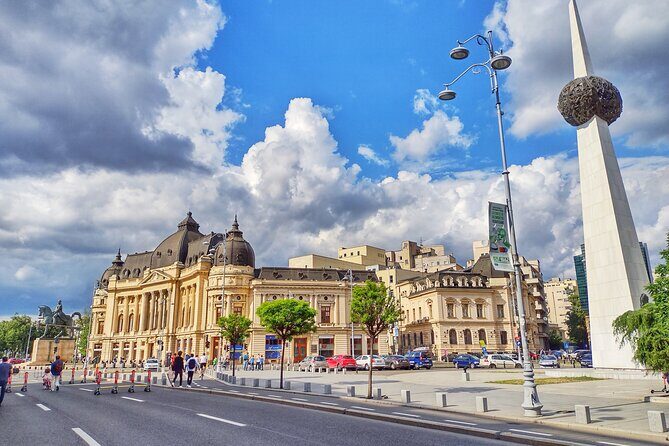
Another important power-era stop is Palatul Regal (Royal Palace), described as the winter residence of Romanian kings, dated to 1937. You’ll hear about how it was built under the supervision of Queen Maria and her son King Carol II.
This segment is only about 10 minutes, also listed as free. It’s the kind of stop that works best when you keep your eyes on what the guide emphasizes: who built it, who it belonged to, and how that fits into Romania’s shift through the early 20th century.
Even if you don’t go inside, the exterior context helps. The tour is building a pattern in your head: Bucharest doesn’t just have monuments—it has monuments that reflect who held authority, and how that authority wanted to look.
Old Town on foot: Lipscani, Stavropoleos Monastery, and the city’s everyday face
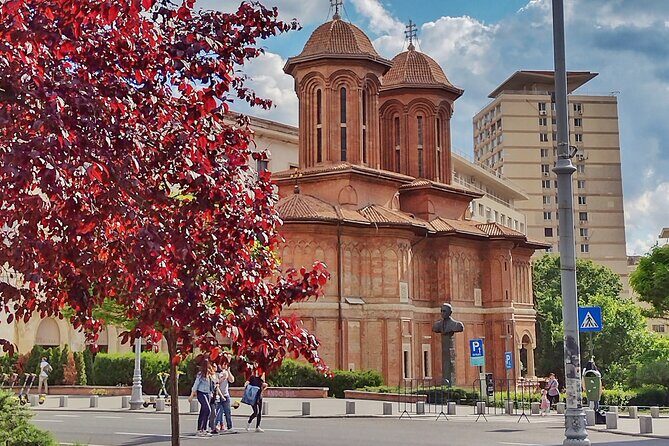
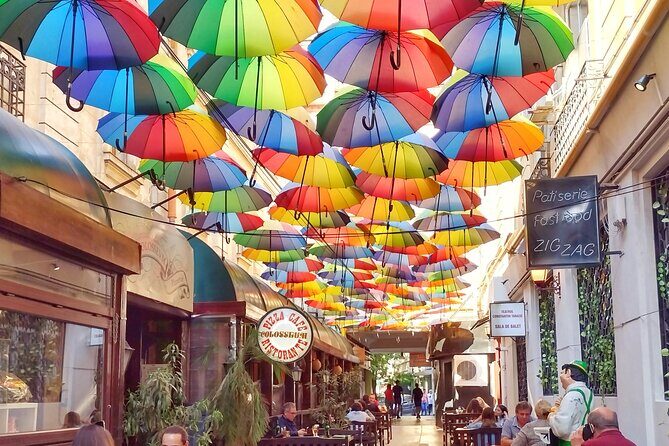
The route then turns toward the Old Town area, where you’ll walk through streets full of cafes, pubs, and restaurants and see 19th century architecture. The vibe here is more about everyday life than official ceremony, and that’s where the tour becomes more fun.
You’ll also stop at Stavropoleos Monastery, which the tour lists as one of the older churches in Bucharest and dating to 1724. You’ll get around 10 minutes, with admission free.
This monastery stop is worth your attention because it offers a contrast to the grand buildings you’ve already seen. The stone-and-courtyard feel is a reminder that Bucharest’s story isn’t only told by palaces and squares.
After that, you’ll move into the Old Town street rhythm again with:
- Lipscani for a stroll along an old street (about 10 minutes, free)
- Macca Villacrosse Passage, a covered passage with a glass roof and known for hookah cafes (about 5 minutes, free)
If you plan to keep exploring after the tour, this is where you’ll feel the “where do I go next?” momentum.
Cărturești Carusel and Palatul CEC: shopping stops that teach you how locals browse
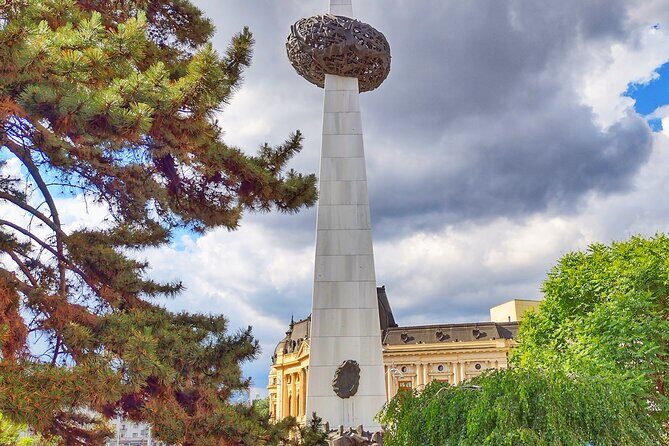
Two quick but memorable stops are Cărturești Carusel and Palatul CEC.
At Cărturești Carusel, the guide points out the restored bookstore concept and the way it works as a modern shopping-and-gifting spot. The tour notes it’s full of Romanian souvenirs and gifts, so it’s a nice place to grab something small without needing extra time.
Then you’ll see Palatul CEC, described as 19th century architecture with magnificent statuary. It’s brief—around 5 minutes—but it’s one of those exteriors you might not notice on your own unless someone tells you what to look for.
I like tour moments like this because they turn a walking route into a usable city skill. You start learning what “matters” to locals: passages, bookshops, and iconic facades that add personality to the street.
The Palace of the Parliament exterior: mega-scale that reframes everything you’ve heard
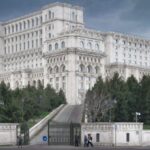
At some point in the walk, you’ll get to the exterior of Romania’s most famous building, the Palace of the Parliament. The tour notes that construction began in 1984. It also gives you the dramatic framing: it’s described as the heaviest building in the world and the world’s third-largest administrative building, plus a comparison that its volume exceeds the Great Pyramid of Giza by about 2%.
Even if you don’t care about building records, you should care about what this stop does to the story. Up to this point, you’ve heard about political events and public spaces. Seeing the exterior is a visual way to understand how the communist era used architecture to express power—large, controlling, and hard to ignore.
This is an exterior-only moment on the tour. Your time here is best spent on perspective: stand back enough to take in the massing, then listen to how the guide explains the “why” behind the scale.
Museums and libraries: free stops first, then optional-pay entrances at the end
One of the smartest things about this tour is that it front-loads free sights. Many stops list admission ticket free, including major landmarks like Ateneul Roman, Revolution Square, and several Old Town buildings.
But there are also a couple of places where admission is not included. The tour notes this for:
- Muzeul National de Istorie a Romaniei (former Post Office Palace, 19th century)
- Biblioteca Nationala a Romaniei (an iconic palace in the Old Town area)
So you can treat the end of the experience like a choose-your-own-adventure. If you’re curious, you can add entrance time. If you’re not, you can keep moving and just enjoy what you can see outside.
There’s also Muzeul National de Arta al Romaniei, listed as the former Royal Palace, and the tour lists it as free for admission on the stop itself. You’ll get about 5 minutes, which is perfect if you want the names and the setting without committing to a full museum session.
This mix makes the price feel more controlled: you’re paying for the walking tour and guide, while admission costs are only needed if you choose to go deeper.
Price and logistics: why $72.25 feels reasonable for what you see
At $72.25 per person for a 2 to 3 hour tour, the price can feel like a deal when you look at what’s included and what’s not.
You get a certified guide, plus printed materials, and you’ll have a mobile ticket. Many of the stops are listed as free admission, which means you’re not constantly paying small entry fees that add up during a short evening.
What’s not included is spelled out: entrance fees (where applicable) and food or drinks. So if you want to eat or drink during the tour, you’ll pay for that separately, but the guide can still point you in the right direction, which is often the difference between a tourist trap and a good local choice.
As for physical effort, the tour asks for moderate physical fitness. In practice, you’re dealing with an evening walk, not a strenuous hike. Still, plan for cobblestones and the usual Bucharest sidewalk reality, especially once you hit Old Town lanes.
Who should book Footprints of Bucharest at night
This is a great fit if you:
- Want a first-night overview of Bucharest that connects political history with real streets
- Like history that’s explained through places, not only dates
- Prefer a small group where your questions don’t get lost
- Want Old Town time without needing to plan a route yourself
It’s also a smart choice if you enjoy guide personality. Names that come up include Toni, Manuela, and Marius, and the common thread in their stories is how they add human detail and practical suggestions, not just facts.
If you hate walking after dark, then this might test you. And if you’re traveling during questionable weather, know that the tour is described as requiring good weather, with a backup date or refund option if it can’t run.
Should you book this Bucharest night tour?
I think you should book it if you want history with street-level clarity. For the price, the biggest win is that you get a focused route with many free stops, plus a guide who makes the communist-era story understandable through real places like Piata Revolutiei and through the visual shock of the Palace of the Parliament exterior. You’ll also finish near Piața Unirii, which makes it easy to continue wandering or grab dinner without needing a full second plan.
Skip it only if you’re not comfortable with night walking or you’re hoping for a mostly museum-heavy experience. This tour is about seeing, hearing, and moving, not staying inside for long.
FAQ
How long is the Footprints of Bucharest: History, Communism & Urban Tales tour?
It runs for about 2 to 3 hours.
What language is the tour offered in?
The tour is offered in English.
What sights have admission fees, and what is free?
Many stops list admission ticket free. Entrance fees are not included for some stops, including Muzeul National de Istorie a Romaniei and Biblioteca Nationala a Romaniei.
Where does the tour start and end?
You start at Strada Benjamin Franklin 2, București and end at Piața Unirii, București, close to the Old Town area.
How big is the group?
The tour has a maximum of 8 travelers.
What if the weather is bad or I need to cancel?
The tour requires good weather. If it’s canceled due to poor weather, you’ll be offered a different date or a full refund. There is free cancellation up to 24 hours in advance for a full refund.