REVIEW · BUCHAREST
Darkside Tour of Bucharest – small group
Book on Viator →Operated by Interesting Times Bureau · Bookable on Viator
Bucharest has a darker side. I love the Bellu Cemetery walk, and I love how the stories snap into real turning points like the 22nd December 1989 violence. One catch: this is geared to adults and teens, since the route involves steady walking and a cemetery setting, and it is not recommended for children aged 15 and under.
This is a tight, 3-hour, small-group experience (maximum 12 people) focused on the “other” Bucharest side—Dark Ages to the Iron Curtain, then the communist years and the Revolution. You’ll be guided in English by people like Vlad and Elena, who get praised for sharp storytelling, humor, and answering questions without rushing you.
Logistically, it’s built for people who want to move smart, not slow. You start at the Ion Luca Caragiale National Theatre, you end at Revolution Square, and the tour uses subway transportation plus free time at major stops. You also get a street snack as part of the deal, but food and drinks beyond that are on you.
In This Review
- Key things worth knowing before you go
- Why this dark-history walk fits Bucharest well
- Getting there: starting at the National Theatre and ending at Revolution Square
- The Bellu Cemetery experience: crypts, tombstones, and human stories
- The subway segment: why switching transport matters on this route
- University Square: protest origins and names that deserve remembering
- Calea Victoriei: the scandalous side before communism
- Revolution Square: Ceausescu-era fear and the 1989 night that changed things
- What’s included (street snack, guide, and subway)
- Guides and storytelling style: what you’re paying for
- Comfort checklist: heat, walking pace, and what to wear
- Who should book this Darkside Tour, and who might not love it
- Should you book the Darkside Tour of Bucharest?
- FAQ
- How long is the Darkside Tour of Bucharest – small group?
- What is the group size limit?
- Is the tour in English?
- What’s included in the price?
- Are entrance tickets included?
- Where does the tour start and end?
- Is it suitable for kids?
- What if bad weather cancels the tour?
- Can I get a full refund if I cancel?
Key things worth knowing before you go
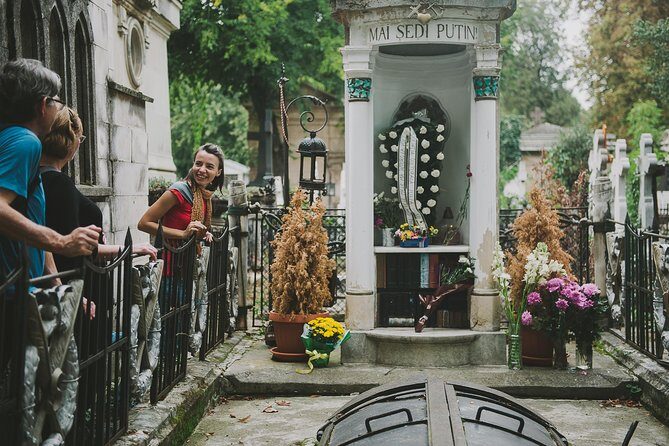
- Bellu Cemetery gets about an hour, with time for crypts, tombstones, and character-driven stories.
- The tour links street locations to major protest moments, from 1989 to later anticorruption battles.
- Revolution Square is the emotional climax, with details around the shootings and Romania’s secret police.
- You’ll take the subway as part of the route, so you avoid some traffic drag.
- Guides like Vlad and Elena are repeatedly praised for pacing, humor, and English clarity.
- It’s a small group format (max 12), which makes questions easier to ask.
Why this dark-history walk fits Bucharest well
Bucharest is the kind of city where the present sits right on top of the past. One minute you’re at a grand boulevard. The next, you’re talking about repression, fear, and people who tried to resist it anyway. That’s the core strength of this tour: it doesn’t treat “history” like a museum label. It uses streets and specific sites so you can feel how the city shaped people—and how people fought back.
I also like the time-balance. You’re not stuck for hours in one place, and you’re not forced through a rush-only checklist either. The route keeps you moving, then gives you real time where it matters—especially at Bellu Cemetery and at the Revolution Square.
The other thing I appreciate is the tone. The tour leans serious, but it doesn’t feel joyless. Humor and anecdote show up often in the way guides are described, which matters when the subject matter turns heavy.
You can also read our reviews of more tours and experiences in Bucharest.
Getting there: starting at the National Theatre and ending at Revolution Square
The tour meets at Ion Luca Caragiale National Theatre on Bulevardul Nicolae Bălcescu (address listed as 2, București). The start time is 3:00 pm. From there, you’ll work your way through the city and end at Revolution Square (Piața Revoluției), in front of the Ministry of Internal Affairs.
That end point is practical. It drops you where plenty of other sights and dining options are easy to reach afterward. It also helps the tour “land” emotionally: you finish at the symbolic center of the communist regime’s collapse, rather than fading out somewhere less meaningful.
Because you’re moving by foot and subway, it’s also a good idea to arrive a few minutes early and keep an eye on your surroundings at the meeting area. One guide was even praised for coming to meet the group when a pickup direction issue happened, which suggests the team is attentive—but you still don’t want to start late.
The Bellu Cemetery experience: crypts, tombstones, and human stories
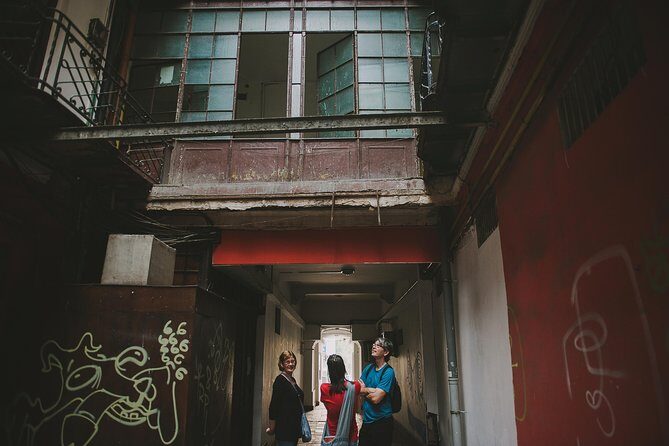
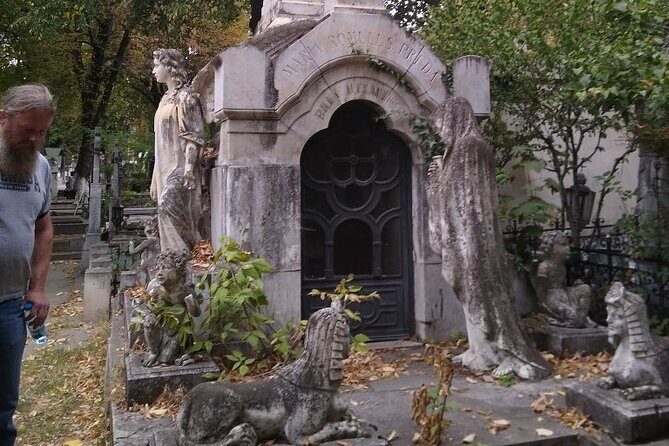
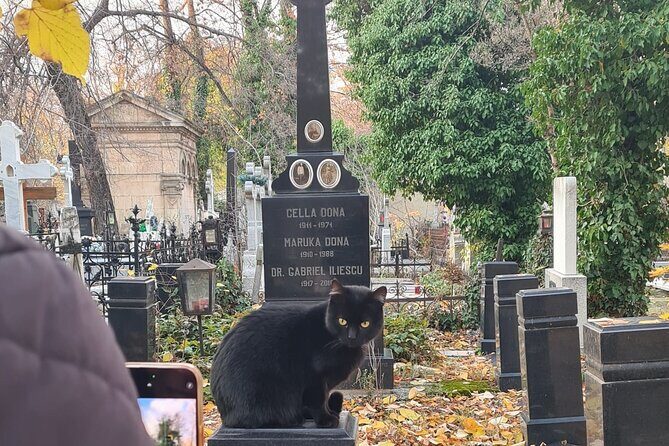
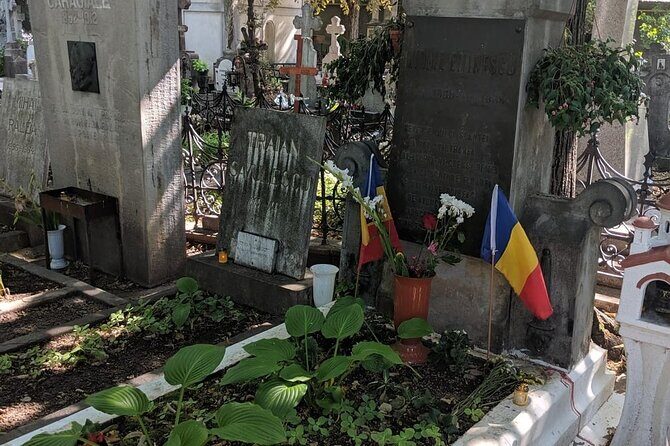
Bellu Cemetery (Cimitirul Serban Voda-Bellu) is the heart of the tour, and it takes about one hour. This is where you slow down and let the place do its work.
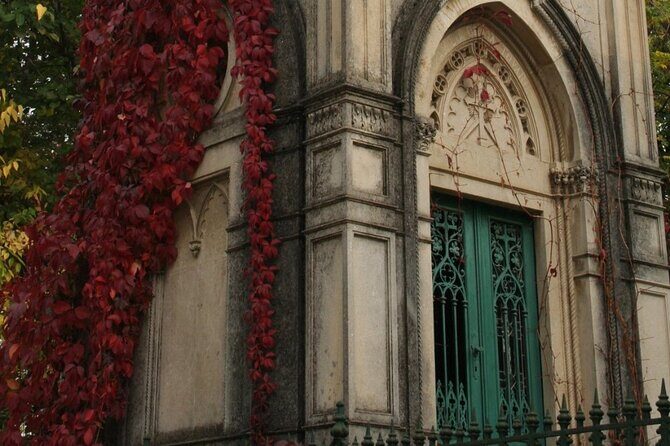
What makes Bellu Cemetery special in this context is the mix of art, architecture, and narrative. You’ll hear about it as the first modern graveyard in the city, and you’ll also get stories tied to love, unique monument styles, and even mysteries that people still talk about. It’s not presented as spooky for the sake of it. It’s more like: “Look closely—there are clues here, and there’s meaning in how people wanted to be remembered.”
You also need to know the feel of a cemetery walk. Even with only one hour, you’ll be outside on uneven ground in a place with narrow paths and lots of stone. Wear shoes you’re comfortable in for walking and standing. If you’re the kind of person who likes details—names, dates, symbolic shapes, small carvings—you’ll get a lot out of it.
And yes, the cemetery has an animal presence. Multiple guide write-ups mention stray cats and even moments where the guide paused to feed them. That tiny human act can shift the mood from grim to real, which is exactly what you want in a tour about life under pressure.
The subway segment: why switching transport matters on this route
The tour includes subway transportation, which makes sense in Bucharest. The city can be busy, and the route between key points doesn’t always line up neatly with a smooth street walk. Using the subway helps you keep energy for the stops instead of spending it waiting at crossings and battling traffic.
It also keeps the experience from feeling like only surface sightseeing. One write-up specifically notes a trip down into the subway as part of the day, which adds a “real city” layer. You get to move like locals do, not like you’re chauffeured between highlights.
Practical tip: bring a small layer if you get cold underground. And if you’re sensitive to crowds, go easy on rush-time assumptions. This tour is only 3 hours total, and it’s a small group, so you’ll typically be easier to manage than larger tour buses.
University Square: protest origins and names that deserve remembering
Next comes University Square, where you spend about 20 minutes. This stop is shorter, but the content is heavy: it’s framed as a starting point for major protests in recent Romanian history.
You’ll hear about the Revolution of 1989 and the victims who fought for an occidental future, plus references to later protest moments connected to miners in the 1990s and an anticorruption battle. The idea here is connection—how one place can serve as a launchpad again and again when people decide they’ve had enough.
This is also a good moment to practice your listening focus. A 20-minute stop can feel like a quick glance if you’re not actively taking notes in your head. Ask yourself what the “lesson” is: the square isn’t just scenery. It’s a checkpoint for civic courage.


Calea Victoriei: the scandalous side before communism
Calea Victoriei is next, with about 40 minutes. This stretch shifts the tone from late-20th-century political struggle to the early 1900s, when Bucharest had scandalous social realities before communist rule took control.
A striking detail shared for this stop is that in 1927, around 12,000 prostitutes and escorts were working in Romania. You also get the story of Zaraza, described as a gypsy dancer and one of the notable figures of that era.
Why this works on a “darkside” tour: it widens the definition of dark. It’s not only prisons and secret police. It’s also social hypocrisy, exploitation, and the ways a city can hide bargains behind glamour. It’s uncomfortable, but it’s also part of understanding why later regimes could control narratives so aggressively.
The value for you: this stop helps you avoid a common tourist trap. If you only hear about communism, you end up with a single-cause explanation for everything. This route shows there were earlier pressures and contradictions too.
Revolution Square: Ceausescu-era fear and the 1989 night that changed things
Piaka Revolukiei—Revolution Square—is the emotional climax and takes about 20 minutes. Expect goosebumps here. It’s one of those places where your body reacts before your brain finishes processing the details.
The tour connects the square to the Romanian gulag system and to Nicolae Ceaușescu as a cruel dictator. You’ll hear what life in the 1980s was like for ordinary people, then the focus sharpens to the events of 22nd December 1989.
That’s when shootings took place, and many innocent people died facing the Securitatea (the secret police). The tour frames the square as a symbolic end to the communist regime in Romania.
Two practical notes:
- In emotionally intense spots, you’ll remember less if you try to multitask. Put your phone away for a few minutes and listen.
- Give yourself a minute after the tour ends to take it in. You’re finishing right in the place where the story is anchored, so don’t sprint off immediately.
What’s included (street snack, guide, and subway)
You get three main inclusions:
- A local guide
- Subway transportation
- A street snack
Everything else—food and drinks beyond that—is not included unless the guide specifies otherwise. So if you’re the type who needs a real meal, plan for it before or after the tour.
One thing I like about the inclusion style is that it doesn’t force you into restaurant timing. You can keep your day flexible. And based on guide write-ups, snacks can go a little beyond the bare minimum. For example, one guide was praised for handing out a pretzel, and another tour note mentions food recommendations—so you may get useful local guidance even when the official package stays simple.
Also: admission tickets are listed as free for the stops. That matters. It means you can focus on the experience instead of unexpected add-ons.
Guides and storytelling style: what you’re paying for
At $48.39 per person for about 3 hours, you’re paying mainly for interpretation and delivery. The “product” here isn’t just locations—it’s the way a guide turns them into a story you can follow without reading a book.
This is where the ratings make sense. The tour is rated 4.9 with 139 reviews, and it’s recommended by 98% of travelers. The praise is consistent: guides are described as enthusiastic, able to explain clearly in English, and comfortable with dark topics while still keeping things engaging.
You’ll see guide names come up again and again, including Vlad, Andra, Alex, Elena, Irina, and Bogdan. The common thread in write-ups is a mix of history, anecdotes, and humor—plus a willingness to answer questions. One write-up also mentions a guide stepping in to help when meeting-point directions were off, which shows attentiveness when things don’t go perfectly.
Practical takeaway for your side: if you’re the curious type, this tour is a good match. With only up to 12 people, you’ll likely get more direct interaction than you would on a large bus tour.
Comfort checklist: heat, walking pace, and what to wear
This tour needs decent weather. If it’s canceled due to poor weather, you’re offered a different date or a full refund.
You should also plan for walking in a cemetery setting. Travelers are advised to have a moderate physical fitness level, and that’s reasonable. It’s not a hiking test, but it’s also not a sit-and-stare tour.
Temperature matters too. One review specifically mentions a 38 C heat index, and the guide reportedly provided enough water and kept everyone from overheating. You can’t bank on perfect conditions each day, but it’s a good sign the team thinks about comfort. Bring your own water if you’re the cautious type, and wear sun protection.
If you’re sensitive to crowded spaces, keep your pace steady and don’t freeze in the middle of pathways—cemeteries and city squares can funnel foot traffic quickly.
Service animals are allowed, and the tour is near public transportation, which helps if you need flexibility on your own after the route ends.
Who should book this Darkside Tour, and who might not love it
This is best for you if you want:
- A compact, 3-hour version of Bucharest’s darker story
- More than a postcard approach—real context tied to real places
- A small group format where questions are welcome
- A guide-led narrative that includes humor, even when the topics are grim
You might want to skip it if:
- You’re traveling with a child aged 15 and under (it’s not recommended)
- You dislike cemetery visits or you’re not comfortable with walking outdoors
- You want only light sightseeing and zero heavy political content
Also, if you’re visiting Bucharest for the first time and you want a fast way to understand what shaped modern Romania, this tour can be a strong foundation. It gives you the story behind the streets, not just the streets.
Should you book the Darkside Tour of Bucharest?
If you want an efficient, high-story-density walk with a small group, I’d book this. The value comes from the combination of Bellu Cemetery, the political anchors around 1989, and the fact that guides are consistently praised for English clarity, humor, and handling difficult topics in a human way.
You should book now if your timing fits the 3:00 pm start and you’re okay with moderate walking and a cemetery setting. It’s also a smart choice if you’re the kind of traveler who likes to understand why a city looks the way it does, even when the answers are uncomfortable.
Just be honest with yourself about the mood. This tour is called Darkside for a reason, and Revolution Square is meant to hit emotionally. If that works for you, you’ll likely leave with Bucharest feeling more real—and more unforgettable—than the usual “see the highlights” circuit.
FAQ
How long is the Darkside Tour of Bucharest – small group?
It runs for about 3 hours.
What is the group size limit?
The tour has a maximum of 12 travelers.
Is the tour in English?
Yes, it is offered in English.
What’s included in the price?
A local guide, subway transportation, and a street snack are included.
Are entrance tickets included?
Admission tickets are listed as free for the stops.
Where does the tour start and end?
It starts at Ion Luca Caragiale National Theatre (Bulevardul Nicolae Bălcescu 2) and ends at Revolution Square (Piața Revoluției), in front of the Ministry of Internal Affairs.
Is it suitable for kids?
It is not recommended for child aged 15 and under.
What if bad weather cancels the tour?
The experience requires good weather. If it’s canceled due to poor weather, you’ll be offered a different date or a full refund.
Can I get a full refund if I cancel?
Yes. You can cancel up to 24 hours in advance for a full refund.