REVIEW · BUCHAREST
Communism Investigation Private Tour
Book on Viator →Operated by Communism Investigation Tour · Bookable on Viator
Bucharest has a way of making the past feel uncomfortably close. This private Communism Investigation Tour strings together the biggest communist-era landmarks—and the telling details in between—so you walk away with a clearer sense of how power worked and how 1989 changed everything. I especially like the private vehicle with high-speed WiFi and the way the guide (often Comrade Marius) turns each stop into an easy-to-follow story with a take-home dossier. One thing to consider: not every interior visit is included, so a couple of the most famous places depend on whether you can add them based on opening times.
You’ll be guided in English (and the tour is also offered with English/French/Italian speaking support), and you’ll get audio-and-video testimony material tied to Romania’s communist period. The pacing works well for a 4–5 hour block, whether you’re a history buff or just curious why Bucharest looks the way it does.
In This Review
- Key highlights worth your attention
- Bucharest’s communist “investigation” method: what the dossier adds
- Private pickup, air-conditioned ride, and why it feels easier in Bucharest
- Stop 1: Ceausescu Mansion—habits, power, and the story behind the residence
- Stop 2: Tomb of the Unknown Soldier—socialist heroes, not silence
- Stop 3: Piaka Revolukiei—where public pressure turned into action
- Stop 4: Palace of Parliament—The People’s House viewed from the street
- Stop 5: Ministry of Internal Affairs—control you can spot without entering
- The guide experience: Marius’s style and the “small touches” that help it land
- What you get for the price: $108.14 per person and where the value comes from
- Timing and pacing: 4–5 hours that keep the story coherent
- Who should book this tour—and who might pass
- Should you book Communism Investigation in Bucharest?
- FAQ
- FAQ
- How much does the Communism Investigation Private Tour cost?
- How long is the tour?
- Is the tour really private?
- What language will the guide speak?
- What’s included in the price?
- Are admission tickets included for every stop?
- Do I need to tip the guide?
- What if I cancel or the weather is bad?
Key highlights worth your attention

- A guided story arc with “investigation” clues at nine narrative moments, even though the named stops are fewer
- Ceaușescu’s residence area plus several 1989-connected sites, explained with real context
- The guide gives practical takeaways, including an Investigation Dossier and printed handouts
- Audio/video testimony onboard, so you’re not just reading plaques at each wall
- Comfort and convenience, with hotel pickup, air-conditioning, and on-board WiFi
Bucharest’s communist “investigation” method: what the dossier adds
This tour isn’t built like a checklist. The label is Communism Investigation, and the format matches that idea. You don’t just see buildings; you collect a set of prompts and material tied to each stop. The centerpiece is a Personal Investigation Dossier designed for note-taking and as a souvenir after the tour.
Here’s why that matters for you: Bucharest’s communist-era story can feel like a blur of names, dates, and big monuments. With a dossier-style approach, you’re constantly connecting the place you’re standing in with what it represented—control, propaganda, security, or public theater. It’s also a smart way to keep your attention, because the guide isn’t waiting for you to ask questions between sites. The tour has built-in story beats and supporting media.
You also get audio and video testimonials linked to the communist era, which helps you understand what lived behind the official façade. It’s not just “what happened”; it’s also about how the system sounded and felt.
You can also read our reviews of more private tours in Bucharest

Private pickup, air-conditioned ride, and why it feels easier in Bucharest

I like how this experience starts with pickup from centrally located hotels or accommodation. In Bucharest, that small detail can make the difference between a smooth morning and a “where do we meet?” scramble.
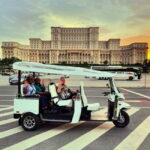
You’re in a private air-conditioned vehicle with just your group and guide, not a loud cattle-herd bus. That matters for two reasons:
- You can hear the guide’s explanations at a normal volume.
- You can keep the pace that works for your comfort level, since the day isn’t scheduled around many different groups.
You also get high-speed WiFi onboard, which is handy for quick map checks, translation support, or simply keeping your phone charged and useful while you’re on the move.
The tour is booked and timed as a 4–5 hour experience, and the vehicle keeps everything compact enough that you don’t feel like you spent the day commuting. You’ll still spend time at the stops—but you’re not burning your energy on transport logistics.
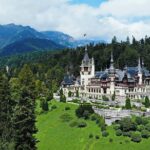
Stop 1: Ceausescu Mansion—habits, power, and the story behind the residence
The first named stop is Ceausescu Mansion. This is tied directly to the dictator’s residence, and the tour focuses on how he lived and what that says about the regime.
The big value here isn’t just the location. It’s the framing. You’re not only learning what was built. You’re learning how personal routine and political control can overlap. That’s the kind of insight that sticks, because it connects politics to everyday patterns.
A practical note: this stop runs about one hour, and it’s listed as having admission tickets not included. So if you plan to add an interior visit, treat it as an optional add-on subject to opening times.
What to expect on the ground:
- You’ll get the guide’s narrative first, so the building isn’t just a facade.
- You’ll have time to orient, take photos, and connect the architecture to the human behavior behind it.
If you’re more interested in 1989 street-level moments, Ceausescu Mansion may feel heavy at the start. But that’s also the point: the rest of the route makes more sense when you understand what power looked like before it collapsed.
Stop 2: Tomb of the Unknown Soldier—socialist heroes, not silence
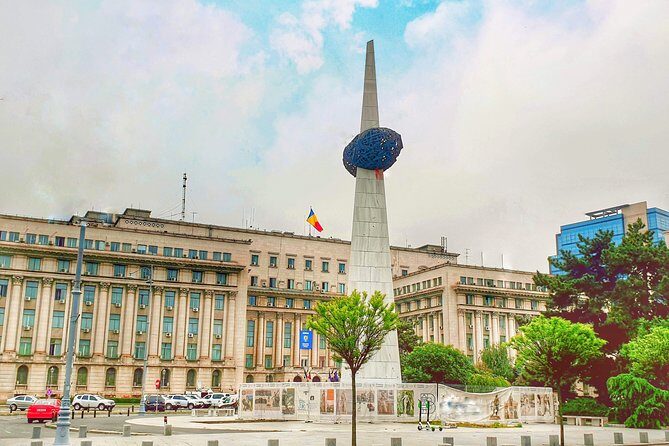
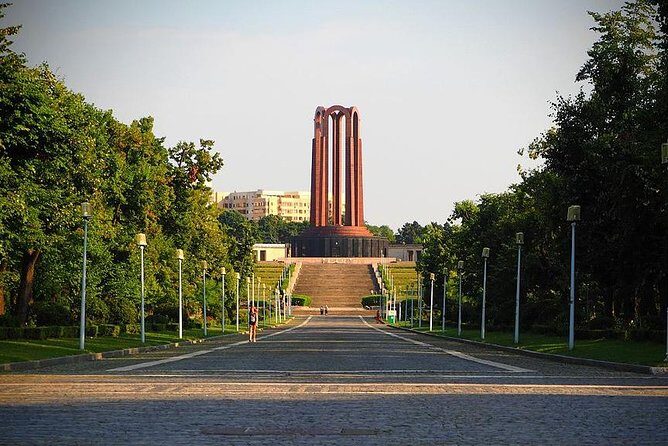
Next up is the Tomb of the Unknown Soldier, also presented as the Mausoleum of Socialist Heroes and tied to the fight for the motherland. It takes about 30 minutes, and admission is free.
This stop is worth your time because it shows how regimes shape memory. Even when the site is about sacrifice, the message can still be steered by the government in charge. You’ll learn what the symbolism was used to reinforce, and how public space becomes propaganda without needing to say the word propaganda out loud.
Since the visit is relatively short, treat it like an anchor moment. It gives you a baseline for how the system tried to define patriotism.
One practical consideration: because it’s free and quick, it can be easier to feel like you’re moving on too fast. If that’s your instinct, use the dossier prompts during the explanation. Write down the key idea you hear, and you’ll avoid the “I saw it, but what did it mean?” feeling.
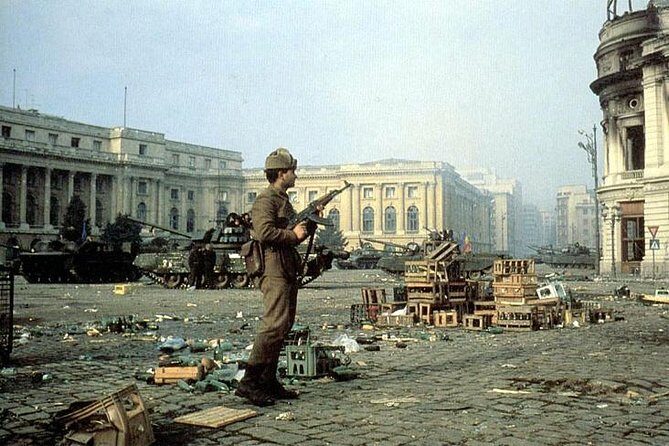
Stop 3: Piaka Revolukiei—where public pressure turned into action

The itinerary’s next highlight is Piaka Revolukiei—the tour describes it as the Communist Party Headquarters hotspot for anti-communist manifestations. You’re there for about 30 minutes, with admission free.
Even if you’re not a Romania history expert, this is the kind of place where you instantly sense stakes. The guide’s job here is to connect a square you recognize on a map with the sequence of events it hosted. The tour’s style—storytelling plus media support—helps turn the space into a timeline.
Why this stop works:
- It connects the communist story to the anti-communist push, instead of keeping everything at the level of “old regime buildings.”
- It gives you a sense of why 1989 wasn’t only about leaders; it was also about people in public space.
If you want photos, aim for a moment when you can stand back and take in the broader layout. The guide’s explanation helps you see which directions and features matter.
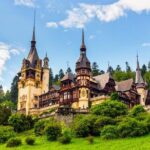
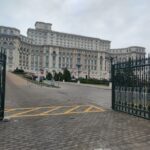
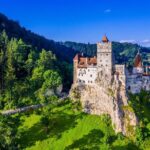
Stop 4: Palace of Parliament—The People’s House viewed from the street
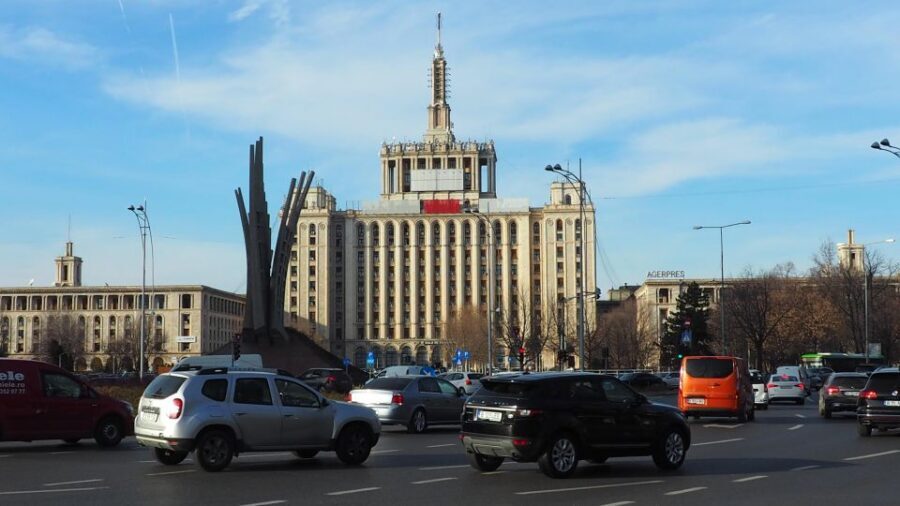
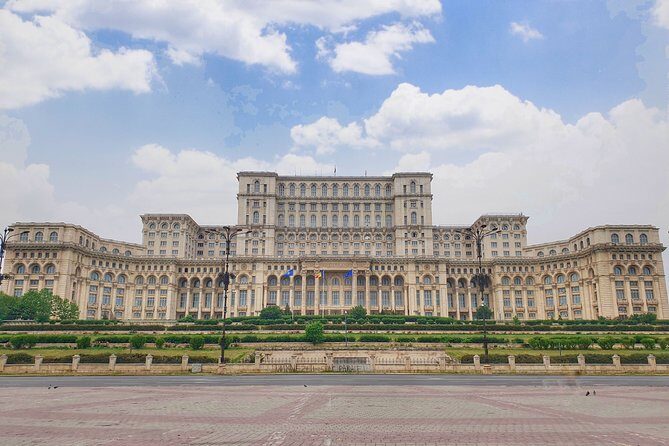
The Palace of Parliament is next, but the visit here is an outside stop. The tour frames it as the People’s House and mentions Victory of Socialism Boulevard as part of the area you’ll see.
You’ll get around 25 minutes, and admission is not included. There’s also an optional interior visit possibility, depending on opening times.
This is one of those stops where expectations matter. You’ll likely experience it more as a scale and symbolism lesson than an inside-architecture tour. And honestly, that’s not a bad thing. From the street, the building communicates the regime’s self-image: power made visible, power that demanded attention from everyone walking nearby.
What I like about including it—even as an outside look—is that it turns the building into a social object. You can stand in the surroundings and connect what you see to what it was meant to project.
If you’re the type who needs interiors to feel satisfied, plan for the optional visit and keep opening times in mind. If you can’t add it, you won’t feel stranded; the tour’s explanation is designed to work without the inside access.
Stop 5: Ministry of Internal Affairs—control you can spot without entering
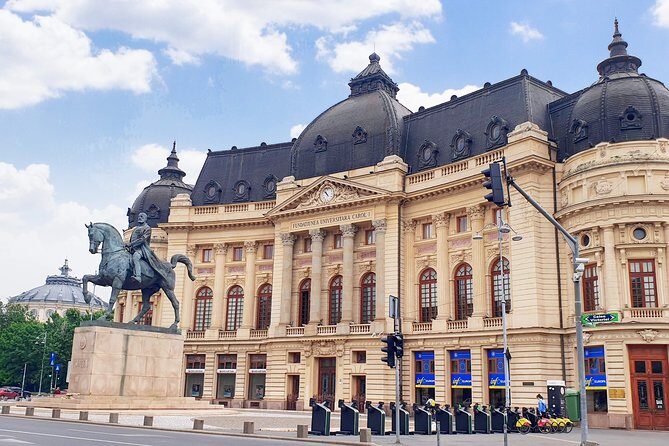
The final named stop is the Ministry of Internal Affairs, described as the former HQ of the Central Committee of the Romanian Communist Party, with an exterior visit. This part takes about 30 minutes, and admission is free.
Exterior-only visits are often seen as a compromise. Here, they can actually be a plus. The tour treats the building as a symbol of everyday control—institutions that ran the system, not just the showpiece monuments.
You’ll learn what to look for and how to interpret the setting. Even without going inside, you can understand why this kind of power infrastructure shaped daily life: security structures and party administration were part of the same machine.
As you wrap up the route, the dossier approach helps tie the final stop back to the beginning. You’re not just looking at an isolated government site; you’re seeing how different parts of the system supported each other.
The guide experience: Marius’s style and the “small touches” that help it land
The best part of any history tour is the guide’s ability to keep the story moving without losing you in details. Here, that’s exactly where this experience gets consistently strong marks, including from Comrade Marius.
What stands out in the way the tour is run:
- The guide uses narrative plus slides and video to connect events to the exact places you’re visiting.
- There are audio/video testimonials that give weight to the official story and the lived reality behind it.
- The experience includes take-home material: the dossier and printed handouts tied to each stop.
There’s also a friendly detail that costs nothing but changes the mood: a welcome Romanian chocolate. It’s a small thing, but it signals you’re not just being transferred from site to site. You’re being welcomed into the story.
Also, one review note that the title can feel a little strong. Communism Investigation is a label, and the tour is definitely more “guided investigation through sites and evidence” than a literal detective game. If you like your history tours to be straightforward and story-driven, that wording won’t bother you. If you wanted a hands-on forensic style experience, you may want to adjust your expectations before you go in.
What you get for the price: $108.14 per person and where the value comes from
At $108.14 per person, this isn’t the cheapest way to see communist landmarks. But it can be strong value for the type of tour you’re getting.
Here’s why the math often works out:
- You’re paying for private transport (air-conditioned vehicle, WiFi, and guide time), not just a walking tour.
- You get structured content: audio/video testimonials, plus a printed dossier/take-away tied to each site.
- The route focuses on key locations connected to the communist era and the 1989 storyline, including both major party-linked settings and the public squares connected to anti-communist activity.
Also, the option for group discounts can improve value if you’re traveling with others and want a private feel without the solo-tour premium.
The main cost caveat is that some entries are not included. Ceausescu Mansion and the Palace of Parliament are listed as admission tickets not included, and any optional interior visit will depend on opening times. If you plan to add interiors, budget extra for entrance fees.
Still, the structure is designed so you can do this experience even if you end up keeping the visits exterior-only.
Timing and pacing: 4–5 hours that keep the story coherent
Because the tour is scheduled for about 4 to 5 hours, the pacing has to be tight enough to cover multiple sites while still explaining the connections. The stop durations reflect that: several are around 25–30 minutes, with the heavier time at Ceausescu Mansion at about one hour.
If you’re prone to museum fatigue, this pacing may actually help. You’re not stuck in one indoor space for hours. You’re also not only standing outside guessing at what you’re seeing.
The route includes nine narrative moments with “secret facts” and storytelling beats, so even when a stop is short, you still get meaningful content. This is especially useful for first-timers who don’t want to read a history textbook on their phone for four hours.
Who should book this tour—and who might pass
This tour is a great fit if:
- You like your history with place-based explanations, not just a lecture.
- You’re curious about how communist power operated in Romania, including the pushback that culminated around 1989.
- You want a private, comfortable ride with a guide and take-home materials.
You might choose something else if:
- You only care about interior museum-style access and are disappointed by outside-only stops.
- You expect a hands-on, forensic investigation experience rather than a guided, evidence-style storytelling tour.
Also, the tone is best for travelers who can handle political history thoughtfully. Bucharest is full of monuments, and this tour aims at meaning, not shock value.
Should you book Communism Investigation in Bucharest?
I’d book it if you want one organized morning or afternoon that connects communist-era sites to the real events around the fall of the system. The “investigation” angle works because you get a dossier, printed handouts, and audio/video testimony, so the information sticks after you leave the street.
It’s also a sensible choice for couples or small groups who prefer privacy over group bus logistics. With pickup from central accommodations and a private vehicle, you spend more time listening and less time figuring things out.
If you’re mainly after big-ticket interiors, check whether you’ll be able to add the optional visits at Ceausescu Mansion or the Palace of Parliament during your dates. But even without those, the route is designed to give a clear understanding of the system and its symbols.
FAQ
FAQ
How much does the Communism Investigation Private Tour cost?
The tour price is listed at $108.14 per person.
How long is the tour?
Plan for about 4 to 5 hours.
Is the tour really private?
Yes. It’s a private tour/activity, and only your group participates.
What language will the guide speak?
The tour is offered in English, and the guide is described as speaking English/French/Italian for the entire tour.
What’s included in the price?
Included features are the story behind each visited site, a Personal Investigation Dossier for collecting evidence from each site, a private air-conditioned spacious vehicle, audio and video testimonials, and high-speed WiFi on board. Pickup is also offered from centrally located hotels or accommodation.
Are admission tickets included for every stop?
No. Admission tickets are not included for Ceausescu Mansion and the Palace of Parliament. The Tomb of the Unknown Soldier, Piaka Revolukiei, and the Ministry of Internal Affairs exterior stop are listed as free.
Do I need to tip the guide?
Tips are not included. The tour notes that bribe (tips) for the Comrade is not included.
What if I cancel or the weather is bad?
You can cancel for free up to 24 hours in advance for a full refund. The experience requires good weather, and if it’s canceled due to poor weather, you’ll be offered a different date or a full refund.