REVIEW · BUCHAREST
Bucharest Old Centre Tour
Book on Viator →Operated by Claires Bucharest Guided Tours · Bookable on Viator
Bucharest’s Old Centre hits differently with a guide. You get a tight 1-hour walking tour that connects the dots between places like the Princely Old Court, St Anton Orthodox Church, Strada Lipscani, and the Stavropoleos Monastery. I especially like how the guide turns street names and buildings into real stories, and I also like the comfort factor of hotel pickup and drop-off from selected central hotels. One thing to consider: you’ll be on foot on uneven old-stone streets, so bring sturdy shoes and expect a weather-dependent experience.
The meeting point is easy to find, and the route is built for orientation. By the time you finish, you won’t just know where things are—you’ll understand why Bucharest looks the way it does in the Old Centre.
In This Review
- Quick hits on the Bucharest Old Centre walk
- Why a guided Old Centre route makes Bucharest click
- Starting out at the National Museum of Romanian History
- Entering the Old Centre: inns, churches, and the “street story”
- National History Museum area and the old Post Office building
- The Old Princely Palace ruins and Vlad the Impaler
- St Anton Orthodox Church: Wallachian rulers made visible
- The oldest and famous inn moments: Gabroveni and the old-centre core
- National Bank grandeur and the layered ruins story
- Stavropoleos Monastery built in 1724: a calm, historic finish
- Price, timing, and what you’re really paying for
- Who this tour suits best (and who might want something else)
- What the guide does well (based on real feedback)
- Practical tips before you go
- Should you book this Bucharest Old Centre Tour?
- FAQ
- How long is the Bucharest Old Centre Tour?
- Where does the tour start?
- Does the tour include hotel pickup and drop-off?
- Is this a private tour?
- What’s included in the price?
- Is food included?
- What should I know about weather?
- What is the cancellation window?
Quick hits on the Bucharest Old Centre walk
- Hotel pickup and drop-off from selected central hotels saves time and energy
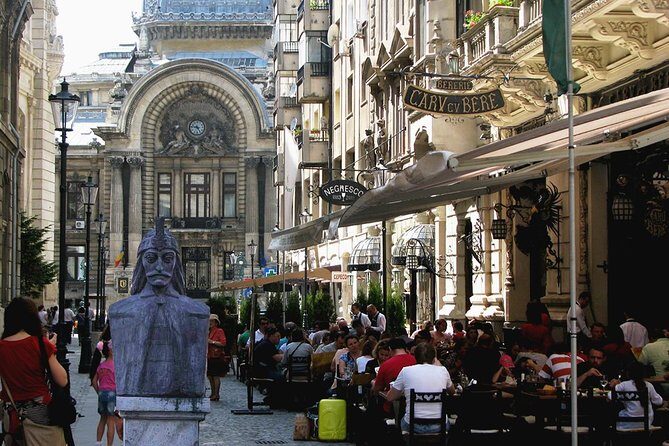
- Strada Lipscani gives you the old-centre “spine” to explore, with real context
- Princely Palace and Vlad the Impaler ruins add a dramatic, specific story beat
- St Anton Orthodox Church is explained in relation to Wallachian rulers
- National Bank area and inn ruins show how modern Bucharest sits on older layers
- Stavropoleos Monastery (built 1724) is a strong finish point with atmosphere
Why a guided Old Centre route makes Bucharest click
Bucharest can feel confusing at first, even when you’re standing in front of famous sights. Buildings sit close together, names sound similar, and the story of the city is layered—literally, in places where ruins peek out behind newer structures. A guided walk fixes that fast.
This tour is designed for one simple goal: get your bearings quickly. In about an hour, you move through the Old Centre by foot and get a guided narrative that connects landmarks that are otherwise easy to treat like separate postcards. That’s the difference between reading about Bucharest and understanding it while you’re walking.
I also like that this isn’t a long, slow slog. If you’re on a tight schedule, you can still cover major areas and leave with enough direction to explore on your own later. And since it’s a private tour/activity, your group can set the tone and ask questions without feeling rushed by other people.
You can also read our reviews of more tours and experiences in Bucharest.

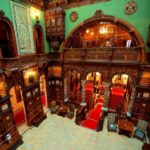
Starting out at the National Museum of Romanian History
You begin at the National Museum of Romanian History on Calea Victoriei 12. It’s a good anchor because it puts you in the center of things right away. From this starting point, the Old Centre route makes more sense—like the city is unfolding in the direction you’re walking.
Even if you’ve visited Bucharest before, a start at a major landmark helps you orient. You’re not wandering without a plan, and you’re not forced into a stiff, museum-only approach. You’re set up for a walk that includes streets, churches, inns, and the kinds of buildings that show how power and commerce worked in different eras.
If you want to make the most of the hour, arrive a few minutes early and wear shoes you’re comfortable standing and walking in. The Old Centre favors pedestrians, but it’s not designed for delicate footwear.
Entering the Old Centre: inns, churches, and the “street story”
One of the first things you’ll do is enter the Old Centre area, described as dating back over 500 years. That’s not just marketing language. As you move, you’ll hear how this part of Bucharest became a hub for travelers, traders, and local life—through institutions like old inns and coffeehouses, and through religious landmarks.
The early stretch focuses on place names and what they used to mean. You’ll hear history tied to the Princely Old Court and buildings and sites such as:
- the Old Coffee House
- Gabroveni Inn
- Linden Tree Inn
- the ruins of Șerban Voda Inn
- St Anton Church and more nearby stops
Here’s why this section matters. Inns and coffeehouses weren’t just background. They helped shape the flow of people and information through the city. Once you understand that, Strada Lipscani later on hits differently, because you can see it as a living corridor—not just a street you pass.
Potential drawback in this part: it’s a walking experience, so you’ll need to stay attentive as you go. If you’d rather soak up sites one by one at a relaxed pace, you might find the route feels a little brisk. On the bright side, it’s exactly what you want if you’re trying to cover a lot without burning a whole day.
National History Museum area and the old Post Office building
Next, the tour shifts toward the National History Museum area and includes the former Post Office building. This is the section that helps you understand how Bucharest grew into a city with institutions—systems for communication, administration, and public life.
The practical value here is that you start to connect what you see with how cities function. A museum and a post office might not look related at first glance, but in a guided context they become part of one big idea: Bucharest’s buildings were built for public purpose, and different eras used them in different ways.
This stop also helps you appreciate the rhythm of the route. You’re not only looking at houses of worship or ruins. You’re also learning how civic buildings fit into the story of the city.
The Old Princely Palace ruins and Vlad the Impaler
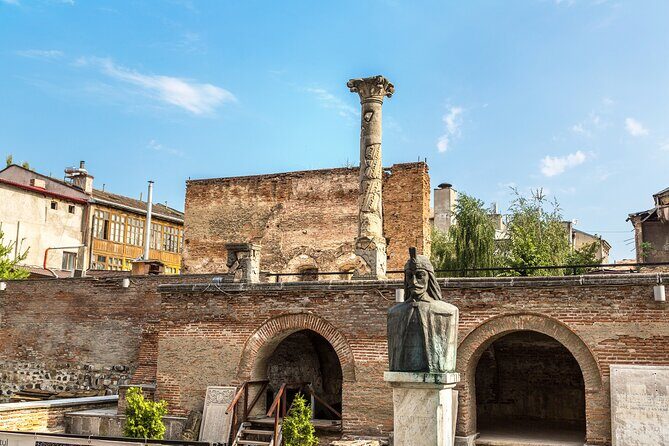
One of the most dramatic beats on the walk is seeing the ruins of the Old Princely Palace, described as one of the oldest buildings in Bucharest and once a residence of Vlad the Impaler. Even in ruin form, this kind of site carries weight. You’re not just seeing a leftover wall. You’re seeing a physical reminder of political power in the city’s past.
This stop is particularly good if you like history that feels specific, not generic. The tour doesn’t just name-drop a ruler; it places that connection into the location itself, which is much more memorable.
A small note: ruins can be visually tricky if you’re expecting a complete building. You’ll get more out of it if you listen for what the guide points out—where things used to be, and what the site represents in Bucharest’s timeline.




St Anton Orthodox Church: Wallachian rulers made visible
After the palace ruins, you’ll hear the history of St Anton Orthodox Church. The tour frames it as the church of Wallachian rulers, located in the heart of Bucharest. That’s a key detail, because it explains why this church belongs in the same conversation as power, not just faith.
This is the kind of stop where a guide really helps. Churches can be beautiful and still feel like you’re just looking at architecture unless someone points out what makes the site historically meaningful. Here, the guide ties the church to leadership and regional history, helping you understand why it’s positioned the way it is and why it matters.
If you’re the type of traveler who likes seeing how religion and politics influenced the same streets, this is one of the best moments on the tour.
The oldest and famous inn moments: Gabroveni and the old-centre core
The itinerary includes time focused on the city’s oldest and most famous inn, plus the history of that ancient inn in the oldest part of Bucharest. Earlier, you’ll also hear the name Gabroveni Inn. That makes this portion feel like a deeper zoom on what you already learned at the start.
Why should you care about an inn on a walking tour? Because inns are where practical history lives. They show where travelers stayed, where transactions happened, and how a city hosted outsiders while shaping local culture.
Then the tour brings you to Strada Lipscani, described as the heart of the old centre. If you’ve ever walked a famous street and thought it felt like a set, Lipscani is a different feeling once you’ve got context for what it used to do. Strada Lipscani stops being just scenery and starts becoming a timeline.
National Bank grandeur and the layered ruins story

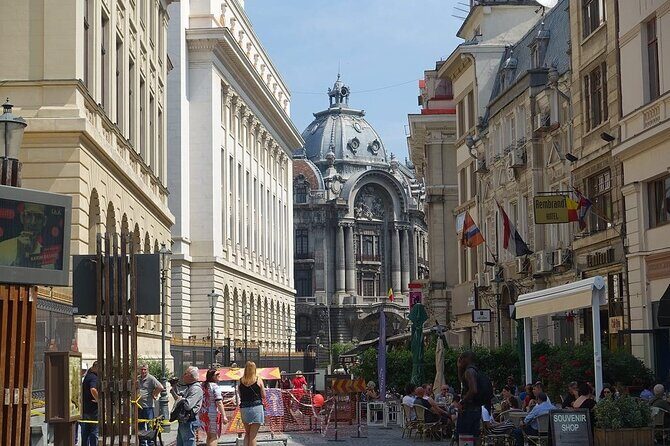
Another standout stop is the National Bank area. You’ll see the grandeur of Romania’s National Bank and hear about its history. The tour also mentions ruins tied to the former Șerban Voda Inn in the same area.
This is where Bucharest’s layers really make sense. You’re looking at a major modern institution while learning that older structures once stood in the same broader footprint. Ruins and grand facades can coexist here, and the guide helps you understand why that matters.
This section is great if you like city history that’s visible, not trapped in a textbook. It also gives you a useful mental model: when you see an impressive building now, don’t assume it replaced nothing. Ask what came before.
Stavropoleos Monastery built in 1724: a calm, historic finish
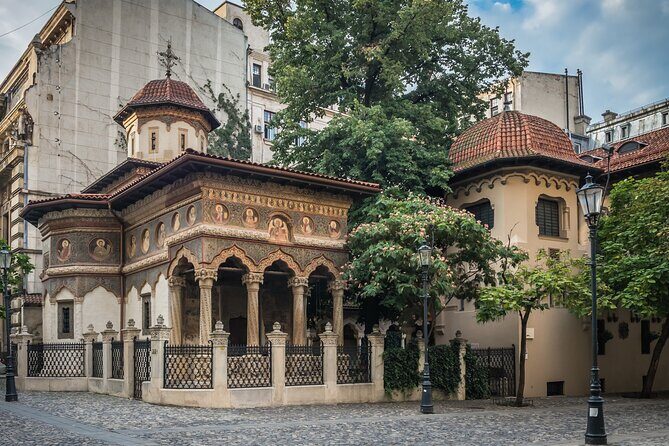
The tour ends with the monastery built in 1724. You’ll also see Stavropoleos Monastery mentioned as part of the experience’s landmark set, and it’s a strong way to close the walk.
Monasteries tend to slow you down, even if you’re only stopping briefly. After a route that covers inns, palaces, churches, and civic buildings, this kind of place gives you a contrast: a quieter historical atmosphere. It’s the kind of ending that helps the whole hour feel coherent, like the city’s story doesn’t only belong to power and commerce.
If you’re thinking about continuing your day afterward, this is also a convenient mental landing point. You’ll have a clearer sense of where you were and what kind of streets you just walked through.
Price, timing, and what you’re really paying for
At $16.77 per person for about an hour, this is priced to feel accessible—especially because it includes a local guide and hotel pickup and drop-off (selected hotels only). When you factor in the pickup/return, you’re not just buying commentary. You’re buying time saved and a route that already makes sense.
Two more details affect value:
- You can choose between morning or afternoon departure, so it fits your pacing.
- It’s private, meaning only your group participates, which is often more comfortable and easier to ask questions in.
One more thing: the tour uses a mobile ticket, and confirmation is handled unless you book very close to travel time. That kind of setup usually means less hassle once you’re in the city.
If you’re a solo traveler or a pair, this type of tour can be a smart “orientation hour.” It’s not trying to replace a day-long exploration. It’s trying to make your next steps after the tour better.
Who this tour suits best (and who might want something else)
This walk fits you if you want:
- a fast orientation to Bucharest’s Old Centre
- history explained while you’re walking the actual streets
- a guide who can connect churches, inns, and civic buildings into one story
It also suits travelers who appreciate practical help. Pickup and drop-off from selected central hotels matters if you’re juggling energy, jet lag, or just tight sightseeing time.
If you’re the type who hates walking or struggles with uneven stone, consider your footwear carefully. The tour is about being on foot in older streets, and the flag-stone surfaces can be a little unforgiving—so you’ll be happier with grippy soles.
What the guide does well (based on real feedback)
The experience is built around the guide’s ability to make eras feel understandable and connected. One guide name stands out in the feedback: Alina. People praised her knowledge of multiple eras of Bucharest, her humor, and the way she brought a local feel to lesser-known places. That matches the tour style here: you’re not only seeing landmarks. You’re learning how they fit together.
One practical tip also came through clearly: bring sturdy shoes because you’ll be walking across flag stones. That’s the kind of small reminder that makes a big difference on a short tour, so take it seriously.
Practical tips before you go
- Wear shoes with grip for older stone streets.
- Bring a light layer if the weather turns, since the experience requires good weather.
- If you’re taking photos, expect that the most rewarding moments are at specific stops—don’t rely on random street shots. Listen for what matters, then frame it.
- Plan to end with a little flexibility. The tour ends back at the meeting point, so you can either head off to another site or stay in the area while it’s still fresh.
Should you book this Bucharest Old Centre Tour?
I’d book it if you want an efficient, guided hour that gives you real context for Bucharest’s Old Centre. The mix of places—Princely Old Court, St Anton Orthodox Church, Strada Lipscani, the Old Princely Palace ruins tied to Vlad the Impaler, National Bank history, and the monastery built in 1724—works well together. You leave feeling like you understand how the city’s layers connect.
I wouldn’t prioritize it if you hate walking, want a slow museum-style pace, or need a tour with very structured “viewing time” at each monument. But for most visitors, it’s a solid value pick: $16.77 for guided orientation plus pickup/drop-off is hard to beat when you’re trying to make the most of limited time.
If you’re staying central and you want a local narrative without committing to a full day, this is the kind of tour that makes the rest of your Bucharest itinerary easier.
FAQ
How long is the Bucharest Old Centre Tour?
It runs for about 1 hour.
Where does the tour start?
The meeting point is the National Museum of Romanian History, Calea Victoriei 12, București 030026, Romania.
Does the tour include hotel pickup and drop-off?
Yes, pickup and drop-off are included from selected central hotels.
Is this a private tour?
Yes. It’s private, so only your group will participate.
What’s included in the price?
The tour includes a local guide and a professional guide, plus hotel pickup and drop-off (selected hotels only).
Is food included?
No. Food and drinks are not included.
What should I know about weather?
The experience requires good weather. If it’s canceled due to poor weather, you’ll be offered a different date or a full refund.
What is the cancellation window?
You can cancel for a full refund up to 24 hours in advance. If you cancel less than 24 hours before the start time, the amount paid will not be refunded.