REVIEW · BUCHAREST
5h Bucharest City Tour by Car/Minivan – Small Group max 7 people
Book on Viator →Operated by Supplier · Bookable on Viator
Bucharest can feel like a lot at first. This 5-hour small-group city tour by car/minivan helps you get your bearings fast, mixing big monuments, neighborhoods, and a few calmer stops so you understand what shaped the city. I especially like how the route pairs famous communist-era architecture with older spiritual sites, and how the guide-led story gives the streets meaning instead of just points on a map.
Two things I’d count on: hotel pickup that saves your morning, and a guide who can slow down at the right moments so the stops actually land. The one catch is timing: it’s a fast-moving day, with mostly short photo stops, so if you want long museum time, you’ll need to plan extra time on your own.
In This Review
- Key things to know before you go
- A 7-Person Bucharest Drive That Actually Helps You Orient
- Palace of Parliament: The World’s Heaviest Flex, Explained
- People’s Salvation Cathedral: Faith on a Monumental Scale
- Ferentari: Learning Bucharest Beyond the Postcards
- Carol Park and the Tomb of the Unknown Soldier: A Monument That Changes Meaning
- Văcărești Natural Park: The Delta of Bucharest in City Form
- Bucur the Shepherd’s Church: The Oldest-Surviving-Feel Stop
- Unirii Square and University Square: Public Life, Revolution Energy
- Ceaușescu’s Mansion (Spring Palace): Luxury, Secrecy, and What That Means
- Village Museum Plus Romanian Culture: When 15 Minutes Isn’t Enough
- Triumphal Arch, National Opera, and the Athenaeum: Power Through Art
- Revolution Square and Calea Victoriei: Streets That Explain a Country
- Price and Value: What $95.12 Buys You (and What It Doesn’t)
- Should You Book This Bucharest Car/Minivan Tour?
- FAQ
- How long is the Bucharest City Tour?
- What is the group size limit?
- Is hotel pickup included?
- What language is the tour guide?
- Are attraction tickets included?
- How much does the Village Museum cost?
- How much does the Romanian Athenaeum cost?
- What time does the tour start?
- What’s the cancellation policy?
Key things to know before you go
- Max 7 people means you’re not lost in a crowd; you’ll actually hear the explanations.
- Hotel pickup keeps the start smooth, with a centrally timed 9:30 am departure.
- Most entrances are free, but you’ll pay for the Village Museum and the Romanian Athenaeum.
- A balanced mix of sites: Parliament, Orthodox landmarks, Revolution Square, and cultural stops.
- Urban nature stop at Văcărești Natural Park, the Delta of Bucharest.
- Photo-friendly route with panoramic driving and picture stops throughout the day.
A 7-Person Bucharest Drive That Actually Helps You Orient
You don’t need a full week to understand Bucharest, but you do need a plan. This tour is built for that first-day feeling—when the city looks familiar on Instagram, yet you still can’t connect why things are where they are.
With a small group (up to 7) and car/minivan transport, you get two big advantages. First, you cover ground without wasting half your morning on transfers and waiting. Second, your guide has enough time to explain what you’re seeing as you go—so Parliament isn’t just a photo, it’s a story.
You’ll start at 9:30 am, with pickup from your centrally located hotel. From there, it’s a panoramic drive with short stops for photos and context. Most stops are around 15 minutes, so think of it as: see a lot, learn the main threads, and decide what deserves a longer return visit later.
You can also read our reviews of more city tours in Bucharest


Palace of Parliament: The World’s Heaviest Flex, Explained
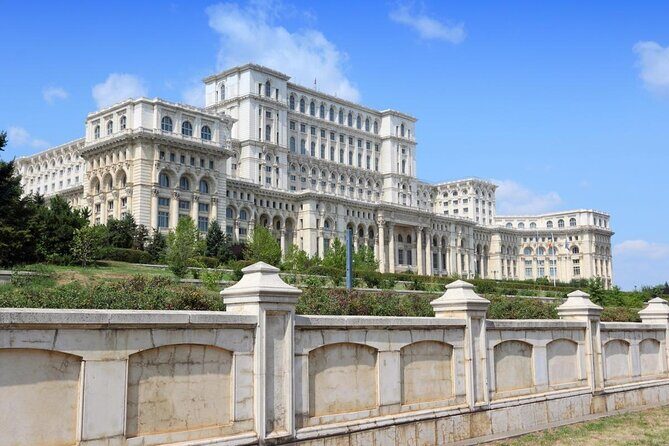
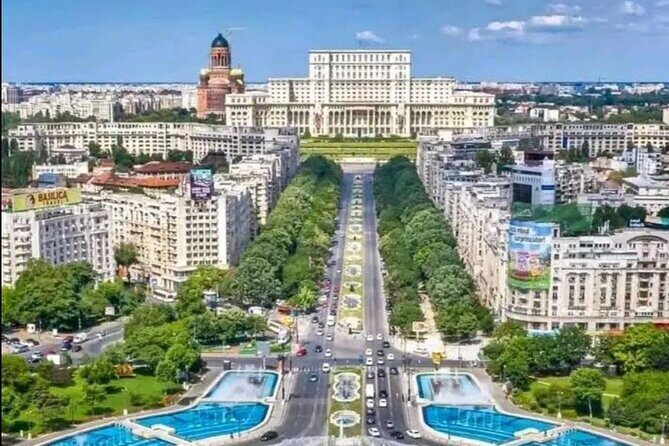
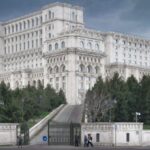
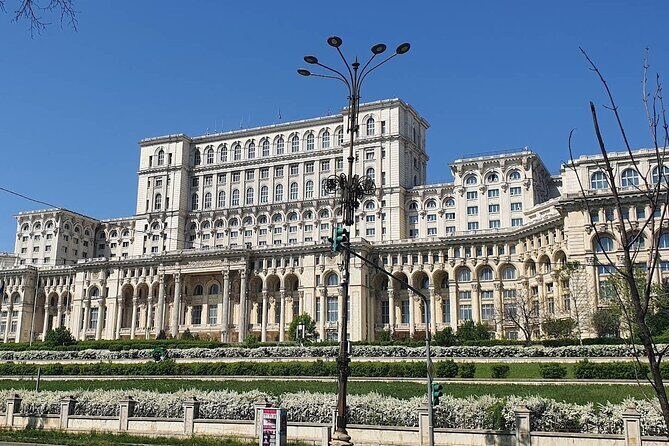
The tour begins with the Palace of Parliament, often described with dramatic numbers because it’s hard to grasp otherwise. It’s stated as the heaviest building in the world, at about 4,098,500,000 kilograms.
Why this stop matters for you: this is Bucharest’s “scale of power” moment. Even if you don’t read every plaque, the building size communicates something. It’s part political symbol, part architectural statement, and part reminder of how the communist regime reshaped the city and its priorities.
You only have about 15 minutes here, so don’t plan to absorb everything like a museum. Instead, use that time well:
- Walk slowly enough to take in proportions.
- Look for the relationship between the palace and the surrounding areas.
- Ask the guide what to notice first—because once someone points it out, the building starts making sense.
People’s Salvation Cathedral: Faith on a Monumental Scale
Next up is Catedrala Mântuirii Neamului (People’s Salvation Cathedral). It’s near the Palace of Parliament, and that proximity is part of the point: you’re moving from a massive political project to an equally ambitious religious one.
The details you’ll hear matter. Construction began in 2010, the cathedral was consecrated in 2018, and it’s designed as what’s claimed to be the largest Orthodox church in the world. The architecture is described as Byzantine-inspired, with a strong sense of national identity and spiritual unity.
Drawback to consider: if the cathedral is under development or you’re expecting a fully finished, museum-like flow everywhere, you might notice areas that feel work-in-progress. The visit is short, so aim to appreciate the form and symbolism rather than checking off every interior detail.
Ferentari: Learning Bucharest Beyond the Postcards

Then you drive by Ferentari, a southern neighborhood known for social hardship—poverty, unemployment, and challenges with infrastructure and public services. It has a reputation for being one of the more difficult areas of the city.
Here’s why this stop is valuable: it prevents Bucharest from becoming only “pretty centers and monuments.” You get a quick reality check on how uneven city life can be, and you also learn that there’s still a diverse community with resilience and ongoing efforts toward social inclusion.
Time is limited, so you won’t do a deep visit. But you can still use the moment responsibly: look at the neighborhood layout, listen to what your guide explains, and keep your expectations grounded. This isn’t sightseeing as fantasy; it’s learning the city as it is.
Carol Park and the Tomb of the Unknown Soldier: A Monument That Changes Meaning
At Carol Park (Parcul Carol), you’ll see the tall red granite memorial. It was originally built in 1963 as a mausoleum for Communist leaders. After 1989, it was repurposed, and since 2006 it serves as the Tomb of the Unknown Soldier, honoring Romanian soldiers who died in battle.
This stop is a great example of how Bucharest layers eras on top of each other. One structure, multiple meanings—history isn’t gone, it just gets rewritten.
Practical note: you’ll only have about 15 minutes, but the park setting helps. You can step away from the heavy feeling of big state buildings and let your eyes rest on something calmer while still soaking up the symbolism.

Văcărești Natural Park: The Delta of Bucharest in City Form

One of the most interesting surprises on the route is Văcărești Natural Park, nicknamed the Delta of Bucharest. It’s described as a unique urban nature reserve around 190 hectares, created on the site of an unfinished communist-era reservoir.
If you like wildlife and quiet detours, this stop is a treat. You’ll be told it’s home to birds, amphibians, and rare plants—exact details can vary with the season, but the main point stays the same: you’re getting nature inside a major European capital.
Why it’s worth your time even if it’s only 15 minutes: it changes your mental picture of Bucharest. After monuments and architecture, this gives you a different rhythm and helps the city feel human-scale again.
Bucur the Shepherd’s Church: The Oldest-Surviving-Feel Stop
Next is Biserica lui Bucur Ciobanul (Bucur the Shepherd’s Church). This is a small Orthodox church near Radu Vodă Monastery, linked to the legend that Bucur the shepherd gave the city its name. The exact origins are debated, but the church dates back to the 18th century and is described as one of the oldest surviving religious buildings in Bucharest.
What you’ll likely notice fast: the vibe is calmer and more intimate than the major landmarks. That matters, because it gives you a pause between heavier sites and helps you understand that Bucharest’s identity isn’t only political or architectural.
Limitation: small churches can feel easy to rush. Since your stop is brief, don’t try to “finish” the site. Instead, take in the exterior details and let the guide’s story anchor what you’re seeing.
Unirii Square and University Square: Public Life, Revolution Energy
Two central squares bring you back into the pulse of the city: Piața Unirii and Piața Universității.
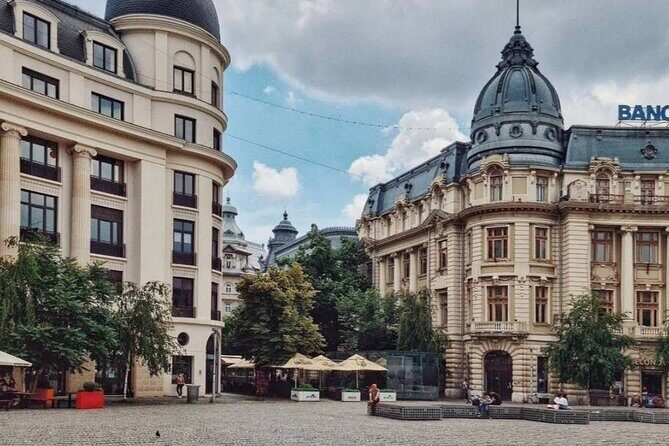
At Unirii Square, you’ll be in one of Bucharest’s biggest and most important public squares. It’s a hub for transportation and commerce, surrounded by shopping centers, historic buildings, and the impressive Unirii Boulevard. It’s also known for large fountains and open space. In a short stop, it works as a reset point—big city energy, easy to photograph, and a good place to hear how neighborhoods connect.
Then comes University Square, in front of the University of Bucharest. This one has an extra layer: it’s connected to Romania’s 1989 Revolution and later public demonstrations. You’ll also hear about nearby important buildings like the National Theatre, and you’ll see statues of notable Romanian figures.
This pairing is smart for you because it shows two faces of civic space. One is daily movement and commerce. The other is civic memory and political change.
Ceaușescu’s Mansion (Spring Palace): Luxury, Secrecy, and What That Means
One of the most striking stops is Ceaușescu’s Mansion, also known as the Spring Palace (Palatul Primăverii). It was the former residence of Nicolae Ceaușescu. During his rule, it was kept secret, and it opened to the public in 2016.
The interior details you’ll learn about—opulent interiors, grand halls, a private cinema, and a lavish indoor pool—don’t just sound extravagant. They explain why this place feels eerie. You’re seeing luxury built into a political system that affected everyday life dramatically.
Why this stop is high value even in a short visit: it connects the dots between the huge state projects (like the Palace of Parliament) and private power. The guide’s context helps you understand how one ideology shaped both the public and private worlds.
Village Museum Plus Romanian Culture: When 15 Minutes Isn’t Enough
After the big monuments and squares, the tour gives you one longer cultural stop: Muzeul Național al Satului Dimitrie Gusti (the Village Museum). The time here is listed as 1 hour, and that extra hour is important because the museum is open-air and takes time to walk.
This is an ethnographic, open-air museum focused on traditional Romanian village life. It’s described as having over 200 authentic houses, farms, and churches brought from different regions of the country. You’ll hear it was founded in 1936 and that it’s among the oldest and largest open-air museums in Europe. It sits by Herăstrău Lake, which adds a different kind of atmosphere—less “monumental city,” more lived-in Romania.
Cost matters here. Entrance for the Village Museum is listed as 40 RON (about €8) and is not included. If you’re budget-conscious, this is the one stop you should mentally pre-plan.
Also note the practical expectation: it’s not a quick photo stop museum. If you care about architecture and how people lived, this hour is exactly what you need to avoid missing the best parts.
Triumphal Arch, National Opera, and the Athenaeum: Power Through Art
The afternoon brings you monuments of national pride and then directly into the arts.
First is the Triumph Arch (Arcul de Triumf), originally built in 1922 to honor World War I soldiers. It was later rebuilt in granite in 1936 and is about 27 meters tall. It’s inspired by the Arc de Triomphe in Paris, with sculptural decorations by notable Romanian artists. It’s also described as a key site for national celebrations and military parades.
This stop is a clean history marker. Even if you don’t know every date, the structure’s purpose is clear: it turns military memory into public architecture.
Then you’ll pass by and stop at cultural institutions:
- Opera Națională București (National Opera): a premier opera and ballet theater founded in 1921.
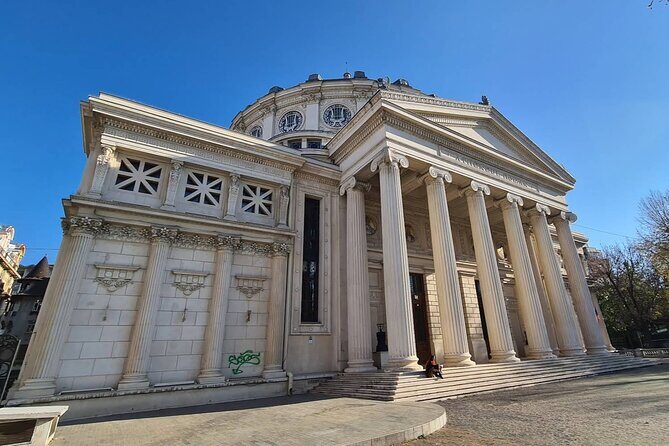
- Ateneul Român (Romanian Athenaeum): a concert hall built in 1888, famous for neoclassical architecture and a domed roof. It’s home to the George Enescu Philharmonic Orchestra and hosts classical concerts and cultural events.
Here’s the one practical caveat: the Athenaeum entrance is not included and is listed as 15 RON cash only (about €3). Your stop time is around 30 minutes, so this is one of the places where you can actually slow down and enjoy the setting if you’re willing to pay the entry fee.
Revolution Square and Calea Victoriei: Streets That Explain a Country
The emotional center of the route comes at Revolution Square (Piața Revoluției). It’s described as the main site of the 1989 Revolution that ended communist rule, surrounded by important buildings like the former Royal Palace and the Athenaeum. You’ll see memorials and statues honoring revolution heroes, and the square remains a powerful symbol of freedom and democracy.
Why this stop works on a guided day: the guide can connect what you saw earlier in the communist-era sites to what happened here. In Bucharest, these places don’t feel random when you put them in sequence.
Finally, you’ll wrap with Calea Victoriei, one of Bucharest’s most famous historic streets. It’s lined with elegant architecture and landmarks, with museums, shops, cafes, and theaters. It’s been a cultural and commercial hub since the 17th century and is still one of the best streets to feel the city’s style.
This ending is practical: after monuments and squares, a historic street is a good way to keep your last impressions “walkable,” so you know where to go if you want more time later.
Price and Value: What $95.12 Buys You (and What It Doesn’t)
At $95.12 per person for about 5 hours, this tour isn’t trying to be cheap. It’s priced for convenience and for the quality of the package: small group size, hotel pickup, and a guided route designed around major sights.
The biggest value lever is that many stops list free admission—so you’re not constantly paying to enter things you barely see. The two costs you should plan for are:
- Village Museum: 40 RON (about €8), not included
- Romanian Athenaeum: 15 RON cash only (about €3), not included
If those two are on your must-see list, the price suddenly feels reasonable because you’re paying for transport and guiding, not for a pile of separate ticket costs. If you don’t care about museums, you may feel the time is a bit structured for your taste—but you still get the architecture and square stops.
One more value factor: English language guide and an itinerary that balances large landmarks with at least a couple of quieter cultural moments (churches, nature park). For a first-time visitor, that mix reduces the risk of spending your limited time only in the most obvious photo spots.
Should You Book This Bucharest Car/Minivan Tour?
Book it if you want a guided overview that covers a lot of major Bucharest landmarks in one morning-to-early-afternoon window, without the stress of navigating between scattered sights. The small group format is the real advantage, especially when you care about context.
Skip it or add a plan B if you want long, slow museum time everywhere. The day includes one full 1-hour museum stop, but most other stops are short. You’ll likely come away with favorites you’ll want to return to—so treat this as the city-introduction that tells you where to spend your next hours.
If you’re going specifically for the arts and the 20th-century story, you’ll appreciate how the route connects big power symbols with Revolution Square and then finishes on cultural streets like Calea Victoriei.
FAQ
How long is the Bucharest City Tour?
The tour runs for about 5 hours.
What is the group size limit?
It’s a small group with a maximum of 7 people.
Is hotel pickup included?
Yes. Hotel pickup is included from centrally located hotels.
What language is the tour guide?
The tour is offered with a professional guide in English.
Are attraction tickets included?
Most stops list free admission, but the Village Museum entrance and the Romanian Athenaeum entrance are not included.
How much does the Village Museum cost?
The Village Museum entrance is listed as 40 RON (about €8) per person and is not included.
How much does the Romanian Athenaeum cost?
The Romanian Athenaeum entrance is listed as 15 RON cash only (about €3) per person.
What time does the tour start?
The start time is 9:30 am.
What’s the cancellation policy?
Cancellation is free up to 24 hours in advance for a full refund. Changes made less than 24 hours before the start time aren’t accepted.