REVIEW · BUCHAREST
Taste of Bucharest: Food and Culture Private Tour
Book on Viator →Operated by Crafted Tours Romania · Bookable on Viator
Bucharest tastes better with history in tow. This private tour strings together Romanian food tastings and big-city landmarks, from the arcades near Amzei to Old Town’s backstreets. You’ll also get a guided walk that explains what you’re seeing, not just where to take photos.
I especially like the well-paced food stops, with bites spaced out instead of one long, rushed scramble. You also get a proper sit-down restaurant moment, where the tasting feels relaxed rather than like a snack sprint. And the guide, Manuela, is the kind of person who turns architecture and everyday life into stories you can actually remember.
One consideration: it’s a walking tour, so you’ll want comfortable shoes and a flexible stomach—there’s enough food here to feel satisfying, not light.
In This Review
- Key highlights at a glance
- Bucharest food, without the food-tour feeling
- Starting at Amzei Church and getting oriented fast
- Ateneul Roman: an outside look that sets the tone
- Piața Revoluției: bringing the 1989 story to street level
- Calea Victoriei and the boulevard view of power
- Paul Gottereau’s landmark and the royal-era buildings
- Old Town walking: cafes, 19th-century streets, and real atmosphere
- Stavropoleos Monastery: a quiet pause in the middle of the action
- Macca Villacrosse Passage: glass-roof charm and hookah cafés
- More royal palaces and civic grandeur near Lipscani
- Lipscani: finishing on an old street with modern energy
- What you’ll eat and drink (and why it matters)
- Drinks you can actually choose
- Manuela’s role: why the stories land
- Value: $135.17 and what you get for it
- Practical tips so the day feels easy
- Who this tour suits best
- Should you book this Taste of Bucharest tour?
- FAQ
- How long is the Taste of Bucharest: Food and Culture private tour?
- What does the tour cost?
- Is this tour private or shared?
- How many food tastings and drinks are included?
- Where does the tour start and end?
- What if the weather is bad?
Key highlights at a glance

- Manuela’s then-and-now storytelling using a tablet with photos and video moments to make Bucharest’s history click
- Up to 8 local tastings plus 4 drinks you choose (beer, wine, brandy, buttermilk, coffee, soft drink, or water)
- A simple route that starts at Amzei Church and winds into Old Town, ending near the National Bank on Strada Lipscani
- Revolution Square stop tied to the events of 1989, with visuals that add context fast
- Iconic Bucharest architecture along Calea Victoriei, from grand civic buildings to royal-era landmarks
- Old Town classics like Stavropoleos Monastery and the glass-roofed Macca Villacrosse Passage
Bucharest food, without the food-tour feeling
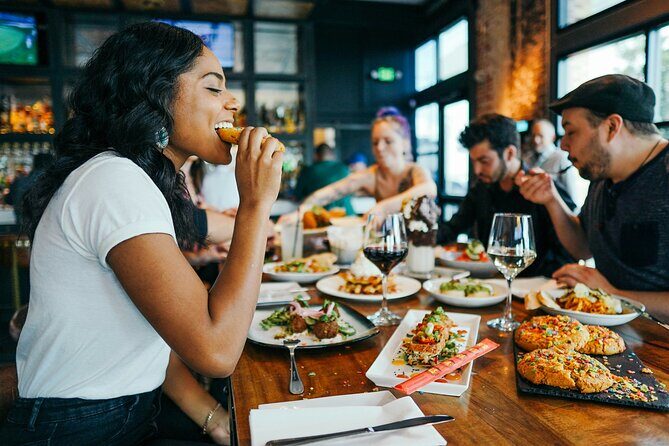
If you’re trying to understand Bucharest, eating your way around the city is a smart shortcut. This tour pairs food with the visual stuff that shaped modern Bucharest: theaters, boulevards, squares, churches, and passages. The result is a day that feels like “how the city got here,” with snacks that keep you moving at a comfortable pace.
I like that it’s private. You’re not squeezed into a big herd of strangers, and the guide can adjust the flow for your group. In the reviews, people repeatedly point to Manuela’s energy and her habit of answering questions beyond the standard script.
You can also read our reviews of more food & drink experiences in Bucharest


Starting at Amzei Church and getting oriented fast
The meeting point is Amzei Church on Strada Biserica Amzei 12. From there, the tour works its way through central Bucharest, so you get an organized “first look” at how the city layers different eras on top of each other.
That early orientation matters. Bucharest’s streets can feel a little confusing at first—broad avenues, sudden alleys, and monumental buildings that don’t always line up with what you’d expect. Starting with a guided walk helps you build a mental map quickly, and then the sights make more sense as you move.
Ateneul Roman: an outside look that sets the tone
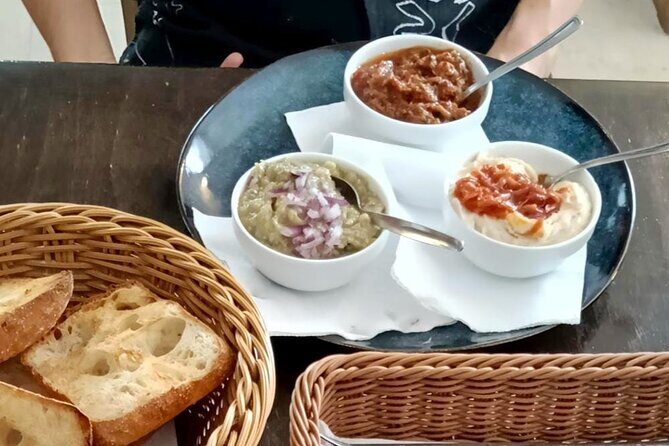
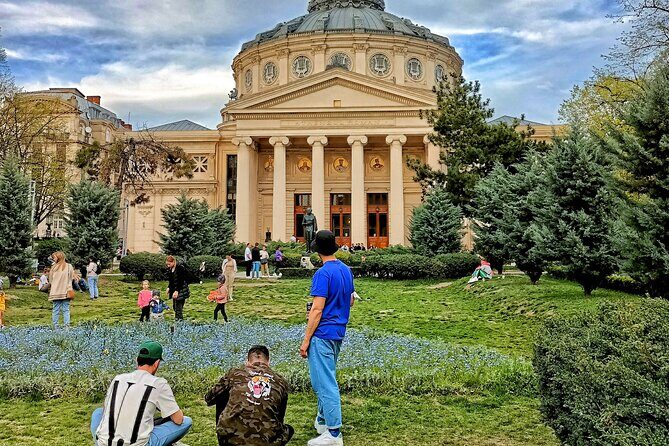
The tour begins with an outside stop at Ateneul Roman. It’s one of Bucharest’s most emblematic buildings and it resembles an ancient Greek temple in its look and proportions.
What I like about starting here is the mood it sets. Even from outside, you’re reminded that Bucharest wants to be seen as cultural and historic—not just functional. Since the admission ticket is listed as free for this stop, it’s also an easy win early on.
Piața Revoluției: bringing the 1989 story to street level
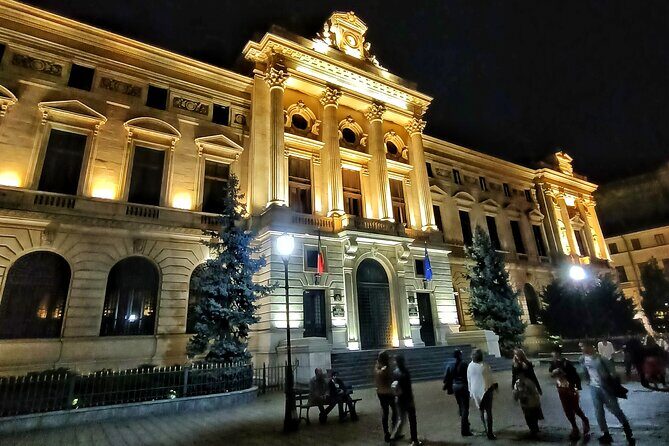
Next comes Piața Revoluției, the square tied to the last speech by former communist president Nicolae Ceaușescu in 1989. The tour doesn’t treat this as a vague “communism happened here” moment. You’ll see pictures and video presentations that set the scene, which helps the names and dates feel real.
This is a good stop for anyone who’s curious but doesn’t want to spend hours in a museum. It also balances the day: one moment you’re looking at monumental architecture, and the next you’re grounded in a specific turning point that still shapes Romania’s public story.
Calea Victoriei and the boulevard view of power
After the square, you walk along Calea Victoriei, widely considered Bucharest’s most elegant avenue. This is where the city shows off its grand scale—major buildings, monuments, and the kind of long, straight streets that make a guided route feel efficient.
The value here is perspective. By the time you’re walking the boulevard, you understand why Bucharest has those dramatic architectural statements. You’re not just seeing pretty facades; you’re seeing how rulers, institutions, and wealth wanted to be remembered.
A few more Bucharest tours and experiences worth a look


Paul Gottereau’s landmark and the royal-era buildings
The route includes a landmark building in an eclectic style, built with sponsorship connected to King Carol I and designed by French architect Paul Gottereau. You’ll also see Carol I’s equestrian statue in front of the nearby library.
Then the tour shifts toward royal-era architecture, including the winter Royal Residence of Romanian kings (dated 1937). This palace was built under the supervision of Queen Maria and her son, King Carol II—two names that come up again and again when you trace Romania’s modernization and royal image.
A quick practical note: these stops help you “read” Bucharest. The city’s different styles aren’t random—they’re linked to who had influence, what they wanted to project, and how Bucharest wished to compare itself to Western Europe.
Old Town walking: cafes, 19th-century streets, and real atmosphere
Old Town is where the pace often turns more relaxed. You get a walking segment of about 45 minutes through the central area with cafes, pubs, and restaurants, plus lots of 19th-century architecture.
This is also where the food culture fits naturally. Bucharest’s Old Town isn’t only about history—it’s lived-in. You can feel the daily rhythm even while you’re stopping for bites and explanations.
Stavropoleos Monastery: a quiet pause in the middle of the action
A short stop brings you to Stavropoleos Monastery, dating from 1724. It’s one of the oldest churches in Bucharest and it feels tucked away from the main flow of the street scene.
This pause is useful. Food tours can blur together if every stop is loud, busy, and fast. A church courtyard moment gives your brain a break and gives you something more reflective to look at—especially after the more political stop at Piața Revoluției.
Macca Villacrosse Passage: glass-roof charm and hookah cafés
Then you’ll pass through Macca Villacrosse Passage, a covered passage with a glass roof. It’s known for its hookah cafés, and the enclosed design gives the area a different sound and feel than the open streets.
I like passages like this because they show a different kind of Bucharest life: not palace, not boulevard, but the everyday “in-between” spaces where people meet. Even if you’re not planning to order hookah yourself, this stop helps you understand how Bucharest socializes.
More royal palaces and civic grandeur near Lipscani
As the tour continues, you’ll also see major 19th-century landmarks connected to former royal residence spaces and civic institutions. The former Royal Palace is described as featuring 19th-century architecture with impressive statues. Nearby is the former Post Office Palace, also 19th-century and notable for its grand design.
This part of the walk is about scale and identity. Bucharest keeps recycling its important buildings—sometimes in new roles—so the city feels layered rather than replaced.
Lipscani: finishing on an old street with modern energy
Your tour winds into Lipscani, an old street area with plenty going on. It’s a practical ending point too: the tour finishes near the National Bank of Romania at Strada Lipscani 25.
Finishing in this zone is handy because you’re right where you’d want to go next—more food options, more walking, and easy access to keep exploring after the tour ends.
What you’ll eat and drink (and why it matters)
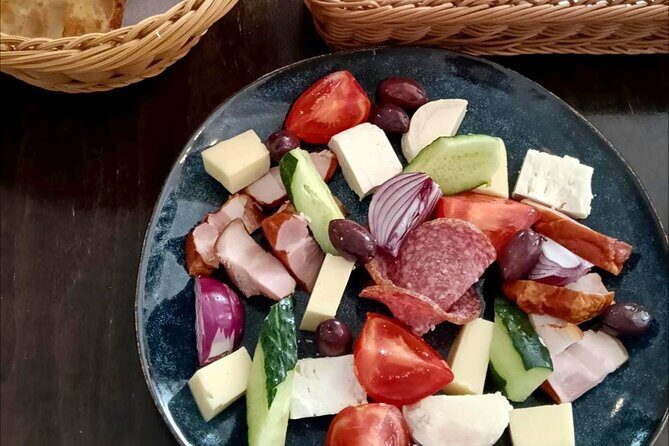
The core promise is simple: you’ll get up to 8 local food tastings plus 4 local drinks of your choice. The drink options listed include beer, wine, brandy, buttermilk, coffee, soft drink, or water.
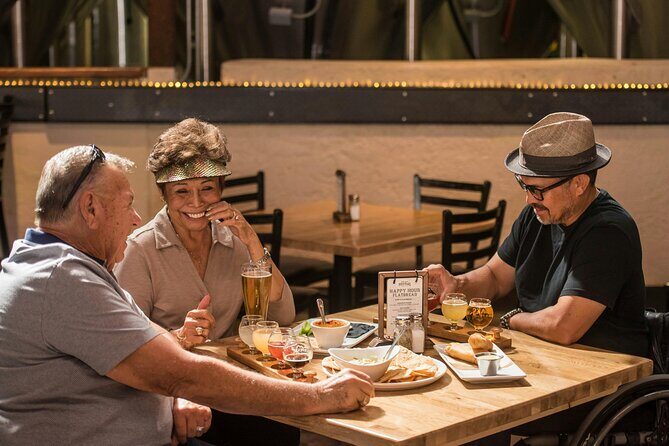
What makes this work for real life is spacing. In the best food tours, you don’t feel like you’re constantly paying the “sugar tax” or the “too much too fast” tax. Here, the tastings are planned along the walking route, and you also get a sit-down experience in a cozy local restaurant.
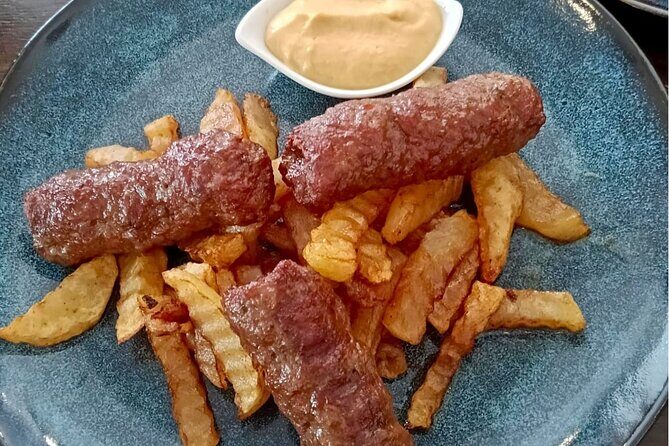
In terms of variety, the tour can include things like Romanian sweets from a chocolate shop, pastry-style treats, and a mix of savory and dessert moments. One standout mentioned in the experience was a crepe-like pastry filled with sour cherry. People also highlight that the Romanian flavor profile often feels less salty and less sweet than what many visitors expect from the US, so the tastes feel more like the ingredient than like the added sugar salt combo.
If you’re the kind of traveler who wants to try new foods but still wants comfort, this is a smart format. You get enough different flavors to understand a pattern, but you still have a proper restaurant stop to reset.
Drinks you can actually choose
I like that the drink part isn’t rigid. You choose from the options listed—so if you prefer coffee or water, you’re not locked out. You can also pick beer, wine, or brandy if you want the more adult tasting route.
That flexibility also helps if you’re traveling with mixed preferences. In a private tour, it’s easy for the guide to steer the group so everyone feels included without forcing one person’s drink choice on the whole table.
Manuela’s role: why the stories land
A recurring theme in the experience is the guide. Manuela shows up with enthusiasm and clear storytelling, and she uses a tablet to show visuals on the move. The then-and-now approach makes architecture and historical changes feel connected rather than like separate trivia facts.
Even better, Manuela goes beyond the monuments. People mention answers about life in Bucharest and questions about Romanian history, and they also come away with extra recommendations for where to go next.
That matters because Bucharest is one of those cities where a little context changes everything. Without guidance, you’ll see buildings. With guidance, you’ll understand why those buildings matter and what they signal about power, culture, and change.
Value: $135.17 and what you get for it
At $135.17 per person, the price is less about “pay for a snack” and more about paying for a planned evening of food plus guided context. You’re getting:
- Up to 8 tastings
- 4 included drinks
- A sit-down restaurant segment
- A private, English-led walking route through major sights
This can be good value if you’re traveling with a small group and you want efficiency. Group walking without a plan often turns into wandering, bargaining, and random restaurant picking. Here, you’re buying time saved and direction provided, plus the tastings are included rather than “maybe.”
If you’re a solo traveler, it can still be worth it if you love food tours and you want structure. But if you prefer self-guided wandering and you’re already confident with Romanian cuisine, you might find you don’t need as much guiding.
Practical tips so the day feels easy
Plan for walking and standing. The day is built around a sequence of stops across central Bucharest, and the tastings include both bite-style moments and at least one sit-down restaurant time.
Also, go hungry but don’t show up stuffed. Up to 8 tastings plus dessert-style moments can be a lot if you start with a big breakfast. If you tend to get overly full on food tours, you can usually pace yourself between stops.
Finally, the tour needs good weather to run. If conditions are poor, it can be offered on a different date or refunded, so don’t plan it as your only option for that day.
Who this tour suits best
This is a strong match if you want:
- Food tastings paired with history and architecture
- A private guide who can answer questions
- A route that moves from major monuments into Old Town streets and passages
- A mix of standing bites plus one comfortable restaurant stop
It’s also a smart fit if Bucharest is your only city stop in Romania, because the route covers key “chapters” quickly: royal-era looks, communist-era turning points, and the daily-life lanes of Old Town and Lipscani.
Should you book this Taste of Bucharest tour?
Yes, I’d book it if you want a guided food walk that also explains the city’s look and story. The standout advantage is the combination of strong guide delivery (Manuela + visuals) and the fact that the day includes actual variety: multiple tastings, drinks you choose, and a sit-down moment.
Skip it only if you hate walking, you want only a short tasting (not up to 8), or you’d rather build your own route without someone shaping your day. Otherwise, this is the kind of Bucharest experience that helps your visit feel organized, flavorful, and more meaningful.
FAQ
How long is the Taste of Bucharest: Food and Culture private tour?
It runs about 4 to 5 hours.
What does the tour cost?
The price is $135.17 per person.
Is this tour private or shared?
It’s a private tour/activity, so only your group participates.
How many food tastings and drinks are included?
You get up to 8 local food tastings and 4 local drinks at your choice (beer, wine, brandy, buttermilk, coffee, soft drink, or water).
Where does the tour start and end?
It starts at Amzei Church (Strada Biserica Amzei 12, București 010392) and ends in the Old Town area near the National Bank of Romania (Strada Lipscani 25, 030167).
What if the weather is bad?
The experience requires good weather. If it’s canceled due to poor weather, you’ll be offered a different date or a full refund.