REVIEW · BUCHAREST
From Bucharest: In the Footsteps of Dracula Day Tour
Book on GetYourGuide →Operated by TravelMaker · Bookable on GetYourGuide
One day. Big climbs. Real-world Dracula stops. This tour threads together the legend of Vlad the Impaler with places tied to Wallachian power, then rewards your effort with mountain views from Poenari Citadel. I like that the day isn’t all gloom and castles; it includes a top Romanian monastery and a scenic lake stop by the Transfăgărășan road.
Another thing I really like is the teaching style: your English-speaking guide (Serban Riga is one name you might get) turns the myths into clear context about who Vlad was and why Bram Stoker’s Count Dracula caught fire in the imagination. One consideration: Poenari means a steep stair climb—1,480 steps—and if that sounds like too much, you can wait at the bottom for the rest of the group.
In This Review
- What makes this tour worth your time
- From Bucharest at 08:00: setting your Dracula frame
- Târgoviște and the golden Chindia Tower
- Curtea de Argeș monastery: beauty with a darker legend
- Lunch and energy planning before the big climb
- Poenari Citadel: 1,480 steps to the real Dracula fortress
- Connecting Vlad the Impaler to the legend you’ve heard
- Vidraru Lake and Transfăgărășan road: the scenic reset
- Value check: is $187 per person a good deal?
- Who this tour suits best (and who might want to think twice)
- Small practical tips that make the day easier
- Should you book this tour?
- FAQ
- FAQ
- What time does the tour pick you up from Bucharest?
- How long is the tour?
- Is this a private group?
- Is there an English-speaking guide?
- What is included in the price?
- What isn’t included?
- How hard is the Poenari Castle climb?
- If I can’t climb all the steps, can I still join the day?
- Are pets allowed?
- Is the tour refundable if plans change?
What makes this tour worth your time
- Poenari Citadel climb: 1,480 steps up, 20–30 minutes on the ascent, and mountain views when you reach the top
- Vlad the Impaler context: you’ll connect the historical prince of Wallachia (1431–1477) to the Dracula legend
- Curtea de Argeș monastery: one of the most beautiful monastic sites in Romania, plus a grim legend tied to its builders
- Târgoviște royal court remains: the Chindia Tower (Sunset Tower) and the old political center of Wallachia
- Vidraru Lake stop: a scenic break near the Transfăgărășan road across Romania’s highest mountains
From Bucharest at 08:00: setting your Dracula frame
You start early, with hotel pickup around 08:00 from your place in Bucharest (or another Bucharest address). That timing matters. It gets you out before the day fully heats up and leaves less “dead time” stuck on the road later. You’re in a car or minibus with an English-speaking driver, and you’ll get history along the way—so the day feels like one story instead of a random checklist of stops.
I find that this kind of “dracula trail” works best when it’s built around real geography and real power centers. That’s what this tour tries to do: start with Wallachian capitals and court sites, move to the monastery, then make the day’s hardest climb feel earned.
You can also read our reviews of more tours and experiences in Bucharest.
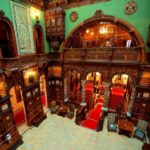
Târgoviște and the golden Chindia Tower
Your first major stop is Târgoviște, on the Ialomița River. This town wasn’t a backdrop; it was one of the key cities of Wallachia. In the 15th and 16th centuries, it served as the region’s capital, so it’s a great place to ground the Vlad story before you go chasing castles.
One highlight here is the Chindia Tower, also called the Sunset Tower. You’ll see it as part of the Curtea Domnească complex—the remains of the old Royal Court. That tower is the kind of sight that makes you slow down without trying: it’s bright, golden-looking, and it gives you a visual anchor for what “royal” meant in this area. When your guide connects it to the court and the era, the whole place clicks faster than if you just wandered on your own.
Practical note: you’ll likely do a bit of walking around the complex area. Wear shoes you trust. Bucharest may train your feet for sidewalks, but these old sites can still be uneven.
Curtea de Argeș monastery: beauty with a darker legend
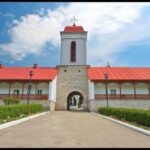
Next comes the monastery of Curtea de Argeș, another medieval capital of Wallachia. This is where the tour shifts tone. If you’ve only been thinking about Dracula, the monastery gives you a different side of the region—faith, art, and architecture that people actually return to.
The monastery is praised for being one of the most beautiful monastic sites in Romania. You’ll also hear a ghoulish legend connected to the workers who built it. I like this stop because it keeps the Dracula theme from turning into pure horror tourism. Instead, you get the sense that legends here grow from real communities and real projects—then get darker over time.
If you’re the kind of traveler who enjoys religious art and medieval design (even if you’re not a “museum person”), this stop will feel like a reset. And if you’re not, the combination of the architecture and the story still gives you something memorable.
Lunch and energy planning before the big climb
Lunch timing isn’t spelled out, but you’ll reach the “after lunch” point before the main ascent. I’d treat the meal as a chance to refuel before the stairs. Poenari is the day’s physical event, so you want your energy level steady—not stuck in that post-road-travel slump.
Also, think about your clothing. You’ll be outside for the climb and viewpoints. Comfortable layers beat a single heavy item. Bring what you’d use for a brisk hike, not a formal dinner outfit.
Poenari Citadel: 1,480 steps to the real Dracula fortress
Then you hit the big moment: the climb to Poenari Castle (Poenari Citadel), the fortress often linked to Dracula in Romanian lore. After lunch, you’ll climb 1,480 steps. The climb should take about 20–30 minutes—but the key isn’t the average time. It’s the steepness and the pace. Go slow, especially if you’re not used to stairs. This is exactly the kind of climb where a steady rhythm matters more than speed.
Here’s what I love about this part of the tour: the reward isn’t only the castle ruins. It’s the way the views change as you go higher. At the top you’re looking out over the mountains and valleys of the Argeș region, and the setting makes the legend make sense. Even if you take Dracula stories with a skeptical mind, the terrain explains why a fortress here would have been strategically important.
One big consideration is right in the tour guidance: if you can’t do the climb, you can wait for the rest of the group at the foot of the hill. That option is a relief for anyone who wants the experience without forcing their body. If you’re on the fence, you’ll do well by planning for a “conserve energy” approach rather than pushing through pain.
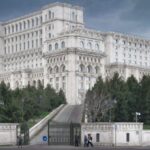
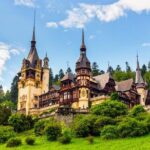

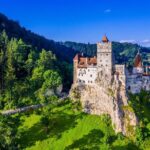
Connecting Vlad the Impaler to the legend you’ve heard
The tour doesn’t treat Dracula as a cartoon character. You’ll learn about Vlad the Impaler as Prince of Wallachia (1431–1477) and how his name became part of Bram Stoker’s 19th-century fictional Dracula. This matters because it changes what you see. Instead of “vampire sights,” you start noticing the real historical themes: power struggles, fortress logic, and the way stories travel long after the people are gone.
I also appreciate the balance: the tour makes room for myth without letting myth replace context. A strong guide helps you see the gap between history and the horror version. That’s exactly the sort of help you want on a day like this, because you’ll see ruins and legends that can easily blur together if you don’t have someone to interpret the clues.
If you get Serban Riga as your guide, you’re in good shape—his style is described as friendly and full of useful background, and it shows in how the day flows.
Vidraru Lake and Transfăgărășan road: the scenic reset
On the way back to Bucharest, you stop at Vidraru Lake, built in the 1960s right next to the famous Transfăgărășan mountain road. This is a smart choice for a late-day stop. After the intensity of Poenari, a lake view near a legendary road gives your brain a softer landing.
Even if you’ve never driven that route, the stop helps you picture why this area is famous. The Transfăgărășan road is “high mountain Romania” in the most literal way, and Vidraru Lake sits right there by the slopes. It’s not just a photo break; it’s a final geography lesson that ties the earlier viewpoints to the larger mountain environment.
Value check: is $187 per person a good deal?
At $187 per person for a one-day tour, you’re paying for more than transportation. You’re paying for the time-efficient loop through major Wallachian sites, an English-speaking guide presence, and the effort-level experience of Poenari. That climb alone is one reason the day can’t be recreated easily without planning.
Two cost notes that affect value:
- Entrance fees are not included, and you should expect around EUR 15 per person.
- This isn’t a “just ride by the sights” tour. It’s built around stops where you actually walk and look.
So the real question becomes: do you want guided context plus a hard hike plus scenic payoff, all in one structured day? If yes, the price feels fair. If you’re traveling with zero interest in history and only want Dracula postcards, you might find it heavy. But if you want the story explained and the sites connected, this is the kind of day that justifies the cost.
Who this tour suits best (and who might want to think twice)
This is a strong fit if you:
- like history that connects myths to real rulers (not just spooky vibes)
- don’t mind a full day and some walking
- want a guided explanation while you see Târgoviște, Curtea de Argeș, Poenari, and Vidraru Lake
It’s also a good fit for people who enjoy exercise as part of sightseeing. The Poenari climb is the “workout moment,” and you get real payoff at the top.
It’s not a fit if you:
- have mobility impairments. The tour is explicitly noted as not suitable for people with mobility impairments.
- can’t handle steep stairs. Even with the option to wait at the foot of the hill, that still changes your experience.
Small practical tips that make the day easier
- Comfortable shoes are non-negotiable. The day includes walking around historic sites and then a steep stair climb.
- If you’re worried about stamina, set your expectation early: your climb plan should be “steady and safe,” not “fast and heroic.”
- Bring a mindset for changing weather. Mountain areas can feel different from Bucharest, especially around the time you reach the higher viewpoints.
- No pets are allowed on this experience, so plan accordingly if you’re traveling with animals.
Should you book this tour?
I’d recommend it if you want a guided Dracula day that treats the legend like a story with roots. You’ll get the historical spine (Vlad the Impaler), then the visual spine (Chindia Tower and the royal court remains), then the physical spine (Poenari’s 1,480 steps), and finally a scenic closer with Vidraru Lake.
I would not book if you’re mainly chasing easy sightseeing with minimal effort. Poenari is the centerpiece, and the day is built around that climb. But if you’re up for it—mentally and physically—this is one of the more meaningful ways to do Dracula territory from Bucharest without turning the trip into chaos.
FAQ
FAQ
What time does the tour pick you up from Bucharest?
Pickup is around 08:00 from your hotel or any address in Bucharest (you provide the address when booking).
How long is the tour?
The tour lasts 1 day.
Is this a private group?
Yes. It’s described as a private group.
Is there an English-speaking guide?
You’ll have an English-speaking driver/guide on the tour.
What is included in the price?
Included is transportation by car or minibus and an English-speaking driver.
What isn’t included?
Entrance fees are not included. They’re listed as approximately EUR 15 per person.
How hard is the Poenari Castle climb?
You climb 1,480 steps. The ascent is described as about 20–30 minutes.
If I can’t climb all the steps, can I still join the day?
Yes. If you can’t climb, you can wait for the rest of the group at the foot of the hill.
Are pets allowed?
No, pets are not allowed.
Is the tour refundable if plans change?
Free cancellation is available up to 24 hours in advance for a full refund.