REVIEW · ROMANIA
Craiova Guided Tour of Historical and Cultural Center
Book on Viator →Operated by we Explore · Bookable on Viator
Three landmarks, one easy morning in Craiova. This guided walk strings together the city’s best-known cultural and civic sights, with an English-speaking guide and a tight timeline that keeps you moving without feeling rushed. It’s built for people who want context fast, not just photos.
I particularly like how the tour connects buildings to stories you can picture. You start at Craiova University, which began life as the Palace of Justice (1896), and you’ll get the kind of background that makes architecture feel personal. I also like the focus on the National Theatre Marin Sorescu Craiova and the City Hall area, where the details matter more than you expect.
One thing to keep in mind: the tour is designed around exterior/landmark visits, and museum entrance fees aren’t included. Also, it runs best in good weather, so plan for the day to be flexible if rain moves in.
In This Review
- Key things to know
- How This Craiova Center Tour Fits Real Travel Days
- Getting Oriented at the Start on Strada România Muncitoare
- Craiova University: Palace of Justice Beginnings (1896)
- National Theatre Marin Sorescu Craiova: Why 1850 Matters
- City Hall and the Administrative Palace (1913): The Civic Heart
- The Right Length: 1–2 Hours Without Dragging
- What You’re Paying For: Price and Value at $72.56
- Included, Not Included, and the Small Budget Traps to Avoid
- The Guide Experience: Organized, Friendly, and Story-Driven
- Who This Tour Suits Best (and Who Might Want Something Different)
- Weather Matters: Plan for a Flexible Day
- Should You Book This Craiova Guided Tour?
- FAQ
- How long is the Craiova guided tour of the historical and cultural center?
- Is the tour offered in English?
- What’s included in the price?
- What isn’t included (and might cost extra)?
- Where does the tour start?
- What is the cancellation policy?
Key things to know
- Small-group pace: up to 20 people, so questions don’t get swallowed.
- Free key stops: the main landmark entries on this route are free.
- Meaningful architecture: Palace of Justice origins at Craiova University (1896).
- Theatre history that stretches back: the National Theatre story starts in 1850.
- Iconic civic centerpiece: City Hall plus the Administrative Palace (1913).
How This Craiova Center Tour Fits Real Travel Days
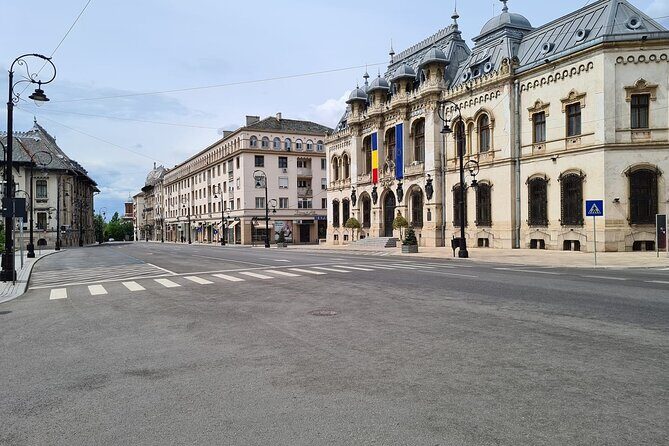
This isn’t a long, slow crawl. It’s a focused 1 to 2 hour guided route through Craiova’s historical and cultural core. That matters because most people don’t come to Romania just to watch their vacation clock run out. You want a hit of context, then time to wander on your own.
The route is also set up in a smart way: three major landmarks, each with a short stop window. That keeps the tour lively and helps you retain what you learn. When a guide only has a few minutes per place, they tend to pick the details that actually help you see the building the way locals do.
You’ll also get a practical travel setup: English is offered, you’ll have a mobile ticket, and the group size tops out at 20. That’s big enough to feel social, small enough that you can ask questions without shouting.
You can also read our reviews of more guided tours in Romania



Getting Oriented at the Start on Strada România Muncitoare
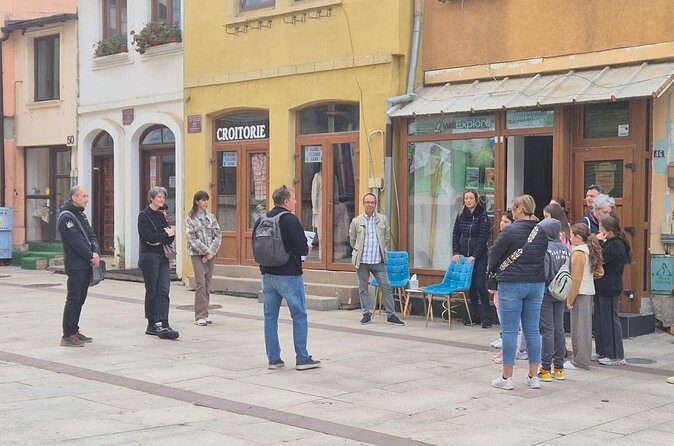
You’ll meet at Strada România Muncitoare 46, Craiova 200396, Romania. From a logistics point of view, I like that the meeting point is tied to public transportation. That reduces the “where do we go exactly?” stress that can turn a history tour into a scavenger hunt.
Bring your confirmation info, too. You should receive confirmation at booking, and the tour uses a mobile ticket—useful if you don’t want to juggle paper or hunt for internet right before you depart. If you’re arriving from another part of town, aim to get there a few minutes early. With a short tour, timing matters.
And since the tour ends in a different location, I’d plan a loose afternoon around that. You’ll likely want to keep exploring nearby after the last stop, rather than expecting to return to the exact starting point.
Craiova University: Palace of Justice Beginnings (1896)
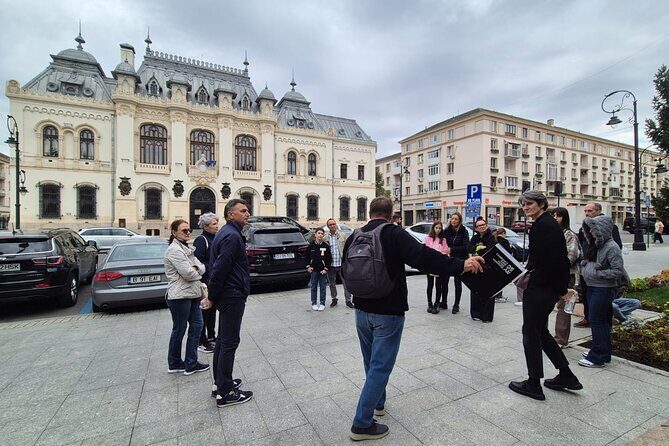
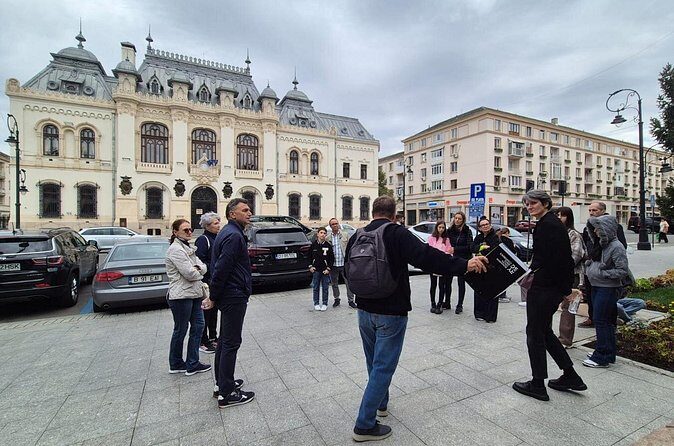
Stop 1 is Craiova University. The big idea here is transformation: the building was originally built in 1896 as the Palace of Justice, and it now serves as the main University building. That single fact changes how you look at it. Courts, education—same walls, different purpose. It’s a reminder that cities reuse their most dramatic spaces.
The stop lasts about 10 minutes, and that brief window is long enough to get the basics and short enough to prevent information overload. If you’re the type who likes to read later, this is a great stop to take a couple of good photos and then catch the main points from the guide so you know what to Google afterward.
What I like most is that the tour doesn’t treat the university as just a backdrop. You’re meant to see it as an architectural and cultural symbol of Craiova. Even if you never set foot inside, the exterior context gives you a better sense of why this area holds such weight in the city.
Admission here is listed as free. So you’re not stuck wondering whether you need an extra ticket just to follow along at a landmark.
National Theatre Marin Sorescu Craiova: Why 1850 Matters
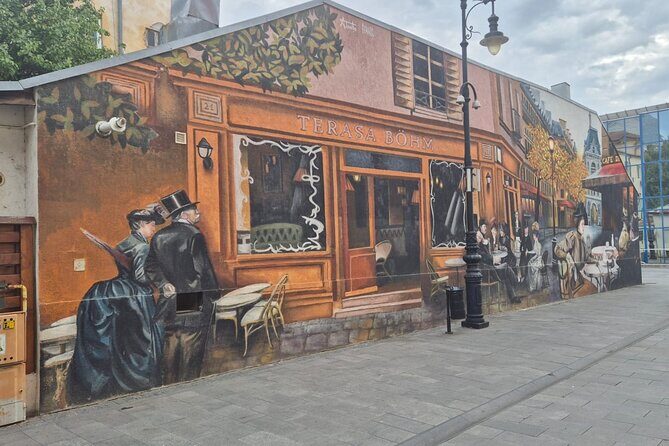
Stop 2 is the National Theatre Marin Sorescu Craiova. The tour’s timeline points to the theatre’s story beginning in 1850, and that’s a key anchor year. When a place’s origins stretch back that far, you can often trace shifts in culture, politics, and community pride through how performances and institutions evolved.
This stop is also about 10 minutes with free admission. In practice, that’s useful: you get the history without turning the tour into a museum marathon. You’ll likely spend most of your time taking in the building’s presence and connecting it to the guide’s explanation of how the theatre developed over time.
One reason this stop tends to land well is that theatre is easier to relate to than, say, pure government buildings. Even if you don’t speak the local language or attend performances, you understand the role of a national theatre: bringing stories to the public and making the arts feel official, not just occasional.
City Hall and the Administrative Palace (1913): The Civic Heart
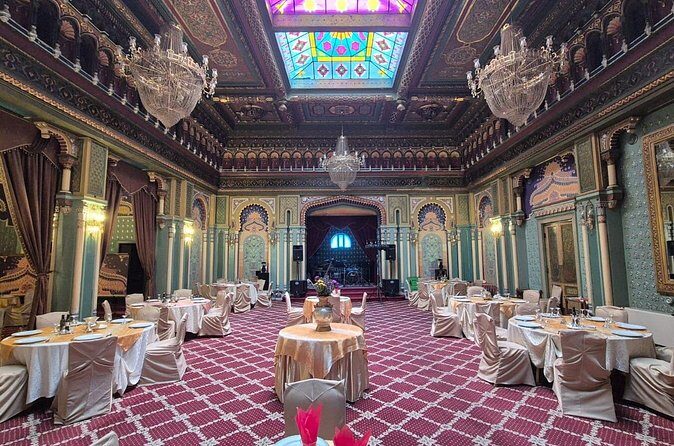
Stop 3 is Craiova City Hall, including the Administrative Palace (1913). This is the longest stop on the route—around 20 minutes—because it’s the most central civic cluster. If you want the tour to feel like it’s building to something, this is where it does.
The Administrative Palace (1913) is described as one of Craiova’s most iconic buildings. That’s the kind of phrase you usually see and ignore. Here, it actually helps you set expectations. You should be looking for the architectural style and the sense of authority in the building’s design, and then listening for how the guide connects those visual cues to the city’s administrative life.
This is also where you tend to notice how much a city relies on landmarks for identity. A theatre tells you about culture; a university hints at education and civic ambition; a city hall and administrative palace show what power and public life look like in stone.
Admission for this stop is listed as free, which keeps your day simpler. As long as you stick to the planned landmarks, you shouldn’t need extra entry tickets just to get the value of this tour.




The Right Length: 1–2 Hours Without Dragging
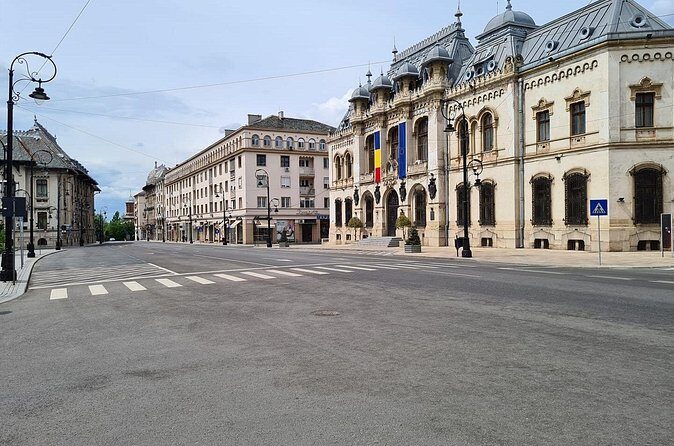
At 1 to 2 hours, the pacing is perfect for a first visit day. If you’re only in Craiova for a short stop, this tour gives you a structured way to see the center while still leaving plenty of time to roam.
The timing also makes it a good “reset” activity. Maybe you’ve been traveling all morning, and you want something that organizes your thinking. After this, you’ll know which buildings matter and why, so your self-guided walk later feels more intentional.
Because the stop lengths are short, I recommend keeping your expectations realistic. You won’t see everything in Craiova’s center in a single outing. But you will get the threads that help you make sense of what you do see afterward.
If you like to take notes, use the stop windows to jot down the facts that feel most interesting—1896 for the Palace of Justice origin, 1850 for the theatre beginning, and 1913 for the Administrative Palace. Those three dates act like mental bookmarks.
What You’re Paying For: Price and Value at $72.56
The price is $72.56 per person, and the value comes down to a simple split: you’re paying for a guided explanation across multiple key landmarks, not for a stack of museum tickets.
Included is a guided tour, and you’ll benefit from:
- a small group size (maximum 20)
- English-speaking guidance
- a short, efficient route with clear stops
Not included is where value can get tricky. Museum entrance fees aren’t included, and that’s important because a few cities have landmarks where the exterior is impressive but the real depth is inside. This tour’s design suggests it focuses on the main landmarks without assuming you’ll pay for interior museum access.
Also not included: bottled water, food & drinks, and private transportation. If you’re the kind of traveler who forgets water until the end of the day, plan ahead. Even on a short walking tour, staying comfortable is part of enjoying the stories.
In other words: this price works best if you want guided context and don’t need a heavy load of paid entries.
Included, Not Included, and the Small Budget Traps to Avoid
Here’s the practical breakdown that helps you avoid surprises:
Included:
- guided tour
Not included:
- admission fee and museum entrance fees (so if you want to go inside a museum area, you’ll need to pay separately)
- bottled water
- food & drinks
- private transportation to and from the meeting point (you handle getting there and leaving after)
Also take note of the end point: the activity ends in a different location. That means your transportation plan matters. Build in a little flexibility so you’re not scrambling to reach your next reservation.
If you want this to feel effortless, show up hydrated, bring a snack if you’re prone to hunger, and decide in advance whether you plan to add any extra indoor stops after the tour.
The Guide Experience: Organized, Friendly, and Story-Driven
The reviews for this tour are strongly positive, and the pattern is clear: the guides work hard to make the history feel like a story rather than a list of dates. People specifically highlight that the guide is friendly and that the information is engaging and enjoyable.
That matters because a walking tour can go two ways. It can become “stand here, read this, next.” Or it can turn into a conversation with the city—where you understand why a building matters. This tour leans toward the second option, and the strong reviews support that.
You’ll also notice praise for organization and overall quality. In a short tour, organization is everything. If the timing slips, you lose the rhythm and the value. Here, the structure seems to hold up, which is a big deal for an experience that’s only 1 to 2 hours.
Who This Tour Suits Best (and Who Might Want Something Different)
This guided walk is a good fit for:
- first-time visitors who want the center explained fast
- travelers who prefer outdoors with a clear route
- people who like architecture and civic/cultural landmarks
- anyone who wants an English tour that doesn’t require a long time commitment
The tour notes include a moderate physical fitness level, which suggests it’s not for anyone who needs minimal walking. It also says it’s near public transportation, so it should be easy to join without complicated transfers.
If you’re the type who wants museums, long interior time, and deep scholarly coverage, you may find the stops too short. But if your goal is to get grounded in the city’s key landmarks and then explore more independently, this works well.
Weather Matters: Plan for a Flexible Day
This experience requires good weather. That means if conditions are poor, the tour may be canceled and you’ll be offered a different date or a full refund. For planning, I recommend avoiding stacking your whole day with tight, non-movable appointments.
A short walking tour is especially sensitive to rain and wind. If Craiova looks iffy that day, keep your afternoon open. It’s the simplest way to protect your plans.
Should You Book This Craiova Guided Tour?
I’d book it if you want an efficient introduction to Craiova’s historical and cultural center. The route hits three landmarks that help you understand the city quickly: a university with origins as the Palace of Justice (1896), the National Theatre with beginnings in 1850, and City Hall with the Administrative Palace from 1913. Those anchors give you a satisfying map in your head after the tour ends.
Skip it (or pair it with extra plans) if you’re expecting a long museum-heavy day or if you already know you’ll want lots of interior entrances. Museum entrance fees aren’t included, and the tour is intentionally timed to keep things brisk.
If you like clear guidance, good organization, and a guide who brings the city’s story to life, this one is an easy “yes.”
FAQ
How long is the Craiova guided tour of the historical and cultural center?
The duration is approximately 1 to 2 hours.
Is the tour offered in English?
Yes, it’s offered in English.
What’s included in the price?
The guided tour is included.
What isn’t included (and might cost extra)?
Admission fees are not included, including museum entrance fees. Bottled water, food, and drinks are also not included. Private transportation to and from the meeting point and after the tour is your responsibility.
Where does the tour start?
The meeting point is Strada România Muncitoare 46, Craiova 200396, Romania.
What is the cancellation policy?
You can cancel for free up to 24 hours in advance for a full refund. If you cancel less than 24 hours before the start time, the amount you paid will not be refunded.