REVIEW · BUCHAREST
Communist Era Bucharest Tour
Book on Viator →Operated by Claires Bucharest Guided Tours · Bookable on Viator
Bucharest tells its communist story in plain sight. This private 3-hour walk links grand state buildings with the streets ordinary people had to live with, using an English-speaking guide and plenty of photo stops. You can pick a morning or afternoon slot, and pickup helps you get moving fast.
I love the private format. It’s just your group, so you can ask questions as you go without feeling rushed or lost in a crowd. I also love how the route covers both symbolism and everyday city life, from Parliament Palace to Revolution Square.
One possible drawback is the pacing: it’s a walking tour with moderate fitness needs, so you’ll want comfortable shoes. And since the experience is guided storytelling in English, if you’re sensitive to accents or want slower explanations, plan to ask for clarity early.
In This Review
- Key highlights to look for on this Bucharest walk
- Communist Era Bucharest Tour: what you’re really paying for
- Where the tour starts: Manuc’s Inn and your easy meeting point
- Piata Unirii: Unirii fountains and the city’s communist makeover
- Bulevardul Unirii: the Socialist Victory boulevard and its 17 fountains
- From the Parliament Palace to Victoria Avenue: where the regime flexed
- Financial institutions: CEC Bank and Romania’s National Bank
- University Square, the Intercontinental Hotel (1971), and the National Theatre
- Piata Revolukiei: the 1989 start point and balcony-linked history
- Iuliu Maniu statue and the Memorial of Rebirth: what comes after change
- What the guide experience feels like in practice
- Timing, walking comfort, and photo strategy
- Is it worth it? Who this tour suits best
- Should you book the Communist Era Bucharest Tour?
- FAQ
- How long is the Communist Era Bucharest Tour?
- What does the tour cost?
- Is pickup included?
- Where is the meeting point?
- Is this a private tour?
- What language is the tour in?
- Will I need to walk a lot?
- Are tickets provided on my phone?
- Is a service animal allowed?
- Can I cancel if my plans change?
Key highlights to look for on this Bucharest walk
- Private group, real conversation pace so questions can shape what you notice
- Unirii fountains and Socialist Victory boulevard show how the city was remodeled under communism
- Ceaușescu’s Parliament Palace area gives you the scale behind the political message
- Revolution Square photo moments including the balcony-linked storyline of 1989
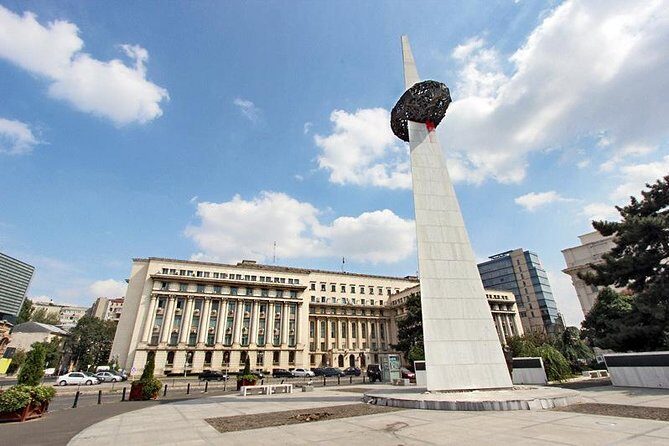
- Monuments tied to 1989’s aftermath from National Rebirth to the Memorial of Rebirth
- Centrally located start and end at Manuc’s Inn for an easy meet-up
Communist Era Bucharest Tour: what you’re really paying for
At about $30.72 per person for roughly 3 hours, this tour is good value because you’re not just seeing buildings—you’re getting context while you’re standing in front of them. Bucharest can feel like a “pretty city with big structures” until someone connects the dots: why the boulevards look the way they do, why certain institutions were built where they were, and what people had to deal with day to day.
The private setup matters, too. Even if you’re only a couple or a small group, you get a focused guide who can adjust the pace. That’s especially useful for a subject like communist-era Bucharest, where the details are dense and the meaning changes depending on the period.
You can also read our reviews of more tours and experiences in Bucharest.
Where the tour starts: Manuc’s Inn and your easy meeting point
Your tour begins at Hanul lui Manuc (Manuc’s Inn) in Old Bucharest, at Strada Franceză 62. The meeting is outside the main entrance, which makes it simple to find—no wandering around side streets guessing where the group is.
Pickup is offered if you’re staying in a centrally located hotel, otherwise you meet at the inn. That’s a practical touch because Bucharest’s older center can be a little maze-like at first, and you’ll want to spend your energy on the story, not on navigation.
The tour ends back at the same meeting point, which helps if you want lunch plans right after or you’re heading onward to another museum, café, or nightlife spot.
Piata Unirii: Unirii fountains and the city’s communist makeover
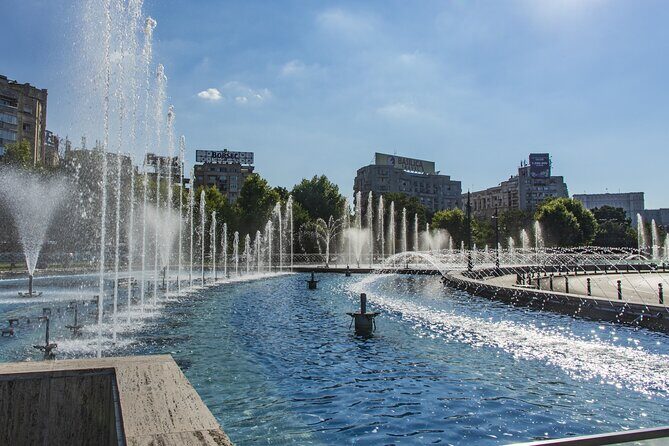
The walk starts at Piața Unirii, described as the heart of Bucharest shaped by communist-era modernization planning. Today, it’s regenerated and active, and the newly restored Unirii fountains give you a contrast right away: power and planning aimed at an idealized future, now repurposed as a public space.
This stop is short, but it’s a smart opener. You’re not jumping straight into Revolution Square. Instead, you begin with a place where the city’s look was engineered—then you move forward to places where the engineering becomes more dramatic.
What you’ll notice here
- How squares were designed as statements, not just intersections
- How the modern city repurposes those central spaces for everyday use
- Why fountains and clean public design can carry political symbolism, even after the regime changes
Bulevardul Unirii: the Socialist Victory boulevard and its 17 fountains
Next comes Bulevardul Unirii, formerly called the Boulevard of Socialist Victory. It’s often seen as the Champs-Élysées of Bucharest, and there’s a very specific reason: it’s long, direct, and meant to impress as you walk.
A standout detail is the line of 17 artesian fountains, decorated to represent the four seasons. On the surface, it’s decorative infrastructure. Under communism, it also becomes messaging—an ordered world, an engineered rhythm, and a sense that the state controlled what the city looked like and how it felt.
This is also a good moment to get your guide to slow down a bit and explain the logic of the boulevard—because later, when you see bigger “power buildings,” the visual language makes more sense.
From the Parliament Palace to Victoria Avenue: where the regime flexed
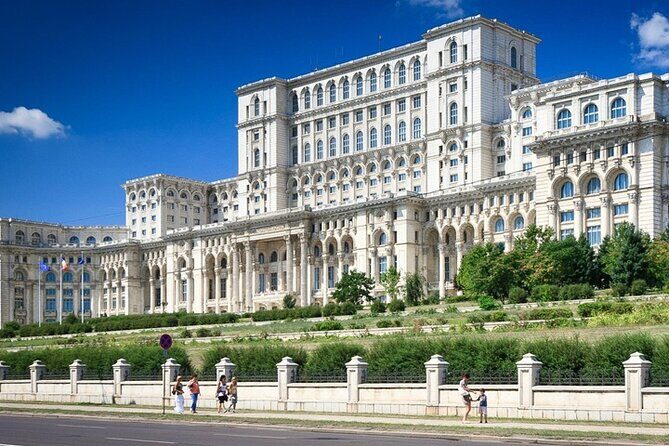
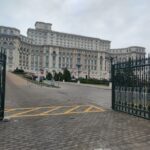
The tour then shifts to Nicolae Ceaușescu’s massive Parliament building (Casa Poporului). The claim here is big: it’s described as the heaviest building in the world. Whether you focus on the technical superlatives or the symbolism, the effect is the same when you’re in the area—this is architecture built to dwarf everything around it.
Just as important, the tour doesn’t leave you staring at one monument and calling it history. It continues along Victoria Avenue, described as lined with attractive shops, while your guide fills in what it was like in the communist era.
That blend matters for two reasons:
- You can compare the “today street” with the “yesterday street.”
- You understand that regimes don’t just build palaces—they reshape the streets people walk every day.
Financial institutions: CEC Bank and Romania’s National Bank
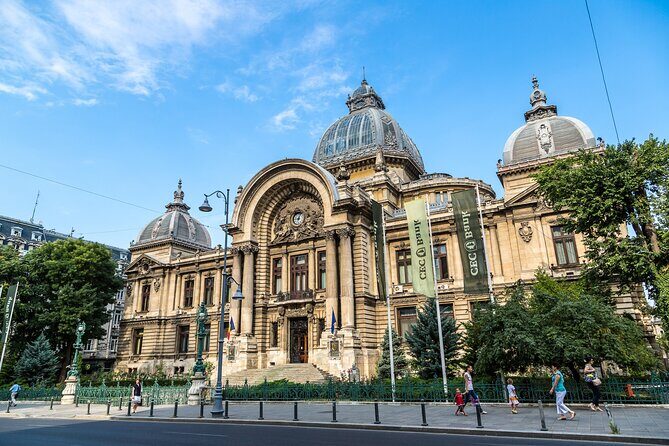
You’ll also pass the CEC Bank, described as the “bank of the people” during the communist years. Nearby, you’ll see the grandeur of Romania’s National Bank, with the guide sharing its history.
Why include banks on a communist-era tour? Because money is power even when power gets disguised. State-controlled or state-influenced institutions show what the government wanted citizens to rely on, and how everyday life was structured.
University Square, the Intercontinental Hotel (1971), and the National Theatre
In the next stretch, you reach University Square, where you can see the oldest and largest university in Bucharest. The tour also connects the area to the Intercontinental Hotel Bucharest, completed and opened in 1971.
That’s a useful time marker because it places “communist-era Bucharest” in a specific decade, rather than treating it as a blur. And it helps you spot how the regime continued building and modernizing through time, not only during dramatic early years.
The route also passes the National Theatre of Bucharest, described as iconic with many changes to its design in a short history. This is another smart choice, because culture buildings often reveal shifting priorities—who the state wants to honor, and what kind of public life it wants to project.
Piata Revolukiei: the 1989 start point and balcony-linked history
Then you arrive at Piața Revoluției (Revolution Square), where the famous 1989 revolution started. This is where the tone changes. You get memorials and story locations tied to life-changing events, including the balcony where Nicolae Ceaușescu made his final speech.
The tour also includes key landmarks around the square:
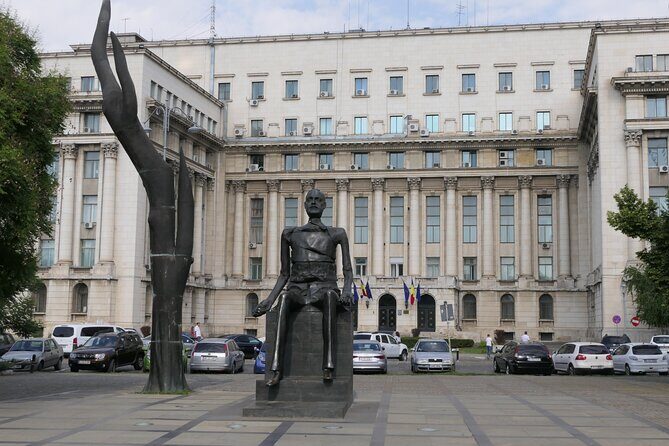
- the former headquarters of the Communist party
- the Monument of National Rebirth
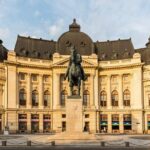
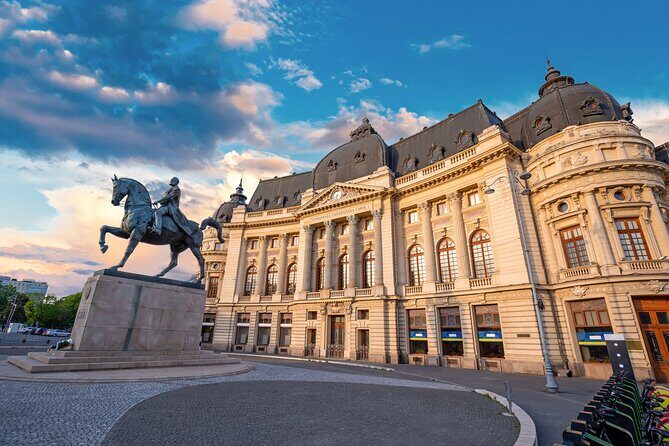
- King Carol I’s equestrian statue
- the university library and more
This part of the walk is particularly good for excellent photo opportunities, because the square is designed for visibility and dramatic sightlines. It’s also a moment where you’ll likely want time to linger, since your guide’s explanations can make small details feel much more important.
If you like history that’s grounded in place, this stop delivers. It’s not only about what happened, but where it unfolded—and how those locations have been commemorated.
Iuliu Maniu statue and the Memorial of Rebirth: what comes after change
After Revolution Square, you move to the Iuliu Maniu statue, tied to the story of a three-time prime minister and his struggle in the early years of communism. It’s a reminder that communist-era history isn’t only about one era’s leaders—it also includes political figures who resisted or opposed the system.
Next is the Memorial of Rebirth, described as a 25-meter monument commemorating struggles and victims of the Romanian Revolution of Christmas 1989. That phrase matters. Your guide frames 1989 not as one neat day, but as a series of events and human cost.
The final stretch of the tour includes a stop described as a historical building with beautiful gardens, built for the people of Bucharest by the people of Bucharest over 100 years ago, with more photo opportunities. That choice is more than scenic—it gives you a “before and after” feeling in the same walk: older local civic pride alongside the communist-era and post-1989 monuments you just learned about.
What the guide experience feels like in practice
A major reason this tour performs so well is the guide style. In past bookings, guides such as Alina and Claire are described as thorough, passionate, and animated, with lots of context about life under communist rule compared to now.
Here’s what that usually means you’ll get on the ground:
- Clear explanations that connect architecture to policies
- A sense that you’re hearing the “why,” not just the “what”
- Room for questions, including personal ones
- Willingness to clarify details if something doesn’t click
One important nuance: communist history can be emotionally loaded. This tour can discuss not only harsh realities, but also the complexities of daily life, including more balanced perspectives. If you’re expecting a nonstop, uniformly dark presentation, know that the tone can be more mixed—because real life was mixed.
Timing, walking comfort, and photo strategy
This is about 3 hours on foot. It’s not an all-day marathon, but it is a city walk with multiple short stops. The tour strongly recommends comfortable walking shoes, and you should have moderate physical fitness.
You’ll also want to plan for photo stops, especially at Revolution Square and the monument areas. Even when stops are timed as short segments, you’ll likely want a minute or two to step back and take photos from the angle your guide describes.
A practical tip: bring water and keep your phone charged. Bucharest’s center can surprise you—one street can feel easy and flat, and the next can shift with cobblestones and traffic-light waits.
Is it worth it? Who this tour suits best
This tour is a strong fit if you:
- Want to understand communist-era Bucharest beyond a quick museum visit
- Like walking tours where landmarks are explained in context
- Prefer a private experience so you can ask questions freely
- Want a route that includes both “state power” buildings and everyday city areas
It’s also a good choice if you already know a few Bucharest landmarks and want the deeper “how it got that way” version—especially around Piața Unirii, the boulevard fountains, and Revolution Square.
If you dislike walking, or if your energy is limited, you might find the 3-hour pace demanding. But for most people who can handle a few hours of steady strolling, the route is manageable—and the concentration of major sites per hour is a big part of why it’s popular.
Should you book the Communist Era Bucharest Tour?
I’d book it if you want a smart, place-based introduction to how communism shaped Bucharest’s streets and buildings—and how 1989 changed the story. The private setup, the tight 3-hour format, and the focus on major sites like Parliament Palace and Revolution Square make it a solid value.
Skip it only if you need a very strictly “hands-off” sightseeing experience with zero discussion, or if you’re uncomfortable with walking at a moderate pace. Otherwise, this is one of the easiest ways to turn a walk through central Bucharest into real understanding.
FAQ
How long is the Communist Era Bucharest Tour?
It lasts about 3 hours.
What does the tour cost?
The price is $30.72 per person.
Is pickup included?
Pickup is offered. You either meet at your centrally located hotel or at the meeting point outside the main entrance of Manuc’s Inn.
Where is the meeting point?
The tour starts and ends at Manuc’s Inn (Hanul lui Manuc), Str. Franceză 62, București 030167, outside the main entrance.
Is this a private tour?
Yes. It’s a private tour/activity, and only your group will participate.
What language is the tour in?
The tour is offered in English.
Will I need to walk a lot?
Yes. Comfortable walking shoes are recommended, and the tour is best for guests with moderate physical fitness.
Are tickets provided on my phone?
Yes. A mobile ticket is offered.
Is a service animal allowed?
Yes. Service animals are allowed.
Can I cancel if my plans change?
Yes. Free cancellation is available. You can cancel up to 24 hours in advance for a full refund.