REVIEW · SIGHISOARA
City Tour Sighisoara Legends & Landmarks A Walk Through Time
Book on GetYourGuide →Operated by Carpathian Travel Center · Bookable on GetYourGuide
Sighișoara hits different when you walk it. This 2-hour city tour strings together the citadel’s best-known stops and the less-obvious details that make medieval life click, and I especially love the Clock Tower views plus the climb up the Covered Staircase toward the Church on the Hill. The main drawback is simple: you’re on foot, with lots of steps and uneven old-stone streets, so it’s not a great fit if mobility is an issue.
I also like how the tour treats Vlad the Impaler as more than a Dracula headline. You’ll connect the UNESCO-listed medieval center, the market square, and the surrounding guild defenses into one story, and a strong local guide can bring names like Peter or Charles into the history in a way that feels practical, not theatrical.
For $45 per person, you get an English-speaking specialized guide and a route that covers a big chunk of Sighișoara without you having to map it out yourself. If you’re picky about entrances, plan for that too: entrance fees are not included, so some interior stops may cost extra.
In This Review
- Key points to know before you go
- Sighișoara Legends & Landmarks: How the 2-hour walk works
- Starting at Piața Muzeului: getting your bearings fast
- The Market Place, Dracula’s Birth House, and why the stories feel local
- Clock Tower viewpoints and what’s inside the mechanism
- The Covered Staircase and the Church on the Hill
- German Cemetery: seeing the town through who lived there
- Guild defenses: Butchers’ Bastion, Tailors’ and Furriers’ Towers
- The Tin Moulders’ Tower, the Venetian House, and the deer-antler finale
- What makes this tour good value for $45
- Who should book this walk, and who should skip it
- Tips to get the most out of your 2-hour schedule
- Should you book the Sighișoara Legends & Landmarks Tour?
- FAQ
- How long is the Sighișoara Legends & Landmarks city tour?
- What time does the tour depart?
- Where do I meet the guide?
- Where does the tour end?
- Is the tour offered in English?
- What is included in the price?
- Are entrance fees included?
- How much does the tour cost?
- What ID do I need to bring?
- Is the tour suitable for people with mobility impairments?
- FAQ
- Is there a supplement for private tours?
- What size luggage is allowed?
- What’s the cancellation policy?
- Can I reserve and pay later?
- Do I need to bring anything else besides ID?
- How many different starting and ending points are there?
Key points to know before you go
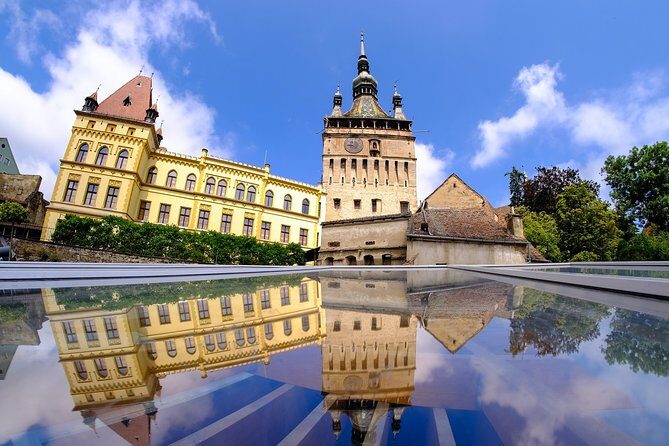
- 64-meter Clock Tower panoramas plus a look inside at the clock mechanism and historical artifacts
- 164-step Covered Staircase leading to the Gothic Church on the Hill and its medieval frescoes
- Dracula’s Birth House experience ties Vlad the Impaler to Sighișoara in a grounded way
- Guild towers and bastions (butchers, tailors, furriers) explain how trades helped defend the city
- Photo-friendly medieval streets with a clear end point at the House with the Deer Antler
Sighișoara Legends & Landmarks: How the 2-hour walk works
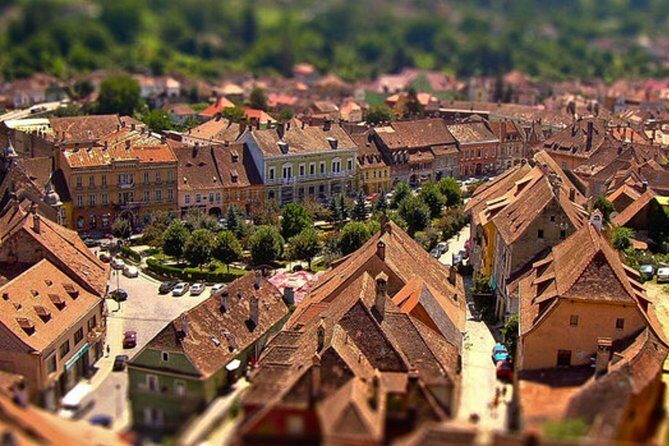
This tour is built for a classic first visit: enough time to see the core monuments, and enough structure that you don’t spend your energy figuring out where to go next. It runs daily with a 11:00 departure, and it typically lasts 2 hours on foot.
You start at Piața Muzeului 5, right in front of the Monastery Church. The operator lists two close starting-point options (Piața Muzeului 5 or 6) and two possible drop-off points (also Piața Muzeului 5 or 6), which makes sense in a compact historic center where the group can flex slightly.
Price-wise, $45 sounds like a city-tour price, but the value is in the guide time and the number of distinct stops packed into a short window. You’re not just looking at buildings from the curb; the route includes places with interior components (like the Church on the Hill and clock-related items) and several story-rich landmarks tied to how the town functioned.
You can also read our reviews of more walking tours in Sighisoara
Starting at Piața Muzeului: getting your bearings fast
Your meeting point is easy to find if you’re already in the citadel area: Piața Muzeului 5, in front of the Monastery Church. This matters, because Sighișoara’s old center is tight and scenic, but also easy to wander in the wrong direction when you’re taking photos.
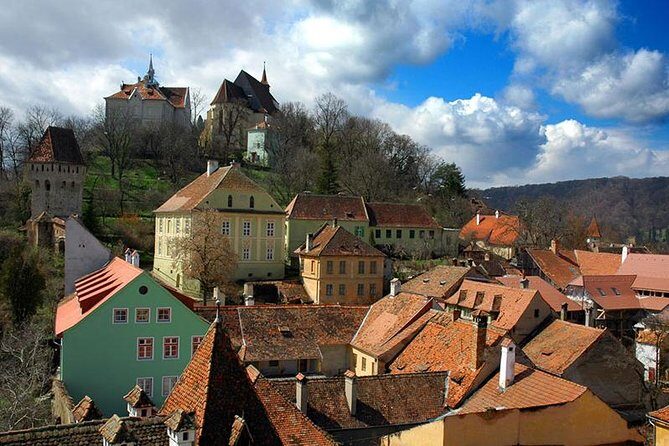
From the start, the tour’s pace is geared toward understanding the layout. You’ll move through the medieval center on cobbled streets and colored facades, but you’ll also learn how the important sites relate to one another—market, defense, worship, and civic life.
A recurring theme in strong guides is how they turn the route into a map you can remember. In past experiences with this kind of walk, guides like Peter or Andrea are often the type who answer questions beyond the usual script, so if you want context on Transylvania, medieval Saxon towns, or Vlad the Impaler’s local connections, you can usually ask and get a straight answer.
The Market Place, Dracula’s Birth House, and why the stories feel local
The center of the citadel is the Citadel’s Market Place, a lively square surrounded by colorful burgher houses. Even if you’re not there on a specific market day, this is the social heart of the town, which helps you understand why so many major landmarks cluster nearby.
Then comes Dracula’s Birth House, widely linked to Vlad the Impaler—Dracula’s real-life inspiration. Here’s the smart angle: instead of treating it as a spooky gimmick, the stop is also presented as a museum/restaurant tied to Sighișoara’s history. You’ll get the legendary association, but you’ll also learn how the town’s past shaped the kind of stories that stuck.
If you’re coming in with only the Dracula myth, this part of the tour helps you correct the focus. The guide connects Vlad Dracul’s era to the specific place you’re standing, so you’re not just collecting names—you’re seeing how history leaves physical traces in walls, streets, and institutions.
Clock Tower viewpoints and what’s inside the mechanism
The Clock Tower is the city’s main landmark, and it’s one of the best reasons to do the guided walk instead of going solo. The tower rises to 64 meters, and the stop includes the panoramic payoff that makes Sighișoara feel like a real fortress town instead of a postcard.
You’ll also hear about the clock mechanism and historical artifacts inside. Even if clocks aren’t usually your thing, this is one of those details that turns an iconic building into something understandable: how the tower worked, what it symbolized, and why it mattered enough to become a centerpiece.
Practical note: since you’ll climb at least once more later (for the Church on the Hill via a staircase), pace yourself. If you’re the type who hates rushing, this is one of the stops where taking a slow moment for photos and a longer look can make the rest of the tour feel less like a checklist.
The Covered Staircase and the Church on the Hill
This is the section that often defines the tour in your memory. You’ll climb the Covered Staircase, a 164-step wooden passage built in the 17th century to protect schoolchildren from harsh weather. That detail alone is worth the walk, because it shows you how daily needs (education, weather, movement between parts of town) shaped real architecture.
Once you reach the top, you’re at the Church on the Hill, a striking Gothic church with a rich interior and medieval frescoes. This is where Sighișoara shifts from “fortress town” to “spiritual and cultural center,” and the guide’s job is to help you notice what you’d miss if you were just scanning for photo spots.
The big benefit here is storytelling through buildings. A Gothic church isn’t only pretty; it’s community identity in stone, and the frescoes are a visual history lesson. If your timing is tight, this is also the stop you’ll want to pay full attention to, because the tour’s best moments often come from slowing down here, not sprinting to the next corner.


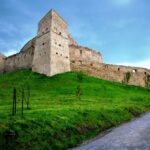


German Cemetery: seeing the town through who lived there
After the hill church, the route moves to the German Cemetery. This is a quieter, more reflective stop, but it’s one of the most useful for understanding how Sighișoara’s influential families left their mark.
You’ll learn how some of the town’s most important lineages are buried there, which gives the medieval center a social dimension. If you only focus on towers and walls, a place like Sighișoara can feel like scenery; the cemetery helps explain who had power, who built legacies, and how the town organized status across generations.
This is also the part of the tour that’s great if you like “people history”—not just wars and rulers. It’s a short shift from legends into something more human: names, continuity, and the way a community remembers itself.
Guild defenses: Butchers’ Bastion, Tailors’ and Furriers’ Towers
Next up are the medieval defensive structures, where the tour’s practical theme—how trades helped protect the city—comes into focus. You’ll stop at the Butchers’ Bastion & Tower to learn about the town’s medieval defenses and how craft guilds played a role in guarding the citadel.
Then the tour continues with the Tailors’ Tower & Furriers’ Tower. These names are memorable, and that’s the point: they link city defense to everyday professions. When you understand that, the towers stop being random architectural leftovers and start reading like an organized system.
If you’re the kind of person who likes architecture explanations, this is your moment. The guide can help you look at fortifications in a functional way—how they were meant to deter, watch, and withstand pressure—without needing a history degree.
The Tin Moulders’ Tower, the Venetian House, and the deer-antler finale
The walk continues to the Tin Moulders’ Tower, another step through the defense-and-trade story. Nearby, you’ll see the Venetian House, described as an elegant Renaissance-style building with an intriguing history.
The value of adding these stops is that they expand the time period. Sighișoara isn’t frozen in one era, and this part reminds you the town kept evolving after the medieval fortifications were already in place.
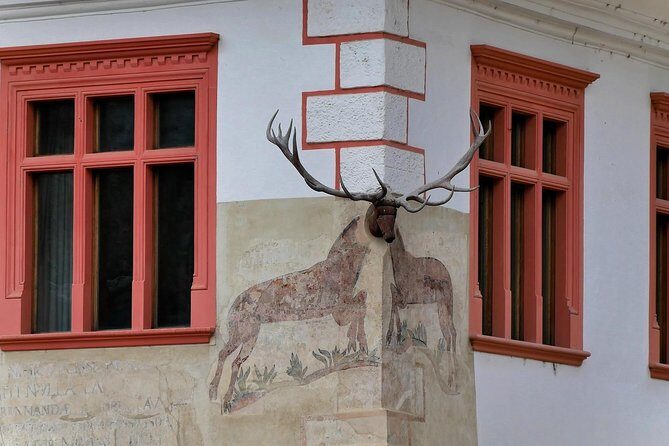
Finally, the tour ends at the House with the Deer Antler, recognized for the deer antlers mounted on the facade. This makes a great close because it’s visually distinctive, easy to remember, and you leave with a clear “last stop” landmark instead of wandering away from the tour mid-route.
What makes this tour good value for $45
Let’s talk value in plain terms. You’re paying $45 for a guided walk that strings together major sights in a short time, which is ideal if you only have a morning or early afternoon to cover the essentials of Sighișoara’s citadel.
The included piece is straightforward: an English-speaking specialized guide. What you’re really buying is direction plus explanation—someone who can point out the why behind the what, like why the Covered Staircase exists, why guilds defended the town, and how Vlad the Impaler connects specifically to Sighișoara rather than just to a popular myth.
Entrance fees are not included. So if certain stops require tickets for interior access, you’ll pay those separately. On a tour like this, it’s smart to keep a small extra budget ready, even if the guide covers what you can see without paying.
There’s also a private-tour supplement listed as EUR 20.00 per person. If you’re traveling as a small group and you prefer a quieter pace with more direct Q&A, that’s often worth considering, but it depends on what you want out of those 2 hours.
Who should book this walk, and who should skip it
This tour is a great match if you want your first Sighișoara day to feel ordered and meaningful. It suits history-lovers who like architecture, people-history details like the German Cemetery, and anyone who wants Vlad the Impaler explained with local context instead of spooky trivia.
It’s also good if you like photos but don’t want to sacrifice understanding. The route naturally places you at the kinds of spots you’ll want to stop for: the market square, tower viewpoints, church angles, and that deer-antler facade at the end.
The one group to be careful is visitors with mobility impairments. The tour includes the ascent to the Church on the Hill via the covered staircase, and it’s not positioned as a step-free option. If stairs are a deal-breaker, you might want to choose a different plan or ask about alternative routes when you book—some guides have shown flexibility when schedules or needs change, but you can’t count on it.
Tips to get the most out of your 2-hour schedule
Wear shoes you trust on old stone. Even when the tour isn’t described as intense, cobblestones plus stairs will slow you down if you’re not comfortable.
Bring your passport or ID card, since the tour requires it. Also, you’re told not to bring oversize luggage or large bags, so travel light; it keeps the group moving and avoids awkward logistics in tight historic streets.
Start with a mindset of questions. A standout feature of this tour style is that guides often go beyond the basic narration, especially when you ask about Vlad the Impaler, Romanian traditions, or how Sighișoara’s Saxon-era civic structure worked. If you’re the type who reads signs quickly and then wants context, you’ll get that here.
And plan your photos with the route. The Clock Tower and Church on the Hill are your “stop and linger” moments. If you try to photo everything equally, you’ll end up rushing the best scenes.
Should you book the Sighișoara Legends & Landmarks Tour?
If you’re visiting Sighișoara for the UNESCO citadel experience and you want a smart route that ties together Vlad the Impaler, Gothic church art, guild defense towers, and standout landmarks like the Clock Tower and Covered Staircase, I’d book this. It’s one of the best ways to make a short stay feel complete without guessing your way through a steep old town.
Skip it if you can’t handle stairs and uneven walking, or if you only want a quick visual stroll with minimal narration. In those cases, you’d likely be happier with a lighter, less structured option.
FAQ
How long is the Sighișoara Legends & Landmarks city tour?
It lasts 2 hours.
What time does the tour depart?
The departure time is 11:00, and it runs daily.
Where do I meet the guide?
Meet at Piața Muzeului 5, in front of the Monastery Church.
Where does the tour end?
The drop-off is either Piața Muzeului 5 or Piața Muzeului 6.
Is the tour offered in English?
Yes, the guide speaks English.
What is included in the price?
An English-speaking specialized guide is included.
Are entrance fees included?
No, entrance fees are not included.
How much does the tour cost?
The price is $45 per person.
What ID do I need to bring?
Bring a passport or ID card.
Is the tour suitable for people with mobility impairments?
No, it is not suitable for people with mobility impairments.
FAQ
Is there a supplement for private tours?
Yes. The information provided lists a EUR 20.00 per person supplement for a private tour.
What size luggage is allowed?
Oversize luggage is not allowed, and luggage or large bags are not allowed.
What’s the cancellation policy?
Free cancellation is available up to 24 hours in advance for a full refund.
Can I reserve and pay later?
Yes, you can reserve now and pay later.
Do I need to bring anything else besides ID?
The information provided only lists passport or ID card as required.
How many different starting and ending points are there?
There are two possible starting points (Piața Muzeului 6 or Piața Muzeului 5) and two possible drop-off points (Piața Muzeului 5 or Piața Muzeului 6).