Golden domes and street myths in one walk. I love the Russian Church stop and hearing 1989 Revolution stories, and I also love the blink-and-you-miss-it Lady Liberty alley. The walk is short enough to fit into a busy day, but it still feels like you’re learning the city’s secret language.
The only real drawback is it’s a true walking tour with lots of corners and stairs near churches and viewpoints, so if you’re slow, go in with comfortable shoes and a calm mindset.
In This Review
- Key highlights to look forward to
- Bucharest Old Town in 2 hours: the point of this walk
- Meeting at University Square and getting your bearings fast
- The Russian Church under the gold dome: 1989 Revolution context you’ll remember
- Lady Liberty in an alley: the small clue that changes how you look at the city
- Wolf Statue and Romulus & Remus: myth with national weight
- St. George Old Church and the Great Fire story
- Covaci and French Street: where Old Town gets its personality
- A final viewpoint toward the History Museum at Piața Unirii
- Guides make or break it: small group energy, real stories, and extra touches
- Price and value: does $45 for two hours make sense?
- Who this tour fits best (and who should choose something else)
- Should you book this Legends & Laneways walk?
- FAQ
- How long is the tour?
- How much does it cost?
- Where do I meet the guide?
- Is the tour small group size?
- Is it in English?
- Does the tour include food?
- Is it suitable for kids?
- What should I wear or bring?
- Is the tour carbon neutral?
Key highlights to look forward to
- Golden-domed Russian Church with 1989 Revolution context you can actually picture
- Lady Liberty in a side alley you’d walk past in seconds
- Wolf Statue and Romulus & Remus as a legend that ties into national identity
- St. George Old Church and stories of the Great Fire’s impact on Bucharest
- French Street and Covaci for Parisian flavor meeting communist-era change
- Small group of 12 max, so your guide can steer toward your interests
Bucharest Old Town in 2 hours: the point of this walk
This isn’t a checklist tour. It’s a legends-and-laneways walk that helps you see Bucharest the way locals do: not as one “Old Town block,” but as overlapping time periods stacked on top of each other.
You get a compact route that starts at University Square and finishes at Piața Unirii, covering the central Old Town on foot. It’s priced at $45, which is very reasonable for a small group with a live English guide, plus a snack included. The value isn’t just the number of stops. It’s the way the guide turns landmarks into stories you can connect—Revolution, mythology, and the city’s modern identity.
And yes, because it’s a small group (maximum 12), the tour has room for questions. From what I’ve seen on this kind of format, that’s the difference between collecting facts and actually understanding why Bucharest looks the way it does.
You can also read our reviews of more tours and experiences in Bucharest.
Meeting at University Square and getting your bearings fast
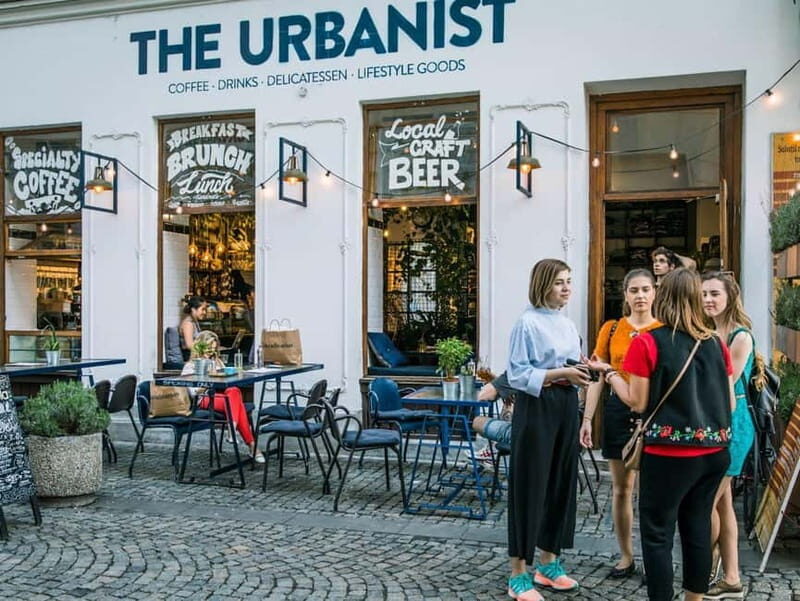
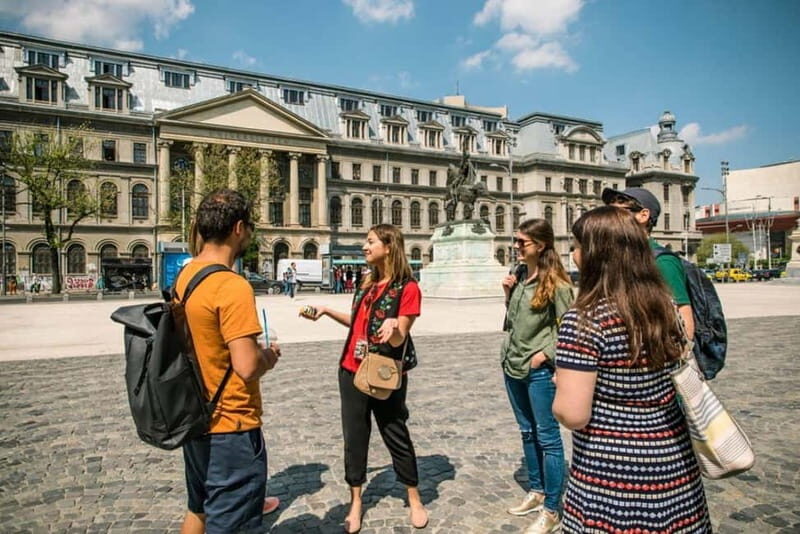
You meet in University Square, in front of the statue of Michael the Brave—the only horse statue in the square. That’s a nice setup because Michael the Brave is one of those figures that keeps showing up when you study Romanian history, even if your first instinct is just to look around and orient yourself.
Right away, your guide sets expectations for what you’ll notice during the walk: side streets, “why this building here,” and which corners hide meaning. If you learn best by seeing how stories connect to real streets, this early framing helps a lot.
Come with comfortable shoes. The tour is only two hours, but it still moves through Old Town lanes where you’ll be stepping on uneven sidewalk sections and changing direction frequently.
The Russian Church under the gold dome: 1989 Revolution context you’ll remember
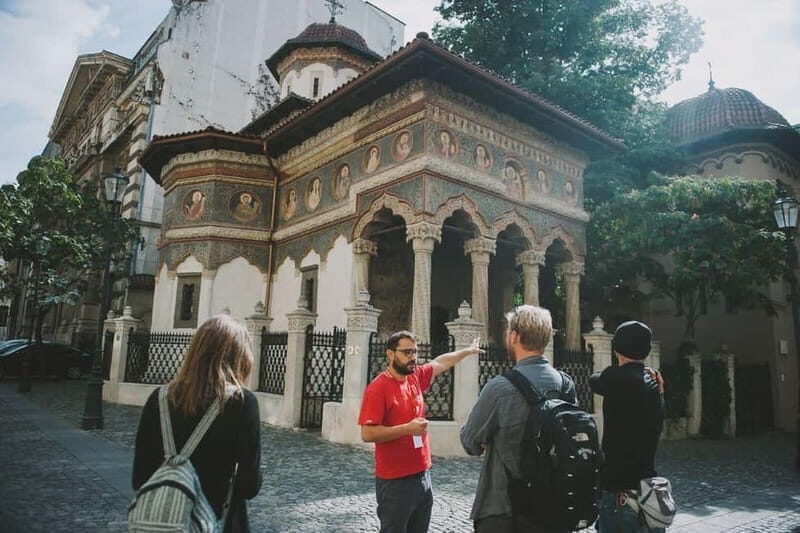
The tour starts with a confident choice: the golden-domed Russian Church. The main payoff here is hearing how the church connects to the 1989 Revolution—stories that help you understand how Bucharest’s people experienced that moment, not just what happened on paper.
I like this stop because it gives you a “big picture anchor.” Later, when you see other symbols and political-era clues across Old Town, you can link them back to this moment of upheaval. It’s the kind of context that makes the rest of the walk feel less random.
A possible watch-out: this is one of those places where your attention will split between architectural details and historical storytelling. If you tend to take lots of photos, slow down and let the guide finish a thought before you shoot.
Lady Liberty in an alley: the small clue that changes how you look at the city
Then the tour turns into something much more fun: the secret alley hunt. The Lady Liberty you’ll see in a narrow lane is the exact kind of Bucharest detail that separates an easy stroll from an informed walk. The guide points it out fast, and you realize how often you’ve been looking past things without knowing what you missed.
I love this part because it teaches an eye for the “in-between.” In Bucharest, a lot of the story isn’t on the main avenue. It’s in the side passage where a symbol survives, sometimes quietly, sometimes with a wink.
Practical note: since the alley is tight, keep your phone and camera ready but don’t block the group. This is a place for quick glances, not a full photo shoot marathon.
Wolf Statue and Romulus & Remus: myth with national weight
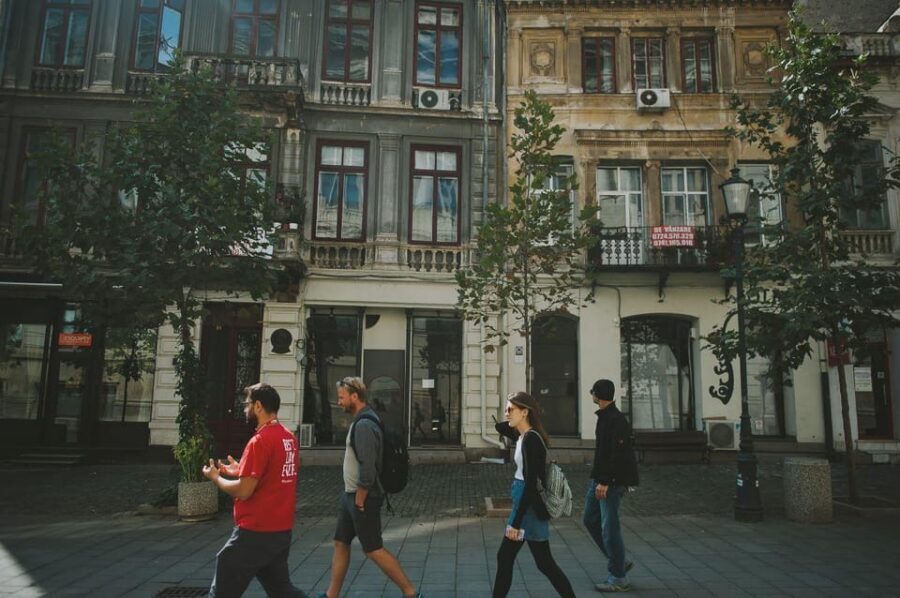
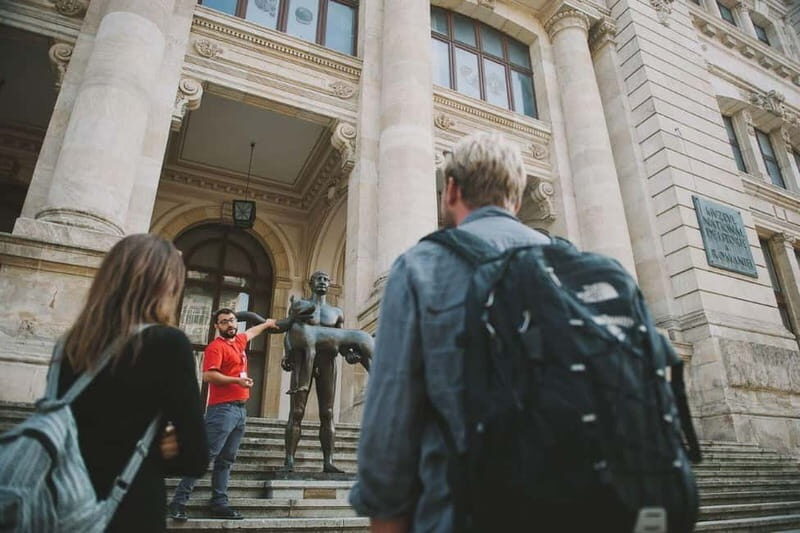
From there you’ll head to the Wolf Statue, where the guide explains the legend of Romulus and Remus. Even if you’ve heard the myth before, the value here is in how it’s placed in Bucharest’s public space and connected to local storytelling.
Myth can sound like filler on some tours. Here, it works because it’s tied to identity—how a city uses shared stories to build meaning you can walk through.
This is also a great moment to ask questions if you’re curious about the mix of classical references and Romanian history. Your guide is set up to talk history, culture, and legends in plain language.


St. George Old Church and the Great Fire story
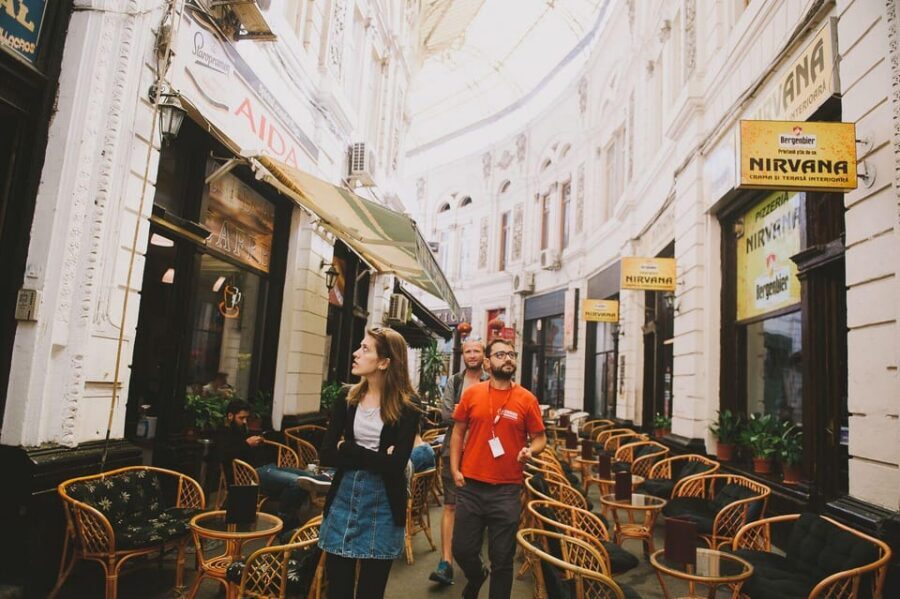
Next comes the St. George Old Church, described as a hidden gem within the area, and it’s paired with talk about the Great Fire and how it shaped Bucharest.
I like the pairing because it shows how disasters become architecture and street logic. When a city is rebuilt, the rebuild leaves traces: different layouts, different priorities, and sometimes strange “why is that there?” moments that only make sense if you know what came before.
A heads-up: churches can be quieter and more still than the street scenes, so this is where you’ll want to keep pace with the group. If you’re the type who wants to linger, tell your guide gently so they know you’re moving a bit slower.
Covaci and French Street: where Old Town gets its personality
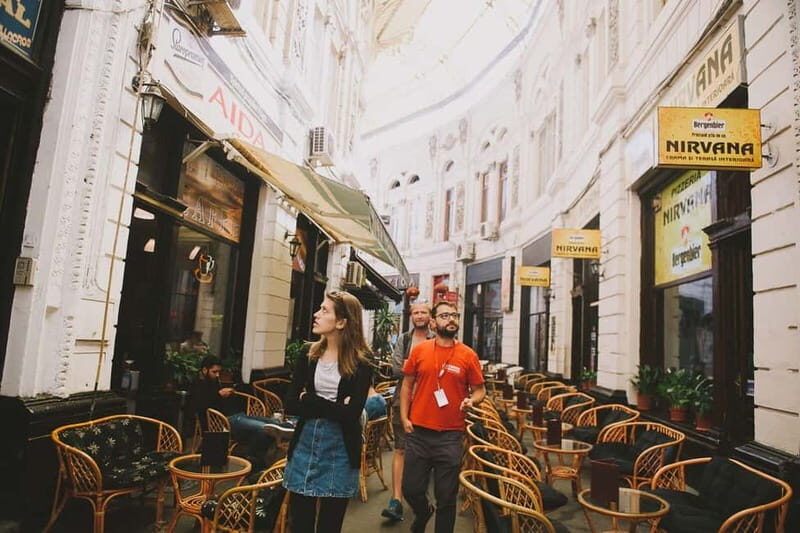
After the religious and myth stops, the walk shifts into streets where you feel Bucharest’s layered styles.
Covaci Street is one of the central lanes for seeing how communism reshaped parts of Old Town. You’ll learn what changed and what that change meant for everyday life—again, not just politics, but the physical result in the streets and buildings you can still see today.
Then you’ll walk French Street, which brings a different mood: Parisian flair mixed into Romanian street reality. That contrast is part of why the tour works. You’re not stuck in one “era vibe.” You’re seeing transitions, and transitions are what make Bucharest feel like Bucharest.
You may also pass the Comedy Theatre. The focus here is atmosphere and context, not a museum-style stop. It’s useful if you want a sense of what’s happening in the city while you’re moving through Old Town.
A final viewpoint toward the History Museum at Piața Unirii
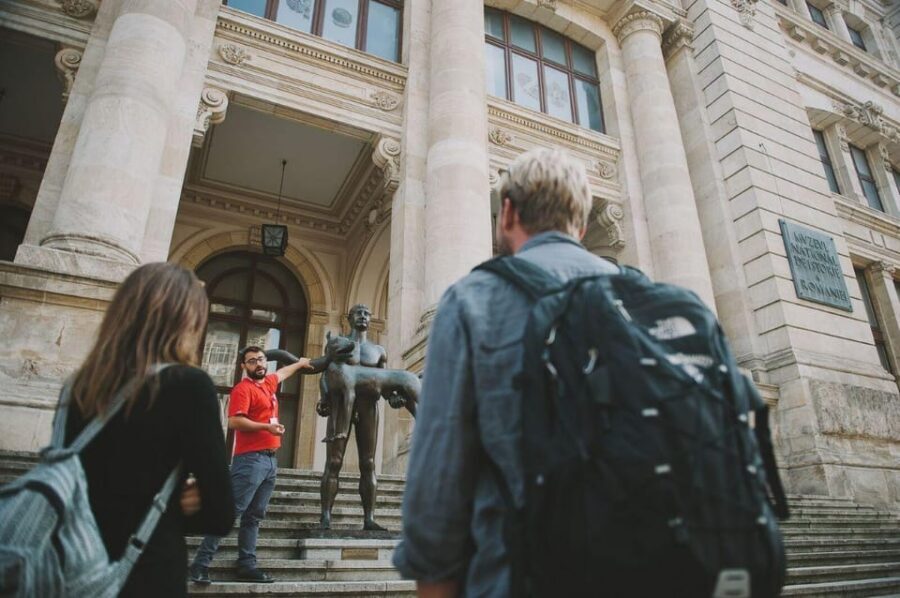
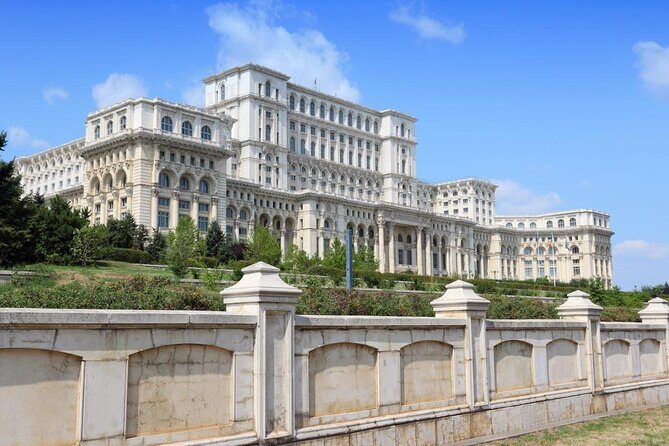
As the walk closes, you’ll get fresh views of the grand History Museum area. You don’t just finish at a transit point—you end where there’s still something to look at, and where your guide can help you decide what to do next.
One reason I like ending in this part of the center is simple: after two hours of legends and explanations, you’re better at noticing what matters. So the final viewpoint acts like a “wrap-up lens”—you leave with the ability to interpret the buildings, not just to remember names.
Guides make or break it: small group energy, real stories, and extra touches
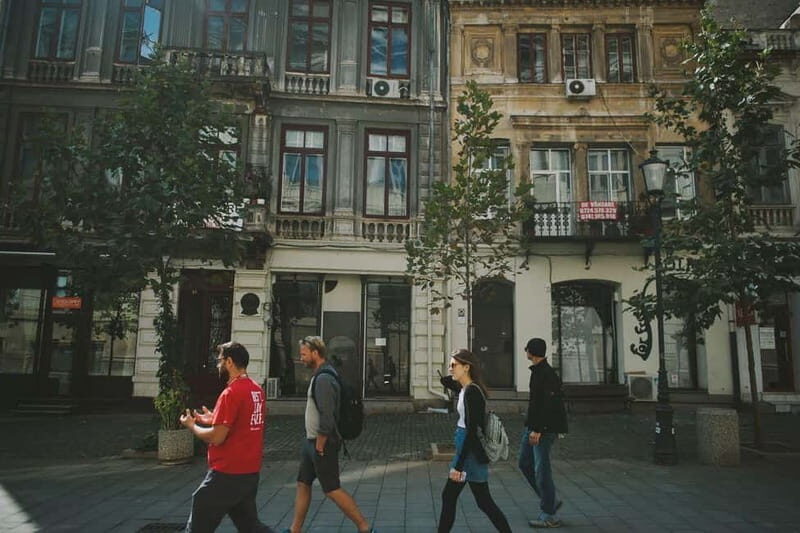
This tour keeps the group to a maximum of 12 people. That matters more than it sounds. With a small group, your guide can slow down for questions and tailor the route if you’re especially interested in history, architecture, or myths.
And the guides really lean into interaction. In past experiences, guides like Alex have offered a welcome covrig street snack and spoken in a way that made the city click faster. Another guide, Ana, is praised as excellent. If you prefer a more visual approach, one guide brought printouts to support key topics—helpful if you learn best by seeing a diagram or timeline alongside the story.
One more detail worth knowing: at the end, some guides share vintage Romanian money as a conversation-starter and potential souvenir. It’s not something you should bank on every time, but it’s a good example of the tone here—storytelling with small, memorable extras.
Price and value: does $45 for two hours make sense?
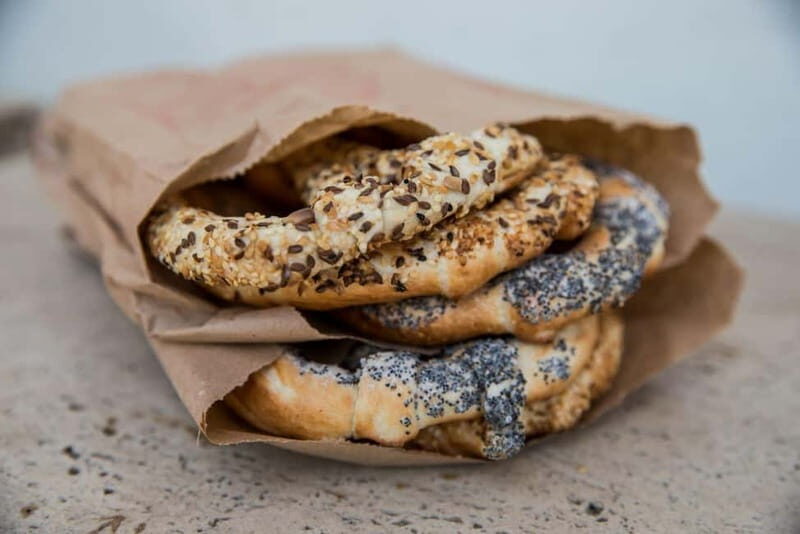
For $45, you’re paying for a live English guide, expert commentary on history and local legends, a traditional covrig snack, and a small-group format. You’re also getting a guided walk that hits both major landmarks and smaller alley-level details that most people miss.
Two hours is also the right length if you want context without burning half your day. If you’re only in Bucharest briefly, this tour is an efficient way to build a foundation before you wander on your own.
If your main goal is museums with tickets, this won’t replace that. But if your goal is to understand the city’s symbols and street logic, $45 feels fair—especially with the limited group size.
Who this tour fits best (and who should choose something else)
This tour is a strong match if you:
- Want a guided walk that connects legends to real places
- Enjoy history told through stories, not lecture format
- Like Old Town atmospheres but want help interpreting them
- Prefer small groups over crowded bus tours
It may be less ideal if you:
- Don’t like walking through compact lanes and church areas
- Want lots of inside visits (this is more of a street-and-stories experience, and only certain places may be accessible depending on conditions)
Kids under 6 can join free, which makes this a reasonable choice for families who want a structured walk with breaks built into the storytelling pace.
Should you book this Legends & Laneways walk?
I’d book it if you want to understand Bucharest quickly and honestly. The mix of the Russian Church, the secret Lady Liberty, Romulus and Remus at the Wolf Statue, and the communist-era perspective through Covaci and related streets gives you more than a pretty walking route. You leave with a working mental map of how symbols and politics show up in everyday streets.
It’s also a solid value at $45 for a two-hour small-group tour with an English guide and a snack. And with guides who adapt to questions—plus the occasional extra like visual printouts or a vintage currency moment—it feels personal, not scripted.
If you’re short on time and you want the city to start making sense fast, this is the kind of tour that earns its spot on your schedule.
FAQ
How long is the tour?
It runs for 2 hours.
How much does it cost?
The price is $45 per person.
Where do I meet the guide?
Meet at University Square, in front of the statue of Michael the Brave.
Is the tour small group size?
Yes. It’s limited to a maximum of 12 guests.
Is it in English?
Yes, the live guide speaks English.
Does the tour include food?
You’ll get a traditional covrig street snack during the tour.
Is it suitable for kids?
Children under age 6 are permitted to join free of charge, and the tour is described as child-friendly.
What should I wear or bring?
Wear comfortable shoes, since it’s a walking tour.
Is the tour carbon neutral?
The activity is described as carbon neutral and operated by a B Corp certified company committed to using travel as a force for good.