REVIEW · BUCHAREST
Bucharest Ghosts Stories and Mythology
Book on Viator →Operated by Bucharest by Foot Tours · Bookable on Viator
Bucharest gets scary after dark. This 2.5-hour ghost-and-myth walk turns the city’s landmarks into story stages, with a 7:00 pm start that helps you dodge the worst daytime crowds while chasing nighttime views and atmosphere.
I love how the guides connect Romanian superstition to real cultural habits, from funeral traditions to stories of spirits and warding off bad luck. I also like the value angle: you pay for the guide and the walk, while admission at each stop is listed as free.
One thing to consider: the tour is still a walking route with short stops, so if you expect nonstop pure jump-scare thrills at every corner, you might find some sections more story-context than full-on chills.
In This Review
- Key points worth knowing
- Bucharest After Dark: Why a 7 pm Walk Works
- Price and Value: What $33.88 Buys You
- Meet at the Ion Luca Caragiale National Theatre and Get Oriented
- Stop 1: National Theatre Ion Luca Caragiale (Free, Quick Hook)
- Stop 2: The Central School, Haunted-School Legends in Real Architecture
- Stop 3: Parcul Ion Voicu and the Strigoi Stories
- Stop 4: Gradina Icoanei, Witches, and a Pond Used for Rituals
- Stop 5: Anglican Church of the Resurrection and Real Exorcism Stories
- How the Guides Tell the Myths (Tudor, Bogdan, Rareș, Ali, Gabriela)
- The Walk-to-Story Ratio: What to Expect From the Pacing
- Comfort, Weather, and What to Wear for an Evening Like This
- Who Should Book This Tour—and Who Might Want Another Style
- Should You Book Bucharest Ghosts Stories and Mythology?
- FAQ
- What time does the tour start?
- How long is the Bucharest Ghosts Stories and Mythology tour?
- Is admission included for the stops?
- Does the price include an English-speaking guide?
- Does the tour include hotel pickup or drop-off?
- What group size can I expect?
- What if the weather is bad?
Key points worth knowing
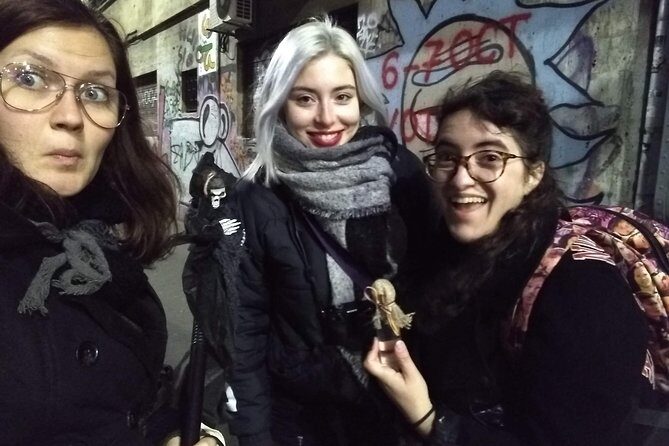
- Small group size (max 12) keeps the vibe personal enough for questions and follow-ups
- Free entry at each stop means your money goes to the guide and the route, not ticket fees
- You’re out after work hours for a quieter feel and better ghost-story mood
- Stories go beyond ghosts into witches, exorcism tales, and how people talk about evil eye and evil spirits
- Parks are part of the route, so you get real nighttime “where does the legend live?” settings
- English-speaking guidance throughout, with guides named in past departures such as Tudor, Bogdan, Rareș, Ali, and Gabriela
Bucharest After Dark: Why a 7 pm Walk Works
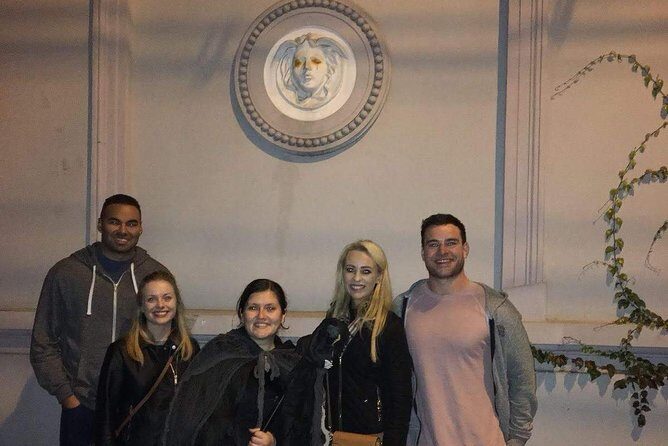
This is the kind of tour that feels right only when the light changes. Starting at 7:00 pm, you’re moving through Bucharest when streets thin out, shadows lengthen, and the city stops acting like a daytime checklist. Even if you know the basics of the Romanian capital, it’s a different city when you hear legend-talk while standing in the same spots locals associate with old stories.
The pacing is designed for an evening route. You’ll spend short bursts at each stop—enough time to hear the story, look around, and take photos—then move on before things feel rushed. And because the group is capped at 12 people, you don’t get swallowed by the crowd noise.
You can also read our reviews of more tours and experiences in Bucharest.
Price and Value: What $33.88 Buys You

At $33.88 per person, this tour sits in the “serious storytelling for a fair price” range. Here’s why the value works.
First, the guide is included and the whole format is built around spoken myth and local context, not just sightseeing. Second, the route includes multiple stops where admission is listed as free, so you’re not paying a separate ticket at each location. Third, the duration—about 2 hours 30 minutes—is long enough for a full evening arc: setup, legend buildup, and an ending that lands with atmosphere rather than a quick photo and goodbye.
If you compare it to the usual ghost tours that are mostly generic scare monologues, the better deal here is specificity. This one focuses on Romanian beliefs: strigoi stories, witch-rumor settings, and even exorcism tales. You’re not just hearing that something is haunted. You’re hearing how people explained fear in real life.
Meet at the Ion Luca Caragiale National Theatre and Get Oriented
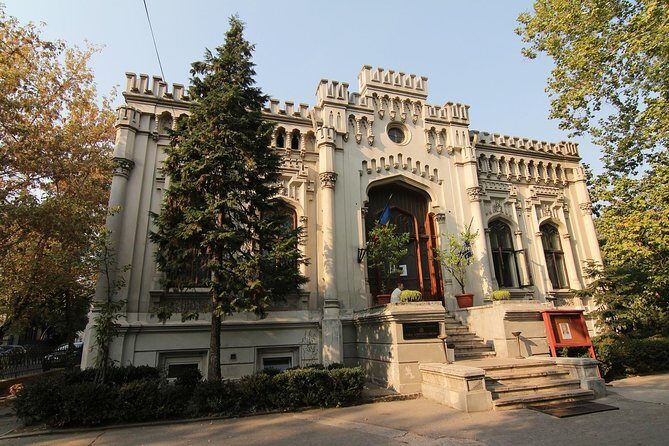
You start right by the National Theatre Ion Luca Caragiale (Bulevardul Nicolae Bălcescu 2). Meeting there is practical for two reasons: it’s a recognizable landmark, and it puts you near major transit connections around Piata Romana.
Expect this start to feel like the tone-setting chapter. The guide begins with context so the later stops make sense. Several guides named from past departures—like Tudor and Bogdan—are praised for mixing straight facts with supernatural explanations, so you get a mental map instead of random spooky facts floating in the air.
Also, because the meeting is near public transport, you’re not locked into a complicated pre-tour commute. If you’re staying anywhere central, you can usually get there without turning the evening into a logistics project.
Stop 1: National Theatre Ion Luca Caragiale (Free, Quick Hook)
This first stop is short—about 10 minutes—and that’s exactly what it should be. Think of it as the opening scene: you’ll likely hear how Bucharest’s legends connect to local beliefs about death, spirits, and the thin line between religion and superstition.
The theatre itself acts as a landmark anchor. It helps you orient your sense of place fast, then the tour quickly pivots into the more folklore-heavy parts of the walk.
If it’s rainy or cold, this is where the guide’s tone matters most. A good guide keeps the group engaged so the evening doesn’t turn into trudging from one dark corner to another.
Stop 2: The Central School, Haunted-School Legends in Real Architecture
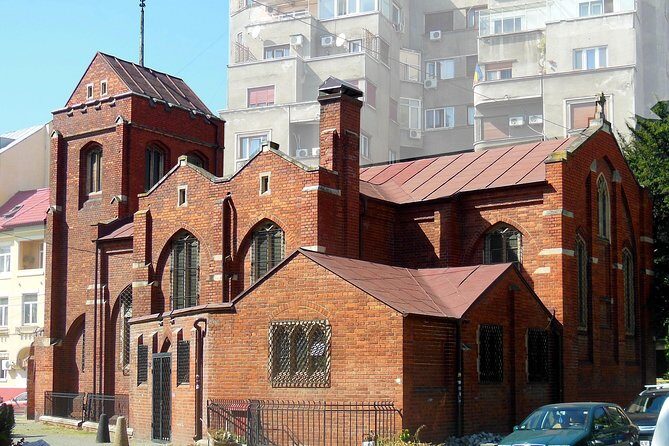
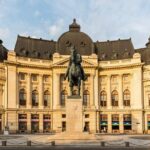
Next up is The Central School, a monument of architecture and a stop tied to a famous haunted-school legend. You’ll spend about 15 minutes here, and that timing matters: haunted-school stories work best when you can see the building and picture the setting.
This is also one of the places where the tour tends to feel most “story-first.” The guide doesn’t just point and say creepy things. You get a shaped narrative—often including the feel of rumor, local belief, and how the supernatural gets attached to everyday places like schools.
One review highlighted a boarding-school story that actually sent chills. That’s the best sign you can get: the guide can make an ordinary city structure feel like part of the legend.
Drawback to keep in mind: since this tour is built as a route of short visits, the school stop is more about the tale than long exploration. If you want to spend serious time reading details off plaques or walking inside rooms, this may feel too quick.


Stop 3: Parcul Ion Voicu and the Strigoi Stories
Then you head to Parcul Ion Voicu, where you’ll rest for about 15 minutes and hear stories specifically about strigoi. This is where the tour’s mood clicks for many people: a park setting lets the supernatural talk breathe.
Strigoi is the kind of word that sounds like folklore because it is folklore—stories people used to explain fear, misfortune, and the idea that the dead can still matter. In a park at night, it’s not hard to understand why a guide’s storytelling feels more believable.
This is also a smart design choice for your energy. Outdoor time plus a few minutes to pause gives you a break from constant walking, especially if you’re dressed for the evening but not for hours of cold wind.
Tip: if you’re going in cooler months, bring warm layers. One review called out that winter visits mean you’ll want to dress for the cold, and that matches the park reality.
Stop 4: Gradina Icoanei, Witches, and a Pond Used for Rituals
At Gradina Icoanei, you spend about 10 minutes. The key detail here is the history-linked legend: in the past, the park included a pond that was used in witch-related rituals.
That pond detail matters because it’s not vague. It gives the story a physical anchor. When a legend has a named place—like a pond, a garden, a church area—it sticks harder in your head than a purely invented ghost tale.
This stop is also where the tour’s mix of religion and superstition tends to become obvious. One recurring theme in the tour’s praise is how guides treat the supernatural as part of a broader belief system. You’re not just learning scary myths—you’re learning how people combined faith practices with older fears and protective habits.
If you prefer darker, more witch-leaning stories, this is likely one of your favorite stretches.
Stop 5: Anglican Church of the Resurrection and Real Exorcism Stories
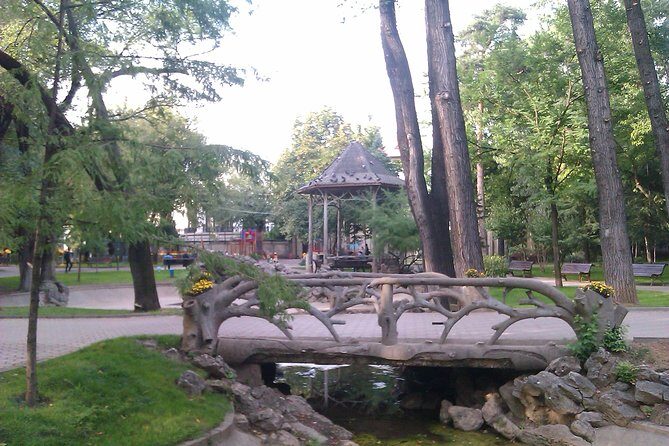
The final storytelling stop is in front of the Anglican Church of the Resurrection, with about 10 minutes here. The hook is direct: you’ll uncover stories of real exorcism.
This is a big shift from witches and strigoi tales. It brings the supernatural closer to documented human practices—how fear was handled, how people tried to explain possession or evil influence. In other words, this isn’t just folklore decoration. It’s a look at how religious settings got pulled into the supernatural worldview.
If you like a tour that ends with something weighty instead of only creepy, this stop does that job well. It also gives you a strong final conversation topic when you’re back at your hotel.
Afterward, you finish at University House (Strada Dionisie Lupu 46), open in Google Maps, and close to Piata Romana.
How the Guides Tell the Myths (Tudor, Bogdan, Rareș, Ali, Gabriela)
This is one of those tours where the guide’s voice is part of the product. Past departures mention guides by name—Tudor, Bogdan, Rareș, Ali, and Gabriela—and the common thread in the praise is storytelling that blends culture with the supernatural.
What that means for you: you’ll likely hear both sides of the myth. There’s the explanation rooted in Romanian cultural belief, and then there’s the “why people thought that” angle. The guide also tends to add personal touches and cultural detail, including how people talk about funerals, spirits, and protection.
One review specifically mentioned learning practical superstition like how to ward off the evil eye and how to recognize signs that someone might be believed to be transformed into an evil spirit. Even if your guide frames it in their own words, it’s the kind of detail that makes the tour feel lived-in rather than generic.
You might also hear folklore tied to the creepy lore of the three houses—Devil’s House, Poltergeist House, and Cat’s House—which shows how the guide links different strands of Romanian myth into one evening narrative.
The Walk-to-Story Ratio: What to Expect From the Pacing
This tour is structured for attention, but it’s still a route. You’ll be outside, moving between locations, and each stop is relatively short. For most people, that’s ideal: you get variety and you don’t drown in one story for too long.
The main complaint to watch for is the balance between walking and talking. One person felt the ratio of walking to storytelling was disappointing and that some sites felt less connected to the ghost theme than expected. That doesn’t mean the tour is bad—it just means expectations matter.
If you’re the type who wants every single minute to be chilling and spooky, this might not fully scratch that itch. But if you like ghost stories that come with cultural context—funeral traditions, witches, exorcism, and how fear is explained in Romania—you’ll likely enjoy the flow.
Comfort, Weather, and What to Wear for an Evening Like This
The operator notes that the experience requires good weather. That means you should check conditions before heading out. If weather forces changes, you’ll be offered an alternative date or a full refund, but you don’t want your evening plans scrambled.
Dress for an outdoor walk. If you’re visiting in winter, plan on cold air and darker light. One review mentioned wrapping warm helped a lot. If it rains, be ready for a damp evening; at least one guide handled pouring rain well, but your own comfort still matters.
Practical footwear helps too. Parks and sidewalks are fine, but this is a walking tour, not a sit-down show.
Who Should Book This Tour—and Who Might Want Another Style
This tour fits best if you:
- want Romanian mythology and superstition tied to actual city locations
- like your ghost stories with cultural context (funerals, exorcism, evil-eye beliefs)
- enjoy a small-group vibe where the guide can keep the story coherent
- prefer an evening walk with atmosphere over an all-day museum slog
It may not be the best fit if you:
- want only the most intense scary moments without context or historical framing
- hate walking for 2.5 hours, even if the stops are short
- have very specific expectations about costuming—one review said an advertised costume wasn’t delivered, which can sting if that was a big part of your excitement
Should You Book Bucharest Ghosts Stories and Mythology?
I’d book it if you want a smart, story-driven evening in Bucharest—one that mixes legend with cultural belief and gives you a guided way to see parts of the city you might skip on your own. The high rating (4.9) and the fact that 98% recommend it is a strong signal that the guide-led storytelling lands well.
Book it especially if you’re staying central and can reach the National Theatre area easily. The route is short enough to stay fun, long enough to feel like an experience, and designed to work with the night mood.
Just go in with the right mindset: this is not a horror movie marathon. It’s a guided walk through places that hold Romanian fear stories—strigoi, witches, and exorcism—told with enough context that you’ll carry the myths home in your head.
FAQ
What time does the tour start?
It starts at 7:00 pm.
How long is the Bucharest Ghosts Stories and Mythology tour?
It lasts about 2 hours 30 minutes.
Is admission included for the stops?
Admission is listed as free for the stops.
Does the price include an English-speaking guide?
Yes. The tour includes an English speaking guide.
Does the tour include hotel pickup or drop-off?
No. Hotel pickup and drop-off are not included.
What group size can I expect?
The tour has a maximum of 12 travelers. There is also a minimum of 2 tourists, and it could be canceled if that minimum isn’t met.
What if the weather is bad?
The experience requires good weather. If it’s canceled due to poor weather, you’ll be offered a different date or a full refund.