REVIEW · BUCHAREST
Bucharest Essential Tour: Old Town, Calea Victoriei & Communism
Book on Viator →Operated by BTrip Bucharest Tours · Bookable on Viator
Bucharest history fits in one well-planned walk. You get plenty of stops for photos and orientation, plus a guide who turns architecture and politics into a story you can actually follow. The main thing to watch is that Ateneul Roman has an admission ticket not included, so you may pay extra if you want inside.
I like how this tour strings together three Bucharest “moods” in one route: elegant Belle Époque along Calea Victoriei, the hard-edged lessons of Revolution Square, and the Old Town lanes that connect people, empires, and rumors. I also like the practical setup: an easy start at Strada Benjamin Franklin 8, a clear finish at Hanul lui Manuc near Piata Unirii, and a tourist map included.
One more consideration: the communism portion is intense, including talk of oppression, hunger/food rations, and the bloody events of December 1989—so it’s not the lighthearted sightseeing type of outing. If you’re good with that, this is a strong way to get bearings fast.
In This Review
- Key things to know before you go
- A Fast 2.5-Hour Route Through Bucharest’s Past and Present
- Ateneul Roman: The Building That Defines Bucharest’s Grand Mood
- Carol I on Horseback and the Monarchy Story
- Revolution Square (Piaka Revolukiei): Communism Under the Surface
- Calea Victoriei: Belle Époque Stroll Where Kings Used to Walk
- Old Town and Manuc’s Inn: Vlad Dracula, Passages, and East-West Bucharest
- Price and Logistics: What You Get for $24.20
- Who Should Book This Tour (and Who Might Skip It)
- Should You Book the Bucharest Essential Tour: Old Town, Calea Victoriei & Communism?
- FAQ
- How long is the Bucharest Essential Tour?
- What is the price per person?
- Where does the tour start and end?
- Is the tour offered in English?
- What is the maximum group size?
- Is a tourist map included?
- Are admissions included for all stops?
- Does the tour include lunch or coffee?
- What if the weather is bad?
- Can I cancel for a full refund?
Key things to know before you go
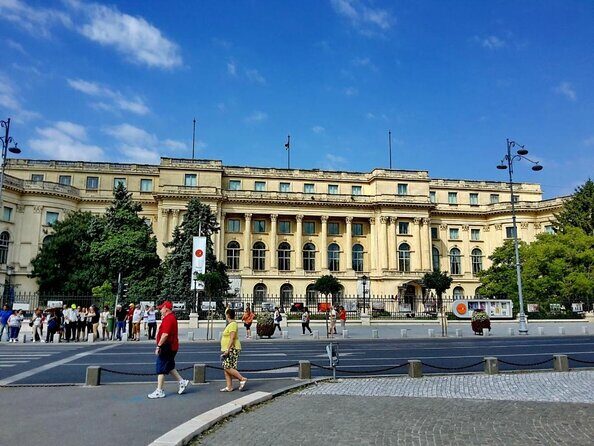
- Small group feel (max 12): easier questions and less waiting around.
- Photo-friendly route: multiple planned stops across Old Town, Calea Victoriei, and Revolution Square.
- Most admissions are free: only Ateneul Roman requires a ticket you bring yourself.
- History told through buildings: Ateneul Roman, Carol I’s statue area, Revolution Square, and the Old Town passages all connect.
- Clear start and finish: Strada Benjamin Franklin 8 to Hanul lui Manuc, near public transport and Piata Unirii.
A Fast 2.5-Hour Route Through Bucharest’s Past and Present
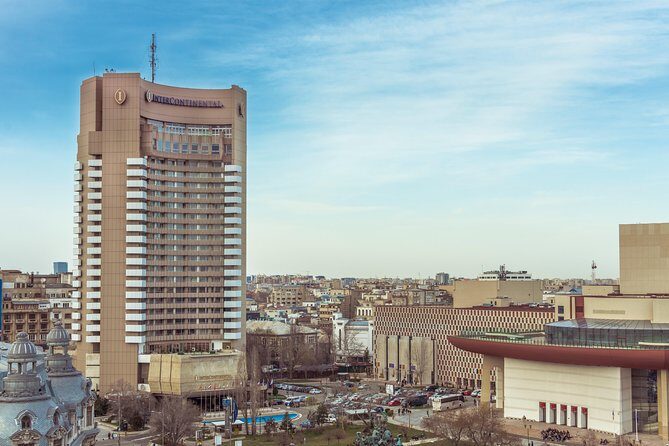
This is an efficient walking tour that targets the places you’ll want on your first day. It runs about 2 hours 30 minutes, and it’s designed so you don’t just “see stuff”—you leave understanding how Bucharest’s architecture and streets mirror political change.
The route also makes practical sense. You start in central Bucharest at Strada Benjamin Franklin 8 and end at Hanul lui Manuc, right near Piata Unirii. That end point is useful because it gives you an immediate jump-off for dinner and an easy metro/tram connection area without hauling yourself back across town.
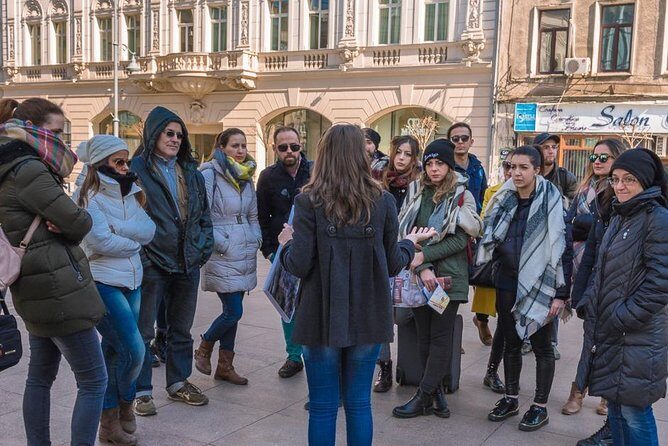
Guides are a big part of the value here. The tour is offered in English, and the experience is built around your guide giving tips and travel advice, not just reciting facts. If your guide happens to be one of the names you’ll hear associated with this tour—Stefania, Dana, Maria, Laura, Stefan, or Ioan—you can expect a lively style, including extra visuals at some stops and lots of Q&A.
You can also read our reviews of more tours and experiences in Bucharest.
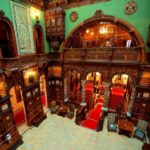
Ateneul Roman: The Building That Defines Bucharest’s Grand Mood
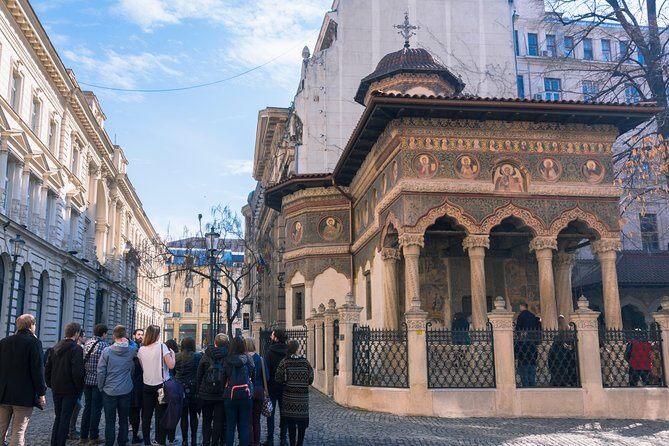
You kick off at Ateneul Roman. Plan for about 15 minutes here, mostly focused on learning why this building matters and what to notice when you look at it.
Two practical points:
- It’s admission not included, so if you want to go inside, you’ll need to arrange that separately.
- Even if you don’t, the stop is still worthwhile because the tour uses the building as a quick “Bucharest identity check.” You learn what makes it special and why locals treat it as a symbol.
I like this kind of start. When a tour begins with a major landmark you can identify instantly, it helps everything else click later—especially once you move from formal architecture into the political story of Revolution Square and the Old Town’s layered streets.
Carol I on Horseback and the Monarchy Story
Next is Statuia Ecvestra a Lui Carol I (the equestrian statue of Carol I). You get about 15 minutes, and there’s no admission ticket needed.
What I like about this stop is the way it’s framed. You’re not just looking at a statue. The tour connects Carol I with the former Royal Palace and points you toward the impressive University Library nearby, using that area to explain the monarchy chapter in Romanian history.
If you enjoy when a city tour explains why certain landmarks sit where they do, this is a good checkpoint. You’ll understand the “why” behind the impressive look—before you jump into the 20th-century politics that replaced those symbols.
Revolution Square (Piaka Revolukiei): Communism Under the Surface
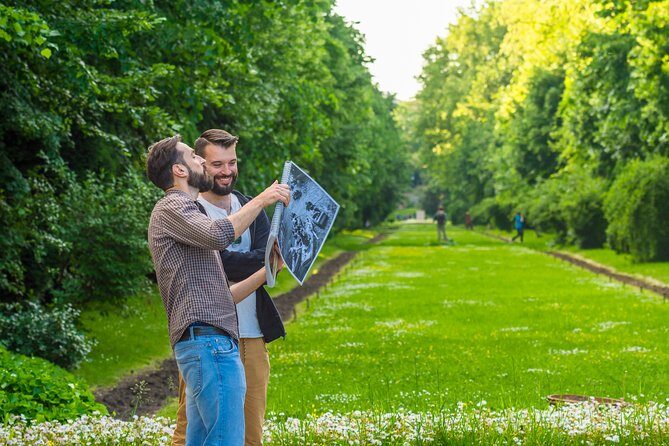
Piata Revolutiei (listed here as Piaka Revolukiei) is one of the most important parts of the route, with about 30 minutes. This stop is free to visit.
Here the tour goes beyond broad slogans. You get stories about how the totalitarian regime controlled everyday life, including details like hunger and food rations, plus images from the time to make the timeline feel real. You also hear about the December 1989 revolution and the fall of dictator Nicolae Ceaușescu, tying it to the shift toward democratic Romania.
This is the moment when I’d be honest about the “tone” of the tour. It’s informative and serious, not cozy. If you’re sensitive to violent or oppressive history, give yourself a mental cushion. On the other hand, if you want Bucharest to make sense—not just photograph well—this is the stop that explains what many of the buildings and street-level memories are reacting to.
Calea Victoriei: Belle Époque Stroll Where Kings Used to Walk
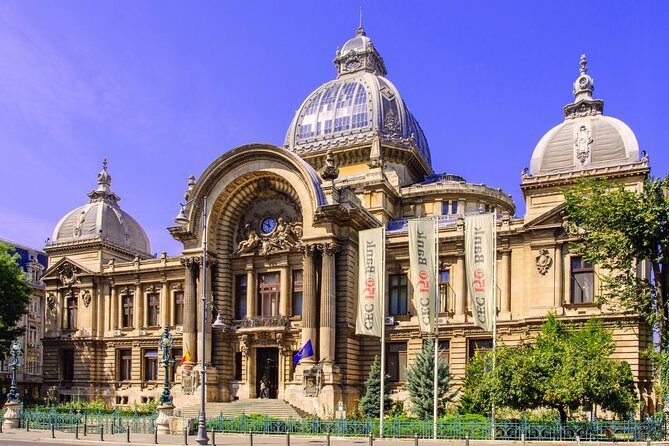
After the heavy stop, the pace turns more visual at Calea Victoriei—about 30 minutes. This section is free, and it’s where Bucharest starts looking like the city in older postcards.
You walk an avenue where kings had daily strolls, and the tour highlights Belle Époque-style buildings such as:
- CEC Palace
- Grand Hôtel du Boulevard
- the University Library again, which helps reinforce what you saw near Carol I
I love this kind of transition. It gives your brain a breather while still staying in the same story. The monarchy-era grandeur you learned about near Carol I starts to echo through the street design and the scale of the architecture on Calea Victoriei.
This is also a strong photo segment. Expect to stop often—so if you want to shoot without constantly catching up, you’ll be glad the route is built for frequent pauses.



Old Town and Manuc’s Inn: Vlad Dracula, Passages, and East-West Bucharest
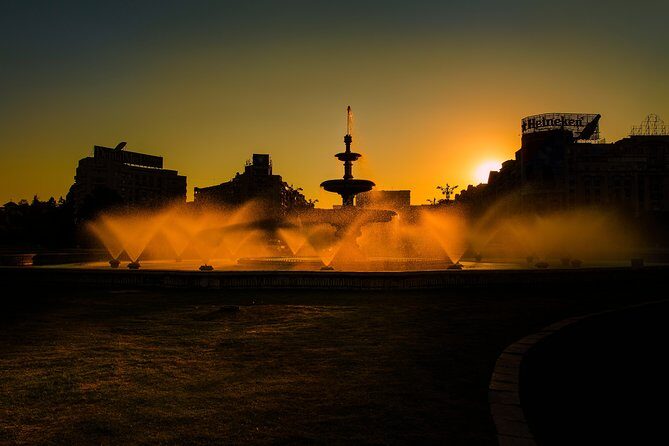
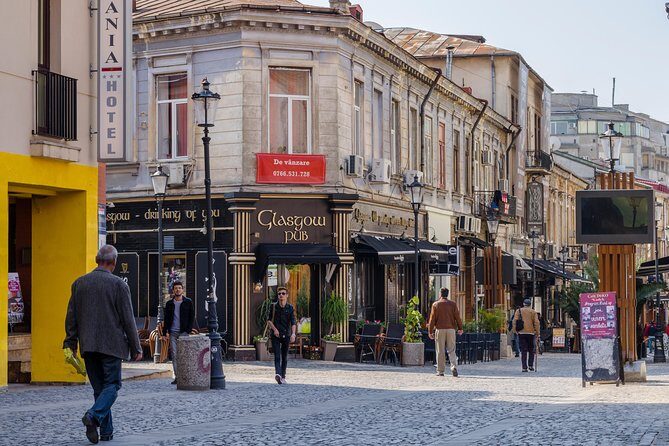
The final stretch is the heart of the wander: about 1 hour in the Old Town, ending at Hanul lui Manuc.
This is where the tour does a clever thing: it uses dramatic storytelling as an entry point, then expands it into real city evolution.
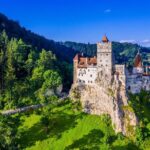
You start with the steps of Vlad Dracula and the idea of a forgotten fortress nearby—so yes, there’s a spooky hook. But the real value is how the tour connects myth and memory to how Bucharest evolved after different cultural influences met.
From there, you head to Manuc’s Inn (Hanul lui Manuc), described as a caravanserai, meaning a former commercial settlement designed for travelers and trade. The tour explains how Bucharest grew at the merger between the East and the West. That framing matters because it stops the Old Town from feeling like just a set of pretty streets—you understand why the buildings and streets feel the way they do.
You’ll also see an eclectic mix of landmarks, including:
- National Bank of Romania
- Stavropoleos Monastery
- Villacrosse Passage
I’d plan your energy for this section. It’s not described as a marathon, but it is the segment with the most “visual variety,” so it can feel dense in a good way. If you like walking tours that show you multiple styles in a small area, this Old Town portion is a solid payoff.
Price and Logistics: What You Get for $24.20
At $24.20 per person for about 2.5 hours, the value is pretty clear once you see what’s included and what’s not. The tour provides:
- a tourist map of Bucharest
- mobile ticket
- group discounts
- an English guide
- a route where most stops are free of admission fees
The one cost you might add is Ateneul Roman. Since the ticket is not included, this tour is still good value even if you decide not to pay for entry. In other words, you’re not forced into extra spending everywhere—you’re mostly guided access and storytelling.
That structure is important for travelers on a budget. You’re paying for the human part: the route logic, the explanations, and the photo-stop pacing. You’re also paying for orientation. After 2.5 hours, you’ll know where major areas sit relative to each other, which can save time later when you build the rest of your trip.
Also worth noting: the group size max is 12, which helps keep things from feeling like a cattle line. Service animals are allowed, and it’s near public transportation, both of which make it easier for most people to fit into a day.
Who Should Book This Tour (and Who Might Skip It)
I think this tour fits best if you want your first Bucharest day to do real work. It’s ideal for:
- first-timers who need a guided framework
- travelers who like architecture plus context
- people who enjoy photo stops without sprinting
- anyone interested in how 20th-century events shaped daily life and the city’s identity
It might be less ideal if you’re only looking for light sightseeing. The communism section includes oppression and the violent revolution of December 1989. It’s not presented as a shallow stop, so you should be ready for that shift in tone.
One more practical fit: if you’re a “build my day” traveler, the end location helps. Finishing at Hanul lui Manuc near Piata Unirii makes it easier to continue on your own afterward instead of ending far from the action.
Should You Book the Bucharest Essential Tour: Old Town, Calea Victoriei & Communism?
If your goal is to understand Bucharest—not just take pictures—this is a smart pick. For a relatively low price, you get a guided route that connects monarchy-era symbols, communism’s impact on daily life, and Old Town evolution around Manuc’s Inn and the city’s standout passages and landmarks.
I’d book it if you like stories that explain why buildings matter and you’re comfortable with serious history. I’d pass if you’re avoiding heavy political topics or if you don’t want any chance of extra ticket costs at Ateneul Roman.
In short: it’s a high-efficiency orientation tour with enough depth to change how you’ll look at the city afterward.
FAQ
How long is the Bucharest Essential Tour?
It lasts about 2 hours 30 minutes.
What is the price per person?
The listed price is $24.20 per person.
Where does the tour start and end?
It starts at Strada Benjamin Franklin 8, 030167 București, Romania, and ends at Str. Franceză 62, 030167 București, Romania, near Hanul lui Manuc (Manuc’s Inn) in the Old Town.
Is the tour offered in English?
Yes, it is offered in English.
What is the maximum group size?
The tour has a maximum of 12 travelers.
Is a tourist map included?
Yes, a tourist map of Bucharest is included.
Are admissions included for all stops?
Ateneul Roman has admission ticket not included. The other listed stops have free admission.
Does the tour include lunch or coffee?
No. Lunch and coffee and/or tea are not included.
What if the weather is bad?
The experience requires good weather. If it’s canceled due to poor weather, you’ll be offered a different date or a full refund.
Can I cancel for a full refund?
Yes. Free cancellation is available up to 24 hours in advance for a full refund. Canceling less than 24 hours before start time isn’t refunded.