REVIEW · BUCHAREST
Bucharest: 4h Panoramic Private Tour by Car with Photo Stops
Book on GetYourGuide →Operated by Day Trip Romania · Bookable on GetYourGuide
Bucharest can feel like a lot fast. This private 4-hour panoramic tour strings together the city’s biggest landmarks in a way that’s easy to follow, with an English guide and a comfortable ride.
I especially liked how the stops connect history to what you’re actually seeing, from Parliament’s scale to the symbolism at the Village Museum.
Two more things I like: you get photo stops built in (so you can actually capture the views), and the guide pacing helps the tour feel relaxing instead of rushed chaos. I also appreciate that the vehicle has Wi-Fi, so downtime between stops doesn’t feel wasted.
The main drawback to consider is that you’re covering a lot of ground in a short window, and entrance fees aren’t included, so you may need to budget extra if you want to go in during the stops.
In This Review
- Key things that make this tour work
- What you really get in 4 hours: private comfort plus a big-city highlight reel
- Palace of the Parliament: seeing scale, then getting the political meaning
- Piața Unirii, then Dimitrie Gusti National Village Museum: Romanian life, not just Romanian buildings
- Revolution Square and the road to December 1989: history that changes how you see streets
- Calea Victoriei (Victory Avenue): the royal side, the communist side, and everything in between
- National History Museum, Romanian Athenaeum, and CEC Palace: architecture lessons without the detour
- Senate Palace and the Central Committee area: where the revolution started feeling real
- Old Town Bucharest: a final guided walk for atmosphere and photos
- Who this tour fits best (and who should skip it)
- Price and value: when $117 makes sense for a private car day
- The guide experience: clear explanations and on-the-fly adaptation
- Should you book this panoramic private car tour?
- FAQ
- What’s the duration of the Bucharest private panoramic tour by car?
- Where does pickup happen?
- What’s included in the price?
- Are entrance fees included?
- What language is the live guide?
- Do we get to skip the ticket line?
- Is there food included?
Key things that make this tour work
- Private, air-conditioned car with Wi-Fi keeps the day comfortable and efficient.
- Palace of the Parliament gives you the “how big can it get” reality check with a history framing that matters.
- Dimitrie Gusti National Village Museum shows Romanian traditions through real homes, materials, and symbols.
- Revolution Square and 1989 landmarks put the fall of Ceaușescu into clear context while you look around.
- Calea Victoriei mixes churches, palaces, and the city’s communist-era contrasts at street level.
- English live guide with strong time management can adapt to what you want to see more of.
What you really get in 4 hours: private comfort plus a big-city highlight reel
This is the kind of tour you book when you want Bucharest’s key sights without spending your vacation figuring out routes, parking, or where to start. You’re picked up from your address, then you ride in an air-conditioned private car with onboard Wi-Fi, which is a big deal in summer heat—or if you simply want the day to flow smoothly.
The structure is practical: you move from landmark to landmark, and each stop has a clear purpose. Some are photo-focused, some include guided walking/sightseeing, and the guide keeps the story moving so you don’t just “see buildings,” you understand why they matter.
What makes it feel especially worthwhile is the way the stops link together. You’ll go from the political weight of Parliament to the cultural weight of the Village Museum, then straight into the visual memory of December 1989. If you enjoy history that shows up in architecture and public space, this format fits.
You can also read our reviews of more private tours in Bucharest

Palace of the Parliament: seeing scale, then getting the political meaning
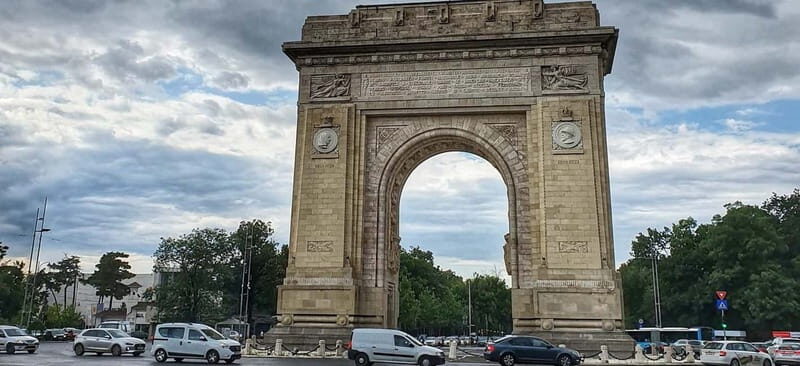
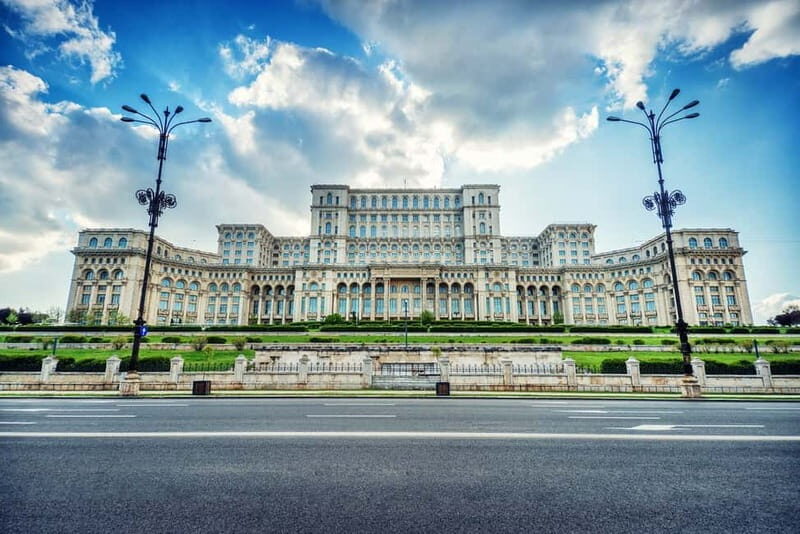
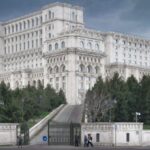
Your tour starts with a photo stop at the Palace of the Parliament (often called People’s House). Even without getting into details you might already know, the building hits you fast. It’s described as the world’s second-largest administrative building, and that scale is the point: power made concrete.
What I like here is the guide’s framing. You’re not just staring at a massive facade. You get context about how totalitarian regimes—specifically the communist era here—can damage a nation, and how megalomania can turn into “pointless opulence.” That’s uncomfortable to think about, but it changes what you notice while you’re standing there. You start looking at size, symmetry, and ambition in a different way.
A practical consideration: you have a limited window at this stop. Plan on using the time for photos and exterior impressions, because the schedule is built to continue on rather than linger.
Piața Unirii, then Dimitrie Gusti National Village Museum: Romanian life, not just Romanian buildings
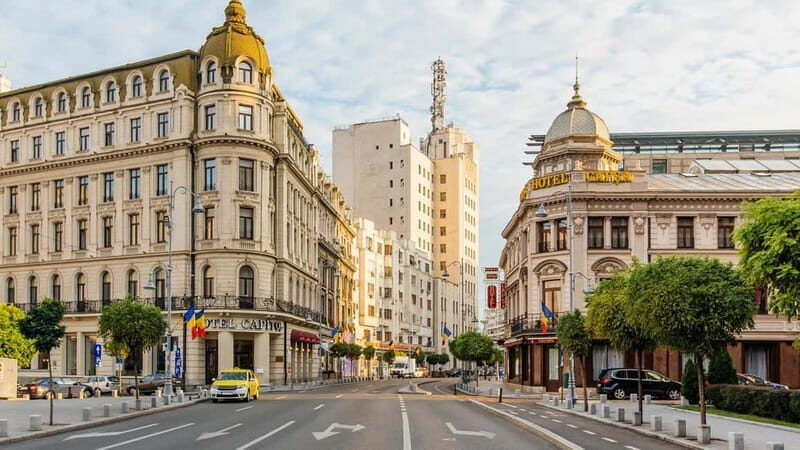
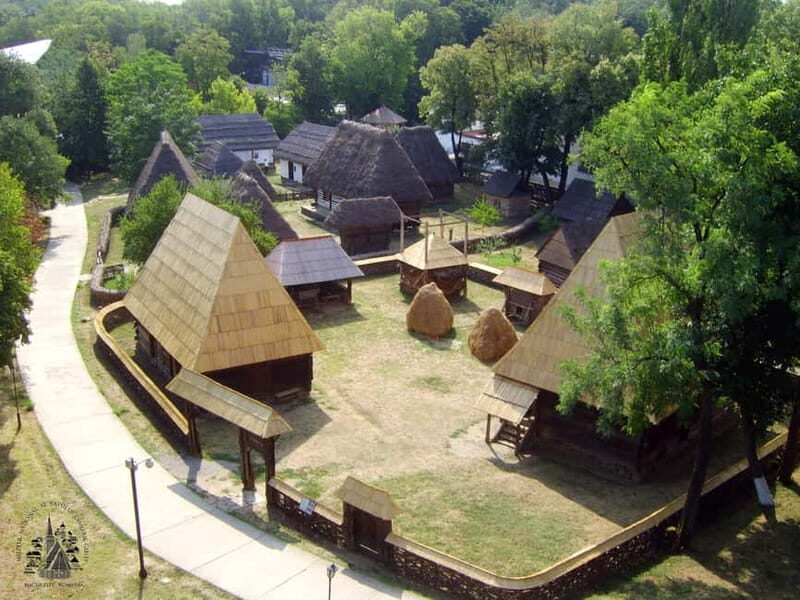
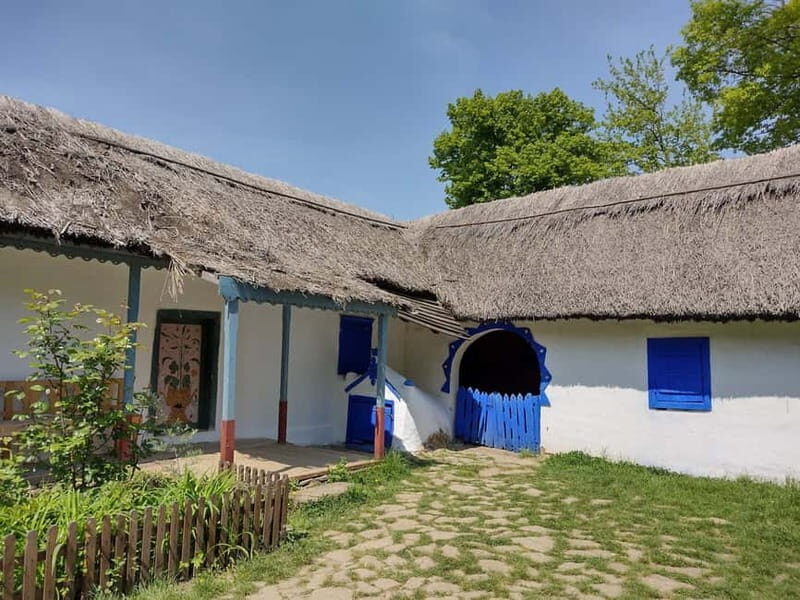
After Parliament, you pass Piața Unirii by car and then swing toward the Dimitrie Gusti National Village Museum, with about an hour set aside. This is one of the most different stops in the whole day, and that contrast is the reason I’d call it a highlight.
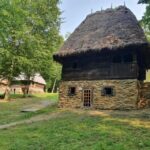
The museum is built around Romanian traditions—especially the kind of rural life many people never see up close. You get an explanation of how villagers built homes and an environment in their “backyard” in a way that’s framed as ecological and sustainable. Whether you view that as literal sustainability or cultural practicality, it gives you a new lens for what the countryside represents.
What you’ll remember most is the variety of traditional houses made from materials like wood, adobe, and stone, representing regions across Romania. You’ll also be introduced to national symbols, including a mill and a wooden church. It’s not only “pretty old architecture.” It’s identity made physical—how people lived, worked, worshiped, and stayed connected over time.
One thing to think about: since entrance fees aren’t included, you might need to factor those into your budget if you want to go into every area the museum offers.
Revolution Square and the road to December 1989: history that changes how you see streets
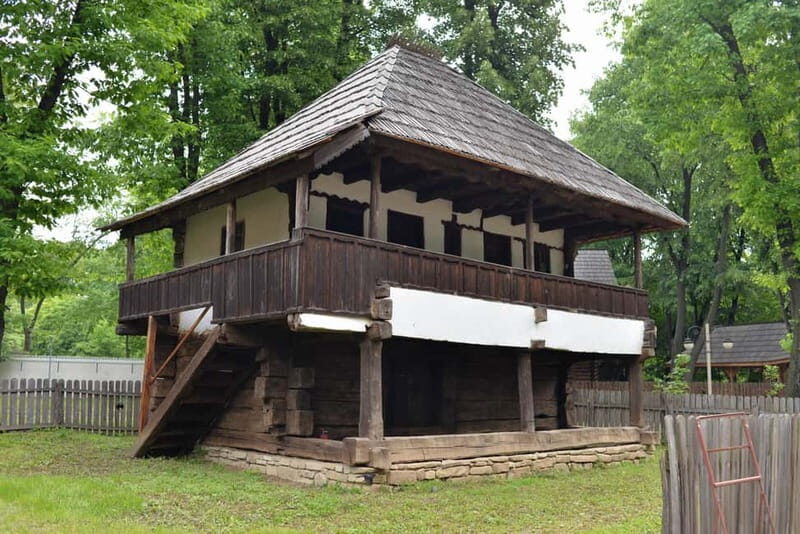
Next comes Revolution Square, with time for a photo stop and a guided segment. This is where Bucharest shifts from cultural storytelling into political memory.
The tour emphasizes the danger and damage of oppressive systems—then ties it directly to a moment when power changed hands. You learn about the Revolution of December 1989, when Nicolae Ceaușescu was ousted, and you connect that event to the specific buildings and spaces around the square.
One detail that tends to stick is how the guide describes Ceaușescu fleeing. The narrative includes that he left by helicopter, and that image helps you feel how sudden and chaotic the end of a regime can be. In this kind of square, history isn’t abstract—it’s the layout of power, the route of control, and the public spaces where people look for symbols.
This stop can feel heavy, but it’s also one of the most meaningful parts of the tour if you want the city’s “why” not just its “what.”
Calea Victoriei (Victory Avenue): the royal side, the communist side, and everything in between
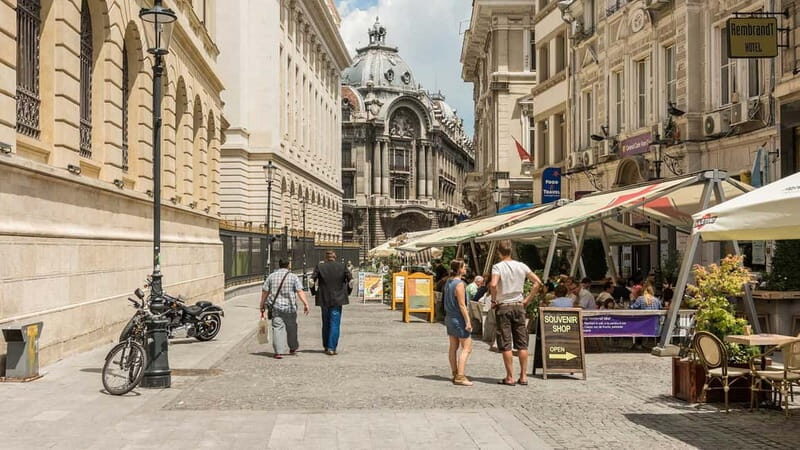
Then you move onto Calea Victoriei (Victory Avenue), with a photo stop and guided sightseeing time. If you want a street-level view of contradictions in Bucharest, this is it.
You get pointed contrasts: on one side, the Royal Palace; on the other, the presence of the Central Committee of the Romanian Communist Party. The tour also links the square and area to Ceaușescu’s flight story, so the street doesn’t feel like a random shopping strip—it feels like a corridor where eras overlap.
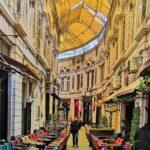
Along the way, you’ll pass old Orthodox churches that carry a sense of mystery, plus a mix of everyday life: music store, casinos, bohemian restaurants, museums, theatres, tea shops, retail streets, and gift shops with souvenirs. The guide’s job here is to help you see that Bucharest isn’t only “monuments and suffering.” It’s also commerce, art spaces, nightlife, and local routines.
A small planning note: because this portion includes both sightseeing and guided explanation, if you want maximum photo time, you’ll likely want to aim for earlier in the stop to grab your best angles.

National History Museum, Romanian Athenaeum, and CEC Palace: architecture lessons without the detour
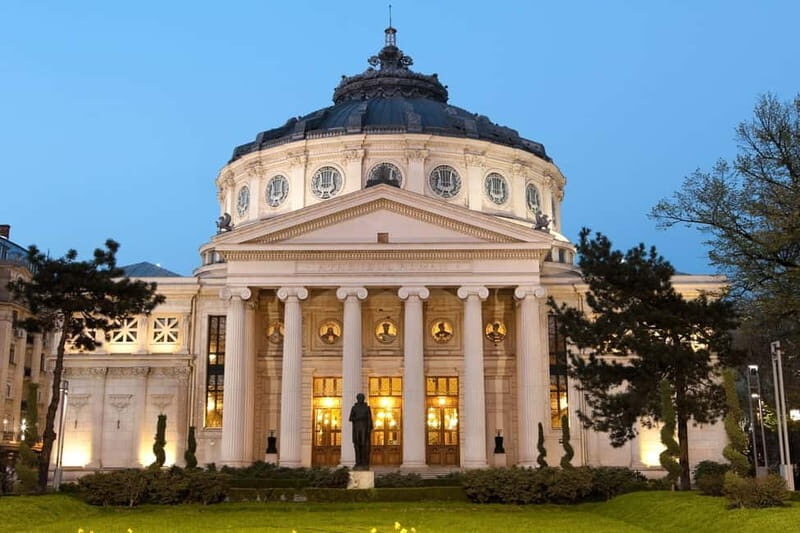
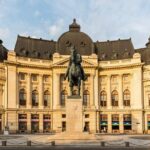
The tour continues with more classic central-city landmarks—the National History Museum, the Romanian Athenaeum, and the CEC Palace—as part of the guided panoramic sightseeing time.
Even if you’re not a full-on architecture fan, you’ll appreciate why these stops are worth squeezing into a short schedule. The Athenaeum, for example, is the kind of building people talk about for its cultural role as much as its look. The National History Museum and CEC Palace add a sense of how Romania presented itself through institutions—what it chose to honor, and what it built to project stability and importance.
The value here is context. When you’re with a live English guide and moving by car between sights, the explanations stick better than if you just read signs on your own. You’re essentially getting a fast lesson in how Bucharest tells its own story through stone, symmetry, and public institutions.
Senate Palace and the Central Committee area: where the revolution started feeling real
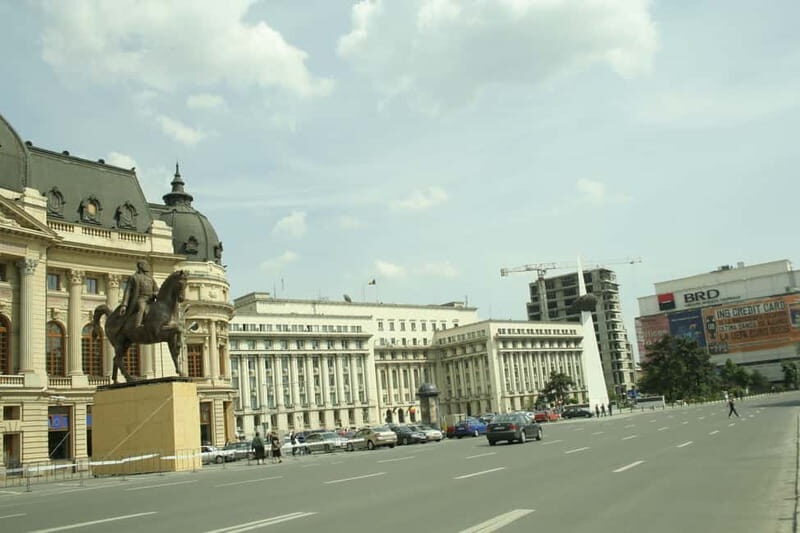
One of the final chapters of the day focuses on the Senate Palace and the area tied to the Central Committee of the Romanian Communist Party. The guide frames this space as part of the starting point for the Revolution of December 1989.
This is the kind of stop that benefits from listening rather than just photographing. When the guide connects the building to the sequence of events—power centers, then the removal of Ceaușescu—your view of the architecture changes again. You stop seeing it as “just big offices” and start seeing it as infrastructure for a political system.
The tour also mentions the aftermath in a blunt way: secrets of a great fortune and controversies involving the state security service. That gives you a more complete picture of why these buildings still matter. Even when the regime ended, the story didn’t just disappear.
Old Town Bucharest: a final guided walk for atmosphere and photos
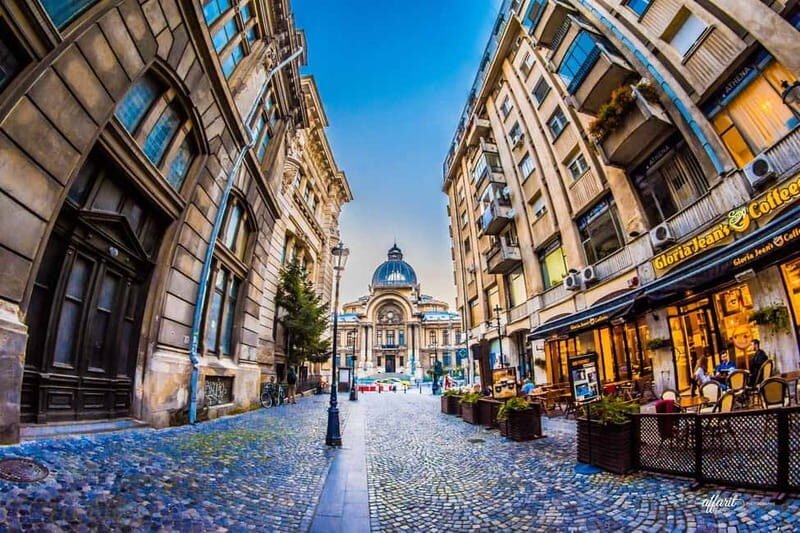
To close out the tour, you head to Old Town Bucharest for a photo stop and about an hour of guided tour time. Old Town is where Bucharest softens after the heavier history stops. You get the feeling of street life and older urban texture—ideal for photos and just getting your bearings.
This portion works well because it comes at the end. You’ve already learned the city’s “politics and identity” through Parliament, museum culture, and revolution sites. Now you can enjoy the city as a city: smaller scenes, church details, and that layered, real-life character that makes you want to return later.
Who this tour fits best (and who should skip it)
This tour is a strong match if you want:
- A private experience with an English guide and a comfortable ride
- A clear route through major Bucharest landmarks without planning stress
- History explained in a way that connects buildings to events and ideology
It’s also a good fit for time-crunched visitors who don’t want to waste half a day just getting from place to place. I especially like that the schedule includes guided segments and photo stops, which keeps the experience balanced between learning and seeing.
Who might skip it? If you want deep museum time—like extended indoor exploration and long ticketed visits—you might find the pace too fast. This is designed to show you the highlights and meaning, not to replace a longer stay dedicated to any single site.
Price and value: when $117 makes sense for a private car day
At $117 per person for 4 hours, this tour isn’t “cheap,” but it’s also not trying to be. The value comes from the basics you’d otherwise pay for in time and hassle: private pickup and drop-off, an air-conditioned vehicle, Wi-Fi, and a live English guide who manages the route and explanation.
The schedule is efficient—multiple iconic landmarks in one shot—so you’re paying for the ability to do it without friction. If you’re traveling with people who want different things (some history, some photos, some “just show me the main sights”), the private format helps the guide adapt.
One more value point: the tour notes skip the ticket line. That can be a real time-saver, especially in popular sights. Still, keep in mind entrance fees are not included, so you should budget separately if you plan to go inside.
From what I’ve seen in the guide feedback, the best part isn’t only where you go—it’s how you get there and how clearly the guide connects it. I’ve heard that guides like Vlad and Alex are very good at time management and adapting to what the group wants, which makes the day feel controlled and smooth rather than chaotic.
The guide experience: clear explanations and on-the-fly adaptation
A big reason people enjoy this tour is the guide quality. In the feedback you can see a pattern: guides are professional, helpful, and efficient with time.
One guide mentioned by name, Vlad, is described as friendly and willing to adapt to visitors’ wishes. Another guide named Alex is noted for strong time management and clear explanations that keep attention. That matters because Bucharest’s story can be dense—Palace scale, communist history, and cultural heritage all in one day. A guide who can explain clearly and keep you moving turns that density into something you can actually absorb.
If you care about meaning—why these places exist and what they represent—you’ll benefit most from listening during the guided parts and asking questions when the guide pauses at photo spots.
Should you book this panoramic private car tour?
Book it if you:
- Want the fastest high-impact overview of Bucharest’s major sights
- Prefer a private, air-conditioned car with Wi-Fi and pickup from your address
- Like history explained in context, from Parliament to Revolution Square to Old Town
Skip it if you:
- Want long indoor museum sessions or lots of unscheduled wandering
- Don’t want to spend part of the day on heavy political history themes
- Can’t or don’t want to handle extra entrance fees on top of the tour price
For most first-timers, I think this tour is a smart way to get oriented quickly while still feeling the weight of Bucharest’s past—and then end the day with Old Town atmosphere.
FAQ
What’s the duration of the Bucharest private panoramic tour by car?
The tour lasts 4 hours.
Where does pickup happen?
Pickup is from your address in Bucharest.
What’s included in the price?
The price includes pickup & drop-off, a private air-conditioned vehicle, private transportation, and Wi-Fi on board. Entrance fees are not included.
Are entrance fees included?
No. Entrance fees are listed as not included and depend on what you choose to enter during the stops.
What language is the live guide?
The live tour guide is available in English.
Do we get to skip the ticket line?
Yes, the tour includes skip the ticket line.
Is there food included?
No. Food and drinks are not included.